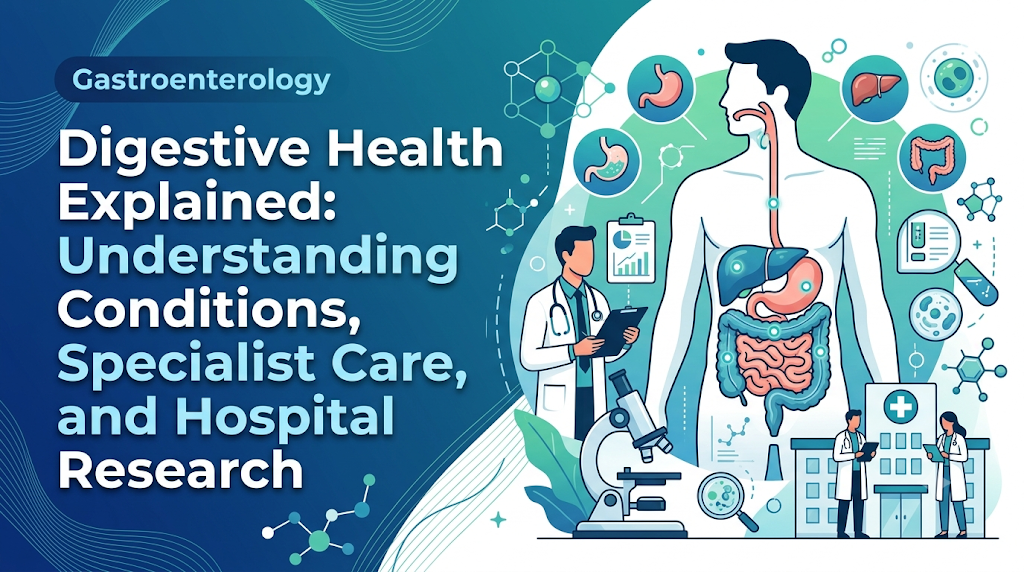
Digestive problems rarely arrive at a convenient time. A burning chest at night, a stomach that hurts after every meal, or a sudden change in bowel habits can leave a person worried and unsure where to turn. Gastroenterology is the field of medicine that deals with exactly these concerns, and it covers far more than the stomach alone.
This article explains digestive healthcare in plain language. It is shared here for readers of Stocksmantra who want to understand how this area of medicine works. GastroHospitals is a digestive-health discovery and education platform that brings together hospital information, specialist topics, condition guides, and procedure details for patients, families, and caregivers. We will use its focus areas to walk through common conditions, tests, treatments, and ways to research care responsibly.
What Is Gastroenterology?
Gastroenterology is the branch of medicine that studies the digestive system and treats its diseases. The digestive system is a long chain of organs that turns food into energy and removes what the body does not need.
Here is how the main parts fit together:
- Esophagus: the food pipe that carries swallowed food to the stomach.
- Stomach: breaks food down using acid and strong digestive juices.
- Intestines: absorb nutrients and move the remaining material along.
- Colon: takes water from the leftover waste and prepares it for removal.
- Liver: cleans the blood, stores energy, and makes bile.
- Gallbladder: holds bile and releases it when fatty food arrives.
- Pancreas: makes enzymes for digestion and hormones that control blood sugar.
These organs depend on one another. When one struggles, others may feel the effect, which is why this specialty needs careful, step-by-step thinking.
When Might Someone Need a Gastroenterologist?
A gastroenterologist is a doctor trained to understand, test for, and manage conditions of the digestive tract and liver. Many of them also perform procedures that let them see inside the body.
Most people begin with a family doctor. That doctor may suggest a specialist when digestive concerns are long-lasting, keep returning, or need tests that go beyond a routine visit. Some examples of concerns that may lead to a specialist visit are:
- Stomach pain that continues for weeks
- Heartburn that happens often
- Ongoing diarrhea or constipation
- Unplanned weight loss
- Trouble swallowing
- Blood in stool or vomit
- Questions about liver health
None of these automatically points to one disease. A healthcare professional can evaluate persistent or concerning symptoms and decide whether specialist care is needed. Severe or sudden symptoms should be checked promptly.
Understanding Digestive Disorders
Digestive disorders are conditions that disturb the normal work of the digestive system. They may start in the food pipe, stomach, intestines, or colon, or in the supporting organs such as the liver, gallbladder, and pancreas.
The causes vary. Some come from infections. Others involve inflammation, weak muscle movement, blockages, or long-term damage to an organ. The effects also vary. One condition may pass in a few days, while another may need monitoring for years.
Because different organs can produce similar discomfort, symptoms alone rarely tell the full story. Two people who both feel stomach pain may have completely different explanations. That is why careful evaluation is the starting point of good care.
Different Gastroenterology Treatment Approaches
The term gastroenterology treatments covers a wide set of options, and no single option fits everyone. Care may include guidance on food and daily habits, medicines prescribed by a doctor, procedures performed with a camera-tipped tube, or surgery.
A doctor usually considers four things before suggesting a direction:
- The diagnosis
- How severe the condition is
- How the person has responded so far
- The person’s overall health and medical history
For this reason, articles like this one cannot tell anyone which treatment to use. They can help readers understand the language of treatment so conversations with their doctor feel clearer. The decision itself belongs to a qualified healthcare professional after proper evaluation.
Common Conditions and Their Treatment Information
Four conditions come up often in digestive-health research. The notes below are general education and do not suggest what any reader has.
Stomach and Intestinal Infections
Gastroenteritis is inflammation of the stomach and intestines, commonly caused by a virus, bacteria, or contaminated food or water. People often experience watery stools, vomiting, cramps, and sometimes fever.
Gastroenteritis treatment usually focuses on comfort and on replacing lost fluids, because dehydration is the biggest risk. Babies, older adults, and people with other illnesses are more vulnerable. Medical care is worth seeking if vomiting will not stop, there is blood in the stool, urination drops sharply, or symptoms last longer than expected.
Acid Reflux
GERD, or gastroesophageal reflux disease, is a condition in which stomach contents repeatedly move back toward the food pipe. This can cause heartburn, a sour taste, or chest discomfort.
An occasional burning feeling after a large meal is common and is not necessarily GERD. When symptoms are frequent, doctors may look deeper. GERD treatment can involve changes in routine, medicines chosen by a doctor, and, for some people, a procedure or surgery. Trouble swallowing or symptoms that disturb sleep should be discussed with a professional.
Inflammatory Bowel Disease
Inflammatory bowel disease, shortened to IBD, refers to long-term conditions that cause ongoing inflammation in the digestive tract. Crohn’s disease and ulcerative colitis are the best-known types. Concerns can include persistent diarrhea, belly pain, tiredness, and weight loss.
IBD treatment is usually managed by a specialist over a long period. The general goals are to calm inflammation, ease symptoms, and watch for changes. Since the condition can flare and then settle, plans may be adjusted over time.
Liver Problems
The liver can be affected by viral infections, fat build-up, alcohol, certain medicines, and inherited conditions. Early liver trouble is often quiet, so someone may feel fine while the problem develops.
Liver disease treatment depends on the cause and the stage. It may include treating the underlying issue, medicines, lifestyle changes, and regular check-ups. In advanced cases, surgery or transplantation may be discussed. Yellowing of the skin or eyes, swelling in the belly, or lasting fatigue should be assessed by a healthcare professional.
How GI Conditions Are Diagnosed
Doctors rarely depend on one test. They start with a conversation about symptoms, timing, eating habits, medicines, and family history, followed by a physical examination.
If more detail is needed, they may use:
- Blood tests to look for infection, inflammation, or liver changes
- Stool tests to check for germs or hidden blood
- Imaging, such as ultrasound or scans, to see organs without entering the body
- Endoscopic exams, which use a thin, flexible tube with a light and camera to view the inside of the digestive tract
Different symptoms call for different tests. Each result removes some possibilities and points toward others, which helps the doctor decide what to do next.
Understanding Common GI Procedures
Digestive procedures fall into two groups. Diagnostic procedures help doctors find the cause of a problem. Therapeutic procedures help treat it. Sometimes one procedure does both.
The colonoscopy procedure is a familiar example. A doctor gently passes a flexible tube with a small camera through the rectum to examine the lining of the colon. The images appear on a screen, allowing the doctor to look for inflammation, bleeding, ulcers, or growths called polyps. Small tissue samples can be collected for testing, and some polyps can be removed at the same time.
Doctors may recommend this test to investigate bowel symptoms, look for the source of bleeding, or screen the colon. Preparation and recovery steps differ from person to person, so those instructions should always come from the treating team.
The procedure directory on GastroHospitals also covers endoscopic interventions and other digestive-care procedures. Endoscopic interventions are treatments done through a scope, which often means no large surgical cut.
When Surgery May Be Part of Digestive Care
Many digestive conditions are managed without an operation. Still, gastrointestinal surgery can become part of care when other treatments are not enough or when a physical problem needs direct correction. Whether surgery suits a particular situation depends on the medical condition and a professional assessment.
Procedures mentioned in the supplied information include:
- Colectomy: removal of part or all of the colon
- Gastrectomy: removal of part or all of the stomach
- Anti-reflux surgery: strengthening the area where the food pipe meets the stomach
- Gallbladder removal: taking out the gallbladder
- Pancreatic surgery: operations on the pancreas for specific conditions
- Liver resection: removing a diseased section of the liver
- Transplantation: replacing a failing organ with a healthy donor organ
These operations differ in size, risk, and recovery. Surgical teams explain the purpose, possible risks, and alternatives before any decision is made.
Finding and Understanding Hospital Information
Many families search for the best hospitals for gastroenterology when a condition needs specialist or procedural care. It is a sensible starting point, though the right answer depends on the type of care needed. A hospital with strong liver services may not be the obvious fit for someone researching IBD care.
Useful points to research include:
- Which digestive-care specialties the hospital has
- Which diagnostic and treatment procedures it offers
- What kinds of specialist services are available
- Whether advanced surgical care is part of its work
- How clearly it shares patient information
- What facilities support patient care
Comparing these details gives a more practical picture than a name alone. The final choice should be made together with a qualified healthcare professional.
Main Areas Covered by GastroHospitals
GastroHospitals arranges digestive-health information into connected areas. Looking at each one shows how a reader can move from a general worry to a more informed conversation.
Hospital discovery. The platform features a directory of 50 leading gastroenterology hospitals. This gives readers an organized starting point so they do not have to collect details from many separate places.
Specialist information. Many people are unsure who treats what. This area explains the role of a gastroenterologist and shows where other professionals, such as surgeons, may become involved.
Digestive diseases. Condition guides cover the esophagus, stomach, intestines, colon, liver, gallbladder, and pancreas. They explain symptoms, diagnosis, treatment approaches, prevention, warning signs, and when professional medical care may be necessary.
Treatments. Treatment information describes the general options for each condition. Readers can use it to prepare questions before an appointment.
Procedures. Diagnostic and therapeutic procedures, including the colonoscopy procedure and endoscopic interventions, are explained in everyday language.
Surgeries. The surgery directory covers colectomy, gastrectomy, anti-reflux surgery, gallbladder removal, pancreatic surgery, liver resection, and transplantation.
Educational articles and patient resources. Blogs, guides, and community resources offer reading support for patients and caregivers between medical visits.
Care areas. Content is organized around GI care, liver care, pancreas care, IBD, endoscopy, and advanced digestive care. Each one points readers toward the part of digestive health that matches their question.
Together, these areas connect hospital research with condition education, treatment guides, and patient-friendly information.
A Practical Step-by-Step Process for Research
Step 1: Understand the health concern. Write down your symptoms, when they began, and what seems to affect them.
Step 2: Learn about the condition or procedure. Read trustworthy educational material to become familiar with basic terms.
Step 3: Research who provides the care. Find out which specialists and hospital departments deal with this type of concern.
Step 4: Review diagnosis and treatment information. See how problems are usually tested and what general options exist.
Step 5: Discuss options with a qualified healthcare professional. Bring your notes to a doctor, who can judge what fits your situation.
Common Mistakes
- Relying on a hospital name alone. A well-known name does not confirm that the right services are available.
- Mixing up general information with personal advice. Articles explain ideas, but they cannot examine a person.
- Skipping a proper diagnosis. Guessing the cause can lead research in the wrong direction.
- Choosing based on price alone. Cost is a real concern, but it does not show whether care matches the medical need.
- Assuming every digestive condition needs surgery. Many are managed in other ways.
- Delaying evaluation for worrying symptoms. Early assessment often makes problems easier to handle.
A Hypothetical Example
Consider a person who has had bloating, stomach pain, and uneven bowel habits for several weeks. Rather than guessing, they start a simple daily note of symptoms and meals. They then read about how digestive problems are usually investigated and learn how specialist care, diagnostic procedures, and treatment options differ.
At the doctor’s office, they share their notes and ask clear questions. The doctor decides which tests, if any, are needed. The reading did not replace medical advice. It helped the person take a more active part in the conversation.
A Quick Reference Table
| Area of digestive care | What readers may research |
|---|---|
| Specialist care | The role of a gastroenterologist and when referral may be considered |
| Digestive conditions | Symptoms, warning signs, diagnosis, and general treatment information |
| Diagnostic tests | Blood tests, stool tests, imaging, and endoscopic exams |
| Procedures | Diagnostic and therapeutic procedures, including endoscopic interventions |
| Surgery | Types of operations and the reasons they may be considered |
| Hospital research | Specialty areas, services, and clarity of patient information |
Frequently Asked Questions
1. What conditions does a gastroenterologist handle?
They handle conditions of the digestive tract and liver, including the esophagus, stomach, intestines, colon, gallbladder, and pancreas.
2. Are digestive disorders always serious?
No. Some are mild and short-lived, while others need long-term care. A doctor can explain which applies.
3. Does gastroenteritis treatment always need a hospital stay?
Not always. Many cases focus on fluids and rest, but severe or lasting symptoms need medical review.
4. Is heartburn the same as GERD?
No. Heartburn is a symptom many people feel at times. GERD involves repeated reflux and must be confirmed by a doctor.
5. Is IBD treatment short-term?
IBD is usually a long-term condition, so care and follow-up typically continue over time.
6. Why might a doctor suggest a colonoscopy?
It can help investigate bowel symptoms, find a source of bleeding, or check the colon’s lining.
7. Does every digestive problem lead to surgery?
No. Surgery is only one part of digestive care and is considered after professional assessment.
8. What can I compare when researching hospitals?
You can look at specialty areas, available procedures, specialist services, and patient information, then discuss what you find with your doctor.
Conclusion
Digestive healthcare covers a wide range of organs, from the food pipe to the colon and from the liver to the pancreas. Digestive disorders can be brief or lifelong, and each needs proper evaluation. Gastroenterologists guide diagnosis and care, with treatments that may include lifestyle changes, medicines, scope-based procedures, and sometimes surgery. When researching hospitals, specialties, services, and procedures tell you more than a single name.
The most useful takeaway is that clear information helps you ask better questions, and it works best when paired with guidance from a qualified healthcare professional.
Leave a Reply