Introduction
Imagine you run a small business supplying office furniture. You send an invoice to a customer for 10 office chairs at $100 each. The total bill is $1,000 plus GST. Later, the customer opens the boxes and finds that two chairs are broken and must be returned.
What happens to the bill? Can you just tear up the original invoice?
No. Under modern tax systems like GST, once an electronic invoice is generated and reported to the government, you cannot simply delete or rewrite it. You need a formal paper trail to adjust the numbers legally. This is where debit notes and credit notes come in.
For many business owners, accounting paperwork feels confusing and full of legal jargon. However, understanding these two notes is essential for accurate bookkeeping, paying the correct amount of tax, and avoiding heavy penalties from tax authorities. This guide breaks down everything you need to know in plain, simple English.
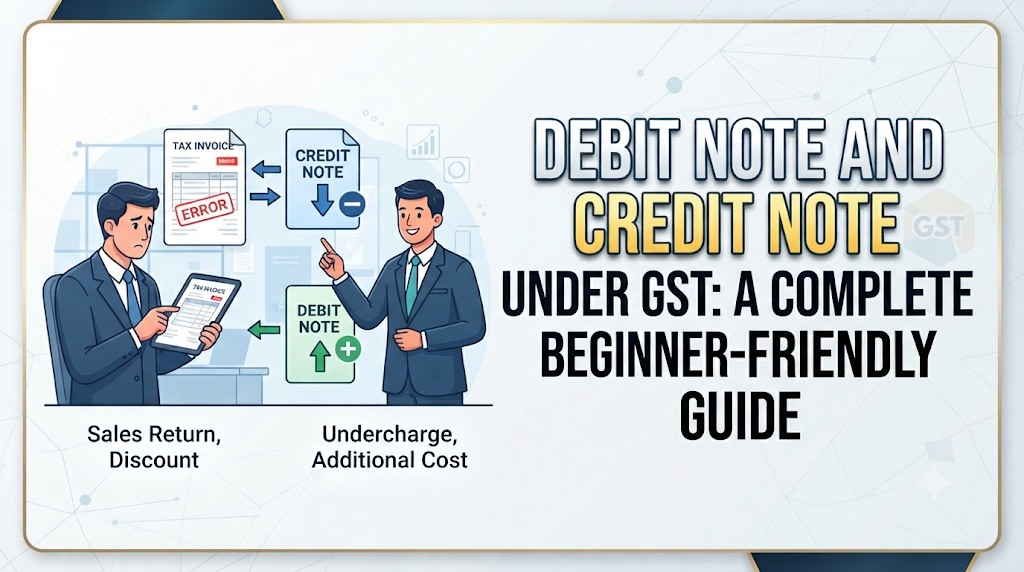
What Is a Credit Note Under GST?
A Credit Note is a document issued by a seller to a buyer to reduce the amount the buyer owes on an original invoice.
Think of it as a financial discount or a correction in reverse. If an invoice was made for too much money, or if goods were sent back, the seller issues a credit note to “credit” the buyer’s account.
Why Does It Matter?
In the GST system, every rupee of tax collected must be accounted for. If a customer returns goods, the tax paid on those goods must also be adjusted. Without a credit note, the seller would end up paying more tax to the government than they actually collected from the final sale.
When Is a Credit Note Issued?
Sellers issue credit notes in several common situations:
- Sales Returns: The buyer returns defective, damaged, or unwanted goods.
- Post-Sale Discounts: The seller offers a discount after the invoice was already created.
- Overcharging: The seller accidentally charged a higher price or a higher tax rate than agreed.
- Deficient Services: The quality of service provided did not match what was promised, leading to a partial refund.
Practical Example
Rahul runs a computer wholesale business. He sells 5 laptops to a retail store for $500 each, totaling $2,500 plus 18% GST. The invoice is generated.
The next day, the retail store finds that one laptop has a cracked screen and returns it. Rahul accepts the return and issues a Credit Note for $500 plus the matching GST. This lowers the total bill and adjusts Rahul’s tax liability for that month.
What Is a Debit Note Under GST?
A Debit Note is a document that increases the value of an original invoice.
If a seller undercharged a customer, or if extra costs like shipping were forgotten on the original bill, the seller issues a debit note to “debit” the buyer’s account for the extra amount.
Interestingly, under GST laws, a debit note can also be issued by the buyer to the seller in certain situations (such as when the buyer returns goods or adjustments are made, though the seller’s side is the most common use case).
Why Does It Matter?
Just like credit notes fix over-reporting, debit notes ensure under-reporting is corrected. If a seller forgets to charge for a service or delivers extra items by mistake, a debit note ensures the government receives the correct amount of tax on the full transaction.
When Is a Debit Note Issued?
- Undercharging: The seller billed the wrong, lower price by mistake.
- Additional Costs: Extra expenses like freight, packaging, or insurance were left off the initial invoice.
- Short Tax Calculation: The tax rate applied on the original invoice was too low.
Practical Example
Continuing with Rahul’s computer business, imagine he shipped 5 laptops and forgot to charge $50 for special insurance packaging requested by the customer. Rahul cannot edit the original invoice. Instead, he issues a Debit Note for $50 plus GST to collect the remaining balance.
How Debit Notes and Credit Notes Work Under GST
Managing these notes requires careful tracking in your accounting software and matching them with monthly tax returns (such as GSTR-1 and GSTR-3B).
The Tax Impact
- For Credit Notes: The seller reduces their output tax liability (the tax they owe the government). The buyer must also reduce their input tax credit (the tax credit they claimed on business purchases).
- For Debit Notes: The seller increases their output tax liability. The buyer can claim extra input tax credit on the additional amount.
Time Limits
Tax laws usually set strict deadlines for reporting these notes. Under GST regulations, a credit note or debit note for a financial year must generally be declared by the time of filing the annual return for that year, or by November 30th of the following financial year, whichever is earlier. Missing this deadline means the tax adjustment cannot be claimed.
Common Mistakes to Avoid
Even experienced business owners can make errors when handling GST adjustments. Here are common pitfalls and how to avoid them:
- Canceling Invoices Instead of Issuing Notes:
- What people do: Try to delete or completely erase an old invoice from their software when a return happens.
- Why it causes problems: This disrupts the electronic tax trail and invites tax audits.
- What to do instead: Keep the original invoice intact and issue a proper credit note to adjust the value.
- Missing the Declaration Deadline:
- What people do: Issue credit notes months later without checking government filing timelines.
- Why it causes problems: You lose the right to adjust your tax liability.
- What to do instead: Process returns and adjustments promptly within the same financial year.
- Mismatches Between Buyer and Seller Records:
- What people do: The seller issues a credit note, but the buyer forgets to reduce their tax credit.
- Why it causes problems: Automated tax portals flag these mismatches, leading to notices and inquiries.
- What to do instead: Communicate adjustments clearly with your business partners so records match.
Key Terms
- Input Tax Credit (ITC): A mechanism that allows businesses to reduce the tax they pay on their sales by the tax they already paid on their business purchases.
- Output Tax Liability: The total tax collected by a business from its customers that must be paid over to the government.
- Tax Invoice: A legal document issued by a seller to a buyer showing the goods sold, quantities, prices, and taxes charged.
- Returns: Periodic statements that businesses must file with tax authorities detailing their sales, purchases, and tax payments.
FAQs
Can a buyer issue a credit note under GST?
No. Under GST, credit notes are strictly issued by the supplier (seller) of goods or services to reduce an invoice value. Buyers typically issue debit notes to suppliers in certain contexts, but credit notes originate from the seller.
Do I need to report every credit note on the GST portal?
Yes. All debit notes and credit notes must be reported in your monthly outward supply returns (such as GSTR-1) so that tax authorities can track adjustments accurately.
What happens if I issue a credit note late?
If you issue or declare a credit note after the legally allowed deadline (usually November 30 of the next financial year or the annual return filing date), you will not be able to claim a reduction in your tax liability.
Is GST calculated on the net amount after a credit note?
Yes. When a credit note is issued, the taxable value and the associated GST are reduced proportionately, meaning you only pay tax on the final net transaction value.
Can a credit note be issued for a business-to-consumer (B2C) transaction?
Yes. If a retail customer returns an item, the business can issue a credit note, even if the customer is an unregistered consumer who does not claim tax credits.
Conclusion
Debit notes and credit notes are vital tools for keeping your business finances clean and compliant under GST. They act as legal bridges that connect past invoices to present changes, ensuring that every return, discount, or pricing error is recorded accurately.
By understanding when to use each document, keeping track of deadlines, and maintaining clear records, you can protect your business from tax penalties and keep your accounting accurate and transparent.
Leave a Reply