Author: mamali

  • Digestive Health Explained: Understanding Conditions, Specialist Care, and Hospital Research

    Digestive problems rarely arrive at a convenient time. A burning chest at night, a stomach that hurts after every meal, or a sudden change in bowel habits can leave a person worried and unsure where to turn. Gastroenterology is the field of medicine that deals with exactly these concerns, and it covers far more than the stomach alone.

    This article explains digestive healthcare in plain language. It is shared here for readers of Stocksmantra who want to understand how this area of medicine works. GastroHospitals is a digestive-health discovery and education platform that brings together hospital information, specialist topics, condition guides, and procedure details for patients, families, and caregivers. We will use its focus areas to walk through common conditions, tests, treatments, and ways to research care responsibly.

    What Is Gastroenterology?

    Gastroenterology is the branch of medicine that studies the digestive system and treats its diseases. The digestive system is a long chain of organs that turns food into energy and removes what the body does not need.

    Here is how the main parts fit together:

    • Esophagus: the food pipe that carries swallowed food to the stomach.
    • Stomach: breaks food down using acid and strong digestive juices.
    • Intestines: absorb nutrients and move the remaining material along.
    • Colon: takes water from the leftover waste and prepares it for removal.
    • Liver: cleans the blood, stores energy, and makes bile.
    • Gallbladder: holds bile and releases it when fatty food arrives.
    • Pancreas: makes enzymes for digestion and hormones that control blood sugar.

    These organs depend on one another. When one struggles, others may feel the effect, which is why this specialty needs careful, step-by-step thinking.

    When Might Someone Need a Gastroenterologist?

    A gastroenterologist is a doctor trained to understand, test for, and manage conditions of the digestive tract and liver. Many of them also perform procedures that let them see inside the body.

    Most people begin with a family doctor. That doctor may suggest a specialist when digestive concerns are long-lasting, keep returning, or need tests that go beyond a routine visit. Some examples of concerns that may lead to a specialist visit are:

    • Stomach pain that continues for weeks
    • Heartburn that happens often
    • Ongoing diarrhea or constipation
    • Unplanned weight loss
    • Trouble swallowing
    • Blood in stool or vomit
    • Questions about liver health

    None of these automatically points to one disease. A healthcare professional can evaluate persistent or concerning symptoms and decide whether specialist care is needed. Severe or sudden symptoms should be checked promptly.

    Understanding Digestive Disorders

    Digestive disorders are conditions that disturb the normal work of the digestive system. They may start in the food pipe, stomach, intestines, or colon, or in the supporting organs such as the liver, gallbladder, and pancreas.

    The causes vary. Some come from infections. Others involve inflammation, weak muscle movement, blockages, or long-term damage to an organ. The effects also vary. One condition may pass in a few days, while another may need monitoring for years.

    Because different organs can produce similar discomfort, symptoms alone rarely tell the full story. Two people who both feel stomach pain may have completely different explanations. That is why careful evaluation is the starting point of good care.

    Different Gastroenterology Treatment Approaches

    The term gastroenterology treatments covers a wide set of options, and no single option fits everyone. Care may include guidance on food and daily habits, medicines prescribed by a doctor, procedures performed with a camera-tipped tube, or surgery.

    A doctor usually considers four things before suggesting a direction:

    • The diagnosis
    • How severe the condition is
    • How the person has responded so far
    • The person’s overall health and medical history

    For this reason, articles like this one cannot tell anyone which treatment to use. They can help readers understand the language of treatment so conversations with their doctor feel clearer. The decision itself belongs to a qualified healthcare professional after proper evaluation.

    Common Conditions and Their Treatment Information

    Four conditions come up often in digestive-health research. The notes below are general education and do not suggest what any reader has.

    Stomach and Intestinal Infections

    Gastroenteritis is inflammation of the stomach and intestines, commonly caused by a virus, bacteria, or contaminated food or water. People often experience watery stools, vomiting, cramps, and sometimes fever.

    Gastroenteritis treatment usually focuses on comfort and on replacing lost fluids, because dehydration is the biggest risk. Babies, older adults, and people with other illnesses are more vulnerable. Medical care is worth seeking if vomiting will not stop, there is blood in the stool, urination drops sharply, or symptoms last longer than expected.

    Acid Reflux

    GERD, or gastroesophageal reflux disease, is a condition in which stomach contents repeatedly move back toward the food pipe. This can cause heartburn, a sour taste, or chest discomfort.

    An occasional burning feeling after a large meal is common and is not necessarily GERD. When symptoms are frequent, doctors may look deeper. GERD treatment can involve changes in routine, medicines chosen by a doctor, and, for some people, a procedure or surgery. Trouble swallowing or symptoms that disturb sleep should be discussed with a professional.

    Inflammatory Bowel Disease

    Inflammatory bowel disease, shortened to IBD, refers to long-term conditions that cause ongoing inflammation in the digestive tract. Crohn’s disease and ulcerative colitis are the best-known types. Concerns can include persistent diarrhea, belly pain, tiredness, and weight loss.

    IBD treatment is usually managed by a specialist over a long period. The general goals are to calm inflammation, ease symptoms, and watch for changes. Since the condition can flare and then settle, plans may be adjusted over time.

    Liver Problems

    The liver can be affected by viral infections, fat build-up, alcohol, certain medicines, and inherited conditions. Early liver trouble is often quiet, so someone may feel fine while the problem develops.

    Liver disease treatment depends on the cause and the stage. It may include treating the underlying issue, medicines, lifestyle changes, and regular check-ups. In advanced cases, surgery or transplantation may be discussed. Yellowing of the skin or eyes, swelling in the belly, or lasting fatigue should be assessed by a healthcare professional.

    How GI Conditions Are Diagnosed

    Doctors rarely depend on one test. They start with a conversation about symptoms, timing, eating habits, medicines, and family history, followed by a physical examination.

    If more detail is needed, they may use:

    • Blood tests to look for infection, inflammation, or liver changes
    • Stool tests to check for germs or hidden blood
    • Imaging, such as ultrasound or scans, to see organs without entering the body
    • Endoscopic exams, which use a thin, flexible tube with a light and camera to view the inside of the digestive tract

    Different symptoms call for different tests. Each result removes some possibilities and points toward others, which helps the doctor decide what to do next.

    Understanding Common GI Procedures

    Digestive procedures fall into two groups. Diagnostic procedures help doctors find the cause of a problem. Therapeutic procedures help treat it. Sometimes one procedure does both.

    The colonoscopy procedure is a familiar example. A doctor gently passes a flexible tube with a small camera through the rectum to examine the lining of the colon. The images appear on a screen, allowing the doctor to look for inflammation, bleeding, ulcers, or growths called polyps. Small tissue samples can be collected for testing, and some polyps can be removed at the same time.

    Doctors may recommend this test to investigate bowel symptoms, look for the source of bleeding, or screen the colon. Preparation and recovery steps differ from person to person, so those instructions should always come from the treating team.

    The procedure directory on GastroHospitals also covers endoscopic interventions and other digestive-care procedures. Endoscopic interventions are treatments done through a scope, which often means no large surgical cut.

    When Surgery May Be Part of Digestive Care

    Many digestive conditions are managed without an operation. Still, gastrointestinal surgery can become part of care when other treatments are not enough or when a physical problem needs direct correction. Whether surgery suits a particular situation depends on the medical condition and a professional assessment.

    Procedures mentioned in the supplied information include:

    • Colectomy: removal of part or all of the colon
    • Gastrectomy: removal of part or all of the stomach
    • Anti-reflux surgery: strengthening the area where the food pipe meets the stomach
    • Gallbladder removal: taking out the gallbladder
    • Pancreatic surgery: operations on the pancreas for specific conditions
    • Liver resection: removing a diseased section of the liver
    • Transplantation: replacing a failing organ with a healthy donor organ

    These operations differ in size, risk, and recovery. Surgical teams explain the purpose, possible risks, and alternatives before any decision is made.

    Finding and Understanding Hospital Information

    Many families search for the best hospitals for gastroenterology when a condition needs specialist or procedural care. It is a sensible starting point, though the right answer depends on the type of care needed. A hospital with strong liver services may not be the obvious fit for someone researching IBD care.

    Useful points to research include:

    • Which digestive-care specialties the hospital has
    • Which diagnostic and treatment procedures it offers
    • What kinds of specialist services are available
    • Whether advanced surgical care is part of its work
    • How clearly it shares patient information
    • What facilities support patient care

    Comparing these details gives a more practical picture than a name alone. The final choice should be made together with a qualified healthcare professional.

    Main Areas Covered by GastroHospitals

    GastroHospitals arranges digestive-health information into connected areas. Looking at each one shows how a reader can move from a general worry to a more informed conversation.

    Hospital discovery. The platform features a directory of 50 leading gastroenterology hospitals. This gives readers an organized starting point so they do not have to collect details from many separate places.

    Specialist information. Many people are unsure who treats what. This area explains the role of a gastroenterologist and shows where other professionals, such as surgeons, may become involved.

    Digestive diseases. Condition guides cover the esophagus, stomach, intestines, colon, liver, gallbladder, and pancreas. They explain symptoms, diagnosis, treatment approaches, prevention, warning signs, and when professional medical care may be necessary.

    Treatments. Treatment information describes the general options for each condition. Readers can use it to prepare questions before an appointment.

    Procedures. Diagnostic and therapeutic procedures, including the colonoscopy procedure and endoscopic interventions, are explained in everyday language.

    Surgeries. The surgery directory covers colectomy, gastrectomy, anti-reflux surgery, gallbladder removal, pancreatic surgery, liver resection, and transplantation.

    Educational articles and patient resources. Blogs, guides, and community resources offer reading support for patients and caregivers between medical visits.

    Care areas. Content is organized around GI care, liver care, pancreas care, IBD, endoscopy, and advanced digestive care. Each one points readers toward the part of digestive health that matches their question.

    Together, these areas connect hospital research with condition education, treatment guides, and patient-friendly information.

    A Practical Step-by-Step Process for Research

    Step 1: Understand the health concern. Write down your symptoms, when they began, and what seems to affect them.

    Step 2: Learn about the condition or procedure. Read trustworthy educational material to become familiar with basic terms.

    Step 3: Research who provides the care. Find out which specialists and hospital departments deal with this type of concern.

    Step 4: Review diagnosis and treatment information. See how problems are usually tested and what general options exist.

    Step 5: Discuss options with a qualified healthcare professional. Bring your notes to a doctor, who can judge what fits your situation.

    Common Mistakes

    • Relying on a hospital name alone. A well-known name does not confirm that the right services are available.
    • Mixing up general information with personal advice. Articles explain ideas, but they cannot examine a person.
    • Skipping a proper diagnosis. Guessing the cause can lead research in the wrong direction.
    • Choosing based on price alone. Cost is a real concern, but it does not show whether care matches the medical need.
    • Assuming every digestive condition needs surgery. Many are managed in other ways.
    • Delaying evaluation for worrying symptoms. Early assessment often makes problems easier to handle.

    A Hypothetical Example

    Consider a person who has had bloating, stomach pain, and uneven bowel habits for several weeks. Rather than guessing, they start a simple daily note of symptoms and meals. They then read about how digestive problems are usually investigated and learn how specialist care, diagnostic procedures, and treatment options differ.

    At the doctor’s office, they share their notes and ask clear questions. The doctor decides which tests, if any, are needed. The reading did not replace medical advice. It helped the person take a more active part in the conversation.

    A Quick Reference Table

    Area of digestive careWhat readers may research
    Specialist careThe role of a gastroenterologist and when referral may be considered
    Digestive conditionsSymptoms, warning signs, diagnosis, and general treatment information
    Diagnostic testsBlood tests, stool tests, imaging, and endoscopic exams
    ProceduresDiagnostic and therapeutic procedures, including endoscopic interventions
    SurgeryTypes of operations and the reasons they may be considered
    Hospital researchSpecialty areas, services, and clarity of patient information

    Frequently Asked Questions

    1. What conditions does a gastroenterologist handle?
    They handle conditions of the digestive tract and liver, including the esophagus, stomach, intestines, colon, gallbladder, and pancreas.

    2. Are digestive disorders always serious?
    No. Some are mild and short-lived, while others need long-term care. A doctor can explain which applies.

    3. Does gastroenteritis treatment always need a hospital stay?
    Not always. Many cases focus on fluids and rest, but severe or lasting symptoms need medical review.

    4. Is heartburn the same as GERD?
    No. Heartburn is a symptom many people feel at times. GERD involves repeated reflux and must be confirmed by a doctor.

    5. Is IBD treatment short-term?
    IBD is usually a long-term condition, so care and follow-up typically continue over time.

    6. Why might a doctor suggest a colonoscopy?
    It can help investigate bowel symptoms, find a source of bleeding, or check the colon’s lining.

    7. Does every digestive problem lead to surgery?
    No. Surgery is only one part of digestive care and is considered after professional assessment.

    8. What can I compare when researching hospitals?
    You can look at specialty areas, available procedures, specialist services, and patient information, then discuss what you find with your doctor.

    Conclusion

    Digestive healthcare covers a wide range of organs, from the food pipe to the colon and from the liver to the pancreas. Digestive disorders can be brief or lifelong, and each needs proper evaluation. Gastroenterologists guide diagnosis and care, with treatments that may include lifestyle changes, medicines, scope-based procedures, and sometimes surgery. When researching hospitals, specialties, services, and procedures tell you more than a single name.

    The most useful takeaway is that clear information helps you ask better questions, and it works best when paired with guidance from a qualified healthcare professional.
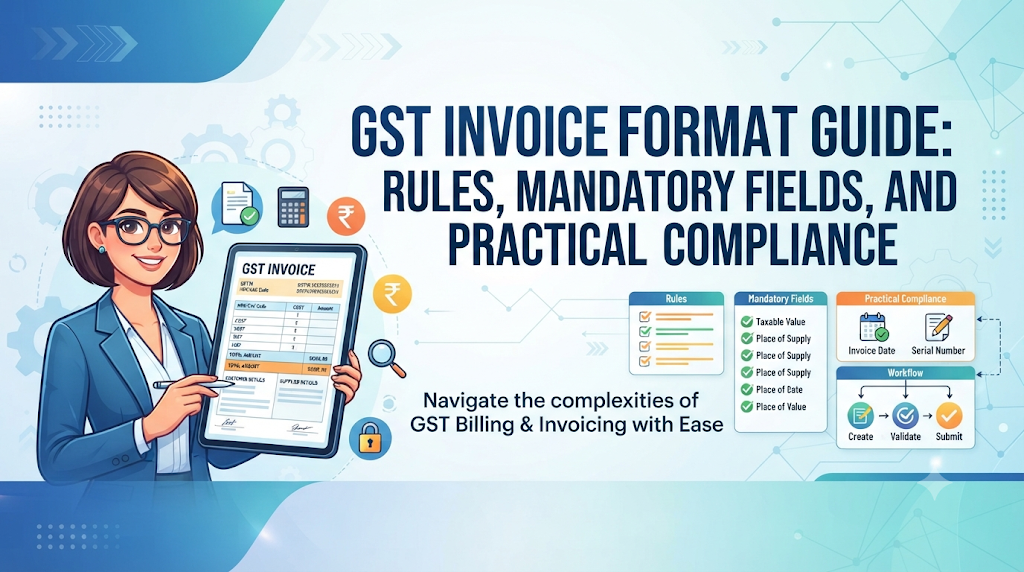
  • GST Invoice Format Guide: Rules, Mandatory Fields, and Practical Compliance

    Introduction

    Whenever a registered business sells goods or delivers services in India, the invoice acts as the backbone of the transaction. For a new business owner or accountant, an invoice might look like a simple payment request. Under the Goods and Services Tax (GST) framework, however, an invoice serves as a binding legal instrument and a verifiable audit trail.

    A simple mistake on an invoice—such as quoting the wrong state code, miscalculating tax splits, or omitting an HSN code—can freeze your client’s tax credits. When credits are blocked, buyers face cash flow delays and vendors face disputed payments.

    This guide breaks down the legal framework of GST invoicing in clear, practical language. It covers mandatory fields, tax calculation mechanics, statutory deadlines, common compliance traps, and verification steps to keep your billing fully compliant.

    What Is a GST Tax Invoice and Why Does It Matter?

    A GST tax invoice is a commercial instrument issued by a registered taxpayer that establishes the transfer of ownership of goods or the completion of services. It records the agreed commercial price and explicitly quantifies the indirect tax collected for remittance to the government.

    The Foundation of Input Tax Credit (ITC)

    To grasp why invoice precision is non-negotiable, you must understand Input Tax Credit (ITC).

    ITC allows a purchasing business to deduct the GST paid on purchases from the GST liability due on outward sales.

    Consider a practical example. A business collects ₹18,000 in GST from sales and has already paid ₹10,000 in GST on inventory purchases. Under the law, the business only pays the net difference of ₹8,000 to the tax authorities.

    Under Section 16 of the Central Goods and Services Tax (CGST) Act, an enterprise cannot claim this ₹10,000 credit without possessing a valid tax invoice containing all statutory particulars. If a vendor issues an incomplete or incorrect invoice, the buyer’s credit claim fails during reconciliation.

    Rule 46: The Mandatory Fields of a GST Tax Invoice

    The Central Goods and Services Tax Rules, specifically Rule 46, outline the mandatory particulars required on every valid tax invoice:

    1. Supplier Credentials: Legal business name, trade name (if applicable), registered office address, and 15-digit GSTIN.
    2. Invoice Number: A consecutive serial number not exceeding 16 characters. It can include letters, numbers, hyphens, and slashes, and must be unique for each financial year.
    3. Date of Issue: The exact calendar date on which the invoice is issued.
    4. Recipient Information (B2B): Legal name, registered address, and GSTIN or Unique Identification Number (UIN) of the buyer.
    5. Recipient Information (B2C over ₹50,000): For unregistered buyers with an invoice value of ₹50,000 or more, the invoice must state the buyer’s name, delivery address, state name, and state code.
    6. HSN or SAC Code: The classification code for goods (HSN) or services (SAC) meeting required digit standards.
    7. Description of Supply: An explicit description of each product or service supplied.
    8. Quantity and Measure: Units sold, measured using official Unit Quantity Codes (such as numbers, kilograms, or meters).
    9. Gross Total Value: Total commercial price before trade discounts or deductions.
    10. Taxable Value: The adjusted value subject to tax after deducting commercial discounts.
    11. Tax Rates Applied: The specific tax slab applied to each item (such as 5%, 12%, 18%, or 28%).
    12. Tax Split: Distinct line items showing Central GST (CGST) and State GST (SGST) for local sales, or Integrated GST (IGST) for interstate sales.
    13. Place of Supply: The name of the destination state along with its corresponding two-digit numerical state code.
    14. Delivery Address: The destination address, if it differs from the buyer’s registered billing address.
    15. Reverse Charge Applicability: A clear statement confirming whether tax is payable under Reverse Charge (Yes or No).
    16. Signature: A physical signature or a recognized digital signature (DSC or Aadhaar e-sign) of the authorized signatory.

    Tax Classification: Intrastate vs. Interstate Supplies

    A common operational error in GST billing is selecting the wrong tax components. Indirect taxation in India relies on the Place of Supply (POS) to determine jurisdiction.

    Intrastate Supply (Local Transactions)

    An intrastate supply occurs when the location of the supplier and the place of supply reside within the same state or union territory.

    • The applicable tax rate is divided equally into CGST and SGST/UTGST.
    • If a vendor in Lucknow sells industrial goods to a manufacturer in Kanpur at an 18% tax rate, the invoice must reflect 9% CGST and 9% SGST.

    Interstate Supply (Across State Borders)

    An interstate supply occurs when the supplier’s location and the place of supply are in different states or union territories.

    • The transaction attracts IGST for the entire tax rate.
    • If a vendor in Lucknow supplies goods to a client in Jaipur at an 18% tax rate, the invoice must show 18% IGST.

    Applying CGST and SGST on an interstate sale renders the buyer unable to claim the tax credit in their home state, requiring credit notes, corrected filings, and cash refunds.

    HSN and SAC Code Requirements

    The Harmonised System of Nomenclature (HSN) standardizes commodity classification, while Service Accounting Codes (SAC) classify services.

    The number of required HSN digits is tied directly to the seller’s Aggregate Annual Turnover (AATO) in the preceding financial year:

    Annual Turnover RangeMandatory Digits (B2B Supplies)Mandatory Digits (B2C Supplies)
    Up to ₹5 CroreMinimum 4 digitsOptional (4 digits recommended)
    Above ₹5 CroreMinimum 6 digitsMinimum 6 digits
    Import / Export Operations8 digits mandatory8 digits mandatory

    Entering a truncated or incorrect classification code risks rejection by the Invoice Registration Portal and invites penalty notices during tax department audits.

    Practical Invoice Calculation Walkthrough

    Understanding how figures flow from raw prices to final settlement values prevents accounting discrepancies.

    Scenario Details

    • Supplier: Modern Tech Dynamics, Bengaluru, Karnataka (State Code: 29)
    • Buyer: Skyline Solutions, Mysuru, Karnataka (State Code: 29)
    • Transaction Nature: Intrastate Supply (CGST + SGST apply)
    • Items: 10 Computer Monitors at a list price of ₹10,000 each
    • Agreed Trade Discount: ₹1,000 per unit
    • Applicable GST Rate: 18%

    Step-by-Step Calculation

    1. Gross Sales Value: 10 units × ₹10,000 = ₹100,000
    2. Total Trade Discount: 10 units × ₹1,000 = ₹10,000
    3. Net Taxable Value: ₹100,000 − ₹10,000 = ₹90,000
    4. CGST Calculation: 9% of ₹90,000 = ₹8,100
    5. SGST Calculation: 9% of ₹90,000 = ₹8,100
    6. Total Invoice Value: ₹90,000 + ₹8,100 + ₹8,100 = ₹106,200

    Trade discounts must always be deducted before calculating tax. Deducting discounts after applying GST creates incorrect tax liabilities and inflates invoice values.

    Statutory Deadlines: When Must an Invoice Be Issued?

    Section 31 of the CGST Act prescribes strict timelines for issuing tax invoices. Invoices generated outside these windows breach statutory compliance:

    Invoicing for Goods

    • One-Time Supply: The invoice must be issued on or before the date the goods are removed for delivery to the recipient.
    • Continuous Supply of Goods: When goods are transferred on an ongoing basis with periodic statements or billing cycles, the invoice must be issued on or before each statement date or payment date.
    • Goods Sent on Sale or Return: The invoice must be issued at the time of supply confirmation, or six months from the date of removal, whichever comes first.

    Invoicing for Services

    • General Service Delivery: The invoice must be issued within 30 days from the completion of the service.
    • Banking and Financial Institutions: The timeline extends to 45 days from the date of supply.
    • Continuous Supply of Services:
      • If the contract specifies the payment due date: on or before the due date.
      • If the payment date is not fixed: before or at the time the supplier receives payment.
      • If payment depends on milestone sign-offs: on or before the completion of that milestone.

    Supplementary Documents Under GST

    Standard tax invoices do not cover every commercial event. GST regulations provide specific document formats for alternative situations:

    • Bill of Supply: Issued by composition scheme dealers or businesses supplying wholly exempt goods and services. No tax is charged, and the recipient cannot claim ITC.
    • Debit Note: Issued when the taxable value or tax amount charged in the original invoice was lower than the actual amount. It increases the seller’s tax liability and the buyer’s credit eligibility.
    • Credit Note: Issued when goods are returned, when post-sale discounts are granted, or when an invoice overcharged tax. It reduces the seller’s output liability.
    • Receipt Voucher: Issued upon receiving advance payments from clients prior to generating a tax invoice.
    • Payment Voucher: Issued by a registered recipient when making payments to an unregistered vendor under the Reverse Charge Mechanism (RCM).
    • Delivery Challan: Used to document goods moving without an immediate sale, such as items sent for job work, inter-branch transfers, or exhibitions.

    E-Invoicing Rules and Compliance

    Electronic invoicing (e-Invoicing) is a reporting system where B2B invoices are submitted to and verified by the government’s Invoice Registration Portal (IRP).

    Mandatory Threshold

    Businesses with an Aggregate Annual Turnover exceeding ₹5 Crore in any preceding financial year since 2017–18 must generate e-invoices for all B2B transactions and exports.

    The Five-Stage Process

    1. Invoice Generation: The enterprise drafts the transaction within its enterprise resource planning (ERP) or accounting software.
    2. Schema Upload: The billing software converts the invoice into standard JSON format (INV-01) and transmits it to the IRP.
    3. Authentication: The portal evaluates the payload and computes a unique 64-character Invoice Reference Number (IRN).
    4. Digital Signature & QR Code: The IRP signs the invoice digitally and appends a verified QR code.
    5. Customer Dispatch: The seller downloads the authenticated file and issues the invoice containing the IRN and QR code to the customer.

    An invoice issued without an IRN and QR code by a business meeting the turnover threshold is legally void. The customer cannot use it to claim ITC, and the seller faces financial penalties under Section 122 of the CGST Act.

    Five Costly Invoicing Mistakes to Avoid

    1. Selecting the Wrong Place of SupplyWhat happens: Charging local CGST and SGST on goods delivered to a client in another state.The consequence: The customer cannot claim the tax credit in their home jurisdiction. The seller must pay the correct IGST from working capital and file for a refund of the erroneously paid CGST and SGST.
    2. Gaps or Duplication in Serial NumbersWhat happens: Resetting serial counters midway through the financial year or repeating numbering series.The consequence: GST returns (GSTR-1) flag mismatched or duplicate numbers, triggering audit scrutiny and reconciliation warnings.
    3. Applying Taxes on Post-Discount Figures IncorrectlyWhat happens: Computing GST on gross amounts and subtracting discounts at the bottom of the bill.The consequence: The business remits excess tax, while the buyer risks disallowed credits for overpaid amounts.
    4. Omitting the Reverse Charge DeclarationWhat happens: Leaving the reverse charge field blank when billing for applicable goods or services (such as transport or legal advisory).The consequence: Both parties face reporting errors in GSTR-3B filings, leading to system mismatch notices.
    5. Truncating HSN Code LengthsWhat happens: Providing a 2-digit chapter code instead of the mandatory 6-digit classification.The consequence: Immediate rejection on the e-invoicing portal and non-compliance fines under Section 125.

    Invoice Verification Checklist for Businesses

    Before approving an invoice for dispatch or processing an incoming invoice for payment, confirm these checkpoints:

    • Serial Number: Is the invoice number strictly consecutive, unique to the financial year, and under 17 characters?
    • Active GSTIN: Has the counterparty’s GSTIN been verified on the GST portal?
    • Tax Jurisdiction: Does an intrastate supply display CGST + SGST, and an interstate supply display IGST?
    • State Code: Is the two-digit numerical state code explicitly stated alongside the Place of Supply?
    • HSN/SAC Precision: Does the classification code meet the 4, 6, or 8-digit requirement based on turnover?
    • Taxable Calculation: Have trade discounts been deducted before applying tax percentages?
    • Reverse Charge Status: Is the reverse charge clause explicitly marked as Yes or No?
    • E-Invoice Requirements: If annual turnover exceeds ₹5 Crore, does the invoice feature a valid IRN and official QR code?
    • Authorized Signature: Is the invoice signed by an authorized signatory physically or via authenticated digital credentials?

    Key Terms Explained

    • GSTIN: Goods and Services Tax Identification Number, a unique 15-digit state-wise identifier assigned to every registered taxpayer.
    • Input Tax Credit (ITC): The mechanism that allows a business to offset tax paid on inward purchases against tax owed on outward sales.
    • HSN Code: Harmonised System of Nomenclature, an international numerical code used to classify tangible products.
    • SAC Code: Service Accounting Code, an official classification standard used to categorize intangible services.
    • Place of Supply (POS): The legal jurisdiction where a transaction is considered consumed, determining whether IGST or CGST/SGST applies.
    • Invoice Registration Portal (IRP): The official government portal that registers, validates, and digitally signs electronic B2B invoices.
    • Reverse Charge Mechanism (RCM): A statutory rule where the buyer, rather than the seller, is responsible for depositing the tax with the government.
    • Bill of Supply: A non-tax billing document issued when trading exempt goods or operating under the GST Composition Scheme.

    Frequently Asked Questions

    1. Is a handwritten invoice acceptable under GST?

    Yes. Businesses that do not cross the mandatory e-invoicing threshold may issue neatly written manual invoices, provided all 16 mandatory particulars under Rule 46 are included.

    2. What characters are permitted in a GST invoice number?

    An invoice number may contain alphanumeric characters, hyphens (-), and forward slashes (/). Special characters such as #, @, spaces, or underscores should not be used.

    3. Can a buyer claim ITC if the vendor prints an incorrect address?

    Minor clerical errors in the street address rarely invalidate a credit claim if the buyer’s GSTIN, state code, and tax figures are accurate. However, an incorrect GSTIN or wrong state code prevents the invoice from appearing in the buyer’s GSTR-2B, blocking the credit claim.

    4. Is a physical signature mandatory on an electronic invoice?

    No. Under the proviso to Rule 46, a physical signature is not required if the invoice is issued digitally using an authorized Digital Signature Certificate (DSC) or Aadhaar-based electronic verification under the Information Technology Act.

    5. How many copies of a tax invoice must be prepared?

    For goods, three copies are required: Original for Recipient, Duplicate for Transporter, and Triplicate for Supplier. For services, two copies are required: Original for Recipient and Duplicate for Supplier.

    6. How should an invoicing error be corrected after delivery?

    Never delete or overwrite an issued invoice. If you undercharged, issue a Supplementary Invoice or Debit Note for the difference. If you overcharged or goods were returned, issue a Credit Note.

    7. Can composition dealers charge GST on their bills?

    No. Composition taxpayers cannot collect GST from buyers and cannot pass on tax credits. They must issue a Bill of Supply carrying the phrase: “Composition taxable person, not eligible to collect tax on supplies.”

    8. Is an invoice mandatory for transactions under ₹200?

    A supplier is not required to issue an individual tax invoice if the sale value is under ₹200, the buyer is unregistered, and the buyer does not request an invoice. The seller must instead prepare a consolidated tax invoice at the end of each business day for all such transactions.

    Conclusion

    Accurate invoicing safeguards your company’s financial health and vendor partnerships. By locking static company data in your billing software, verifying counterparty GSTINs before dispatch, and calculating taxes strictly on net taxable amounts, you eliminate audit liabilities and ensure seamless tax compliance.

  • GST Compliance for Online Marketplaces: The Plain-English Guide for Operators and Sellers

    Introduction

    Starting an e-commerce platform connects buyers with sellers, facilitates transactions, and automates order fulfillment. However, managing the tax framework beneath that digital storefront is challenging.

    Many marketplace founders assume they only need to pay tax on platform commissions. Others assume that every third-party vendor can use the standard offline turnover exemption threshold before registering. Both assumptions cause serious compliance failures under Indian tax law.

    Failing to set up the correct compliance workflows from day one leads to frozen working capital, severe tax notices, and disputed vendor payouts. This guide breaks down how GST compliance works for online marketplaces, what platform operators must implement, and what third-party vendors must know to stay compliant.

    What Is an E-Commerce Operator Under GST?

    Under Section 2(45) of the CGST Act, an Electronic Commerce Operator (ECO) is any person who owns, operates, or manages a digital or electronic facility or platform for electronic commerce.

    This legal definition applies across multiple business models:

    • Product Marketplaces: Multi-vendor websites where independent retailers list inventory.
    • Service Aggregators: Platforms offering ride-hailing, home repairs, salon visits, or restaurant deliveries.
    • Digital Product Hubs: Marketplaces facilitating sales of design assets, software subscriptions, or downloadable media.

    If your platform facilitates a financial transaction between an independent supplier and an end customer, you are an ECO in the eyes of the tax department.

    Two Distinct Tax Models: Standard Marketplaces vs. Section 9(5)

    The most important distinction in marketplace taxation is determining who holds the primary liability to remit tax to the government.

    1. The Standard Facilitation Model (Section 52)

    In a typical marketplace selling items like apparel, books, or consumer electronics, the third-party merchant is the supplier.

    The transaction flow works through specific steps:

    1. The seller issues a tax invoice directly to the customer for the item sold.
    2. The marketplace issues a separate business-to-business (B2B) invoice to the seller for platform commission, listing fees, and payment gateway charges, adding 18% GST.
    3. The marketplace deducts 1% TCS from the base taxable price before releasing the payout balance to the merchant.

    2. The Deemed Supplier Model (Section 9(5))

    For specific notified categories, the law treats the digital platform as if it were the actual supplier, even though an independent vendor performs the service.

    These categories include:

    • Passenger Transportation: Ride-hailing platforms, shared cab networks, and auto-rickshaws booked via an application.
    • Short-Term Accommodation: Hotels, guest houses, and homestays booked through an aggregator where the property owner is unregistered.
    • Housekeeping Services: Plumbing, cleaning, carpentry, and electrical repairs booked via an on-demand app where the technician is unregistered.
    • Restaurant Services: Food delivery platforms delivering meals from independent cloud kitchens and restaurants.

    Under Section 9(5), the marketplace collects and remits the full GST on the customer bill. The driver, cleaner, or budget hotel owner does not file output tax for that transaction.

    How Tax Collected at Source (TCS) Works

    Tax Collected at Source (TCS) is a tax mechanism under Section 52 of the CGST Act designed to create a clear digital audit trail. The tax department uses TCS to prevent cash leakage and verify that marketplace sellers report their true revenue.

    The Calculation Logic

    TCS is charged at 1% on the “Net Taxable Supplies.”

    Net Taxable Supplies equals the Gross Value of Taxable Supplies minus the Value of Returned Goods.

    TCS applies only to the base price of the item. It does not apply to the GST charged on the item, nor does it apply to exempt goods.

    Worked Example: Selling an Office Chair

    Suppose a verified merchant lists an ergonomic chair on your platform:

    • Listed sale price (base value): ₹10,000
    • Applicable GST (18%): ₹1,800
    • Total collected from buyer: ₹11,800
    • Marketplace commission (10% on base): ₹1,000
    • GST on commission (18%): ₹180

    The settlement calculation follows these steps:

    1. Calculate TCS: 1% on the base value (₹10,000) equals ₹100.
    2. Calculate Marketplace Fee: ₹1,000 commission + ₹180 GST equals ₹1,180.
    3. Seller Payout: ₹11,800 (total collected) minus ₹1,180 (marketplace fee) minus ₹100 (TCS withheld) equals ₹10,520.

    The marketplace deposits the ₹100 TCS with the government under the seller’s GSTIN. When the seller logs into the GST portal, this ₹100 appears in their electronic cash ledger to offset their own tax liability.

    Mandatory Registration Rules for Operators and Sellers

    In standard offline retail, small traders do not need to register for GST until their annual turnover crosses ₹40 lakh for goods or ₹20 lakh for services.

    For e-commerce, the rules are stricter:

    EntityRegistration ThresholdKey Requirement
    Marketplace Operator (ECO)₹0 (Mandatory from Day 1)Needs standard GST registration and separate TCS registration for each state where it operates.
    Inter-State Goods Seller₹0 (Mandatory)Anyone selling goods to buyers outside their home state via a marketplace must hold a regular GSTIN.
    Intra-State Goods SellerUp to ₹40 lakh (Exempt under conditions)Small sellers selling only within their state can trade without GSTIN if they obtain an Enrolment ID on the portal.
    Service Providers via MarketplaceUp to ₹20 lakhSmall service professionals can supply services via an ECO without GST registration if turnover is below threshold.

    If your platform allows a merchant in Gujarat to ship an order to a customer in Tamil Nadu, that merchant must obtain a regular GSTIN before dispatching goods, regardless of their turnover.

    Essential Monthly Compliance Workflow for Marketplaces

    Operating a marketplace requires a recurring monthly routine to balance payouts, reports, and tax credits.

    1. Data Reconciliation (Days 1 to 7)

    Reconcile total orders processed, completed customer deliveries, customer cancellations, and Return to Origin (RTO) packages. Only confirmed deliveries minus processed returns enter the taxable calculation.

    2. File GSTR-8 (By the 10th of Every Month)

    GSTR-8 is the return filed specifically by e-commerce operators deducting TCS.

    • It lists the GSTIN of every registered merchant, gross sales values, sales returns, and net TCS deducted.
    • The marketplace must pay the accumulated TCS liability to the government balance before submitting this return.

    3. File GSTR-1 and GSTR-3B (By the 11th and 20th)

    The marketplace operates as an independent business providing facilitation services:

    • GSTR-1: Report outward supply of services, including commission, listing fees, and logistics markups billed to vendors.
    • GSTR-3B: Pay the 18% GST collected on platform fees and claim eligible Input Tax Credit (ITC) on operational expenses like cloud hosting, server infrastructure, and office lease payments.

    Common Mistakes Marketplace Operators Make

    1. Deducting TCS on Gross Orders Instead of Net Deliveries

    Many early-stage marketplaces compute TCS at checkout. However, e-commerce involves customer cancellations, RTOs, and post-delivery returns. Deducting TCS before an order is completed creates balance mismatches. You must compute TCS against completed orders and credit notes before finalizing GSTR-8.

    2. Treating Restaurant and Hotel Aggregation as Standard Sales

    If you launch a food delivery or room booking vertical, you cannot deduct 1% TCS and leave output tax to the vendor. Under Section 9(5), the platform must invoice the end-user, charge the appropriate rate (5% without ITC for standard restaurant food, or 12% to 18% for hotels), and remit that entire sum directly to the government.

    3. Missing State-by-State TCS Registrations

    A marketplace registered only in Karnataka cannot legally collect TCS against shipments initiated by a seller registered in Maharashtra to a customer in Maharashtra. The marketplace must secure a TCS registration in every state where its sellers store inventory or operate.

    4. Incorrect Place of Supply (PoS) Tagging

    Determining whether an order requires intra-state tax (CGST + SGST) or inter-state tax (IGST) depends on the customer’s delivery destination. If your platform billing engine maps to the vendor’s billing location instead of the delivery address, your tax returns will generate reconciliation mismatches with state tax authorities.

    Marketplace Risk and Control Matrix

    Operational AreaPrimary RiskFinancial ImpactPreventive Control
    Seller OnboardingOnboarding fake or cancelled GSTINs.Blocking of marketplace input credit; regulatory scrutiny.Integrate automated GSTIN verification via government API at seller sign-up.
    Product Returns (RTO)Remitting excess TCS on refunded transactions.Direct working capital loss for the platform.Run settlement cycles on a T+7 or T+14 delivery-confirmed model.
    Section 9(5) OperationsClaiming ITC on inputs against 5% restaurant billings.Penalties for ineligible ITC claims.Segregate platform overhead expenses between taxable commission income and 9(5) supplies.
    Payout SettlementsReleasing merchant funds without withholding TCS.Platform must pay unwithheld TCS out of its own funds.Build automated escrow software that auto-deducts TCS and commission at line-item level.

    Step-by-Step Marketplace Implementation Checklist

    Use this checklist before processing live transactions:

    • Dual GST Registration: Register your operating entity under regular GST rules, and secure TCS registrations across all states where sellers operate.
    • Automated GSTIN Validation: Ensure your vendor onboarding portal validates a merchant’s active GSTIN status and legal trade name via the official API.
    • Categorize Catalog by Section 9(5): Tag products and services that fall under Section 9(5) separately from standard commission goods in your platform database.
    • Tax-Compliant Invoicing Engine:
      • For standard goods: Generate the supplier’s tax invoice displaying their GSTIN, HSN codes, and item rates.
      • For platform services: Generate a separate B2B tax invoice to the seller covering commissions, logistics, and gateway fees with 18% GST.
    • Settlement Reserve Window: Hold merchant payouts until the standard customer return window (such as 7 days) closes to avoid filing adjustments on reversed orders.
    • Reconciliation Engine: Verify that internal platform accounting reports align with GSTR-8 lines before filing on the 10th of every month.

    Key Terms Explained

    • E-Commerce Operator (ECO): Any entity that owns or manages an electronic platform facilitating commercial transactions between third-party buyers and sellers.
    • Tax Collected at Source (TCS): A mandatory 1% deduction made by a marketplace on the net taxable value of goods or services sold by registered sellers through the platform.
    • Section 9(5) Liability: A legal provision where the digital platform is treated as the deemed supplier liable for remitting the full tax amount directly to the tax department.
    • Net Taxable Supplies: The total base monetary value of taxable goods delivered to buyers, minus the value of orders returned or cancelled during the same month.
    • GSTR-8: The monthly compliance return filed by marketplace operators detailing gross sales, processed returns, and TCS withheld across all merchants.
    • Input Tax Credit (ITC): The tax paid on operational business purchases (such as cloud servers or marketing) that can reduce tax liability owed on platform fee earnings.
    • Place of Supply (PoS): The registered state or territory that determines whether a transaction requires inter-state IGST or intra-state CGST plus SGST.
    • Return to Origin (RTO): An e-commerce package that could not be delivered to the buyer and was returned to the merchant warehouse.

    Frequently Asked Questions

    Can an individual sell products on a marketplace without a GST registration?

    Yes, but only within strict limits. If the seller operates exclusively within their home state (intra-state), sells physical goods, and makes under ₹40 lakh annually, they can obtain an Enrolment ID on the GST portal to list on a platform. Selling to any customer located in another state requires a regular GSTIN from the first transaction.

    Is TCS deducted on exempt or zero-rated goods?

    No. If an item is legally exempt from GST (such as fresh fruits, unpackaged grains, or unbranded dairy items), the marketplace does not deduct TCS on that item.

    How does a seller claim the TCS deducted by the marketplace?

    The marketplace uploads the deducted TCS against the seller’s GSTIN in its monthly GSTR-8. The seller navigates to the “TCS and TDS Credit Received” tab on the GST portal and accepts the entries. The funds transfer into their Electronic Cash Ledger to pay their monthly tax bill.

    Does a marketplace charge GST on its shipping fees?

    Yes. If the marketplace provides courier logistics and bills the seller or buyer for delivery, it must charge 18% GST on that courier service fee.

    What happens if an order is cancelled after the marketplace files GSTR-8?

    When an item is returned in a later month, the marketplace reports a negative sales value in that seller’s record during the next month’s GSTR-8 filing. This reduces the net TCS payable for that new period.

    Can an e-commerce operator claim Input Tax Credit on goods sold through its website?

    No. Standard inventory belongs to third-party merchants, not the platform. The marketplace can only claim ITC on its direct overhead expenses, such as software development, payment gateway fees, office rent, and hosting servers.

    Does TCS apply to services sold through an online platform?

    TCS applies to services unless they are specifically covered under Section 9(5). For example, a business consultant selling contract review services via a platform is subject to 1% TCS. However, passenger transport or restaurant bookings fall under Section 9(5), meaning the platform pays the entire tax bill directly.

    Summary

    GST compliance for online marketplaces requires clear operational boundaries. Platform operators cannot treat tax compliance as an afterthought once transactions scale.

    Success requires distinguishing between regular brokerage sales and Section 9(5) deemed supplies, maintaining state-by-state TCS registrations, and setting up automated accounting reconciliation to catch returns before monthly GSTR-8 filings. Establishing an automated, rules-based engine early protects the platform from unexpected liabilities while maintaining clean financial ledgers for merchant partners.

  • GST for LLP in India: Rules, Registration, Rates, and Compliance Guide

    Introduction

    Setting up a Limited Liability Partnership (LLP) gives entrepreneurs the flexibility of an ordinary partnership alongside the limited liability protection of a private limited company. However, as soon as an LLP starts billing clients, buying equipment, or renting commercial office space, indirect tax enters the picture.

    Goods and Services Tax (GST) applies to LLPs just as it does to private limited companies or individual sole proprietors. Yet many partners make expensive assumptions early on. Some believe an LLP is exempt from GST until it makes an income-tax profit. Others do not realize that exporting consulting services or hiring overseas software tools triggers mandatory compliance steps.

    Failing to follow GST regulations leads to blocked bank accounts, canceled registrations, heavy interest penalties, and lost business from corporate clients who demand clean tax records. This guide breaks down how GST works for LLPs in simple, practical terms so business partners can remain compliant and avoid unnecessary costs.

    What Is GST for an LLP?

    GST is a single, destination-based indirect tax levied on the supply of goods and services across India. When an LLP provides a service or sells a physical product, it collects GST from the buyer and pays that amount to the central and state governments.

    Under GST law, an LLP is treated as a distinct “taxable person.” This means the GST registration belongs to the LLP entity itself, tied to the LLP’s Permanent Account Number (PAN), rather than to any individual partner.

    Three Types of GST You Will See on Invoices

    • CGST (Central GST): Collected by the Central Government on sales within the same state (intra-state).
    • SGST (State GST): Collected by the State Government on sales within the same state.
    • IGST (Integrated GST): Collected by the Central Government on sales between two different states (inter-state) or on imports.

    If an LLP in Mumbai bills a client in Pune, it charges CGST and SGST in equal halves. If that same Mumbai LLP bills a client in Bengaluru, it charges IGST for the entire tax percentage.

    When Is GST Registration Mandatory for an LLP?

    An LLP does not always need a GST number on its first day of operations. The law establishes clear turnover thresholds, alongside specific situations where registration is mandatory from day one.

    1. Turnover Thresholds

    For businesses operating entirely within a single state:

    • Service Providers: Registration is compulsory once aggregate turnover in a financial year crosses ₹20 lakh (or ₹10 lakh in special category states like Manipur, Mizoram, Nagaland, and Tripura).
    • Suppliers of Goods: Registration is compulsory once aggregate turnover crosses ₹40 lakh (or ₹20 lakh in special category states), provided the LLP does not sell inter-state.

    Aggregate turnover includes all taxable supplies, exempt supplies, and export supplies made under the same PAN across India.

    2. Compulsory Registration (Regardless of Turnover)

    An LLP must obtain a GST registration even with zero previous revenue if it falls under any of the following conditions:

    • Inter-State Supply of Goods: Shipping physical goods to a customer located in another state. (Note: Service providers have a conditional exemption up to the ₹20 lakh limit for inter-state service supplies).
    • E-Commerce Sellers: Selling physical goods through online marketplaces such as Amazon or Flipkart.
    • Reverse Charge Mechanism (RCM): Receiving specific services where the recipient must pay GST directly to the government (such as hiring a goods transport agency, legal services from an advocate, or sponsorship services).
    • Exporting Goods or Services: Billing foreign clients, even if the GST rate on qualifying exports ends up as 0% under a Letter of Undertaking (LUT).

    Can an LLP Opt for the Composition Scheme?

    The Composition Scheme is a simplified tax mechanism designed for small businesses to reduce filing burdens. Instead of tracking every invoice and claiming input credits, a business pays a flat, small percentage of its total turnover as tax.

    Composition Scheme Limits and Rates

    • For Manufacturers and Traders: Available if aggregate turnover is below ₹1.5 crore (₹75 lakh in special category states). Tax rate is generally 1% of turnover.
    • For Service Providers: Available if turnover is below ₹50 lakh. Tax rate is 6% of turnover.

    Restrictions for LLPs Under Composition

    While the lower paperwork is appealing, most LLPs find the Composition Scheme unsuitable because:

    1. You cannot issue tax invoices; you cannot collect GST from your buyers.
    2. You cannot claim Input Tax Credit (ITC) on any purchases or expenses.
    3. You cannot supply goods or services across state lines (no inter-state sales).
    4. You cannot supply goods through e-commerce operators.

    If an LLP works with corporate clients (B2B), those clients generally refuse to deal with a composition dealer because they cannot claim tax credits on the invoice.

    How Input Tax Credit (ITC) Works for LLPs

    Input Tax Credit is the core engine of the GST mechanism. It prevents the “cascading effect,” which is the tax on top of another tax.

    When an LLP buys laptops, rents commercial office space, pays telephone bills, or buys raw materials for business use, it pays GST to those vendors. That paid tax is recorded as an asset in the LLP’s Electronic Credit Ledger.

    When the LLP later bills its own clients, it offsets that accumulated credit against the tax collected from clients, depositing only the net difference to the government.

    Conditions to Claim ITC Successfully

    An LLP can claim ITC only when all four statutory conditions are met:

    1. The LLP possesses a valid tax invoice or debit note issued by a registered supplier.
    2. The goods or services have been physically received.
    3. The vendor has filed their return, meaning the invoice reflects accurately in the LLP’s auto-generated GSTR-2B statement.
    4. The LLP has paid the supplier the full invoice amount (including GST) within 180 days from the invoice date. If unpaid after 180 days, the claimed credit must be reversed with interest.

    Blocked Credits (Section 17(5))

    Not every business expense qualifies for ITC. Under Section 17(5) of the CGST Act, credit is blocked for:

    • Motor vehicles used for transporting persons (seating capacity up to 13), unless used for transportation businesses, driving schools, or passenger transport services.
    • Food, beverages, outdoor catering, beauty treatments, and club memberships for partners or staff.
    • Goods or services used for personal consumption of the designated partners.
    • Goods lost, stolen, destroyed, written off, or given away as free gifts.

    Regular Compliance Calendar for an LLP

    Once registered, an LLP must file returns periodically, even during months where there were zero sales and zero purchases (Nil returns).

    Return FormFrequencyDue DatePurpose
    GSTR-1Monthly (or Quarterly under QRMP)11th of the following month (13th if quarterly)Statement of outward supplies (details of sales made to clients).
    GSTR-3BMonthly (or Quarterly under QRMP)20th of the following month (22nd or 24th if quarterly)Summary return showing total sales, ITC claimed, and tax paid in cash.
    GSTR-9Annually31st December following the end of the financial yearComprehensive annual return consolidating all monthly/quarterly filings.

    The QRMP Scheme (Quarterly Return, Monthly Payment)

    LLPs with an aggregate turnover of up to ₹5 crore in the preceding financial year can opt into the QRMP scheme.

    Under QRMP:

    • Returns (GSTR-1 and GSTR-3B) are filed once every three months.
    • Tax liabilities for the first two months of the quarter are calculated and paid monthly using a simple payment challan (Form PMT-06).
    • Invoices can still be uploaded monthly using the Invoice Furnishing Facility (IFF) so your B2B customers can claim their input credits without waiting for the quarter to end.

    Documents Required to Register an LLP for GST

    Applying for GST is an entirely digital process completed through the official GST portal (gst.gov.in). To prevent delays or rejection from tax officers, the LLP should gather these documents in advance:

    1. LLP Legal Documents: Certificate of Incorporation issued by the Ministry of Corporate Affairs (MCA), the registered LLP Agreement, and the LLP’s PAN Card.
    2. Designated Partners’ Documents: PAN cards, Aadhaar cards, passport-sized photographs, and residential address proofs of all designated partners.
    3. Proof of Principal Place of Business:
      • Owned premises: Electricity bill, property tax receipt, or municipal khata copy under the owner’s name.
      • Rented premises: Valid rent agreement along with an electricity bill in the landlord’s name, plus a signed No Objection Certificate (NOC) from the landlord.
    4. Bank Account Proof: A canceled cheque or bank statement bearing the LLP’s legal name, account number, and IFSC code.
    5. Authorization Document: A resolution passed and signed by the partners authorizing one designated partner to act as the “Authorized Signatory” on the GST portal.

    Reverse Charge Mechanism (RCM): What LLPs Must Know

    In standard GST transactions, the seller collects tax from the buyer and sends it to the government (Forward Charge).

    Under the Reverse Charge Mechanism (RCM), this process flips: the buyer (the LLP) must pay the tax directly to the government out of pocket.

    Common RCM Scenarios for LLPs

    • Legal Services: Fees paid to individual advocates or law firms for legal representation or consultancy.
    • Goods Transport Agencies (GTA): Road freight paid for moving business materials, unless the transport agency charges GST under forward charge.
    • Import of Services: Using foreign software, design platforms, or hiring overseas consultants. The Indian LLP must pay IGST on these cross-border payments under RCM.
    • Director/Partner Remuneration Disputes: While partner profit shares and drawings are not subject to GST, specific contractual fees paid to partners for independent services can occasionally face scrutiny.

    Important Rule: Tax under RCM must always be paid using cash (through net banking or challan). You cannot use existing Input Tax Credit to settle an RCM liability. However, once paid, you can claim that RCM payment as an input tax credit in the subsequent month’s filing, provided the expense is eligible.

    Comparison: Voluntary Registration vs. Waiting for Turnover

    An LLP does not have to wait until it crosses the legal threshold. It can apply for voluntary registration at any time. Here is how the two approaches compare:

    Evaluation FactorVoluntary Registration (Before Crossing Limits)Waiting Until Crossing Legal Limits
    Input Tax CreditCan claim ITC on high upfront setup costs (computers, machines, office fit-outs).All GST paid on initial setup costs is lost as a sunk business expense.
    B2B Business CredibilityLarge corporate clients prefer working with GST-registered vendors so they can claim tax credits.Corporate buyers often avoid non-registered vendors due to tax friction.
    Compliance OverheadRequires monthly or quarterly return filings, accounting support, and software subscriptions.Zero compliance burden and zero recurring filing costs until limits are reached.
    Price Competitiveness in B2CMust charge an extra 18% (or applicable rate) to retail customers, increasing their purchase price.Can offer lower retail prices since no tax is added to the retail invoice.
    Penalty ExposureFailure to file returns triggers automatic daily late fees and interest calculations.Zero risk of GST late fees or scrutiny until registered.

    Common Mistakes LLPs Make with GST

    1. Failing to Pay Suppliers Within 180 Days

    If an LLP claims ITC on an invoice but delays paying the vendor beyond 180 days, the law considers that credit invalid. The LLP must reverse the credit along with penal interest (currently 18% per year) in its next GSTR-3B return. The credit can be reclaimed only after the payment is cleared.

    2. Not Reconciling Purchase Books with GSTR-2B

    Never claim ITC based only on paper invoices stored in your office file. Under Rule 36(4), you can only claim credit if the supplier has filed their returns and the invoice appears in your digital GSTR-2B. Claiming unmatched credit leads straight to automated mismatch notices from the GST system.

    3. Ignoring RCM on Foreign SaaS Tools

    Many LLPs buy subscriptions for cloud hosting, project management software, or online advertising from companies outside India using an international credit card. These transactions represent “Import of Services.” The LLP is legally required to pay IGST on these charges under Reverse Charge.

    4. Forgetting to File an Annual Letter of Undertaking (LUT)

    If your LLP exports software, consulting, or marketing services abroad, you can export at a zero-rate tax without paying upfront IGST. However, you must submit an online Letter of Undertaking (LUT) on the GST portal at the start of every financial year. Exporting without a valid LUT forces the LLP to pay tax upfront and claim complex refunds later.

    Practical Compliance Checklist for LLP Partners

    • PAN & Bank Verification: Confirm that the LLP’s current bank account name matches its MCA incorporation certificate and PAN card exactly.
    • Address Documentation: Ensure the commercial rent agreement is active and that the landlord’s utility bill is not older than two months.
    • Aadhaar Authentication: Complete primary authorized partner Aadhaar authentication online during registration to avoid physical site visits by tax inspectors.
    • HSN / SAC Code Mapping: Identify the correct 6-digit or 8-digit Harmonized System of Nomenclature (HSN) for goods or Services Accounting Code (SAC) for services before issuing your first bill.
    • Monthly Reconciliation Workflow: Match purchase ledgers against GSTR-2B between the 12th and 14th of every month before submitting GSTR-3B.
    • Track 180-Day Accounts Payable: Audit your aging accounts payable monthly to clear supplier dues before the 180-day ITC reversal window closes.
    • Annual LUT Submission: If your LLP bills clients abroad, file your Form GST RFD-11 (LUT) in March for the upcoming financial year.

    Key Terms Explained Simply

    • Aggregate Turnover: The total value of all sales, services, and exports made by a business across India under a single PAN, excluding GST charges.
    • Input Tax Credit (ITC): The tax you paid on your business purchases that you subtract from the tax you collect on your sales.
    • GSTR-1: A monthly or quarterly return where you declare details of all sales invoices you issued to customers.
    • GSTR-3B: A self-declared summary return where you state your total sales, total ITC claimed, and pay the net cash tax due.
    • GSTR-2B: An auto-generated tax statement that shows which supplier invoices are officially eligible for you to claim as credit.
    • Reverse Charge Mechanism (RCM): A rule where the buyer pays the tax directly to the government instead of paying it to the seller.
    • Letter of Undertaking (LUT): A document filed online allowing service exporters and goods exporters to sell globally without paying upfront IGST.
    • SAC / HSN Code: Standard government numerical codes used to classify specific services and goods to determine their correct tax rate.

    Frequently Asked Questions

    1. Does an LLP need a separate GST registration for every state it operates in?

    Yes. GST is a state-based registration. If an LLP operates branch offices, warehouses, or delivery centers in three different states, it must obtain three separate GSTINs, even though all units belong to the same parent LLP and share one PAN.

    2. Is GST registration mandatory if an LLP has zero revenue?

    No. An LLP with zero turnover is not required to register unless it intends to make inter-state sales of goods, export services, or claim refund credits on heavy initial capital investments. However, if an LLP chooses to register voluntarily, it must file “Nil” returns every period even with zero transactions.

    3. What happens if an LLP does not file GST returns on time?

    Late filing results in mandatory daily late fees: ₹50 per day of delay (₹20 per day for Nil returns), split equally between CGST and SGST, subject to statutory caps. Additionally, unpaid tax liabilities attract interest at 18% per year calculated on the net cash liability.

    4. Can an LLP partner claim GST credit on their personal car purchase through the firm?

    Generally, no. Under Section 17(5) of the CGST Act, passenger vehicles with a seating capacity of up to 13 persons are categorized as blocked credits, even if purchased under the firm’s name and used for business meetings.

    5. Can an LLP provide services to foreign clients without charging GST?

    Yes. Providing services to clients outside India qualifies as an “Export of Services,” which is treated as a zero-rated supply. To deliver services without charging IGST, the LLP must obtain a GST registration and file a Letter of Undertaking (LUT) online before billing the client.

    6. Are profit withdrawals by LLP partners subject to GST?

    No. The share of profit distributed by an LLP to its partners is a return on capital and an internal allocation of business profits. It is not considered a supply of goods or services under the GST Act and attracts no GST.

    7. How long must an LLP keep its GST books and tax invoices?

    Under Section 36 of the CGST Act, every registered business must preserve books of account and related records for at least 72 months (6 years) from the due date of filing the relevant Annual Return (GSTR-9) for that financial year.

    8. What is the difference between an LLP’s Designated Partner and an Authorized Signatory for GST?

    A Designated Partner is legally responsible for overall LLP management under the LLP Act, 2008. An Authorized Signatory is the specific partner or representative authorized by the LLP via a formal board resolution to sign, submit, and verify filings on the GST portal.

    Conclusion

    Managing GST for a Limited Liability Partnership requires clear operational habits rather than complex tax engineering. The most critical priorities are maintaining an organized digital record of your purchases, confirming your suppliers upload their invoices on time, and filing your GSTR-1 and GSTR-3B before the statutory deadlines.

    By setting up a monthly reconciliation system early, your LLP preserves its working capital through clean Input Tax Credits while keeping compliance costs completely under control.

  • Complete Guide to GST for Private Limited Companies

    Introduction

    Setting up a private limited company (Pvt Ltd) is a common milestone for growing businesses and startups in India. Founders choose this structure because it protects personal assets, makes raising investment easier, and builds trust with corporate clients. However, forming the company under the Companies Act is only the first step. The moment the business starts selling or billing clients, tax laws apply.

    GST is the primary indirect tax system in India. It merges multiple older taxes—such as excise duty, service tax, VAT, and entry tax—into a single structure. For a private limited company, handling GST properly is not just about paying taxes; it directly affects cash flow, vendor relationships, corporate valuation, and statutory audits.

    Many new founders assume that tax rules only apply after making substantial profits. Under GST, tax liability is tied to turnover (total sales value), transaction type, and supply location—not profit. A basic misunderstanding can lead to frozen bank accounts, blocked tax credits, and financial penalties. This guide explains how GST works for a private limited company in clear, practical terms.

    What Is GST and How Does It Apply to a Pvt Ltd Company?

    GST is a destination-based consumption tax. This means the tax is collected at every point of value addition and is paid to the state where the final product or service is consumed.

    A private limited company is treated as a distinct “taxable person” under the Central Goods and Services Tax (CGST) Act. The company has its own Permanent Account Number (PAN). When the company registers for GST, it receives a 15-digit Goods and Services Tax Identification Number (GSTIN) based on that corporate PAN.

    The Three Components of GST

    When a private limited company sells goods or services, the tax charged depends on where the customer is located:

    1. CGST (Central GST) and SGST (State GST): Charged together when the seller and the buyer are in the same state (an intra-state transaction). The tax amount is split equally between the central government and the state government.
    2. IGST (Integrated GST): Charged when the seller and the buyer are in different states (an inter-state transaction), or during imports and exports. The central government collects this tax and distributes the state’s share to the destination state.
    3. UTGST (Union Territory GST): Replaces SGST when the transaction takes place within a Union Territory without a legislature (such as Ladakh or the Andaman and Nicobar Islands).

    Mandatory Registration Rules for Private Limited Companies

    A private limited company does not automatically get a GST number upon incorporation, although the SPICe+ incorporation form on the Ministry of Corporate Affairs (MCA) portal allows founders to apply for GST simultaneously.

    Registration becomes legally mandatory under two conditions: crossing the turnover threshold, or triggering specific compulsory registration rules.

    1. Turnover Threshold Limits

    A company must register within 30 days of crossing these turnover limits in a financial year:

    • For Companies Selling Only Goods: ₹40 lakh normal threshold (₹20 lakh for special category states: Arunachal Pradesh, Manipur, Meghalaya, Mizoram, Nagaland, Puducherry, Sikkim, Telangana, Tripura, and Uttarakhand).
    • For Companies Providing Services (or Mixed Goods & Services): ₹20 lakh normal threshold (₹10 lakh for special category states: Manipur, Mizoram, Nagaland, and Tripura).

    Turnover means the aggregate value of all taxable supplies, exempt supplies, exports, and inter-state supplies made under the same PAN across India.

    2. Mandatory Registration (Regardless of Turnover)

    A private limited company must register for GST even with zero sales if any of the following apply:

    • Inter-State Outward Supply of Goods: Selling physical goods to a customer outside the home state (with limited exceptions for specific handicraft goods and service providers up to ₹20 lakh).
    • Reverse Charge Mechanism (RCM): Paying for specific services where the recipient is required by law to pay the GST (such as legal fees paid to an advocate or goods transport agency services).
    • E-Commerce Operators and Sellers: Selling products through platforms like Amazon, Flipkart, or operating a digital marketplace.
    • Non-Resident Taxable Persons or Casual Taxable Persons: Carrying out occasional business in a state where the company has no fixed physical office.
    • Input Service Distributor (ISD): Operating an office that receives tax invoices for shared services and distributes the credit to branch offices.
    • Exporting Goods or Services: Supplying goods or software/services to international clients.

    Understanding Input Tax Credit (ITC)

    Input Tax Credit (ITC) is the core engine of the GST system. It prevents the “cascading effect” (tax on tax).

    When a company buys raw materials, office laptops, internet connections, or cloud hosting to run its business, it pays GST to those vendors. This is Input Tax.

    When the company sells its own products or services to clients, it charges GST. This is Output Tax.

    ITC allows the company to reduce the Input Tax already paid from the Output Tax it needs to pay the government.

    Net GST Payable to Government = Output GST (on Sales) - Eligible Input Tax Credit (on Purchases)
    

    The Rules to Claim ITC

    A private limited company cannot claim ITC simply because it holds a purchase receipt. To claim credit legally under Section 16 of the CGST Act, four strict conditions must be met:

    1. Tax Invoice in Hand: The company must possess a valid tax invoice or debit note issued by a registered supplier containing the company’s correct GSTIN and legal name.
    2. Receipt of Goods or Services: The products or services must have actually been delivered or rendered.
    3. Vendor Must Pay the Tax: The supplier must have uploaded the invoice details in their return (GSTR-1) and deposited the collected tax with the government.
    4. Filing of Return: The buying company must file its own monthly return (GSTR-3B) claiming the credit.
    5. The 180-Day Payment Rule: The company must pay the vendor the full invoice value plus GST within 180 days from the invoice date. If payment is not made within 180 days, the claimed ITC must be reversed with interest. The credit can be reclaimed once the payment is cleared.

    Blocked Credits (Section 17(5))

    Not every business expense qualifies for ITC. The law explicitly blocks ITC on certain items even if used for business:

    • Motor vehicles for seating up to 13 persons (unless the company is in the business of selling cars, driving schools, or passenger transport).
    • Food and beverages, outdoor catering, beauty treatment, and health services provided to staff (unless mandated by law or part of an identical outward taxable supply).
    • Membership of clubs, gyms, and fitness centers.
    • Travel benefits extended to employees on vacation (leave travel concession).
    • Goods lost, stolen, destroyed, written off, or disposed of as free gifts or samples.
    • Construction or renovation of immovable property (such as office buildings) on the company’s own account, except plant and machinery.

    Overview of Important GST Returns

    A private limited company must maintain a regular filing cadence. Missing a filing deadline attracts daily late fees and interest on unpaid taxes.

    Return FormWho Must FilePurposeNormal Due Date
    GSTR-1All regular registered companiesReports details of outward supplies (sales invoices, credit notes, export details).11th of the next month (monthly filers) or 13th of the month following the quarter (QRMP scheme).
    GSTR-2BAuto-generated statement (View only)Shows eligible and ineligible ITC based on suppliers’ filed returns. It is static and generated monthly.Available on the 14th of the following month.
    GSTR-3BAll regular registered companiesA self-declared summary return to pay net tax liabilities and declare total claimed ITC.20th of the next month (monthly filers) or 22nd/24th of the month following the quarter.
    GSTR-9Regular companies crossing ₹2 crore turnoverAnnual consolidated return summarizing all sales, purchases, and tax payments for the financial year.December 31st following the end of the financial year.
    GSTR-9CCompanies crossing ₹5 crore turnoverAnnual self-certified reconciliation statement matching audited financial balance sheets with GST returns.December 31st following the end of the financial year.

    Practical Example: Cash Flow and ITC in Action

    Consider a software development company, Apex Cloud Solutions Pvt Ltd, based in Bengaluru (Karnataka).

    Step 1: Inward Purchases (Expenses)

    During July, Apex incurs the following business expenses to set up its developer workstations:

    • Buys 10 office laptops from a local dealer: Base price ₹10,00,000 + 18% GST (9% CGST = ₹90,000; 9% SGST = ₹90,000). Total paid: ₹11,80,000.
    • Pays for cloud server hosting to a provider in Mumbai (Inter-state): Base price ₹2,00,000 + 18% IGST = ₹36,000. Total paid: ₹2,36,000.

    Total Input Tax Credit available in GSTR-2B:

    • CGST: ₹90,000
    • SGST: ₹90,000
    • IGST: ₹36,000
    • Total ITC pool: ₹2,16,000

    Step 2: Outward Supplies (Sales)

    In the same month, Apex completes two client projects:

    • Project A (Client in Bengaluru – Intra-state): Invoiced at ₹15,00,000 + 18% GST (CGST ₹1,35,000 + SGST ₹1,35,000).
    • Project B (Client in Hyderabad – Inter-state): Invoiced at ₹5,00,000 + 18% IGST (₹90,000).

    Total Output Tax Liability:

    • CGST: ₹1,35,000
    • SGST: ₹1,35,000
    • IGST: ₹90,000
    • Total Tax Collected: ₹3,60,000

    Step 3: Tax Settlement in GSTR-3B

    Under GST settlement rules, IGST credit is used first to offset IGST liability, then CGST/SGST liabilities. CGST credit settles CGST liability, and SGST credit settles SGST liability.

    1. IGST Liability (₹90,000): Settled using ₹36,000 of IGST credit + ₹54,000 from CGST credit pool. (IGST liability becomes ₹0; CGST credit balance drops to ₹36,000).
    2. CGST Liability (₹1,35,000): Offset using remaining CGST credit of ₹36,000. Net CGST cash payable = ₹99,000.
    3. SGST Liability (₹1,35,000): Offset using SGST credit of ₹90,000. Net SGST cash payable = ₹45,000.

    Final Action: Apex pays ₹1,44,000 (₹99,000 CGST + ₹45,000 SGST) in cash via the electronic cash ledger on or before August 20th.

    Reverse Charge Mechanism (RCM) Explained

    Under normal GST transactions, the seller collects tax from the buyer and deposits it with the government. Under the Reverse Charge Mechanism (RCM), the process flips: the buyer (recipient of goods or services) pays the tax directly to the government.

    A private limited company regularly deals with situations where RCM applies:

    • Director Remuneration: When a private limited company pays sitting fees, commissions, or non-salary consultancy fees to its directors, GST cannot be charged by the director. Instead, the company must calculate the tax at 18%, pay it to the government under RCM in cash, and then claim it back as ITC in the same or next tax period. (Note: Regular salaries paid to whole-time directors under an employer-employee relationship with TDS deducted under Section 192 are outside the scope of GST).
    • Legal Services: Fees paid to individual advocates or law firms for legal representation or advice fall under RCM. The company pays the applicable GST directly.
    • Goods Transport Agencies (GTA): Hiring road freight transporters who do not pay GST under the forward charge mechanism requires the company to discharge the tax under RCM (commonly at 5%).
    • Sponsorship Services: Sponsoring corporate events, sports meets, or exhibitions requires the company paying the sponsorship fee to deposit the GST under RCM.

    Operational Warning: GST liability under RCM must always be paid using cash (electronic cash ledger). A company cannot use its existing balance in the Input Tax Credit ledger to settle an RCM bill. Once paid in cash, the company can claim it as ITC in the same month, provided it qualifies as an eligible business expense.

    E-Invoicing and E-Way Bills: Crucial Compliance Layers

    Beyond regular return filing, operating a private limited company requires adhering to digital reporting checkpoints for daily sales transactions.

    1. Electronic Invoicing (E-Invoicing)

    E-invoicing requires businesses to upload their B2B (business-to-business) invoices, credit notes, and debit notes to the government’s Invoice Registration Portal (IRP). The portal validates the invoice details, signs it digitally, and generates a unique Invoice Reference Number (IRN) along with a readable QR Code.

    • A standard invoice printed from internal accounting software without an IRN and official QR code is legally invalid if the company falls under the e-invoicing mandate.
    • The threshold applies to companies whose aggregate annual turnover in any preceding financial year from 2017–18 onward crossed ₹5 crore.
    • B2C (business-to-consumer) transactions do not require an IRN, but B2B and export invoices do.

    2. Electronic Way Bills (E-Way Bills)

    An E-Way Bill is an electronic document generated on the GST portal to track the movement of physical goods.

    • It is mandatory for any consignment of goods valued above ₹50,000 moving across state lines or within states (certain states have established higher monetary limits for intra-state movement).
    • Moving goods without a valid E-Way Bill can result in the interception of transport vehicles, cargo seizure, and penalties equivalent to 200% of the tax due under Section 129 of the CGST Act.

    Common Mistakes Founders and Finance Teams Make

    1. Claiming ITC Without GSTR-2B Reconciliation: Claiming input credit based purely on internal purchase books without checking if the supplier actually filed their GSTR-1 leads to automated demand notices under Section 73 or 74. If an invoice does not appear in your company’s GSTR-2B, the credit cannot be taken.
    2. Ignoring the 180-Day Creditor Payment Rule: Forgetting to track vendor dues past six months is common in early-stage startups managing cash crunches. If you take ITC on an invoice in January but do not settle the vendor’s payment by July, that ITC must be added back to your output tax liability with mandatory interest.
    3. Failing to File “Nil” Returns: If a company does not execute any commercial sales or incur expenses during a given month, management often ignores the filing. Filing is mandatory for every active GST registration. Skipping a Nil return still triggers daily late fees.
    4. Treating Director Compensation Incorrectly: Confusing contractual director fees with salary. If board fees or profit-linked incentives are paid without applying RCM, the company remains liable for unpaid taxes plus 18% annual interest during audits.
    5. Mismatched Registration Addresses: Adding new warehouses, operating offices, or retail outlets without updating the GST certificate. Every operating site where inventory is stored or business is conducted must be declared as an “Additional Place of Business” within 15 days of occupancy.

    Trade-offs: Choosing Between Standard Registration and the Composition Scheme

    While private limited companies are permitted to choose the simpler Composition Scheme if their manufacturing or trading turnover is below ₹1.5 crore (or ₹50 lakh for service providers), it involves severe business restrictions.

    Decision FactorStandard GST RegistrationComposition Scheme
    Tax RateStandard rates (5%, 12%, 18%, 28%) based on item HSN/SAC.Flat low rate (e.g., 1% for traders/manufacturers, 6% for service providers).
    Collecting TaxThe company charges GST directly to clients on every invoice.The company cannot charge GST to customers on bills. Tax is paid out of pocket.
    Input Tax CreditFull eligibility to claim ITC on business inputs and capital assets.Zero ITC. All taxes paid on purchases become dead costs.
    Inter-State SalesFully permitted across India and globally.Prohibited. The company cannot make inter-state outward sales of goods.
    B2B Client AppealHigh. Corporate buyers prefer registered sellers to claim tax credits.Very low. Corporate clients cannot claim any ITC from composition suppliers.
    Compliance OverheadHigher (monthly filings, reconciliation, invoice matching).Lower (quarterly statement via CMP-08 and annual return GSTR-4).

    Strategic Takeaway: The Composition Scheme is designed for small hyper-local neighborhood businesses. For almost every private limited company targeting corporate clients, venture funding, inter-state expansion, or software delivery, standard registration is the only practical option.

    Actionable Operational Checklist

    Before issuing invoices or filing monthly returns, ensure your company’s operational workflow covers these verification steps:

    • Verify Legal Identity: Confirm company name, registered office address, and 15-digit GSTIN match both the MCA portal and PAN records.
    • Map HSN/SAC Codes: Assign correct 6-digit or 8-digit Harmonized System of Nomenclature (HSN) codes for physical goods, or Service Accounting Codes (SAC) for services, to all catalogue items.
    • Set Up Invoice Formats: Include mandatory fields: invoice serial number (unique per financial year), customer GSTIN, place of supply, state code, and a clear breakdown of CGST, SGST, and IGST.
    • Reconcile Monthly Purchases: Cross-reference internal purchase registers with GSTR-2B on the 14th of every month before generating GSTR-3B.
    • Review Outstanding Creditors: Review accounts payable monthly to catch any vendor invoices approaching 180 days unpaid.
    • Track RCM Liabilities: Maintain an internal schedule of legal payments, transport payments, and non-salary director disbursements to pay RCM liabilities in cash.
    • Maintain Records for 72 Months: Store digital and physical copies of all tax invoices, credit notes, payment vouchers, and inventory records for at least 72 months (6 years) from the due date of the relevant annual return.

    Key Terms Explained

    • GSTIN: Goods and Services Tax Identification Number. A unique 15-digit state-wise registration number tied to the company’s PAN.
    • HSN Code: Harmonized System of Nomenclature. A standardized global coding structure used to classify physical products for tax calculation.
    • SAC Code: Services Accounting Code. A uniform classification system created by the Central Board of Indirect Taxes and Customs (CBIC) to categorize services.
    • Input Tax Credit (ITC): The tax a business pays on purchases that it can use to reduce the tax it must pay on its sales.
    • Reverse Charge Mechanism (RCM): A rule where the buyer of goods or services pays the tax directly to the government instead of the seller.
    • GSTR-1: The statutory return where a company lists all sales invoices, export shipments, and credit notes issued during the tax period.
    • GSTR-3B: The monthly summary tax return used to settle final tax liabilities using available credit and cash.
    • GSTR-2B: A system-generated, read-only monthly statement that shows which vendor tax credits are officially available for the company to claim.
    • Place of Supply: The legal location determined by statutory rules that dictates whether a sale attracts intra-state (CGST + SGST) or inter-state (IGST) tax.
    • E-Way Bill: An electronic movement slip generated on the central portal required to transport consignments of goods worth more than ₹50,000.

    Frequently Asked Questions

    1. Does a private limited company need GST registration immediately after incorporation?

    No. Registration is not automatic upon incorporation. It is required only if the company crosses the statutory turnover threshold (₹20 lakh for services, ₹40 lakh for goods) or triggers mandatory rules such as inter-state goods supplies, export operations, or reverse charge transactions.

    2. Can our company claim ITC on laptops and office furniture bought for employees?

    Yes. Laptops, computers, software subscriptions, office desks, and chairs used for commercial business operations qualify as plant and machinery or capital goods. You can claim full ITC as long as you hold an invoice listing the company’s GSTIN and the vendor files their return.

    3. What happens if a client does not pay our company’s invoice? Can we refund the GST paid?

    Once an invoice is issued and reported in GSTR-1, the output tax must be paid to the government. If the client refuses to pay or defaults, GST law does not allow you to reclaim output tax simply due to a bad debt. However, if the contract is canceled or the invoice value is mutually renegotiated downward, you can issue a formal Credit Note before November 30th following the end of the financial year to adjust the tax.

    4. Can a private limited company registered in one state operate across India?

    A single GSTIN covers business operations within that specific state. If your company opens physical branches, warehouses, or fulfillment hubs in other states, you must obtain a separate GST registration in each state where a place of business is established.

    5. Is GST applicable on salaries paid to regular employees of a private limited company?

    No. Services provided by an employee to an employer in the course of or in relation to their employment are non-taxable supplies under Schedule III of the CGST Act. No GST applies to regular employment salaries.

    6. Can our company claim Input Tax Credit on business meals with prospective clients?

    No. Under Section 17(5) of the CGST Act, food, beverages, and outdoor catering are classified as blocked credits. Even if a restaurant bill features the company’s GSTIN and was incurred during a genuine sales meeting, the credit cannot be claimed.

    7. What is the penalty if our company delays filing GSTR-3B?

    Filing after the deadline incurs a statutory late fee (typically ₹50 per day of delay for regular returns, or ₹20 per day for Nil returns, subject to statutory caps) plus mandatory interest calculated at 18% per annum on the net unpaid tax liability from the due date until payment.

    8. Does our company need to charge GST on exports of services?

    Exports of services are treated as “Zero-Rated Supplies.” You do not have to pay tax if you execute a Letter of Undertaking (LUT) on the GST portal before providing the service. Alternatively, you can pay IGST on export invoices and claim a cash refund from the government later.

    Conclusion

    Managing GST for a private limited company requires consistent systems rather than complex accounting tricks. The core principles are straightforward: register when required, verify that every business purchase shows up in your official GSTR-2B before claiming tax credits, settle vendor balances within 180 days, and file your monthly returns on schedule.

    Treat GST compliance as an ongoing operational habit rather than an annual audit scramble. Establishing clean invoicing systems and regular monthly reconciliations protects your working capital, maintains your company’s credit rating, and ensures your business stays audit-ready as it scales.

  • Choosing Drones and Drone Pilots the Easy Way: A Look at DronesBee

    Introduction

    Your cousin says to buy a small camera drone. A forum post says you need something heavier. A neighbor says to skip buying and just hire someone. Everyone sounds sure, and nobody agrees.

    That is what makes choosing a drone tricky. Drones are made for photos, mapping, industrial checks, farm work, and more. The right one depends on purpose, price, features, camera, flight ability, sensors, payload, and where you plan to fly. Drone specifications help you sort through all of this, but only if you know what you are looking for. Sometimes the smartest move is to hire a pilot and let drone services handle the job.

    DronesBee is a drone and UAV platform built for this kind of confusion. The sections below answer the questions a friend might ask you.

    What Is DronesBee?

    DronesBee is an online platform about drones and UAV technology. It helps in two ways: it teaches you about drones, and it helps you find people who work with them.

    The teaching side starts with a drone database. It lists products from manufacturers like DJI, Autel Robotics, Skydio, Parrot, and AeroVironment, along with other makers. Product information and reviews appear next to the listings.

    The finding side includes service discovery and operator directories. These help people look for qualified pilots and professional work in areas such as real estate, filmmaking, construction, infrastructure, agriculture, environmental monitoring, surveying, and inspection.

    On top of that, there are news pages, UAV technology topics, regulation information, forums, and learning material. So you can read, ask, and compare before you commit to anything.

    Is It Meant for Someone Like Me?

    Probably, whatever your reason for being curious.

    If you are buying for fun or family use, you can study easy-to-fly models and see what owners say.

    If you are a drone fan, the news and forums give you plenty to follow.

    If you are a professional pilot, you can look at equipment for paid work and watch for rule changes.

    If you run a commercial drone operation, you can study tools for mapping, filming, or inspection, and you can make it easier for clients to find your work.

    If you run a business and have a job in mind, such as checking a roof or mapping land, you can look for someone who can do it.

    If you are a researcher, you can gather information about how drones are used across fields.

    If you work in the drone industry, you can keep up with news and discussion.

    What Can I Actually Look Up?

    A lot, and it helps to go in order.

    Start with models, makers, and categories. A camera drone, a mapping drone, and an industrial drone are made for different work. Knowing the category tells you which products to ignore. Makers differ too. Some lean toward everyday flying, while others build for business or specialist use.

    Next, read the drone specifications. These tell you about flight time, range, camera output, payload, sensors, and size. Always read each number next to your job. A battery that lasts long enough for a short clip may not cover a large farm.

    Then look for real experience. Drone reviews show how a drone feels in use, such as how smooth the flight is and how owners handle problems. Try to find reviews from people who do work like yours.

    Last, do a drone comparison. Put two or three models side by side and the trade-offs become clear. One flies longer, one carries more, one fits in a small bag. That is why the same drone rarely suits everybody.

    How Do I Choose Between Two Drones?

    Searching for the best drones can get confusing fast, because the word “best” hides a question: best for what? So start with your job, then check these points:

    • Intended use. Say it in one sentence.
    • Camera needs. Photos, video, and fine detail each ask for something different.
    • Flight time and range. Longer jobs need more air time, and some sites need more distance.
    • Payload and sensors. Some work needs extra equipment.
    • Size and portability. Small is easy to carry, and larger may do more.
    • Weather conditions. Wind, rain, dust, and heat all matter.
    • Software. Flying and editing tools shape daily use.
    • Regulations. Rules differ from place to place.
    • Budget. Count batteries, accessories, and repairs too.
    • Maintenance and support. Find out who handles parts and help.

    Sometimes the hardest part is hearing big claims. Here is how to answer them.

    When Someone SaysAsk Back
    “This is the best drone.”Best for which kind of job?
    “It flies for a long time.”Long enough for my task?
    “The camera is amazing.”Amazing for photos, video, or detail checks?
    “It is easy to carry.”Does it still carry what my work needs?
    “Everyone is buying it.”Does it fit my project, not just theirs?

    No drone wins in every situation. The best one is the one that fits your real requirements.

    What If I Only Want the Job Done?

    Then you may not need a drone at all. You may need drone services, which means a trained pilot handles the flying and delivers a result such as footage, a site map, or an inspection report.

    A typical job has a simple shape. You describe what you want. The pilot checks the site, the rules, and any risks. The flight happens. Then the pilot turns the raw images or data into something you can use.

    Different work needs different skills. A film shoot needs smooth camera handling. A construction project needs measurements you can trust. A farm needs someone who understands crops and fields. An inspection needs calm flying near buildings or structures. That is why the pilot, the equipment, safety habits, and a clear scope all matter. DronesBee helps people look for operators in real estate, filmmaking, construction, infrastructure, agriculture, environmental monitoring, surveying, and inspection.

    Where Do Drones Really Help?

    When the view is the point

    Some things are best seen from above: a property and its surroundings, a scene for a film, a building site as it grows, a tourist spot at its best.

    If you look for aerial photography services, first think about how the pictures will be used. A brochure, a film, and a progress record all need a different look.

    When the ground needs measuring

    Walking a big site with instruments takes a long time. A drone can cover the ground quickly, and software turns its pictures into maps and models. This helps with land surveys, site measurement, and construction planning.

    Drone surveying services fit large, uneven, or hard-to-walk ground. Ask what you will receive and how accurate it must be.

    When the place is hard to reach

    Tall walls, narrow spaces, and unsafe roofs are risky for people. A drone can fly close and record clear images, and an inspector can study them from a safe place. This applies to buildings, industrial assets, infrastructure, and construction sites.

    Drone inspection services work best when the pilot understands the job and the reader of the images knows what to look for.

    When the field is big

    Problems in a large field can hide until they grow. From above, weak patches and uneven growth often stand out. Drones can support crop monitoring and field assessment, so a farmer can act sooner.

    Agricultural drone services vary by crop, field size, and equipment. Ask what will be monitored and how you will see the results.

    When you need someone close

    Many people start with a search like drone pilots near me. A nearby pilot usually means easier planning, quicker visits, and a good feel for local conditions. Before choosing one, check these points:

    • Has the pilot done similar work?
    • Does the equipment suit the job?
    • How are safety and local rules handled?
    • What will you receive at the end?
    • Is the scope written down?

    How Do I Decide, Step by Step?

    Step 1: Define the Actual Need. Say what you want to end up with. “I want clear photos of my property” and “I want a map of this land” lead to very different choices.

    Step 2: Identify the Required Equipment or Service. Ask yourself, “Will I need this often, or once?” Frequent, simple work you can learn may justify buying. Rare, technical, or risky work usually suits a professional.

    Step 3: Compare Important Factors. Look at specifications, features, and sensors for products. Look at experience, equipment, scope, and deliverables for providers. Keep notes side by side.

    Step 4: Check the Provider or Product Carefully. Read what owners say, and confirm support for a product. Ask a provider about past work, safety habits, and what the price covers.

    Step 5: Match the Choice to the Project. Pick what fits your job, not what is most talked about. A famous drone or a busy provider is not automatically the right one.

    What Do People Usually Get Wrong?

    • They pick the popular one. The catch: popular does not mean it suits your task.
    • They look only at price. The catch: a cheap choice that cannot finish the job costs more later.
    • They skip drone specifications. The catch: flight time, range, camera, and payload set the limits.
    • They compare without a goal. The catch: nothing is there to measure against.
    • They hire without checking past work. The catch: a photographer may not be a surveyor.
    • They forget the rules. The catch: local regulations can stop a project.
    • They forget upkeep and safety. The catch: batteries wear out, parts fail, and careless flying can hurt people.

    Can You Show Me How It Works?

    A mango orchard owner wants two things. He wants to see which parts of his orchard look weak, and he wants a few good aerial pictures for a local buyers’ meeting.

    He writes his goals first: a clear view of the whole orchard to spot uneven areas, and a few attractive photos. Then he asks himself whether to buy a drone. He has never flown one, and he needs the work only a couple of times a year. So he leans toward hiring.

    He lists what the job needs: good coverage of a large area, a camera that captures enough detail, steady flying over rows of trees, and respect for local rules. He looks for nearby pilots and compares three. He asks about past work, equipment, and what each will deliver.

    One pilot has worked with farms and also takes good property photos. She explains the final images in simple words. The owner agrees on the scope in writing and books her. A large farm group that needs weekly flights might choose to buy its own drone instead.

    Quick Answers for Busy Readers

    1. Is DronesBee only for people who already know drones?
    No. Beginners can use the educational resources, news, and forums to learn the basics before making decisions.

    2. Can I read about professional and industrial drones, or only hobby models?
    The platform covers a range of products, including professional and industrial drones, from many manufacturers.

    3. What is the fastest way to shortlist drones?
    Write your job in one sentence, pick the right category, then keep only the models whose specifications fit.

    4. How do I know if a specification matters to me?
    Ask whether it affects your task. Flight time matters for a big field, while weight matters if you travel a lot.

    5. Can one visit cover more than one task?
    Sometimes. Some pilots can handle photos and basic mapping together, but ask for examples of each.

    6. What should I tell a pilot about my location?
    Share the address or area, access details, nearby hazards, and any permissions you already have.

    7. Does a bigger budget always bring a better result?
    Not always. A clear goal and a good match matter more than the amount spent.

    8. How can I avoid paying for work I do not need?
    Agree on a written scope that lists exactly what will be done and delivered.

    9. Why do pilots ask about permissions and site access?
    Rules and safety depend on where the flight happens, so pilots need to know the conditions.

    10. How often should a farm or site be photographed?
    It depends on how fast things change. Fast-changing sites may need more frequent records than slow ones.

    Conclusion

    DronesBee brings both sides of the drone world together: research on drone models, specifications, and reviews, and a way to look for skilled pilots and professional services. Whichever side you need, the best choice starts with the same habit. Know exactly what you want to achieve, then check what the drone or the pilot can really do. Think about the project conditions, the pilot’s experience, safety, local rules, and the full cost, including upkeep. When you weigh these points calmly, instead of following popularity or pri

  • GST for Partnership Firms: A Complete Guide for Business Owners

    Introduction

    You and a friend start a business together. You pool your money, rent a shop, and start selling products. Sales grow steadily. One day, a big corporate client wants to buy from you, but they ask for your GST number before they sign the contract.

    Many business partners face this exact situation. Running a partnership firm is easier than running a large company, but the tax rules can still confuse beginners. You might wonder if the firm pays the tax or if the partners pay it individually. You might also worry about what happens if your business partner makes a mistake with the tax filings.

    Poor understanding of these rules can lead to heavy penalties. It can also cause legal disputes between partners later on.

    This article explains how GST works for partnership firms in plain English. You will learn when you must register, how the tax liability works, what documents you need, and how to avoid costly mistakes.

    What Is GST for Partnership Firms?

    Goods and Services Tax (GST) is a single indirect tax on the supply of goods and services. When two or more people run a business together as a partnership, the government treats that partnership firm as a separate business entity for tax purposes.

    This means the partnership firm must apply for its own GST registration. It does not use the personal tax numbers of the individual partners. The firm bills customers, collects the tax, and files the returns under its own name.

    However, the people behind the firm still matter. The government links the firm’s registration to the identities of the partners to ensure someone is accountable for the business operations.

    Why GST Registration Matters for Your Firm

    Getting a GST number changes how your business operates. It offers several practical advantages that help a partnership grow.

    First, it makes your business look professional. Large companies and government departments usually only buy from registered vendors. A GST number instantly builds trust with new clients.

    Second, it allows you to claim Input Tax Credit.

    • Input Tax Credit (ITC): This means you can reduce the tax you owe by subtracting the tax you already paid on your business purchases.
    • Why it matters: It stops you from paying tax twice.
    • Example: Your firm buys laptops for Rs. 100,000 and pays Rs. 18,000 in GST. Later, you sell software services and owe Rs. 20,000 in GST. You can use your Rs. 18,000 credit, meaning you only pay Rs. 2,000 out of your pocket.

    Finally, registration allows your partnership to legally sell goods to customers in other states. Unregistered businesses face strict limits on interstate trade.

    When Do You Need to Register?

    You do not always need a GST number on your first day of business. The government sets specific rules for when registration becomes mandatory.

    The Turnover Limit

    Your firm must register when your total annual sales cross a certain limit.

    For businesses selling only goods, the standard turnover limit is generally higher. For businesses selling services, or a mix of goods and services, the limit is usually lower. Special category states have lower limits to bring smaller businesses into the tax system.

    Mandatory Registration

    Sometimes, your sales volume does not matter. You must register immediately if you fall into certain categories.

    You must get a GST number if your firm sells items from one state to another. You must also register if you sell products through large e-commerce platforms. If your firm acts as an agent for another registered business, the law requires you to have your own GST registration as well.

    How the GST Registration Process Works

    Applying for a GST number is a completely digital process. You do not need to visit a government office.

    Step 1: You submit the firm’s PAN card, email address, and mobile number on the official government portal. This generates a temporary reference number.

    Step 2: You fill out the detailed application form. You must enter the details of the business, the main place of work, and the personal information of all partners.

    Step 3: You upload all the required proof documents.

    Step 4: You submit the application using an electronic signature or an Aadhaar-based verification code.

    Step 5: A tax officer reviews your application. If everything is correct, they approve it and issue a GST Identification Number (GSTIN) and a registration certificate.

    Important Documents Needed

    Having the correct documents ready prevents application delays. A partnership firm needs a specific set of proofs.

    • Firm’s PAN Card: The permanent account number issued in the name of the partnership firm.
    • Partnership Deed: The legal agreement signed by all partners that outlines how the business runs.
    • Partners’ Details: PAN cards, Aadhaar cards, and photographs of all active partners.
    • Address Proof: A rent agreement, electricity bill, or property tax receipt for the main office location.
    • Bank Proof: A cancelled cheque or a recent bank statement in the firm’s name.
    • Authorization Letter: A document signed by all partners giving one partner the authority to sign GST documents on behalf of the firm.

    How Partners Share the Tax Liability

    This is the most critical concept for anyone joining a partnership firm.

    In a private limited company, the owners have limited liability. If the company fails, the owners usually do not lose their personal houses or cars. Partnership firms are completely different.

    Partners have Joint and Several Liability.

    • Joint and Several Liability: This means the tax department considers all partners equally responsible for the firm’s tax debts.
    • Why it matters: If the business runs out of money and cannot pay its GST dues, the government can demand the full amount from any single partner.
    • Example: A firm owes a heavy penalty. Partner A has no money left, but Partner B has personal savings. The tax department can legally take the penalty amount from Partner B’s personal savings.

    Retiring Partners

    If a partner wants to leave the business, they must formally inform the tax department. A retiring partner remains responsible for all tax dues that piled up while they were still in the firm. If they fail to notify the tax department about their exit, they might even be held responsible for taxes the firm fails to pay after they leave.

    Real-World Considerations: GST Return Filing

    Getting the GST number is only the beginning. The real work is maintaining it every month.

    A registered partnership firm must file regular GST returns. A return is simply a document that tells the government how much you sold, how much you bought, and how much tax you collected.

    Most standard businesses file returns either monthly or quarterly. You must file two main types of regular returns. One return lists all your sales invoices. The second return calculates your final tax payment after adjusting your Input Tax Credit.

    If your accountant makes a mistake and uploads the wrong invoice, your client might not get their tax credit. This damages your business relationship. Therefore, accurate accounting is essential for partnership firms.

    Trade-offs: Unregistered vs. Registered Partnership

    Should you register voluntarily before crossing the mandatory turnover limit? Review this comparison to decide.

    FeatureUnregistered PartnershipGST Registered Partnership
    Input Tax CreditCannot claim credit on purchases.Can claim credit, saving money.
    Interstate SalesCannot sell outside the home state.Can sell to customers across the country.
    Compliance CostLow. No monthly tax filings needed.Higher. Needs an accountant and regular filings.
    B2B TrustLow. Large companies may avoid you.High. Vendors and corporates prefer registered firms.
    E-commerceCannot sell on major online platforms.Can sell freely on all e-commerce platforms.

    Choose an unregistered setup if you run a small, local shop serving end consumers. Choose a registered setup if you plan to scale, sell online, or serve corporate clients.

    Common Mistakes Beginners Make

    Many new partners face penalties because they misunderstand the rules. Avoid these common operational errors.

    Mistake: Mixing personal and business bank accounts. Why they do it: Beginners want to save time and avoid bank fees. Why it causes problems: The tax department tracks the firm’s income. Mixing funds makes it impossible to calculate the correct turnover, leading to incorrect tax filings and audits. What to do instead: Open a separate current bank account exclusively for the firm’s GST transactions.

    Mistake: Forgetting to update the GST portal when a partner changes. Why they do it: They update the partnership deed but forget the tax department. Why it causes problems: The GST certificate becomes invalid if it does not match the current business reality. Retiring partners remain legally trapped in tax liabilities. What to do instead: File an amendment application on the tax portal immediately after any partner joins or leaves.

    Mistake: Assuming the accountant handles everything perfectly. Why they do it: Business owners find tax math boring and trust their hired help blindly. Why it causes problems: Accountants can miss filing deadlines or type the wrong numbers. The government penalizes the partners, not the accountant. What to do instead: One partner must take responsibility for reviewing the filed returns every month before paying the tax.

    Failure Modes and Risks

    What happens when a partnership fails to follow the tax rules properly? The consequences disrupt daily business operations.

    Blocked E-Way Bills

    If your firm needs to transport goods worth a high amount, you must generate an electronic document called an E-Way Bill. If your firm fails to file tax returns for two consecutive periods, the government blocks your ability to generate E-Way Bills. Your delivery trucks cannot legally move, halting your entire supply chain.

    Registration Cancellation

    If a firm continues to ignore its return filing duties, the tax officer will eventually cancel the GST registration. Once cancelled, you can no longer legally operate your business. Restoring a cancelled registration takes a lot of time, legal fees, and payment of all pending taxes with heavy interest.

    Interest and Late Fees

    Every day you delay filing a return or paying tax adds a late fee. Over several months, these small daily fees become a massive financial burden. The government also charges an interest rate on the unpaid tax amount.

    Decision-Making Checklist

    Before you apply for GST for your partnership firm, verify these important points.

    • Does the firm have its own valid PAN card?
    • Is the partnership deed signed, dated, and legally notarized?
    • Have all partners agreed on who will be the authorized signatory?
    • Do you have a clear, valid proof of address for the main office?
    • Do you have an accountant or software ready to handle monthly billing?
    • Have you opened a dedicated business bank account in the firm’s name?
    • Do you understand the specific GST rates for the products or services you sell?

    Key Terms to Know

    • GSTIN: The 15-digit unique identification number given to your firm upon successful registration.
    • Output Tax: The GST you charge your customers on the sales invoices you issue.
    • Input Tax: The GST you pay to your suppliers when you buy goods or services for the firm.
    • Authorized Signatory: The specific person chosen by the partners to sign tax documents and communicate with the tax department.
    • Turnover Limit: The maximum total sales amount a business can achieve in a year before GST registration becomes legally required.
    • Composition Scheme: A simple tax scheme for small businesses that allows them to pay a small percentage of their turnover as tax, instead of tracking detailed input credits.

    FAQs

    Can a partnership firm have multiple GST numbers?

    Yes. If your partnership operates branches in different states, you must get a separate GST number for each state. If you have multiple branches within the same state, you can choose to keep one number or apply for separate ones.

    Does a sleeping partner have tax liability?

    Yes. The tax department makes no distinction between an active working partner and a sleeping partner. Every partner named in the deed holds joint responsibility for the firm’s tax dues.

    Can we apply for GST without a firm PAN card?

    No. A partnership firm cannot use the personal PAN of a partner to register. You must apply for a specific PAN card in the name of the partnership firm first.

    What happens to the GST number if the partnership dissolves?

    If the business closes completely, the authorized partner must apply to cancel the GST registration. You must clear all pending tax payments before the department accepts the cancellation.

    Can an unregistered firm charge GST to customers?

    No. It is completely illegal to collect tax from customers if you do not hold a valid GSTIN.

    Is a bank account mandatory before applying?

    You can submit the initial application without bank details. However, you must update the portal with a valid firm bank account shortly after receiving your registration certificate.

    Can we change our main business address later?

    Yes. If the firm moves to a new office, you must file an amendment on the portal and submit the new address proof. You do not need to apply for a brand new registration.

    Conclusion

    Understanding GST for partnership firms keeps your business safe and professional. The process starts with getting a PAN card for the firm and ensuring your partnership deed is in order.

    The most important practical point to remember is joint liability. Every partner must stay aware of the firm’s tax health, because a failure to file returns puts everyone’s personal finances at risk.

    Take the time to organize your documents properly before applying. Hire a reliable accountant, but always review the final tax numbers yourself. Staying compliant ensures your partnership firm can scale smoothly and build trust with major clients.

  • GST for Proprietorship Firms: A Complete Beginner’s Guide to Registration and Compliance

    Introduction

    Starting a business as a single owner—known as a sole proprietorship—is one of the easiest ways to enter the business world. You make the decisions, you keep the profits, and you manage the daily operations.

    However, as your business starts growing, you will hear a term that makes many new owners nervous: GST.

    For a beginner, tax laws sound like a foreign language filled with confusing numbers and legal jargon. Many small business owners worry that tax rules will slow down their growth or lead to heavy penalties by accident.

    This guide breaks down GST for proprietorship firms into simple terms. You will learn when you need it, how it works, why it matters, and how to manage it without stress.

    What Is GST for Proprietorship Firms?

    GST (Goods and Services Tax) is a destination-based indirect tax applied to the supply of goods and services in India.

    When a sole proprietorship firm sells a product or service, it collects GST from the customer on behalf of the government and deposits it after adjusting taxes paid on business purchases.

    Unlike older tax systems where taxes piled on top of each other, GST is uniform across the country. For a proprietorship firm, the business owner and the business are legally the same entity. This means the GST registration is tied to the owner’s Permanent Account Number (PAN).

    Why Does GST Matter?

    Without GST, your business cannot legally collect tax from customers or claim refunds on taxes you pay to your suppliers. It acts as a digital bridge between small local shops and large nationwide markets, making interstate trade smooth and legal.

    How GST Works for a Sole Proprietorship

    Understanding the flow of money and tax in a proprietorship helps you price your products correctly and avoid cash flow jams.

    The Input Tax Credit (ITC) Mechanism

    Input Tax Credit is a system that lets businesses reduce the tax they owe to the government (output tax) by the amount of tax they already paid on business purchases (input tax).

    • Example: Imagine you run a small electronics repair shop registered under GST. You buy spare parts worth ₹10,000 and pay a 18% GST of ₹1,800 to your supplier. Later, you repair a gadget for a customer and charge ₹20,000 plus an 18% GST of ₹3,600. Instead of paying the full ₹3,600 to the government, you subtract the ₹1,800 you already paid. You only pay the net balance of ₹1,800.

    This prevents double taxation and ensures you only pay tax on the actual value you add.

    Who Needs GST Registration for a Proprietorship?

    Not every proprietorship needs a GST number. The law sets specific boundaries based on annual revenue and the nature of business.

    Turnover Threshold Limits

    • For Goods: If your total annual turnover crosses ₹40 lakhs (for most states, though some special category states have a limit of ₹20 lakhs), registration is compulsory.
    • For Services: If your total annual turnover crosses ₹20 lakhs (or ₹10 lakhs for special category states), registration is compulsory.

    Compulsory Registration Rules

    Regardless of turnover, certain business activities require mandatory GST registration from day one:

    • Interstate Supply: Selling goods or services to customers in another state.
    • E-commerce Sellers: Selling products through online platforms like Amazon, Flipkart, or Meesho.
    • Casual Taxable Persons: Operating a temporary stall or business in a state where you do not have a fixed place of business.

    Important Factors to Understand Before Registering

    Before jumping into the online registration portal, keep these structural realities in mind:

    • PAN Linkage: A proprietorship GST registration uses the proprietor’s personal PAN. If you own two different businesses under the same PAN in the same state, they must share a single GST registration.
    • Regular vs. Composition Scheme: Regular taxpayers file monthly or quarterly returns and can claim Input Tax Credit. The Composition Scheme is designed for small turnover businesses (up to ₹1.5 crores for goods), allowing them to pay a low flat tax rate (e.g., 1% for traders) without the hassle of maintaining detailed input credits, but they cannot issue tax invoices to charge customers.
    • Geographical Scope: A GSTIN is state-specific. If you open an office or warehouse in another state, you need a separate registration for that state.

    Step-by-Step GST Registration Process

    Registering your proprietorship firm is done online through the official GST portal.

    1. Part A (Enrollment): Visit the GST portal, go to Services > Registration > New Registration, and enter your PAN, mobile number, and email ID. Verify using the OTPs received. You will get a Temporary Reference Number (TRN).
    2. Part B (Application Form): Log back in using the TRN and fill out the detailed application form. Provide business details, promoter (proprietor) details, principal place of business, and bank account details.
    3. Document Upload: Upload clear digital copies of required documents:
      • Proprietor’s PAN card and photograph.
      • Proof of business address (electricity bill, rent agreement, or property tax receipt).
      • Bank account proof (cancelled cheque or bank statement).
    4. Verification: Submit the application using an Electronic Verification Code (EVC) or Digital Signature Certificate (DSC).
    5. Approval: The tax officer reviews the application. If everything is correct, a 15-digit GSTIN is issued within 3 to 7 working days.

    Practical Examples

    Example 1: The Local Apparel Retailer

    Rohan runs a clothing boutique in Jaipur. His yearly sales are around ₹35 lakhs, and he only sells locally to walk-in customers within Rajasthan. Because his turnover is below the ₹40 lakh threshold for goods and he does not sell online, GST registration is optional for him. However, if he decides to sell his designer dresses on an e-commerce website next month, registration becomes compulsory immediately.

    Example 2: The Freelance Digital Marketer

    Priya runs a digital marketing agency from Bangalore, providing services to clients across India and abroad. Her annual fee income crosses ₹25 lakhs. Because she provides services (threshold limit ₹20 lakhs) and engages in interstate transactions, she must register for GST, file monthly returns, and collect tax on her invoices.

    Common Mistakes Proprietors Make

    • Mixing Personal and Business Expenses: Using personal bank accounts for business transactions or failing to link the correct business current account during registration causes reconciliation issues during audits.
    • Delaying Return Filings: Forgetting to file monthly or quarterly returns leads to late fees and daily interest penalties, even if the business had zero sales in that period.
    • Ignoring the Composition Scheme Rules: Opting for the composition scheme to save tax paperwork without realizing you cannot claim Input Tax Credit or sell goods across state lines.
    • Failing to Issue Tax Invoices: Issuing informal cash receipts instead of proper tax invoices with your GSTIN breaks compliance rules and blocks your customers from claiming credits.

    Risks and Limitations

    • Cash Flow Pressure: If your customers delay payments while your GST return deadlines remain fixed, you must pay the output tax out of pocket before receiving cash from clients.
    • Compliance Cost: Maintaining proper accounting software and hiring tax professionals to file regular returns adds a recurring administrative cost to small operations.
    • Cancellation Risk: If you fail to file returns for six consecutive months, the tax authorities can cancel your GSTIN automatically, disrupting your business operations.

    Decision-Making Framework: Should You Register Voluntarily?

    If your turnover is below the mandatory threshold, use this step-by-step checklist to decide whether to get a voluntary GST registration:

    • Step 1: Analyze your customer base. Do your clients consist mostly of other registered businesses (B2B) who demand a tax invoice to claim input credit? If yes, voluntary registration helps you win clients.
    • Step 2: Calculate your input costs. Do you purchase heavy raw materials or equipment loaded with GST? If yes, voluntary registration lets you claim Input Tax Credit to recover those costs.
    • Step 3: Evaluate compliance capability. Do you have the time or budget to manage monthly filing requirements?
    • Step 4: Make the final call. If B2B sales and input credits outweigh the compliance effort, apply for voluntary registration. Otherwise, stay unregistered until you cross the statutory threshold.

    Key Terms

    • GSTIN (Goods and Services Tax Identification Number): A unique 15-digit number assigned to every registered taxpayer.
    • Output Tax: The GST amount collected by your firm from your customers on sales.
    • Input Tax: The GST amount paid by your firm to suppliers when purchasing business goods or services.
    • GSTR-1: A monthly or quarterly statement detailing all outward supplies (sales) made by your business.
    • GSTR-3B: A summary return of inward and outward supplies used to calculate and pay net tax liability.
    • Composition Scheme: A simplified tax scheme for small taxpayers with low compliance burdens and fixed low tax rates.
    • Reverse Charge Mechanism (RCM): A rule where the buyer of goods or services pays the tax directly to the government instead of the seller.
    • HSN Code (Harmonized System of Nomenclature): A standardized international numerical system used to classify goods for tax purposes.
    • SAC Code (Services Accounting Code): A universal classification system used to identify and categorize various services under GST.

    Frequently Asked Questions

    Can a sole proprietorship have multiple GST numbers?

    Yes. If your proprietorship firm operates physical branches, warehouses, or offices in different states, you must obtain a separate GST registration for each state. You can also have multiple registrations within the same state if you manage distinct business verticals.

    Do I need a current bank account for GST registration?

    Yes. While you can initiate registration with a savings account, tax authorities require you to update your profile with a dedicated business current account linked to your trade name soon after receiving your GSTIN.

    What happens if I cross the turnover limit and fail to register?

    Operating a business above the statutory threshold without a GST number is a legal offense. Tax authorities can impose heavy penalties equal to the tax evaded or a mandatory minimum fine, along with seizure of goods in severe cases.

    Can I cancel my GST registration later if my business closes or sales drop?

    Yes. If your business shuts down, your turnover falls permanently below the threshold, or you change your business structure (e.g., converting into a Private Limited company), you can apply for cancellation of your GSTIN on the portal.

    Is digital signature mandatory for proprietorship GST registration?

    For individual proprietorships, verification can be completed easily using an Electronic Verification Code (OTP sent to the proprietor’s Aadhaar-linked mobile number). A Digital Signature Certificate (DSC) is generally optional for sole proprietorships unless required by specific corporate compliance rules.

    How do I pay GST if I have zero sales in a month?

    Even if your business had zero transactions or sales during a specific tax period, you are still legally required to file a Nil Return to avoid late fees and keep your registration active.

    Conclusion

    GST for proprietorship firms is an essential part of running a modern, growing business in India. While tax filings and compliance require discipline, understanding how Input Tax Credit works and keeping your records clean turns GST from a stressful chore into a powerful business tool. Stay organized, file your returns on time, and treat your tax compliance as a core pillar of professional growth.

  • Exploring DevOpsSchool.jp: Modern Engineering Training and Consulting Services in Japan

    INTRODUCTION

    Building software applications is only part of the modern engineering challenge. Once code is ready, moving it safely into production servers often involves complex deployment steps, configuration hurdles, and unexpected downtime. Software delivery requires deep technical coordination across automated pipelines, cloud platforms, container tools, infrastructure code, system reliability, and active monitoring. Mastering these diverse disciplines demands structured education and reliable guidance. Platforms such as DevOpsSchool.jp address these engineering needs in Japan by providing focused training programs, professional consulting services, implementation support, and ongoing technical assistance for organizations modernizing their IT environments.

    WHAT IS DEVOPSSCHOOL.JP?

    DevOpsSchool.jp functions as a dedicated technology hub tailored to the requirements of the Japanese engineering community. It bridges the divide between software development and system operations through practical education and advisory services.

    Instead of relying solely on textbook theories, the platform delivers actionable programs that help teams handle real-world infrastructure challenges. Its core offerings range from corporate workshops and architectural consulting to deployment assistance and technical maintenance. By focusing on cloud-native tools and automated workflows, the platform enables organizations to upgrade their technical capabilities steadily.

    WHO CAN BENEFIT FROM ITS TECHNOLOGY FOCUS?

    Different technical roles encounter distinct hurdles when companies shift toward modern infrastructure models. Understanding who utilizes these resources highlights their practical utility.

    Developers often need visibility into how their application code behaves once deployed inside cloud environments. IT managers seek reliable methods to accelerate software releases while maintaining strict system stability. Engineering teams require unified workflows to eliminate communication barriers between writing code and managing physical or virtual servers.

    Enterprise organizations undergoing infrastructure modernization must train their staff on container orchestration and automated provisioning. Furthermore, technical leaders looking to optimize software delivery cycles benefit greatly from structured guidance on monitoring tools, incident response, and scalable production architecture.

    WHAT AREAS DOES IT COVER?

    Modern software engineering relies on a tightly integrated set of operational domains. DevOps unifies development and operations through continuous integration and automated testing. Container technologies allow applications to run uniformly across different operating environments, while infrastructure as code enables teams to define servers using readable configuration scripts rather than manual commands.

    Site reliability engineering prioritizes system uptime, performance tracking, and structured incident management. Security practices embedded directly into pipelines help identify vulnerabilities early in the development cycle. Additionally, machine learning operations manage the deployment, scaling, and monitoring of AI models. Together, these technical areas form the foundation of resilient production systems.

    WHY PRACTICAL DEVOPS TRAINING MATTERS

    Studying theoretical workflows differs significantly from executing them on live infrastructure. Many technical teams grasp automation concepts in theory, but stumble when establishing continuous integration pipelines or managing server clusters. Practical learning experiences expose engineers to genuine configuration errors and troubleshooting procedures.

    Structured DevOps 研修 courses give practitioners the hands-on practice required to build dependable deployment pipelines. For enterprises upgrading entire engineering departments, comprehensive DevOps corporate training Japan initiatives ensure consistent skill levels across all personnel. When training emphasizes practical problem-solving over rote memorization, teams eliminate repetitive manual tasks and deliver software more reliably.

    HOW CLOUD-NATIVE SKILLS FIT INTO DEVOPS

    Cloud-native architecture transforms how applications are packaged, deployed, and scaled. Rather than relying on single dedicated servers, modern software runs across distributed cloud environments utilizing containers and automated provisioning tools.

    Containers package an application alongside its required dependencies, ensuring consistent behavior across developer laptops and production servers. Kubernetes 研修 programs teach engineering teams how to automate the deployment, scaling, and networking of these containers across large server clusters without manual intervention.

    Concurrently, manual infrastructure configuration slows down project momentum and invites human error. Terraform 研修 enables teams to define servers, networks, and storage components through declarative text files, allowing entire cloud environments to be version-controlled and reproduced consistently.

    HOW RELIABILITY AND SECURITY CONNECT WITH DEVOPS

    Accelerating software release cycles provides little value if production environments suffer frequent outages or security breaches. Frequent deployments require robust safeguards to catch errors before end users experience disruption.

    SRE 研修 trains engineers to define clear service level objectives, monitor system metrics, and manage incidents efficiently. This discipline treats operational maintenance as a software challenge, utilizing automation to minimize manual workloads and maximize uptime.

    Security measures must also evolve alongside delivery speed. DevSecOps 研修 embeds automated vulnerability scans and compliance checks directly into development pipelines, ensuring that software remains secure without creating administrative bottlenecks for release teams.

    HOW MLOPS EXTENDS MODERN ENGINEERING PRACTICES

    Artificial intelligence and machine learning models play an increasingly vital role in software products. However, managing machine learning code presents unique challenges compared to standard applications, as models depend heavily on data pipelines, training consistency, and ongoing performance monitoring after release.

    MLOps 研修 applies established software automation principles to the machine learning lifecycle. It helps engineering teams build reproducible pipelines for data ingestion, model training, validation, and production deployment. Much like traditional software relies on continuous integration, machine learning systems require structured operations to track model accuracy and handle updates safely.

    CONSULTING AND TECHNICAL SUPPORT

    While training equips engineers with foundational knowledge, organizations frequently encounter complex architectural hurdles or migration projects that require expert advisory support. Professional services fill this critical gap.

    DevOps コンサルティング provides strategic direction when companies evaluate their current engineering maturity, plan cloud migrations, or redesign delivery workflows. Collaborating with an experienced DevOps consultant Japan assists organizations in navigating complex technical choices tailored to local business standards.

    Moreover, once modern systems operate in production, teams often require ongoing assistance. Dependable DevOps support Japan ensures that enterprises maintain access to specialized technical professionals who can resolve operational bottlenecks, fine-tune performance, and ensure long-term system stability.

    FIVE-STEP PROCESS FOR PLANNING A DEVOPS SKILL DEVELOPMENT PROGRAM

    Implementing a structured technical education plan requires a clear, methodical roadmap. Organizations can follow these five steps to strengthen their internal engineering capabilities:

    1. Identify Current Skills and Problems: Evaluate existing development pipelines to uncover bottlenecks, frequent deployment errors, and reliance on manual tasks.
    2. Define the Required Skills: Determine which technical disciplines—such as container orchestration, infrastructure automation, or reliability engineering—need immediate focus.
    3. Build a Practical Learning Plan: Combine theoretical modules with hands-on lab sessions aligned with the team’s daily responsibilities.
    4. Apply the Skills to Real Work: Direct engineers to test their new knowledge on staging environments, internal tools, or upcoming product releases.
    5. Measure and Improve: Review performance indicators, track deployment metrics, and identify subsequent training or support requirements.

    COMMON MISTAKES ORGANIZATIONS SHOULD AVOID

    Adopting modern engineering workflows often introduces predictable stumbling blocks. Recognizing these common errors helps organizations plan more effective transitions.

    • Adopting complex tools without understanding the underlying technical problem.
    • Focusing heavily on theoretical study while ignoring practical lab work.
    • Selecting training curricula without assessing the team’s actual skill deficiencies.
    • Treating DevOps as an exclusive responsibility of the operations department rather than a shared team culture.
    • Postponing security evaluations until the final stages of the release cycle.
    • Neglecting system monitoring and reliability practices during initial architecture design.
    • Deploying advanced orchestration tools without grasping fundamental cloud infrastructure.
    • Attempting to implement too many technologies simultaneously rather than progressing incrementally.

    REAL-LIFE EXAMPLE

    Consider a Japanese software enterprise where developers write high-performing application code, but the team struggles with manual server provisioning and unpredictable release schedules. Whenever a new feature is finished, engineers spend hours configuring environments by hand, resulting in configuration drift and production downtime.

    To resolve these issues, management reviews their internal workflows and designs a structured learning path. The team starts with foundational automation and delivery practices, followed by container management workshops to standardize application packaging. Next, they introduce infrastructure as code tools to manage cloud resources through repeatable configuration scripts.

    After mastering these core technologies, the team integrates automated monitoring and security checks into their daily routine. By combining practical education with gradual implementation, the company shortens release cycles, reduces human error, and fosters a collaborative engineering environment.

    TECHNICAL DOMAIN OVERVIEW

    DisciplinePrimary FocusPractical Benefit for Teams
    DevOpsCollaboration and automationStreamlined software delivery from code repository to production
    KubernetesContainer orchestrationReliable scaling and automated management of containerized services
    TerraformInfrastructure as CodeConsistent, repeatable provisioning of cloud infrastructure
    SREReliability and production operationsHigh system availability, proactive monitoring, and rapid incident resolution
    DevSecOpsSecurity automationEarly vulnerability detection integrated directly into deployment pipelines
    MLOpsMachine learning operationsReproducible workflows and reliable management of production AI models

    FREQUENTLY ASKED QUESTIONS

    1. What is DevOpsSchool.jp?

    It is a technology platform focused on the Japanese market that provides specialized training, consulting, implementation guidance, and technical support for modern software delivery.

    2. What does DevOps training cover?

    It covers workflow automation, continuous integration and deployment pipelines, version control systems, and collaborative engineering practices.

    3. Why are Kubernetes skills useful for DevOps teams?

    Kubernetes automates the deployment, scaling, and management of containerized applications across multiple server environments without manual intervention.

    4. What is the purpose of Terraform training?

    It teaches engineers how to define and manage cloud infrastructure using text configuration files, making server setup faster and more reproducible.

    5. How does SRE connect with DevOps?

    Site reliability engineering applies software development practices to operations, focusing on system uptime, performance monitoring, and incident management.

    6. What does DevSecOps add to software delivery?

    It embeds automated security checks and vulnerability scans early in the development pipeline to ensure secure releases without slowing down deployment.

    7. Why is MLOps important for machine learning systems?

    It provides structured automation for training, testing, deploying, and monitoring machine learning models in live production environments.

    8. What does DevOps consulting involve?

    It involves assessing an organization’s current technical maturity, planning cloud migrations, and designing efficient delivery strategies.

    9. What does corporate DevOps training mean in Japan?

    It refers to structured educational programs designed specifically for Japanese enterprises and engineering teams to build modern technical competencies.

    10. When might an organization need ongoing DevOps support?

    An organization requires ongoing technical support when managing complex production environments, resolving difficult operational incidents, or optimizing cloud performance.

    CONCLUSION

    Modern software engineering demands connected expertise across automation, cloud platforms, container tools, infrastructure code, system reliability, security, and machine learning operations. Platforms like DevOpsSchool.jp assist Japanese organizations in navigating these technical requirements through structured education and professional guidance. Organizations that first evaluate their internal needs, invest in practical skill development, and adopt a thoughtful implementation strategy can build resilient engineering teams capable of delivering reliable software with confidence.

  • GST for Small Traders and Shop Owners: A Complete Beginner-Friendly Guide

    Introduction

    Walking down a bustling local market, every shop owner deals with suppliers, customers, bills, and stock. Years ago, taxes like VAT, excise duty, and service tax made running a retail shop a paperwork nightmare.

    Then came GST.

    For many small business owners, hearing the letters “G-S-T” still brings up fear of heavy fines, complex software, and endless government forms. But GST does not have to be confusing. Once you understand the basic rules, managing tax becomes just another routine part of running your shop.

    This guide breaks down everything small traders and shop owners need to know about GST in plain, simple English—covering limits, tax filing, common mistakes, and how to stay legal without losing your sanity.

    What Is GST and Why Does It Matter?

    Goods and Services Tax (GST) is a unified tax charged when a product or service moves from the manufacturer to the final consumer.

    Simple Meaning

    Instead of paying multiple separate taxes at different stages, businesses pay one single tax. The tax moves forward through the supply chain until the end customer buys the item.

    Why It Matters

    For a small shop owner, GST acts as a bridge between local wholesale markets and official digital commerce. Having a GSTIN (Goods and Services Tax Identification Number)—a unique 15-digit code—allows you to buy goods legally from large national distributors, claim tax credits on your business purchases, and sell to bigger corporate clients who demand official tax invoices.

    How GST Works for Retail Shops

    To understand how GST affects a local retail shop, let us look at the day-to-day cash register.

    When you buy items from a wholesaler, you pay the product price plus GST. This is called Input Tax Credit (ITC) potential. When you sell that item to your retail customer, you collect GST from them. At the end of the month, you pay the government only the difference between the tax you collected from customers and the tax you already paid to your suppliers.

    The Input Tax Credit (ITC) Process

    1. Purchase: You buy 10 shirts for Rs. 10,000 plus Rs. 500 GST.
    2. Sale: You sell those shirts to customers and collect a total of Rs. 700 in GST.
    3. Settlement: When filing your return, you subtract the Rs. 500 you paid earlier from the Rs. 700 you collected. You pay the remaining Rs. 200 to the government.

    This ensures you are never taxed twice on the same product value.

    The Turnover Limit: Do You Need GST?

    Not every small street vendor or neighborhood grocery shop needs to register for GST. The law sets clear sales boundaries, known as the threshold limit.

    Threshold Limits for Registration

    • Goods Traders: If your total annual turnover is below Rs. 40 lakhs (in most states), GST registration is optional.
    • Service Providers: If your service-based business turnover is below Rs. 20 lakhs, registration is optional.
    • Special Category States: In northeastern and hilly states, the limit is lower (usually Rs. 10 lakhs or Rs. 20 lakhs).

    Mandatory Registration Situations

    Even if your sales are below 40 lakhs, you must register for GST if:

    • You sell goods through online e-commerce platforms (like Amazon, Flipkart, or local delivery apps).
    • You make inter-state sales (selling goods across state borders).
    • You are required to pay tax under Reverse Charge Mechanism (RCM).

    Regular Scheme vs. Composition Scheme

    Small traders have two primary ways to handle GST compliance. Choosing the right one can save you thousands of rupees in accountant fees and tax payouts.

    1. The Regular Scheme

    • Who it is for: Businesses with large turnovers or those selling across state borders.
    • How it works: You file monthly or quarterly returns, upload every sales invoice, and claim Input Tax Credit.
    • Pros: Allows you to pass tax credits to business buyers.
    • Cons: High paperwork load and strict accounting requirements.

    2. The Composition Scheme

    • Who it is for: Small retailers, manufacturers, and restaurant owners with an annual turnover up to Rs. 1.5 crores.
    • How it works: You pay a very low flat tax percentage on your total sales (e.g., 1% for traders).
    • Pros: Minimal paperwork, filing returns only once every quarter, and no need to track detailed invoice-wise customer data.
    • Cons: You cannot collect GST from your customers on your bills, and you cannot claim Input Tax Credit on your purchases.

    Practical Examples: Which Scheme Should You Choose?

    Example A: The Neighborhood Grocery Store (Kirana)

    • Profile: Annual sales of Rs. 60 lakhs, selling mostly to local families who do not care about tax invoices.
    • Best Choice: Composition Scheme.
    • Why: Paying a flat 1% tax on sales keeps compliance simple. Since retail customers do not ask for tax credits, losing ITC does not hurt business.

    Example B: The B2B Electrical Parts Supplier

    • Profile: Annual sales of Rs. 80 lakhs, selling wires and switches mostly to contractors and local builders.
    • Best Choice: Regular Scheme.
    • Why: Business buyers demand proper tax invoices so they can claim their own Input Tax Credit. If you use the Composition Scheme, corporate buyers will not purchase from you.

    Important Factors and Compliance Obligations

    Running a compliant shop under GST involves several routine tasks. Ignoring them leads to late fees and canceled registrations.

    • Invoicing: If registered under the regular scheme, every sale above a certain value requires a formal Tax Invoice showing your GSTIN, hsn/sac codes, and tax breakdowns.
    • Filing Returns: Depending on your scheme, you must file returns (such as GSTR-1 for sales and GSTR-3B for summary tax payments) monthly or quarterly using the official GST portal.
    • E-Way Bills: When transporting goods worth more than Rs. 50,000 across state borders (or within states as per local rules), you must generate an electronic waybill online before movement.

    Common Mistakes Small Traders Make

    1. Mixing Personal and Business Expenses: Using personal bank accounts for business transactions makes matching bank statements with GST filings difficult during audits.
    2. Ignoring HSN Codes: Entering wrong Harmonized System of Nomenclature (HSN) codes on invoices. Always use the correct 4-digit or 6-digit code for your specific product category.
    3. Missing Filing Deadlines: Waiting until the last hour to file returns, which causes website traffic jams on the GST portal and invites automatic late fees.
    4. Failing to Reconcile Purchases: Forgetting to match your supplier’s uploaded invoices with your own records (GSTR-2B matching), leading to lost tax credits.

    Risks and Limitations

    • Cash Flow Lock: In the regular scheme, if your customers delay payments, you still owe the government its share of the collected tax by the monthly deadline.
    • Cancellation Risk: Failing to file returns for six consecutive months can lead to suo-moto cancellation of your GSTIN, making it illegal to trade taxable goods.
    • Audit Penalties: Under-reporting sales to save tax can trigger department scrutiny, resulting in heavy back-taxes, interest charges, and penalties.

    Step-by-Step Decision Framework for Shop Owners

    Use this simple workflow to decide your next move regarding GST:

    1. Calculate Your Sales: Add up your total gross revenue from the previous financial year.
    2. Check the Threshold: Are your sales crossing Rs. 40 lakhs (goods) or Rs. 20 lakhs (services)? If no, stop here—registration is optional unless selling online.
    3. Analyze Customer Type: Do you sell to regular retail consumers, or do you sell to other registered businesses?
    4. Select the Scheme: Choose the Composition Scheme for simple retail trade under Rs. 1.5 crores, or the Regular Scheme if your buyers need tax invoices.
    5. Set Up Software: Invest in an affordable, user-friendly billing software that auto-generates GST-compliant invoices to save daily time.

    Checklist for New GST Registrants

    Before you start trading under GST, verify these operational checkpoints:

    • Permanent Account Number (PAN) linked to an active mobile number and email.
    • Proof of business address (electricity bill, rent agreement, or NOC from landlord).
    • Current bank account opened in the exact legal name of the business.
    • Digital Signature Certificate (DSC) or Electronic Verification Code (EVC) ready for signing documents.
    • Product HSN codes identified and listed for your inventory.
    • Simple accounting or billing software installed for daily invoice generation.

    Key Terms

    • GSTIN: A unique 15-digit state-wise code assigned to every registered taxpayer.
    • ITC (Input Tax Credit): The tax you paid on business purchases that you can subtract from the tax you owe on sales.
    • HSN Code: A standardized international numbering system used to classify goods for taxation.
    • B2B (Business to Business): Transactions where one registered business sells goods or services to another registered business.
    • B2C (Business to Consumer): Transactions where a business sells directly to an end retail customer.
    • Reverse Charge: A rule where the buyer of goods or services pays the tax directly to the government instead of the seller.
    • Turnover: The total gross revenue or total sales generated by a business in a financial year.
    • GSTR-3B: A simplified monthly summary return showing sales, purchases, and tax liability calculations.

    Frequently Asked Questions

    1. Is a physical shop visit required to get a GST number?

    No. The entire GST registration process in India is completely online through the official GST portal (gst.gov.in). Documents are uploaded digitally, and verification is done via email or OTP.

    2. What happens if my sales cross Rs. 40 lakhs midway through the year?

    Once your aggregate turnover crosses the threshold limit during a financial year, you must apply for GST registration within 30 days from the date eligibility is triggered.

    3. Can I cancel my GST registration later if my sales drop?

    Yes. If your business closes down or your annual turnover drops below the threshold limit, you can apply for voluntary cancellation of your GSTIN through the portal.

    4. Do I need a chartered accountant to file GST returns?

    Not strictly. If you use user-friendly cloud billing software and operate under the Composition Scheme, you can file simple returns yourself. However, for complex Regular Scheme filings and annual audits, consulting a tax professional is recommended.

    5. Are agricultural products subject to GST?

    Most unbranded, unprocessed agricultural food grains, fresh vegetables, milk, and loose items sold by farmers are generally exempt from GST.

    6. Can I issue a handwritten bill if my computer fails?

    Yes, manual tax invoices are legally permitted during power outages or system failures, but the details must be entered into your digital accounting software later to maintain accurate records.

    Conclusion

    GST for small traders and shop owners is designed to formalize business, not complicate daily retail life. By determining your correct turnover bracket, choosing between the regular and composition schemes, and keeping clean digital records, you can protect your shop from penalties while unlocking new avenues for business growth. Keep your invoices organized, file on time, and treat tax compliance as a normal routine part of running a successful enterprise.