Websites crash. Applications freeze. Users get frustrated, and businesses lose revenue.
Keeping computer systems online requires careful planning, smart design, and daily care. Modern tech platforms run on complex cloud networks that demand constant attention.
This article explores SRESchool.com. It explains how the platform helps engineers and enterprises build reliable software using core Site Reliability Engineering practices.
What Is SRESchool.com?
SRESchool.com is a global learning and professional platform focused entirely on Site Reliability Engineering. The site teaches engineers how to build stable systems that stay online and scale under heavy user demand.
Instead of treating uptime as guesswork, the platform provides structured educational pathways. Its core areas include:
SRESchool Training: Practical lessons covering system metrics, monitoring, and reducing manual toil.
SRESchool Certification: Structured assessment paths for engineers, architects, and technical leaders.
Site Reliability Engineering Course: Comprehensive learning guides built for cloud, software, and platform professionals.
SRESchool Consulting: Professional advice to help organizations improve reliability maturity and incident workflows.
SRESchool as a Service: Ongoing expert support for cloud infrastructure and production platforms.
What Is Site Reliability Engineering?
Site Reliability Engineering is a professional field that applies software engineering to IT operations. In older tech models, operators managed servers manually by hand. They waited for failures to happen and scrambled to fix them after the fact.
SRE replaces manual firefighting with automation and software code. Engineers focus on performance, system availability, and fast recovery.
Imagine an online ticket booking portal. If millions of users try to buy tickets at once, the backend must handle the load without breaking. An SRE makes sure the system scales automatically and warns the team before servers run out of memory.
Why Reliability Matters in Modern Systems
Today’s applications rely on complex cloud networks and dozens of microservices. If one minor component fails, it can trigger a chain reaction that crashes the entire application.
Downtime damages trust and hurts business growth. Waiting for a system to break before fixing it no longer works. Modern infrastructure requires proactive planning and safety margins to absorb unexpected errors gracefully.
SRESchool Training for Real Production
Good training teaches engineers how applications behave under real-world pressure. Core topics include:
Reliability Principles: How code, hardware, and networks interact.
System Tracking: Watching app health continuously.
Emergency Response: Staying calm and organized during an outage.
Toil Reduction: Writing scripts to handle repetitive manual chores.
Training helps engineers find design flaws before users experience them in production.
SRE Certification and Knowledge
An SRE Certification gives professionals a structured way to prove their grasp of reliability rules. It covers monitoring, incident management, and automation techniques.
However, a certificate is not a substitute for hands-on experience. Passing an exam proves conceptual understanding, but true skill comes from fixing live production bugs and learning from real outages. Certification guides learning, while practice builds mastery.
Exploring the Site Reliability Engineering Course
A complete course takes learners through a logical path:
Foundations: Learning what system reliability means in practice.
Metrics: Setting clear performance targets.
Budgets: Balancing fast feature updates with safety limits.
Observability: Using logs and metrics to track internal system states.
Incident Response: Fixing outages quickly.
Automation: Letting code handle routine tasks.
Each stage prepares technical staff for real-world production stress.
Becoming a Certified Site Reliability Engineer
A Certified Site Reliability Engineer focuses on deep technical operations. They measure how well a service performs for the end user. They manage error budgets and lead post-incident reviews.
Certification validates these skills, helping technical leaders guide their organizations with data-driven confidence.
SRE Consulting for Growing Teams
Even skilled engineering teams run into complex architectural walls. SRE Consulting brings outside experts in to review existing setups.
Consultants examine monitoring pipelines, evaluate reliability maturity, and help leadership build clear improvement roadmaps. This outside view helps companies catch blind spots they might miss internally.
SRE as a Service for Ongoing Support
Hiring a large reliability team from scratch is difficult. SRE as a Service offers an alternative by providing ongoing operational backup.
Growing companies partner with external experts to manage cloud infrastructure and monitoring workflows. This gives teams enterprise-level support while internal developers focus on building core product features.
Corporate SRE Training for Teams
Every business has a unique technical stack. Corporate SRE Training customizes lessons to fit specific enterprise environments.
Teams learn together using tools from their daily work. This shared experience helps developers and IT staff speak the same language and solve production bottlenecks faster.
SRE Tutorials for Beginners
An SRE Tutorial breaks large topics into simple, single steps. Tutorials help beginners learn one skill at a time—like configuring an alert rule—without feeling overwhelmed.
Small steps build confidence so learners can test ideas safely before touching live systems.
Essential SRE Tools
Tools do not create reliability on their own, but the right technology makes managing complex systems much easier.
Tool Category
What It Does
Problem It Solves
Metrics
Tracks CPU and memory use.
Stops teams from flying blind.
Logging
Records app event text.
Helps find exact error lines.
Tracing
Follows requests across microservices.
Finds slow network spots.
Alerting
Sends warning notifications.
Warns teams before crashes happen.
Incidents
Organizes on-call shifts.
Stops chaos during outages.
Tools help, but they cannot replace thoughtful system design.
SLIs, SLOs, and Error Budgets
Teams cannot manage reliability by guessing. They use clear measurements:
SLI (Service-Level Indicator): A direct measure of performance, like page load speed.
SLO (Service-Level Objective): The target uptime goal set by the team, like 99.9% success.
Error Budget: The amount of downtime allowed by the SLO.
Error budgets bridge the gap between developers and IT staff. If the budget is safe, developers ship features quickly. If the budget runs out, the team pauses new releases to fix stability issues.
Monitoring vs. Observability
People often mix these up, but they serve different purposes:
Monitoring tells you when something breaks.
Observability tells you why it broke.
Collecting data is not enough. Engineers must understand what the data means to troubleshoot complex failures.
Incident Response and Post-Mortems
When things break, a clear response plan stops panic:
Alert: Automated systems flag abnormal behavior.
Triage: An engineer checks the severity.
Fix: The team applies a patch or rolls back a bad change.
Review: A post-incident report asks what went wrong and how to prevent a repeat.
Blameless post-mortems focus on fixing system flaws rather than pointing fingers at people.
Automation and Toil Reduction
Toil is repetitive, manual work that does not scale as a service grows. Examples include restarting servers by hand or copying data between spreadsheets.
SRE uses automation to eliminate toil. Engineers write scripts to handle routine tasks. However, bad scripts can break things quickly, so automation must be tested carefully.
Capacity Planning and Cloud Reliability
Traffic spikes happen. Marketing campaigns can double user numbers overnight.
Capacity planning forecasts future resource needs using past trends. Cloud reliability ensures servers scale up during surges and scale down to save costs when demand drops.
Distributed Systems and Production Engineering
Modern apps use dozens of independent microservices. Network links can drop, and servers can fail.
Production engineering builds fault tolerance into these systems so one minor backend glitch does not take down the entire user-facing app.
Real-World SRE Examples
Scenario 1: Traffic Spike
Problem: An online store slows down during a major sale.
Signal: High CPU use and slow page loads.
Fix: Adding caching layers and optimizing database queries restores normal speed.
Scenario 2: Alert Fatigue
Problem: Teams receive hundreds of fake alerts at night and start ignoring them.
Fix: Adjusting alert thresholds so only real user-facing problems trigger pages.
The Learning Ecosystem
The learning areas on SRESchool.com connect naturally:
Start with basic SRE Training and step-by-step SRE Tutorials.
Move to a complete Site Reliability Engineering Course.
Learn how to use essential SRE Tools.
Earn an SRE Certification to become a Certified Site Reliability Engineer.
Scale up company workflows using SRE Consulting, SRE as a Service, or Corporate SRE Training.
Benefits of Learning SRE
Studying SRE gives technical professionals real advantages:
Deep knowledge of how cloud systems behave under stress.
Better troubleshooting and observability skills.
Calmer incident response habits.
Less manual toil through smart automation.
Stronger capacity planning.
Common SRE Mistakes
Teams often fall into these common traps:
Buying expensive tools before learning basic concepts.
Collecting logs without knowing how to read them.
Setting up too many noisy alerts.
Treating operations like manual server administration instead of software design.
Recognizing these pitfalls helps teams build healthier engineering cultures.
Practical SRE Learning Path
Learn Basics: Understand system reliability.
Master Metrics: Define SLOs and error budgets.
Study Observability: Set up logs and traces.
Practice Incidents: Learn how to triage alerts.
Build Automation: Write scripts for routine fixes.
Explore Networks: Understand service dependencies.
Review Post-Mortems: Read past incident logs.
Get Certified: Validate your skills.
Who Can Benefit?
Beginners: People breaking into cloud tech.
Software Engineers: Developers who want to see how code runs live.
It is a professional field that uses software code to manage IT operations and keep systems stable.
What does SRE training cover?
It covers metrics, SLOs, error budgets, monitoring, and incident response.
Why use error budgets?
They balance the speed of new features against system stability.
What is an SLO?
An internal uptime goal set by an engineering team.
How does SRE consulting help?
Experts review existing setups to help teams reduce downtime.
What is SRE as a Service?
It is ongoing, outsourced cloud reliability support.
What skills do certified engineers need?
They need strong observability, automation, and incident response skills.
How do post-mortems help?
They find root causes of outages so bugs do not repeat.
What is toil?
It is repetitive manual work that offers no lasting value.
Can beginners use SRESchool.com?
Yes, the platform offers tutorials for all skill levels.
Conclusion
Apps must stay online, and users expect speed every single day. Good tech teams plan for failures early by using smart tools and clear uptime goals. Platforms like SRESchool.com give engineers the exact skills they need to succeed in modern cloud environments. In the end, reliable systems lead directly to happy users and long-term business success.
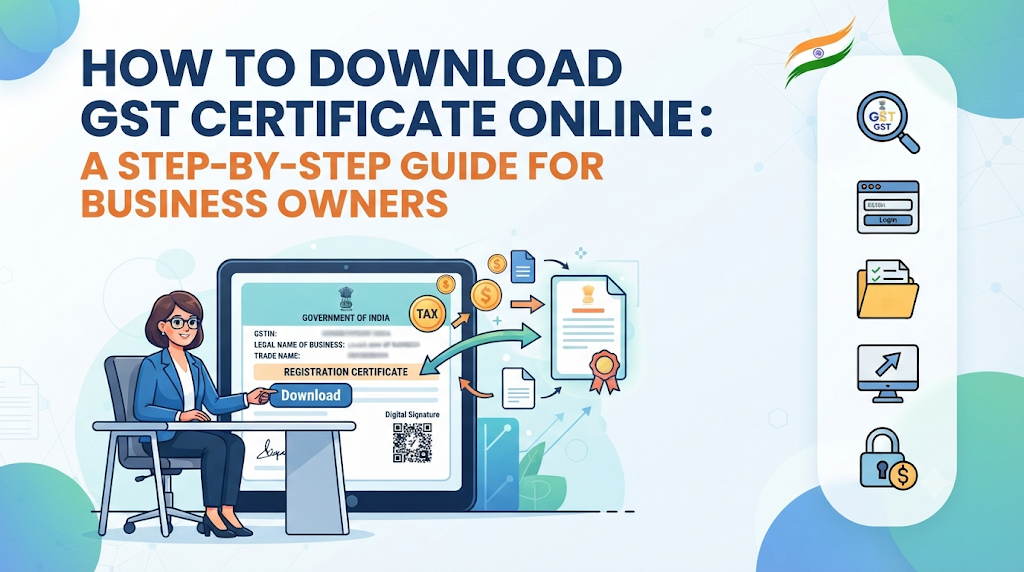
Getting your Goods and Services Tax registration is a major milestone for any business. It makes your operations legal, lets you collect tax from customers, and allows you to claim tax credits on your purchases.
However, once registration is complete, many business owners struggle to find or download their official certificate when banks, vendors, or government offices ask for proof. Paper copies get lost easily, and knowing how to get a digital copy quickly is essential.
This guide will show you how to log into the official portal, navigate the menus, and download your GST certificate without hassle.
What Is a GST Certificate?
A GST certificate is an official document issued by the tax department to businesses registered under the Goods and Services Tax system.
It contains vital details about your business, including your Legal Name, Trade Name, Principal Place of Business, registration date, and your unique 15-digit GSTIN (Goods and Services Tax Identification Number).
Why It Matters
Legal Compliance: You must display your certificate at your main place of business.
Business Verification: Vendors and partners often ask for your certificate to verify your tax status before working with you.
Bank Work: Banks require your GST certificate to open current accounts or process business loans.
Prerequisites Before You Download
Before you log in to download your certificate, make sure you have the following ready:
GSTIN: Your 15-digit Goods and Services Tax Identification Number.
Portal Login Details: Your username and password for the GST portal.
Registered Mobile or Email: Access to the phone or email linked to your account for receiving One-Time Passwords (OTPs).
Step-by-Step Guide to Downloading Your GST Certificate
Follow these simple steps to download your certificate directly from the official portal.
Step 1: Visit the Official GST Portal
Open your web browser and go to the official Indian GST portal (www.gst.gov.in).
Step 2: Log In to Your Account
Click on the Login button at the top right corner of the homepage. Enter your username, password, and the captcha code shown on the screen. Click Login to enter your dashboard.
Step 3: Navigate to User Services
Once you are on your dashboard, look at the top menu bar. Click on the Services tab. A drop-down menu will appear. Hover over User Services and click on View/Download Certificates.
Step 4: Locate Your Registration Certificate
The system will display a list of available certificates related to your account. Look for the document labeled Registration Certificate (FORM GST REG-06).
Step 5: Download the PDF
Click the Download icon or link next to the certificate. The file will download to your computer or phone as a PDF document. Open the file to check that all your business details are correct.
Common Mistakes to Avoid
Using Unofficial Websites: Never enter your login credentials on third-party websites promising quick downloads. Always use the official government portal.
Forgetting to Save a Backup: Do not keep your certificate in a single downloads folder. Save a digital backup in a secure cloud folder and print a physical copy to keep at your office.
Ignoring Typo Errors: Check your certificate immediately after downloading. If you spot a spelling mistake in your business name or address, file an amendment application on the portal right away.
Key Terms
GSTIN: A unique 15-digit code assigned to every business registered under the tax system.
FORM GST REG-06: The official legal form number of the Goods and Services Tax registration certificate.
Portal Dashboard: The main control panel screen you see after logging into your account.
Principal Place of Business: The main headquarters or primary location where your business operates.
Frequently Asked Questions
Is there any fee to download the GST certificate?
No. Downloading your certificate from the official government portal is completely free of charge. Do not pay any third-party service to download it.
Can I download my GST certificate without a password?
No. You must log in with your valid username and password, and complete an OTP verification step to access your dashboard and download the certificate.
What should I do if my certificate is not visible on the portal?
If you cannot find your certificate, check if your application is still pending approval by the tax officer. Once approved, the certificate usually appears within a few hours.
Can I laminate my GST certificate?
Yes. Many business owners laminate their physical copy to protect it from damage and display it prominently at their workplace as required by law.
How many copies of the certificate should I keep?
Keep a digital PDF copy on your secure work computer and print at least one physical copy to display at your primary business location.
Conclusion
Downloading your GST certificate is a quick process once you know the exact steps. By using the official portal, navigating to user services, and saving your PDF securely, you ensure your business stays compliant and ready for any verification check. Keep your login details safe and maintain backups so you never get caught unprepared.
Filing taxes used to mean long queues, paper forms, and dealing with government offices in person. Today, India’s indirect tax system has moved almost entirely online through the Goods and Services Tax network.
For many business owners, however, opening the official tax website can feel intimidating. The screen fills up with terms like ITC (Input Tax Credit), GSTR-3B, and electronic cash ledgers. If you press the wrong button, you might worry about making a filing mistake or facing a penalty.
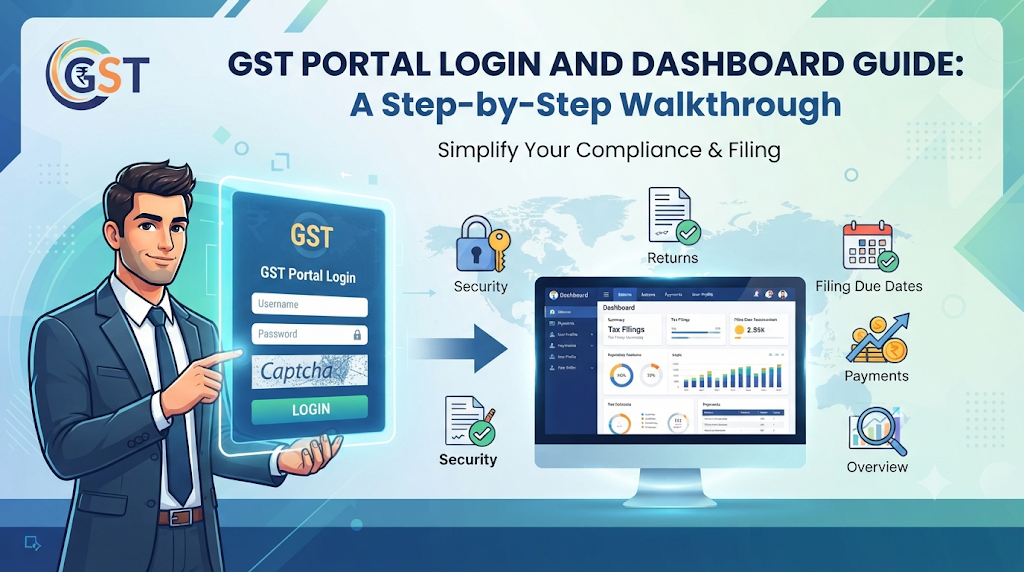
This guide will walk you through the GST portal login process and help you understand your dashboard. You will learn how to sign in securely, find your way around the main screens, and keep your business tax records organized without stress.
What Is the GST Portal?
The GST portal is a secure, shared digital platform managed by the Goods and Services Tax Network (GSTN). It connects taxpayers, banks, and tax departments into a single system.
Think of it as your personal online office for all indirect taxes. Instead of visiting a tax office, you use this portal to register your business, file monthly or quarterly tax returns, pay taxes online, and check your tax ledger balances.
Why It Matters
Before this portal existed, businesses had to deal with different tax rules across different states. The GST portal brings everything under one roof. It makes tax compliance transparent and allows you to track whether your suppliers have paid their taxes properly.
How the GST Portal Works
The portal acts as a bridge between you and the tax department. When you make a sale and collect tax from a customer, you report that sale on the portal. When you buy goods for your business and pay tax to your supplier, you record those purchases on the portal to claim tax credits.
The system calculates what you owe, matches your records with your suppliers’ records, and lets you pay the difference online.
Basic Workflow
Login: You enter your secure credentials.
Dashboard Review: You check your filing status and ledger balances.
Data Entry: You upload your sales and purchase details.
Filing and Payment: You submit your tax returns and pay any tax due through net banking, UPI, or credit cards.
Step-by-Step: How to Complete Your GST Portal Login
Logging into the portal is straightforward once you have your credentials ready. Follow these simple steps:
Step 1: Visit the Official Website
Open your web browser and go to the official URL: www.gst.gov.in.
Practical Tip: Always check the website address bar to ensure you are on the secure official site. Look for the padlock symbol before the web address.
Step 2: Click the Login Button
On the top right corner of the homepage, click the “Login” button.
Step 3: Enter Your Credentials
A login page will appear asking for:
Username: The unique user ID created during your GST registration.
Password: Your secret login password.
Captcha: A set of letters and numbers shown on the screen to prove you are a human. Type these characters exactly as shown.
Step 4: Access Your Dashboard
Click the “Login” button below the form. If your details are correct, the system will open your personalized GST dashboard.
What Happens If You Forget Your Password?
It is common to forget passwords, especially if you only log in once a month to file returns. Here is how to fix it:
On the login page, click the link that says “Forgot Password?”.
Enter your Username and the captcha code.
The system will send an OTP (One-Time Password) to your registered mobile number and email address.
Enter the OTP on the screen.
Create a new, strong password and confirm it. You can now log in using your new credentials.
Understanding Your GST Dashboard
When you log in successfully, the main screen you see is your dashboard. It acts as your control center.
The dashboard is divided into several useful tabs and sections:
1. Services Tab
This is where you will do most of your work. It includes sub-menus for:
Registration: To apply for amendments or add new business places.
Returns: To view, track, and file your tax returns (like GSTR-1 and GSTR-3B).
Payments: To create challans and pay tax dues.
User Services: To view notices, orders, and apply for refunds.
2. Returns Dashboard
This section shows your filing status for different financial periods. It uses color codes or status markers to show whether a return is filed, delayed, or pending.
3. Electronic Ledgers
The portal maintains three main digital ledgers for your money:
Electronic Cash Ledger: Shows cash deposits you have made that are waiting to be used for tax payments.
Electronic Credit Ledger: Shows the Input Tax Credit (ITC) you have accumulated from your business purchases.
Electronic Liability Register: Shows your total tax, interest, and penalty dues for the current period.
Practical Examples: Navigating Daily Use
Let us look at how a small business owner uses the dashboard in real life.
Example: Filing a Monthly Return
Rohan runs a small electronics shop. Every month, he logs into the GST portal to file his return.
He clicks on Services, then Returns, and selects Returns Dashboard.
He chooses the current financial year and filing period (for example, last month).
He opens the relevant return form (such as GSTR-3B for summary tax payment).
He reviews the auto-populated numbers, checks his tax liability, and uses the Electronic Cash Ledger to pay any remaining tax balance via net banking.
Finally, he clicks File with DSC (Digital Signature Certificate) or File with EVC (Electronic Verification Code via mobile OTP) to complete the process.
Common Mistakes to Avoid
Even experienced users make mistakes on the portal. Here are some common pitfalls and how to avoid them:
Waiting Until the Last Day:
Why people do it: Procrastination or waiting for final client payments.
Why it causes problems: Millions of taxpayers try to log in on the due date, which can slow down the portal or cause server timeouts.
What to do instead: File your returns at least two to three days before the official due deadline.
Ignoring Auto-Populated Data:
Why people do it: Assuming the computer system is always 100% correct without checking.
Why it causes problems: If your suppliers missed filing their invoices, your tax credit claims might not match, leading to official notices later.
What to do instead: Always cross-verify your portal data with your internal accounting books before final submission.
Using Unsecured Networks:
Why people do it: Logging in from public Wi-Fi networks at cafes or airports.
Why it causes problems: Exposes your business tax credentials to potential data theft.
What to do instead: Always use a secure, private internet connection when accessing tax portals.
Risks and Limitations
While the GST portal has made tax filing paperless, it comes with certain operational realities:
Risk
Why It Matters
How to Reduce It
Server Slowdowns
The portal can slow down significantly on filing due dates, preventing timely submissions.
Complete your invoice matching and data entry early in the month.
Technical Glitches
Occasional browser compatibility issues or OTP delivery delays can stall your work.
Clear your browser cache, keep backup phone numbers active, and try standard browsers like Chrome or Edge.
Session Timeouts
For security, the portal logs you out automatically after a period of inactivity, which can erase unsaved draft work.
Save your work frequently while filling out online tax forms.
Checklist Before You Log Out
Before you close your browser after a GST portal session, run through this quick checklist:
Did you save or submit all your draft data properly?
Did you download and save copies of your filed return acknowledgments (PDF)?
Did you verify that your electronic cash or credit ledger balances updated correctly?
Did you log out safely using the “Logout” button instead of just closing the browser window?
Key Terms
GSTN: Goods and Services Tax Network; the private company that manages the technical infrastructure of the portal.
Challan: A payment receipt form generated on the portal used to deposit tax money into the government account.
ITC (Input Tax Credit): The tax you paid on business purchases that you can subtract from the tax you collected on sales.
EVC (Electronic Verification Code): An OTP sent to your registered mobile number used to sign and submit tax documents securely.
DSC (Digital Signature Certificate): A secure USB token device used by companies and larger businesses to legally sign tax returns.
GSTR-3B: A monthly summary return where taxpayers declare their summary sales, purchases, and tax payments.
GSTR-1: A detailed return where businesses report all outward supplies (sales) made during the period.
FAQs
1. Is the GST portal login free to use?
Yes, accessing the portal and filing your returns online is completely free. However, if you hire a professional tax accountant or use third-party accounting software to connect with the portal, they may charge service fees.
2. Can I use the GST portal on my mobile phone?
While you can open the website on a mobile browser, it is much easier to navigate, check tables, and file returns using a desktop computer or laptop due to the large amount of data involved.
3. What should I do if I enter the wrong password too many times?
If you enter incorrect passwords repeatedly, the portal will temporarily lock your account for security reasons. You can either wait for the lockout period to end (usually 30 minutes) or use the “Forgot Password” link to reset it immediately.
4. Why am I not receiving my login OTP?
OTP delays can happen due to poor mobile network coverage or heavy traffic on the telecom gateway. Wait a couple of minutes and click the “Resend OTP” button. Ensure your registered mobile number is active.
5. Do I need a Digital Signature to log in?
No, a Digital Signature Certificate (DSC) is not required just to log in and view your dashboard. However, certain entities, such as companies and Limited Liability Partnerships (LLPs), must use a DSC or an EVC to finally submit and sign their tax returns.
6. Can I have multiple users logging into the same GST account?
Yes, you can create additional user profiles (like accountants or managers) by assigning specific roles through the portal’s user management settings, keeping your primary login credentials secure.
Conclusion
Mastering the GST portal login and dashboard is a vital skill for anyone running a business or managing accounts. While the screens may look complex at first glance, breaking them down into simple sections—like the returns dashboard and electronic ledgers—makes navigation much easier.
By logging in early, checking your supplier data carefully, and following safe digital habits, you can handle your tax compliance smoothly and keep your business safe from avoidable penalties.
Modern digital systems generate massive streams of operational data every second. Applications run across cloud servers, microservices communicate constantly, and user traffic fluctuates dynamically. For system administrators and engineers, keeping track of this vast ecosystem using traditional dashboards can feel like finding a needle in a haystack.
When thousands of alerts fire at once, teams often struggle to find the root cause of an outage before users notice. This operational challenge is where Artificial Intelligence for IT Operations comes into play. Platforms like TheAIOps.com help organizations and technical professionals explore how automation, machine learning, and advanced analytics transform traditional IT management into proactive, intelligent operations.
What Is TheAIOps.com?
TheAIOps.com is a specialized knowledge, learning, and consulting hub focused entirely on modern IT operations driven by artificial intelligence. Rather than treating monitoring as a reactive chore, the platform explores how intelligent systems can collect, analyze, and act on operational data automatically.
The platform connects several key technical areas:
Structured learning resources and study paths for professionals.
Guidance on selecting and integrating modern operational tools.
Strategic insights for organizations planning operational transformation.
Deep dives into observability, event correlation, and automated remediation.
By bringing these disciplines together, TheAIOps.com serves as an educational bridge between traditional system administration and next-generation autonomous operations.
Understanding Artificial Intelligence for IT Operations
At its core, Artificial Intelligence for IT Operations combines big data with machine learning algorithms to automate and streamline IT management tasks.
Traditional monitoring relies on static thresholds. If CPU usage crosses 90 percent, an alert triggers. However, modern workloads fluctuate naturally, leading to false alarms or missed issues hidden deep within complex log files.
Intelligent IT operations platforms solve this by establishing baselines of normal behavior. Instead of waiting for a hard threshold break, the system learns what normal looks like across logs, metrics, and traces. When an unusual pattern appears, the platform flags it immediately, helping engineers catch performance dips before they cause downtime.
Exploring Structured Learning and Certification
As organizations adopt intelligent monitoring platforms, the demand for skilled professionals continues to grow. Structured educational pathways help engineers build competence step by step.
AIOps Training
Effective training programs move beyond basic theory to cover real-world operational scenarios. Learners explore core concepts such as intelligent monitoring, anomaly detection, event correlation, root-cause analysis, and automated remediation. The goal is to help technical staff understand how to interpret machine-driven insights rather than just staring at dashboards.
AIOps Certification
For professionals looking to validate their knowledge, certification programs offer a structured way to demonstrate competence in modern IT management. While hands-on practice remains essential, structured exams help organize complex topics into measurable milestones. Certification highlights a professional’s familiarity with modern operational tools, data pipelines, and automation frameworks.
AIOps Course Content
A comprehensive course typically follows a logical progression, starting with basic IT operations and moving toward advanced automation:
Fundamentals of IT monitoring and log management.
Basics of machine learning in operational data analysis.
Techniques for detecting anomalies and reducing alert noise.
Strategies for event correlation and root-cause discovery.
Adopting intelligent operations requires the right mix of technology and planning. Understanding the difference between individual utilities and a unified platform is essential for success.
AIOps Tools
Engineers use various tool categories to maintain visibility over infrastructure. Log management tools collect text logs, monitoring tools track resource metrics, and tracing tools follow requests across distributed microservices. Each tool serves a specific purpose, but managing them separately can create data silos.
AIOps Platform
An AIOps platform acts as a central nervous system for operational data. It ingests logs, metrics, and traces, processes the information through machine learning models, and correlates related events. By grouping hundreds of related alerts into a single incident ticket, the platform cuts through noise and points engineers directly toward the underlying problem.
AIOps Implementation
Implementing intelligent operations is an engineering journey rather than an overnight software installation. A successful rollout typically involves:
Assessing the existing monitoring environment and data quality.
Identifying high-impact use cases, such as reducing alert fatigue.
Connecting relevant data sources and testing machine learning models.
Setting up controlled automation with human approval steps.
Measuring results and refining rules over time.
Consulting, Services, and Professional Skills
Many organizations partner with external experts to accelerate their adoption journey. Advisory services help bridge the gap between legacy infrastructure and modern automated workflows.
AIOps Consulting and Services
Consulting engagements typically focus on environment assessments, tool evaluations, and architecture planning. Services may include designing custom data pipelines, setting up observability dashboards, and creating reliable automation scripts. These services ensure that organizations invest in solutions that match their specific operational maturity.
The Role of an AIOps Engineer
An AIOps Engineer bridges the gap between software development, data science, and system administration. Essential skills include a strong foundation in Linux and cloud infrastructure, familiarity with observability tools, scripting capabilities in Python or Go, and a basic understanding of machine learning models. These professionals design the pipelines that turn raw operational data into actionable insights.
Core Technical Concepts in Modern Operations
To understand how intelligent systems operate under the hood, it helps to examine the underlying mechanics of data collection and analysis.
Monitoring vs. Observability
Monitoring tells you whether a system is working or broken by checking predefined metrics.
Observability allows you to understand why a system is behaving a certain way by examining its internal outputs, including logs, metrics, and traces.
Anomaly Detection and Event Correlation
Anomaly detection algorithms watch system behavior continuously. If a database latency metric deviates from its historical pattern on a Tuesday afternoon, the system flags it.
Event correlation takes this a step further. During a major outage, a single server failure can trigger thousands of downstream alerts. Event correlation engines group these symptoms together, identifying that a single network switch failure caused all subsequent warnings.
Predictive Analytics and Automated Remediation
Predictive models analyze historical capacity trends to forecast disk space exhaustion or memory leaks before they cause crashes. Once an issue is understood, automated remediation scripts can restart services, clear caches, or scale up cloud resources without requiring manual intervention.
Common Challenges and Mistakes
While intelligent operations offer powerful benefits, teams often encounter common pitfalls during adoption:
Starting with tools instead of problems: Buying expensive software without defining clear operational goals.
Ignoring data quality: Feeding incomplete or messy logs into machine learning models, leading to inaccurate insights.
Over-automation: Automating responses before fully trusting the system, which can sometimes make outages worse.
Neglecting human review: Removing human oversight entirely instead of maintaining a collaborative human-in-the-loop model.
Conclusion
The shift toward intelligent IT operations represents a natural evolution in how organizations manage complex digital infrastructure. By combining operational data, observability tools, and machine learning analytics, teams can move away from reactive firefighting. Platforms like TheAIOps.com provide the educational foundation and professional guidance needed to navigate this transition successfully, helping engineers build resilient, efficient, and modern IT environments.
Frequently Asked Questions
1. What is the primary purpose of TheAIOps.com?
TheAIOps.com serves as a specialized knowledge and learning platform dedicated to exploring how artificial intelligence, machine learning, and automation transform modern IT operations.
2. How does AIOps differ from traditional IT monitoring?
Traditional monitoring relies on static thresholds to trigger alerts, whereas AIOps uses machine learning to establish dynamic baselines, detect subtle anomalies, and correlate related events automatically.
3. What subjects are typically covered in AIOps training programs?
Training programs generally cover operational fundamentals, intelligent monitoring, log analysis, anomaly detection, event correlation, root-cause analysis, and automated remediation workflows.
4. Do I need a strong background in data science to learn AIOps?
No. While a basic understanding of machine learning concepts is helpful, AIOps primarily builds upon standard IT administration, cloud infrastructure, and systems engineering knowledge.
5. What role does an AIOps platform play in an enterprise?
An AIOps platform ingests operational data from multiple monitoring tools, reduces alert noise, correlates related events, and helps engineers pinpoint root causes quickly.
6. What is the difference between monitoring and observability?
Monitoring tells you when a system fails, while observability provides the detailed telemetry—logs, metrics, and traces—needed to understand the internal state and root cause of the failure.
7. Why is data quality important for intelligent IT operations?
Machine learning models rely on accurate historical data. Inconsistent, noisy, or missing log data can lead to false positives and unreliable anomaly detection.
8. What skills are most important for an AIOps Engineer?
Key skills include a solid grasp of cloud architecture, system troubleshooting, observability tools, scripting languages, and familiarity with data pipeline management.
9. What should organizations consider before implementing AIOps?
Organizations should assess their current monitoring maturity, define specific operational bottlenecks, clean up their data sources, and establish clear goals for automation.
10. Can automation completely replace human operators in IT management?
No. Automated remediation handles repetitive tasks and fast responses, but human oversight remains essential for complex troubleshooting, strategic planning, and approval workflows.
Modern digital applications must run continuously. When an online shopping platform, banking app, or streaming service crashes, millions of users experience frustration, and businesses lose revenue instantly. Traditional IT teams often struggle to keep large, complex systems running smoothly because they rely on manual troubleshooting and reactive fixes.
To solve this challenge, organizations turn to Site Reliability Engineering. SRE bridges the gap between software developers who write code and operations teams who keep systems running. However, learning these skills requires structured guidance. Understanding the right SRE training paths, certifications, tools, and best practices helps professionals build reliable infrastructure without burning out engineering teams.
What Is Site Reliability Engineering?
Site Reliability Engineering is a discipline that applies software engineering principles to infrastructure and operations problems. Instead of treating system administration as a manual, repetitive chore, SRE teams write code and build automation software to manage systems, prevent failures, and scale applications efficiently.
An SRE team focuses on making systems dependable. When a system is reliable, users can access it whenever they need it, and it performs consistently even under heavy traffic.
Why Does It Matter?
As applications grow larger and move to cloud environments, manual management becomes impossible. A single engineer cannot monitor thousands of servers by hand. SRE matters because it introduces repeatable, automated processes that catch problems before they impact users, reducing downtime and protecting business value.
How SRE Works
Site Reliability Engineering works by treating operations as a software problem. If a manual task must be repeated more than once, an SRE engineer writes a program or script to automate it. This philosophy saves time and reduces human error.
SRE practices rely heavily on measurement. Engineers define clear targets for how dependable a system should be and use monitoring software to track real-time performance. When things break, teams run blameless post-mortem reviews to find the root cause of a failure and fix the underlying system rather than blaming individuals.
Why SRE Training Matters
Mastering reliability engineering requires more than just basic coding or system administration skills. Structured SRE training provides a clear roadmap through complex topics like distributed systems, cloud infrastructure, and automated monitoring.
Through comprehensive Site Reliability Engineering training, professionals learn how to design architectures that can withstand hardware failures, network partitions, and sudden spikes in user traffic. Structured learning paths help engineers transition from basic troubleshooting to advanced reliability architecture.
Important Concepts in SRE Education
A solid SRE course covers foundational concepts that govern how modern production systems operate.
Service-Level Indicators (SLIs): Quantitative measures of service performance, such as request latency or error rates.
Service-Level Objectives (SLOs): Target reliability goals agreed upon by the engineering and product teams for a specific SLI.
Service-Level Agreements (SLAs): Business contracts with customers that specify penalties if reliability targets fall below an agreed threshold.
Error Budgets: The allowance for how much unreliability or downtime a service can experience over a specific period before users feel the impact.
Toil: Manual, repetitive, operational work that lacks enduring value and can be automated away.
Detailed Explanation of Core SRE Pillars
To understand how SRE functions day-to-day, it helps to examine its primary operational pillars.
Observability and Monitoring
You cannot fix what you cannot see. Observability goes beyond simple monitoring by helping engineers understand the internal state of a system based on its external outputs: logs, metrics, and traces. Good observability allows teams to diagnose unfamiliar problems quickly.
Incident Management
When production systems fail, structured response is critical. SRE frameworks establish clear escalation paths, on-call rotations, and incident command structures to restore service rapidly and minimize customer disruption.
Capacity Planning
Predicting future resource needs prevents unexpected outages. SRE engineers analyze historical traffic trends, growth projections, and load test results to ensure the infrastructure can handle upcoming demand.
Practical Examples
Consider a popular food delivery application experiencing a sudden surge in orders during a festival evening.
Without SRE practices, the database might lock up under heavy traffic, crashing the application. Engineers would rush to restart servers manually, leading to prolonged downtime and lost orders.
With proper SRE implementation, automated scaling groups add computing resources dynamically as traffic rises. Circuit breakers protect the database from being overwhelmed by failing gracefully. Furthermore, error budgets dictate whether developers can release new software features or pause deployments to focus entirely on system stability.
Real-World Considerations
Implementing SRE in an organization involves cultural shifts as well as technical changes. Management must support spending engineering time on automation and system design rather than rushing features out the door with technical debt.
Additionally, training staff takes time. Organizations must balance operational duties with continuous learning so engineers can absorb modern tooling without feeling overwhelmed.
Common Mistakes
Beginners and transitioning teams often make predictable errors when adopting SRE practices.
Mistake: Treating SRE as just a renamed system administration role.
Why it happens: Organizations change job titles without changing daily responsibilities or workflows.
Why it causes problems: Engineers remain trapped doing manual, repetitive toil instead of writing automation software.
What to do instead: Empower engineers to spend at least half their time on software development, automation, and reliability engineering projects.
Mistake: Setting unrealistic reliability targets like 100% uptime.
Why it happens: Stakeholders want perfection without understanding the massive financial and engineering cost required.
Why it causes problems: Teams burn out trying to achieve the impossible, slowing down product innovation.
What to do instead: Agree on realistic SLOs based on user needs and business revenue impact.
Mistake: Ignoring blameless post-mortems.
Why it happens: Teams view outages as personal failures and look for someone to blame.
Why it causes problems: People hide mistakes, preventing the team from fixing the systemic flaws that caused the outage.
What to do instead: Focus review discussions strictly on technical failures and process gaps, not human error.
Risks and Limitations
While SRE drastically improves uptime, it is not a universal fix for poorly written application code. If software contains fundamental design flaws, no amount of infrastructure reliability engineering can prevent application crashes.
Additionally, heavy reliance on complex automation tools can introduce new failure modes if the automation scripts themselves contain bugs. Teams must test their automation code just as rigorously as product code.
SRE Tools and Methods
Reliable engineering depends on a robust ecosystem of specialized software tools.
Prometheus & Grafana: Used for collecting time-series metrics and building visual dashboards to monitor system health.
Kubernetes: An orchestration platform that automates the deployment, scaling, and management of containerized applications.
Terraform: An infrastructure-as-code tool that allows engineers to provision cloud resources safely and repeatably.
PagerDuty / Opsgenie: Incident management tools that coordinate on-call schedules and alert engineers when production anomalies occur.
Comparison / Decision Framework: Traditional Operations vs. Site Reliability Engineering
Feature
Traditional IT Operations
Site Reliability Engineering
Approach to Work
Manual firefighting and reactive fixes.
Proactive engineering and automation.
Handling Repetition
Repetitive manual tasks performed repeatedly.
Software automation written to eliminate toil.
Metric Focus
Server uptime and infrastructure availability.
User experience, error budgets, and SLO compliance.
Deployment Style
Infrequent, high-risk manual releases.
Frequent, automated, small-batch releases.
Failure Response
Assigning blame to individuals during post-mortems.
Conducting blameless post-mortems to fix systemic issues.
Checklist for SRE Implementation
Use this checklist to verify that your organization is ready to adopt practical site reliability practices:
Define user-facing services and identify critical user journeys.
Establish measurable SLIs and realistic SLOs with stakeholders.
Calculate initial error budgets and set policies for budget exhaustion.
Implement centralized logging, metrics, and distributed tracing.
Set up an on-call rotation with clear escalation paths and alert thresholds.
Automate repetitive infrastructure provisioning using infrastructure-as-code tools.
Establish a blameless post-mortem review process for all major incidents.
Key Terms
Automation: Using software scripts or programs to execute tasks without manual human intervention.
Blameless Post-Mortem: An analysis meeting held after an incident that focuses on technical and process improvements rather than blaming individuals.
Capacity Planning: The process of predicting future resource and infrastructure requirements based on growth trends.
CI/CD: Continuous Integration and Continuous Deployment, a method for frequently delivering apps to customers through automated building and testing.
Containerization: Packaging software code and its dependencies together so it can run reliably across different computing environments.
Error Budget: The amount of downtime a service can accumulate before triggering a freeze on new feature releases.
Infrastructure as Code (IaC): Managing and provisioning computing infrastructure through machine-readable definition files rather than physical hardware configuration.
Latency: The time delay between a user action and the corresponding system response.
Observability: The ability to measure the internal state of a system by examining its outputs.
Redundancy: Duplication of critical components or functions of a system to increase reliability.
Service-Level Agreement (SLA): A formal business contract defining guaranteed service availability and penalties for failure.
Service-Level Indicator (SLI): A metric measuring service performance over time.
Service-Level Objective (SLO): A specific reliability target set for a particular service metric.
Toil: Manual, repetitive operational work that does not add long-term value.
FAQs
What is the difference between DevOps and SRE?
DevOps is a cultural philosophy that encourages collaboration between development and operations teams to speed up software delivery. SRE is a specific implementation of that philosophy, treating operations as a software engineering problem with a heavy focus on uptime, reliability, and automation.
Do I need a computer science degree to become an SRE engineer?
No. While a background in computer science, software engineering, or information technology helps, many successful site reliability engineers transition from system administration, cloud engineering, or software development roles by completing focused training and earning industry certifications.
What programming languages should an SRE learn?
Python, Go, and Bash scripting are the most widely used languages in reliability engineering because they are ideal for writing automation scripts, monitoring tools, and cloud infrastructure interactions.
How do error budgets protect product development?
Error budgets balance reliability with speed. If a system meets its reliability goals, developers have the freedom to release new features quickly. If the error budget is exhausted due to outages, feature releases pause until reliability is restored.
Is SRE training beneficial for cloud administrators?
Yes. Cloud administrators benefit significantly from SRE courses because modern cloud environments require automated scaling, robust monitoring, and proactive incident management to maintain high availability.
How long does it take to complete an SRE certification program?
Completion time varies depending on prior experience and course depth, but most structured professional learning programs take between a few weeks to several months of dedicated study.
Conclusion
Building dependable digital systems requires moving past reactive firefighting and adopting structured engineering practices. Site reliability engineering transforms how organizations handle production environments by pairing software automation with clear measurement. Whether you are an individual engineer preparing for certification or an organization scaling cloud infrastructure, investing in practical SRE training builds resilient systems and resilient engineering teams.
Managing taxes can feel like putting together a giant puzzle where half the pieces are missing. For business owners and accountants, one of the most important parts of this puzzle is claiming Input Tax Credit (ITC).
Put simply, ITC lets you reduce the tax you pay on your sales by the tax you already paid on your business purchases. But there is a catch. You cannot just claim any amount you like. The government provides an auto-generated statement called GSTR-2B, which shows all the tax credits available to you based on what your suppliers have reported.
Many beginners find this matching process confusing. They wonder what to do when numbers do not match, or why a supplier’s delay can block their own tax savings. If you do not match your data correctly, you might end up paying heavy penalties or losing valuable money.
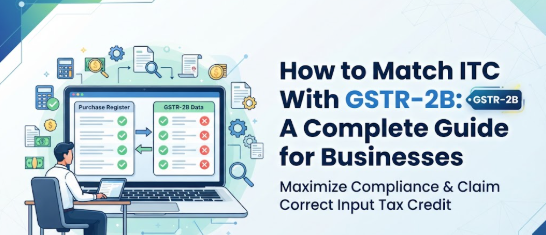
This guide will explain how to match your ITC with GSTR-2B in very simple terms, why it matters, and how you can avoid common mistakes.
What Is GSTR-2B?
To understand the matching process, you first need to understand what GSTR-2B is.
GSTR-2B is an auto-generated, static tax statement available on the Goods and Services Tax (GST) portal in India. It acts like a digital monthly passbook for your business purchases.
When your suppliers file their sales returns (using GSTR-1 or invoice furnishing facility), the GST system automatically captures those details and puts them into your GSTR-2B statement.
Why It Matters
Before GSTR-2B came along, businesses could claim ITC based entirely on their own purchase invoices. This led to a lot of fake claims and mismatches. GSTR-2B acts as a single source of truth. It tells you exactly which invoices your suppliers have successfully registered with the government.
Example
Imagine you buy raw materials worth 10,000 rupees plus 1,800 rupees in GST from a supplier named ABC Enterprises. ABC Enterprises must file their monthly return and show that they collected 1,800 rupees from you. Once they do that, that specific 1,800 rupees will show up in your GSTR-2B statement.
What Is ITC Matching?
ITC matching is the act of comparing two sets of data:
Your Purchase Register: The list of all purchase invoices recorded in your own accounting software.
GSTR-2B: The list of purchase invoices generated by the government portal based on your suppliers’ filings.
When you match these two, you are checking if the taxes you think you paid are actually recorded in the government system by your suppliers.
Why Does It Matter?
Current tax laws state that you can only claim ITC if it appears in your GSTR-2B. If an invoice is missing from GSTR-2B, claiming that ITC can trigger automated tax notices, interest charges, and penalties. Matching helps you catch these gaps early so you can talk to your suppliers and get them to fix their filings.
How the ITC Matching Process Works
The matching process follows a clear workflow every month. Here is how businesses typically handle it:
Download Data: Export your purchase register from your accounting software (like Tally, Zoho, or Excel) for the specific month. Download the official GSTR-2B JSON or Excel file from the GST portal.
Compare Invoices: Check each invoice number, supplier GSTIN (Goods and Services Tax Identification Number), taxable value, and tax amount (CGST, SGST, IGST) against both files.
Classify Results: Group your invoices into three categories:
Matched: Everything is identical in your books and GSTR-2B. You can safely claim this ITC.
Mismatched: The invoice exists in both places, but the numbers (like tax amounts or invoice numbers) are different due to typing errors.
Pending / Missing: The invoice is in your books, but it does not appear in GSTR-2B because your supplier has not filed their return yet.
Take Action: Contact suppliers to fix mismatches or missing filings, and finalize your monthly tax return (GSTR-3B).
Important Factors to Understand
When matching your data, keep these key technical factors in mind:
Timing Differences: Suppliers have deadlines to file their returns. If a supplier files late, the invoice will appear in a later month’s GSTR-2B, not the month you made the purchase.
Reverse Charge Mechanism (RCM): For certain services, you have to pay the tax directly to the government instead of the supplier. These transactions need special handling during matching.
Eligible vs. Ineligible ITC: Not all purchases qualify for tax credits. For example, buying food for office parties or personal vehicles usually does not qualify, even if it shows up in GSTR-2B. You must filter these out.
Practical Example
Let us look at a simple scenario involving a small business owner named Rahul who runs a retail shop.
The Purchase: Rahul buys inventory worth 50,000 rupees plus 9,000 rupees in GST from a wholesaler. Rahul records this in his accounting software on June 10.
The Problem: When Rahul checks his GSTR-2B at the end of June, the invoice is missing because the wholesaler forgot to file their GSTR-1 on time.
The Action: Rahul calls the wholesaler. The wholesaler realizes the mistake and files the return on July 5.
The Result: The invoice appears in Rahul’s July GSTR-2B statement. Rahul safely claims his 9,000 rupees ITC in his July tax filing instead of June, avoiding an official mismatch notice from the tax department.
Common Mistakes
Many businesses lose money or face tax audits because of recurring errors during ITC matching.
1. Manually Matching Large Data Volumes
What people do: Accountants try to match hundreds of lines of invoices manually using their eyes.
Why it causes problems: Human eyes miss tiny typing errors, such as a flipped digit in an invoice number or a small mismatch in decimal points.
What they should do instead: Use automated reconciliation tools or built-in features in modern accounting software to match data instantly.
2. Claiming ITC on Missing Invoices
What people do: Claiming tax credits for invoices that are not visible in GSTR-2B just because the physical bill is on the desk.
Why it causes problems: The tax portal flags this discrepancy automatically, leading to official mismatch notices and interest penalties.
What they should do instead: Wait for the supplier to upload the invoice or follow up aggressively before filing the monthly return.
3. Ignoring Small Amount Differences
What people do: Assuming a difference of a few rupees on tax calculations does not matter.
Why it causes problems: Automated tax scrutiny systems check every single rupee. Even small discrepancies can accumulate into large audit flags over a financial year.
What they should do instead: Reconcile every single paisa or adjust your books according to accepted accounting rules.
Risks and Limitations
While matching is essential, it comes with operational challenges and risks that you should manage carefully.
Supplier Dependency: Your ability to claim ITC depends entirely on whether your suppliers do their work on time. If a supplier goes out of business or delays filing, your cash flow gets stuck.
System Downtime: The official GST portal can sometimes run slowly or experience downtime during peak filing dates, making it hard to download statements at the last minute.
Data Formatting Issues: Exporting purchase registers in different formats (Excel vs. CSV) can sometimes distort invoice numbers or dates, creating false mismatches during software reconciliation.
Decision-Making Framework
Use this simple step-by-step framework every month before filing your taxes:
Step 1: Gather Files: Download your GSTR-2B and export your internal purchase register on the same day.
Step 2: Run Auto-Reconciliation: Upload both files into an automated matching tool or software to separate matched items from discrepancies.
Step 3: Review Exceptions: Focus only on the mismatched and missing invoices.
Step 4: Contact Vendors: Send a quick list of missing or mismatched invoices to your suppliers immediately. Give them a strict deadline.
Step 5: Decide on Claiming: Drop the ITC claim for missing invoices this month. Carry them forward to the next month once the supplier updates their filing.
Step 6: File Safely: File your GSTR-3B return based strictly on the verified, matched figures.
Key Terms
ITC (Input Tax Credit): The tax you pay on business purchases that you can use to reduce your final tax liability on sales.
GSTR-2B: An auto-generated, static monthly statement showing all eligible input tax credits available to a taxpayer.
GSTIN: A unique 15-digit identification number assigned to every registered taxpayer under the GST system.
Reconciliation: The process of comparing two different sets of records to check that figures agree with each other.
Reverse Charge Mechanism (RCM): A rule where the buyer of goods or services pays the tax directly to the government instead of the seller.
GSTR-3B: A monthly summary return where businesses declare their sales, purchases, and final tax payments.
Invoice Number: A unique serial number given by a seller to identify a specific sales bill.
Taxable Value: The value of goods or services before adding GST.
FAQs
What happens if an invoice is missing from my GSTR-2B?
If an invoice is missing from your GSTR-2B, you should not claim the ITC for that invoice in your current monthly return. Contact your supplier immediately and ask them to file their return correctly so the invoice appears in the next month’s statement.
Can I claim ITC on provisional bases like before?
Under current tax rules, the old provision allowing provisional ITC claims (such as claiming an extra percentage over GSTR-2B) has been removed. You can only claim ITC that is explicitly reflected in your GSTR-2B statement.
Who is responsible if my supplier does not file their return?
Legally, the responsibility to ensure that taxes are paid and filings are completed rests with the registered buyer claiming the credit. While you can pressure or change your supplier, the tax department will recover disallowed ITC and interest from you.
How often should I match my ITC with GSTR-2B?
You should perform this matching process every single month before filing your GSTR-3B return. Doing it monthly prevents a massive backlog at the end of the financial year.
What causes tax amount mismatches during matching?
Mismatches usually happen due to rounding off differences, typing errors in tax rates (such as typing 5% instead of 18%), or suppliers reporting incorrect invoice numbers in their returns.
Does GSTR-2B change after it is generated?
No. GSTR-2B is a static statement. Once it is generated for a month, it does not change. Any new invoices uploaded by suppliers later will appear in the GSTR-2B statement of the subsequent month.
Conclusion
Matching your Input Tax Credit with GSTR-2B is not just a boring paperwork task—it is a vital financial shield for your business. By comparing your purchase records with government data every month, you protect your working capital, prevent unexpected tax penalties, and maintain clean accounts.
Set up a reliable monthly routine, communicate proactively with your suppliers, and use automated tools to handle the heavy lifting. Staying disciplined with your matching process ensures your business remains compliant and financially healthy.
Managing taxes in a growing business can feel like piecing together a massive puzzle. Every month, you buy raw materials, pay bills, and purchase software or office supplies. On almost all these purchases, you pay a Goods and Services Tax (GST).
The good news is that the government allows you to get that tax money back as a credit, known as Input Tax Credit. But there is a catch. You cannot just claim this credit blindly.
Tax authorities require you to prove that the supplier you paid has actually collected that tax and deposited it with the government. This is where a vital monthly routine called GSTR-2B reconciliation comes into play. If you skip it, you risk losing your tax credits, paying penalties, or facing notices from the tax department.
What Is GSTR-2B?
To understand reconciliation, you first need to understand the documents involved.
GSTR-2B is an auto-generated, static tax statement provided by the official GST portal. Think of it as your monthly financial report card prepared by the government based on what your suppliers reported to the authorities.
When your suppliers file their outward sales returns (called GSTR-1 or GSTR-3B), the GST system automatically pulls that data and puts it into your GSTR-2B statement. It shows all the eligible and ineligible tax credits available to your business for a specific month. Because it is a static statement, the data does not change once it is generated, giving you a fixed target to check against.
What Is GSTR-2B Reconciliation?
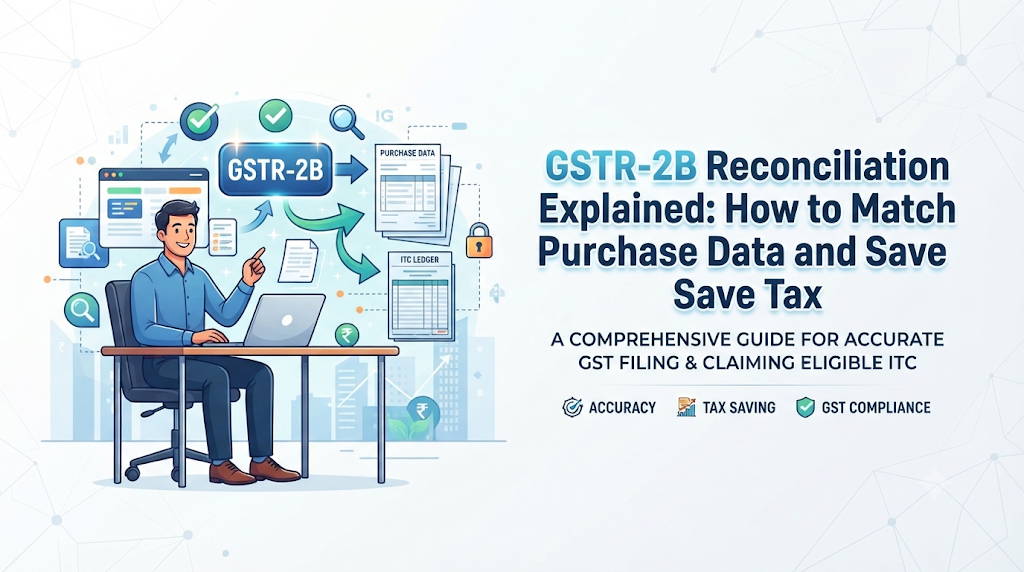
GSTR-2B reconciliation is simply the act of comparing two sets of records:
Your Purchase Register: The internal records or accounting software data (like Tally, Zoho, or Excel) where your team records all bills and invoices received from suppliers.
The GSTR-2B Statement: The official tax document downloaded from the GST portal showing what your suppliers uploaded.
When you match these two lists side by side, you are doing a reconciliation. You want to see if everything in your purchase register appears correctly in the government portal, and vice versa.
Why Does GSTR-2B Reconciliation Matter?
Tax laws link your ability to claim tax credits directly to your suppliers’ actions. If a supplier fails to file their return, your tax credit for that transaction can be blocked.
Here is why regular reconciliation is crucial for your business:
Protects Your Working Capital: Input Tax Credit reduces your cash outflow. If you cannot claim it because of a mismatch, you end up paying cash tax from your pocket.
Avoids Government Notices: Tax departments use automated systems to cross-verify claims. Large mismatches instantly trigger automated warning notices and scrutiny.
Catches Supplier Mistakes Early: Suppliers often make typo errors in your GSTIN (Goods and Services Tax Identification Number), invoice numbers, or tax amounts. Reconciliation helps you catch these errors so you can ask the supplier to fix them.
Ensures Compliance: Staying regular with this process keeps your business audit-ready and protects your compliance rating.
How the GSTR-2B Matching Process Works
The reconciliation process generally falls into three clear matching categories:
Match Category
What It Means
Action Needed
Exact Match
Invoice number, supplier GSTIN, tax amount, and taxable value match perfectly in both records.
Safe to claim Input Tax Credit immediately.
Partial Match
Minor differences exist, such as a slight typo in the invoice date, an extra digit in the invoice number, or a minor rounding difference in the tax amount.
Investigate the difference, correct your internal books if needed, or ask the vendor to amend their filing.
Missing in GSTR-2B
The invoice is in your purchase register, but it does not appear in your GSTR-2B statement at all.
Do not claim ITC yet. Contact the supplier and remind them to file their return correctly.
Real-World Example
Imagine you run a small manufacturing business. In May, you buy raw materials worth ₹1,00,000 from a metal supplier, paying an 18% GST of ₹18,000.
Your Books: Your accountant enters the purchase and the ₹18,000 tax credit into your accounting software.
The Reality: At the end of the month, you check your GSTR-2B statement.
The Problem: The statement only shows ₹9,000 of tax credit because the supplier forgot to report half of your invoices in their monthly return, or they typed your GSTIN incorrectly.
Because of reconciliation, you catch this gap immediately. You call the supplier and ask them to amend their filing in the next cycle. Meanwhile, you hold off on claiming the missing ₹9,000 credit, saving your business from a future penalty notice.
Common Mistakes Businesses Make
Even experienced business owners and accountants can fall into traps during the GST matching cycle. Avoid these common errors:
Claiming Blindly Without Checking: Assuming that whatever is in your accounting books is automatically eligible for tax credit without verifying it against GSTR-2B.
Delaying Reconciliation Until Year-End: Waiting until the annual audit to match records. By then, suppliers may have closed their businesses, changed software, or become unresponsive, making corrections nearly impossible.
Ignoring Small Mismatches: Brushing off small differences of a few rupees. Over hundreds of invoices, small gaps add up to significant financial leakages.
Failing to Follow Up with Vendors: Spotting a missing invoice in GSTR-2B but never contacting the supplier to fix the error.
Risks and Limitations
While GSTR-2B reconciliation is powerful, it comes with practical limitations:
Timing Gaps: Suppliers sometimes file their returns late. An invoice dated in May might only appear in your GSTR-2B in June or July due to supplier delays.
Human Error in Data Entry: Manual data entry by your accounts team can introduce typos that cause false mismatches during automated software comparisons.
Vendor Non-Compliance: If a vendor permanently shuts down or refuses to file their taxes, you lose the credit permanently, leaving you to absorb the financial loss.
A Simple Decision-Making Framework
Use this step-by-step framework at the end of every tax period:
Step 1 – Download: Download your GSTR-2B JSON or Excel file from the official GST portal as soon as it is released.
Step 2 – Export: Export your internal purchase register for the exact same tax period from your accounting software.
Step 3 – Run Comparison: Use automated matching tools or software to run a comparison based on supplier GSTIN, invoice number, and tax value.
Step 4 – Categorize: Group the results into exact matches, partial matches, and missing entries.
Step 5 – Resolve Gaps: Send a consolidated mismatch report to your vendors with a clear deadline for correction.
Step 6 – File and Claim: Claim Input Tax Credit strictly for matched and eligible invoices, keeping unmatched invoices on hold until resolved.
Key Terms
Input Tax Credit (ITC): The tax you pay on business purchases that you can use to reduce the final tax liability you owe on your sales.
GSTIN: A unique 15-character identification number assigned to every registered business under the GST framework.
Outward Supply: Sales made by your business to your customers, reported through GSTR-1.
Inward Supply: Purchases made by your business from your suppliers, which form the basis of your purchase register.
Static Statement: A report whose data remains locked and unchanged once generated by the portal for a specific period.
Tax Liability: The total amount of tax your business owes to the government on its sales.
Frequently Asked Questions
Can I claim Input Tax Credit if an invoice is missing from my GSTR-2B?
No. Current tax rules generally restrict you from claiming Input Tax Credit on purchases that do not reflect in your auto-generated GSTR-2B statement. Claiming unverified credit can invite penalties and interest.
What should I do if a supplier’s GSTIN is incorrect on the invoice?
You should immediately contact the supplier, point out the error in the invoice details, and request a corrected invoice or a credit/debit note adjustment along with a revised filing.
How often should GSTR-2B reconciliation be performed?
Ideally, reconciliation should be performed every month before filing your monthly return (GSTR-3B). Monthly checks prevent errors from piling up and ensure smooth cash flow.
Does GSTR-2B show ITC on all my business expenses?
No. GSTR-2B only shows ITC on purchases where your suppliers have filed their returns and reported your GSTIN. Furthermore, it excludes items restricted under blocked credit rules (such as food, beverages, or personal vehicles).
What happens if I claim excess Input Tax Credit by mistake?
If automated portals or tax audits detect excess credit claims, you will be required to reverse the incorrect credit along with interest and applicable penalties.
Can accounting software automate GSTR-2B matching?
Yes. Most modern accounting and tax filing software can automatically pull GSTR-2B data via API and match it against your purchase register within seconds.
Conclusion
GSTR-2B reconciliation is much more than a routine administrative chore. It is a critical financial safeguard that protects your company’s cash flow, ensures compliance with tax laws, and keeps your vendor relationships transparent. By setting up a disciplined monthly matching routine, catching supplier mistakes early, and claiming only verified tax credits, you turn tax season from a stressful scramble into a smooth, predictable process.
Imagine running a busy shop or a growing company. Every day, you buy raw materials from suppliers, sell finished goods to customers, and pay taxes along the way. At the end of the month, you have to report all these transactions to the government.
When you file your tax returns, you expect your financial records to match the government’s records perfectly. But in the real world, mistakes happen. A supplier might forget to upload an invoice, a data entry operator might type the wrong GST number, or an amount might get recorded twice.
If these numbers do not match, problems arise. You might lose out on tax savings, or worse, the tax department might send you a warning notice. This is why GST reconciliation is one of the most important monthly tasks for any business owner.
What Is GST Reconciliation?
GST reconciliation is the process of matching your own accounting books with the data stored on the official GST portal.
Simple Meaning
It is just like matching your monthly bank statement with your personal passbook to check if all your deposits and withdrawals are correct. In GST, you match your purchase register (the bills you paid) with Form GSTR-2B (the tax credits auto-generated by the government portal) and your sales register with Form GSTR-3B.
Why It Matters
When you buy goods for your business, you pay tax on them. The government allows you to claim that tax back later as a discount on your final tax bill. This is called Input Tax Credit (ITC). However, the government will only give you this discount if your supplier has actually collected your tax money and deposited it with the government. Reconciliation proves that the match is correct.
How GST Reconciliation Works
The GST system is built on a matching network. When two businesses trade, both parties must report the transaction.
The Supplier’s Duty: Your supplier files their sales return (GSTR-1). When they do this, your company’s unique GST Identification Number (GSTIN) gets attached to those sales invoices.
The Portal’s Role: The government portal collects these invoices and displays them in your monthly statement (GSTR-2B). This acts as your digital shopping list of available tax credits.
Your Comparison: Your accountant takes your internal purchase software data and compares it line by line against the government portal data.
The Three Outcomes:
Perfect Match: Both records look identical. You can safely claim your tax credit.
Mismatch: The invoice is present in both places, but the amounts, tax rates, or invoice numbers do not match.
Missing Record: The invoice is in your books, but your supplier has not uploaded it yet, meaning it is missing from the portal.
Why GST Reconciliation Matters for Your Business
Doing regular reconciliation is not just a boring paperwork task. It keeps your business financially safe and healthy.
Protects Your Cash Flow: Input Tax Credit acts like cash. If you cannot claim it because of mismatched data, you end up paying extra cash out of your pocket to the government.
Prevents Tax Notices: Tax authorities use automated computer systems to spot mismatches. If your numbers do not align, you can receive an official demand letter asking for heavy fines and interest.
Keeps Suppliers Honest: When you check your data regularly, you can quickly call or email suppliers who forgot to upload their invoices and push them to fix the error.
Important Factors to Understand
To master GST reconciliation, you need to be familiar with a few key electronic filing forms used in the system:
GSTR-1: The outward supply return filed by your suppliers to report what they sold to you.
GSTR-3B: The summary return where you declare your total sales, total purchases, and final tax liability or ITC claim.
GSTR-2B: An auto-drafted, static statement provided every month that shows all the eligible tax credits available to you based on what your suppliers filed.
Practical Examples
Example 1: The Missing Invoice
Rahul runs a manufacturing unit. In July, he bought raw materials worth 1,00,000 rupees and paid 18,000 rupees as GST to his supplier, ABC Enterprises. Rahul recorded this in his books. However, when Rahul checked his GSTR-2B statement at the end of the month, ABC Enterprises had not uploaded the invoice.
The Result: Rahul cannot claim the 18,000 rupees tax credit for July. He must contact ABC Enterprises and ask them to file their return properly before the deadline.
Example 2: The Typo Error
Priya owns a retail store. She purchased goods and paid tax, but her accountant typed the invoice number as INV-102 instead of INV-120 into the billing software.
The Result: The automated system on the GST portal fails to link the two records because the numbers do not match. Priya has to manually identify the typo, correct her accounting books, and match the records.
Real-World Considerations
In practice, reconciliation can become messy when dealing with large volumes of data.
High Volume of Invoices: A mid-sized business might deal with thousands of invoices every single month. Doing this manually in spreadsheet software like Excel becomes impossible and prone to human error. Businesses rely on specialized GST software tools to automate the matching process.
Timing Differences: Sometimes a supplier ships goods and raises an invoice on the last day of March, but the goods arrive and get entered into your books in April. This creates temporary timing mismatches that require careful tracking.
Vendor Compliance Risk: Your tax credit depends entirely on whether your suppliers do their work on time. If a supplier delays filing their returns repeatedly, your business suffers.
Common Mistakes Beginners Should Avoid
Waiting Until the End of the Year: Many business owners look at reconciliation only once a year during annual tax filing. By then, it is too late to chase suppliers for missing invoices. What you should do instead: Run reconciliation every single month.
Ignoring Small Mismatches: Accountants often ignore small differences of a few rupees in tax amounts. Over hundreds of invoices, these small gaps add up to a large sum. What you should do instead: Set a low tolerance threshold and clear all discrepancies quickly.
Blindly Claiming Credit: Claiming tax credits for invoices that do not appear in your GSTR-2B statement invites direct penalties from tax authorities. What you should do instead: Only claim ITC on invoices that are clearly verified by the official portal statement.
Risks and Limitations
System Downtime: The government GST portal can sometimes run slowly or experience technical downtime during peak filing deadlines, slowing down your verification work.
Uncooperative Vendors: If a supplier shuts down their business or refuses to upload missing invoices, you risk losing your hard-earned tax credit permanently.
Software Errors: Automated reconciliation software can occasionally fail to match invoices with different formatting styles, requiring human review.
Comparison: Manual vs. Automated Reconciliation
Feature
Manual Reconciliation (Excel)
Automated GST Software
Speed
Very slow; takes days for large datasets
Fast; matches thousands of invoices in minutes
Accuracy
High risk of human typos and missed lines
Low risk; uses smart algorithms to match data
Cost
Free (uses existing spreadsheet tools)
Requires a subscription fee for software licenses
Suitability
Best for very small businesses with few bills
Best for growing businesses with high transaction volumes
Checklist for Successful GST Reconciliation
Before you finalize your monthly tax filing, run through this quick checklist:
Download the latest GSTR-2B statement from the official GST portal.
Export your purchase register from your accounting software.
Run your matching process to identify exact matches, partial matches, and missing entries.
Contact suppliers who have missing or mismatched invoices and request immediate corrections.
Adjust your books to account for any genuine human typing errors.
Confirm that your final claimed Input Tax Credit matches your verified portal data.
Key Terms
Input Tax Credit (ITC): A mechanism that lets businesses reduce the tax they owe on their sales by the tax they already paid on their purchases.
GSTIN: A unique 15-character code given to every business registered under the Goods and Services Tax law.
Outward Supply: Goods or services sold by a business to its customers.
Inward Supply: Goods or services purchased by a business from its suppliers.
Discrepancy: A mismatch or difference found when comparing two sets of financial records.
Tax Liability: The total amount of tax money a business owes to the government.
Frequently Asked Questions
What happens if I claim ITC without matching my data?
If you claim tax credit for invoices that are missing from your official portal statement, the tax department can issue a recovery notice, asking you to repay the claimed amount along with high interest and penalties.
How often should my business perform GST reconciliation?
You should perform reconciliation every month before filing your final GSTR-3B return. Monthly checks prevent small errors from snowballing into massive financial problems at the end of the year.
Can I claim ITC if my supplier delays filing their return?
No. You cannot claim the credit for that specific month. You must wait until the supplier files their return and the invoice appears in your GSTR-2B statement in a later month.
What causes tax amounts to mismatch during reconciliation?
Common causes include rounding-off differences (paise values), typing errors in tax rates, wrong GSTIN entries by suppliers, or invoices issued in one tax period but entered into books in another.
Do small businesses need software for GST reconciliation?
If your business handles only a handful of invoices each month, you can manage it using spreadsheet tools. However, as your transaction volume grows, investing in dedicated GST compliance software saves valuable time and prevents costly errors.
Conclusion
GST reconciliation is a vital routine that keeps your business compliant and financially secure. By comparing your purchase and sales registers with official portal data every month, you protect your cash flow, secure your rightful tax credits, and avoid stressful notices from tax authorities. Build a disciplined monthly review habit to keep your business running smoothly and efficiently.
Tax compliance can feel like running a marathon where the finish line moves every month. For accountants and business owners, the end of a month does not just mean closing books—it kicks off the high-stakes GST filing cycle.
When you miss a detail or rush through a filing, things break down quickly. Minor data mismatches can trigger official notices, block vital working capital, or lead to steep financial penalties.
This guide provides a practical, step-by-step monthly GST checklist designed to help accountants keep their filing process organized, accurate, and completely stress-free.
What Is a Monthly GST Checklist?
A monthly GST checklist is an operational guide that outlines every single task an accountant must complete from the last day of a tax period until the final return is successfully submitted.
Think of it like a pilot’s pre-flight checklist. Even seasoned accountants handle hundreds of invoices, tax codes, and vendor adjustments. Relying purely on memory increases the chance of missing a crucial step, such as matching purchase registers with electronic credit ledgers.
Why a Structured GST Checklist Matters
Without a clear workflow, GST compliance becomes a reactive emergency every month-end.
Prevents Financial Loss: Catching missing input tax credit (ITC) claims before filing saves real money.
Protects Cash Flow: Timely filing ensures that your customers can claim their tax credits without delay, keeping business relationships smooth.
Reduces Stress: A systematic approach eliminates last-minute scrambles and server-crash panic on due dates.
Avoids Penalties: Missing deadlines attracts late fees and daily compounding interest that eats directly into profit margins.
Step-by-Step Monthly GST Checklist for Accountants
Step 1: Gather and Organize All Financial Data
Before touching any tax portal, get your house in order internally.
Collect all sales invoices, debit notes, credit notes, and export documents issued during the month.
Collect all purchase invoices, expense bills, and import documents (Bills of Entry).
Ensure your accounting software (like Tally, Zoho Books, or SAP) is fully updated with the month’s transactions.
Step 2: Run Sales Reconciliations and File GSTR-1
GSTR-1 is your outward supply return where you report all sales made to registered and unregistered buyers.
Match your internal sales register with the e-invoices and e-way bills generated during the month.
Ensure GSTINs (GST Identification Numbers) of your business clients are active and correctly entered.
Classify supplies accurately into B2B (Business to Business), B2C (Business to Consumer), exports, and exempt supplies.
Submit and file GSTR-1 securely on the GST portal before the standard due date (usually the 11th of the following month).
This is the most critical step for protecting a company’s cash flow. You can only claim tax credits on purchases if your suppliers have correctly reported their sales.
Pull the auto-populated GSTR-2B statement from the GST portal.
Compare GSTR-2B data against your internal purchase register.
Identify three buckets of invoices:
Matched: Safe to claim immediately.
Missing from GSTR-2B: Follow up with the respective vendors to upload their invoices.
Mismatched: Check values, tax rates, or invoice numbers for typos.
Reverse any ITC claimed previously on goods or services used for personal consumption or exempt supplies.
Step 4: Calculate Net Tax Liability
Once your sales and eligible purchases are locked in, calculate what you actually owe the government.
Total Output Tax Liability (GST collected on sales) = ₹X
Total Eligible Input Tax Credit (GST paid on purchases from GSTR-2B) = ₹Y
Net Tax Payable = $X – Y$
Verify if you have any cash balance or electronic credit ledger balances to offset this liability.
Step 5: File GSTR-3B and Pay Taxes
GSTR-3B is your summary return where you declare total sales, eligible credits, and pay your final tax dues.
Enter your consolidated outward and inward supplies into the GSTR-3B form.
Cross-verify the tax computation with your final balance sheet or trial balance.
Generate the challan, make the electronic tax payment via net banking, UPI, or NEFT, and offset the liability.
File GSTR-3B with an Electronic Verification Code (EVC) or Digital Signature Certificate (DSC) before the deadline (usually the 20th of the following month).
Step 6: Post-Filing Documentation and Archiving
Compliance doesn’t end with a successful filing confirmation message.
Download and save the filing acknowledgements (PDFs and ARN receipts) in structured cloud storage or local secure folders.
Update your internal ledger accounts for tax payments and credit offsets.
Send reconciliation exception reports to vendors who failed to upload invoices so they can fix them in the next cycle.
Essential GST Monthly Checklist Table
Phase
Key Task
Common Tool / Source
Standard Timeline
Data Prep
Collect sales & purchase records
Accounting Software
Days 1 to 5 of next month
Sales
Reconcile sales & file GSTR-1
GST Portal / E-invoice system
By 11th of next month
Purchases
Match ITC with GSTR-2B
GSTR-2B Portal vs Purchase Register
Days 10 to 18 of next month
Filing
Calculate liability & file GSTR-3B
GST Portal Payment Gateway
By 20th of next month
Closure
Save receipts & notify vendors
Cloud Storage / Email
By 25th of next month
Common Mistakes Accountants Should Avoid
Even experienced professionals can run into trouble if they fall into these common traps:
Waiting Until the Last Day: Portal traffic spikes on due dates, leading to slow loading times and transaction timeouts. Always aim to file at least 48 hours early.
Ignoring Vendor Non-Compliance: Claiming ITC on invoices missing from GSTR-2B creates future audit risks and sudden tax recovery notices from authorities.
Failing to Reconcile E-Way Bills: Discrepancies between your physical goods movement values reported in e-way bills and your GSTR-1 sales invite scrutiny.
Overlooking Reverse Charge Mechanism (RCM): Forgetting to calculate and pay tax under RCM on applicable professional fees or freight charges leads to short-payment penalties.
Key Terms Every Accountant Should Know
GSTIN: A unique 15-digit code assigned to every registered taxpayer under the GST system.
GSTR-1: A monthly or quarterly statement detailing all outward supplies (sales) made by a taxpayer.
GSTR-3B: A simplified summary return filed monthly to declare liabilities and claim input tax credits.
GSTR-2B: An auto-generated static input tax credit statement available monthly to help businesses track eligible credits.
Input Tax Credit (ITC): The tax a business pays on its purchases that it can use to reduce the tax liability it owes on its sales.
Reverse Charge Mechanism (RCM): A rule where the recipient of goods or services pays the tax directly to the government instead of the supplier.
Frequently Asked Questions
What happens if I miss the GSTR-3B filing deadline?
Missing the deadline attracts a late fee (a combined daily amount for CGST and SGST) plus interest calculated at an annual percentage on the unpaid tax amount from the due date until the actual date of payment.
Can I claim ITC if an invoice is not reflecting in my GSTR-2B?
As per current tax rules, you can only claim input tax credit if the respective invoice or debit note is furnished by your supplier in their GSTR-1 and reflects in your GSTR-2B statement.
Is GSTR-1 filing mandatory even if there were no sales in a month?
Yes. If a business has zero transactions during a specific tax period, you must still file a “Nil” GSTR-1 and GSTR-3B return to maintain compliance and avoid late fees.
How far back can I claim missed Input Tax Credit?
Generally, ITC pertaining to a financial year can be claimed up to the date of filing the return for November of the following financial year, or when the annual return is filed, whichever is earlier.
What is the difference between GSTR-1 and GSTR-3B?
GSTR-1 is an invoice-level detailed statement of all your sales. GSTR-3B is a high-level summary return where you declare your total sales, total eligible purchases, net tax payable, and make the actual tax payment.
Conclusion
Staying compliant with GST does not have to be an overwhelming monthly fire drill. By following a disciplined, step-by-step checklist, accountants can catch discrepancies early, protect company cash flow through accurate ITC claims, and eliminate last-minute errors. Build this checklist into your standard routine, file early, and turn tax season into a smooth, predictable process.
Small business owners often feel overwhelmed by the sheer volume of paperwork, changing tax rates, and rigid due dates required by modern taxation systems. When a new entrepreneur launches a venture, their primary focus naturally stays on sales, product development, and customer acquisition, leaving tax administration as an afterthought. However, missing a single tax deadline can trigger heavy late fees, attract interest penalties, and damage the business credit profile. This lack of structured awareness often causes unnecessary financial stress, cash flow crunches, and frantic last-minute scramble sessions at the end of every month. This blog will explain how the GST compliance calendar for businesses works, who needs to follow it, and how structured planning transforms chaotic tax tasks into a predictable routine. Business owners, finance students, and new entrepreneurs will benefit most from this breakdown because it emphasizes proactive habits over reactive fixes. Practical understanding always beats quick decisions when dealing with government regulations and financial accountability. By following a structured approach, business owners can protect their hard-earned capital, maintain flawless records, and focus confidently on growing their core operations without fear of sudden tax notices.
Understanding GST Compliance Calendar for Businesses in Simple Words
A GST compliance calendar for businesses is a structured schedule that outlines the exact dates and deadlines for submitting tax returns, paying liabilities, and filing statements under the Goods and Services Tax framework. It acts as an operational roadmap, telling business owners precisely what needs to be filed and when, whether on a monthly, quarterly, or annual basis. People search for this topic to avoid missing crucial statutory dates that carry financial penalties. In real life, this calendar is used by accountants, business owners, and financial managers to synchronize internal bookkeeping with government portal submissions. It connects directly with business finance, cash flow management, and legal compliance, ensuring that operations run smoothly without interruption. For example, a small retail shop owner uses this schedule to file outward and inward supply details by the designated monthly date to keep their tax credit flow active. A common misunderstanding is that compliance calendars only matter for massive corporations, whereas small and medium enterprises face the exact same statutory timelines. The practical takeaway is that maintaining a visible, updated tax schedule prevents accidental defaults and keeps business finances transparent.
Why GST Compliance Calendar for Businesses Is Important
Timely adherence to tax schedules directly dictates the financial health, operational freedom, and long-term viability of a commercial enterprise. When a business ignores its filing schedule, the consequences bleed into daily cash flow management, inventory planning, and borrowing capacity.
Savings: Avoiding late fees and penalty interest preserves working capital for productive business use rather than wasting it on avoidable government fines.
Borrowing: Lenders evaluate tax compliance records closely when reviewing business loan applications, making clean calendars essential for credit approval.
Tax Planning: Systematic filing gives business owners a clear view of their tax liabilities, preventing sudden year-end tax shocks.
Risk Awareness: Staying updated with deadlines minimizes the risk of sudden account suspension or legal scrutiny from tax authorities.
Better Planning: Knowing upcoming outflows allows owners to reserve cash ahead of time, ensuring smooth payroll and vendor payments.
Long-Term Discipline: Regular documentation builds strong internal accounting habits that scale seamlessly as the business grows.
Consider a practical scenario: A small manufacturing unit fails to file its monthly returns on time due to disorganized records. As a result, their business customers cannot claim input tax credit, forcing them to look for more reliable, compliant vendors.
The Real Problem Readers Face With GST Compliance Calendar for Businesses
The primary hurdle business owners encounter is the sheer complexity and frequency of tax filings combined with a lack of centralized guidance. Many entrepreneurs rely on fragmented advice found across social media or scattered notifications, which often leads to confusion about which specific form applies to their enterprise. Emotional decision-making, such as panicking when a deadline approaches or ignoring notices until they pile up, worsens the situation. Poor planning and weak record-keeping habits mean invoices are tracked manually at the eleventh hour, increasing the likelihood of calculation errors. Unrealistic expectations regarding how quickly an accountant can fix messy data also create friction. Many beginners assume that compliance is a one-time setup rather than an ongoing operational commitment. Ignoring terms, conditions, and portal updates often leaves businesses exposed to unexpected system lockouts. Overcoming these challenges requires acknowledging that structured systems, digital tools, and consistent habits are mandatory for modern business management.
10. How GST Compliance Calendar for Businesses Works Step by Step
Step 1: Audit Internal Invoicing Records. This means reviewing all sales invoices, purchase bills, and credit notes generated during the tax period. It matters because accurate source data forms the foundation of every valid tax return. Apply this by reconciling your accounting software with physical bills weekly. A common mistake is waiting until the last day to collect missing invoices. The better approach is to implement a daily digital invoice logging habit.
Step 2: Map Transactions to Relevant Tax Returns. This involves categorizing supplies into business-to-business, business-to-consumer, and exempt categories. It matters because different categories feed into distinct return forms with unique due dates. Apply this by setting up automated classification rules in your billing software. A common mistake is lumping all sales together without structural separation. The better approach is to train staff on correct invoice tagging from day one.
Step 3: Reconcile Input Tax Credit Claims. This means matching your purchase register with the official auto-populated tax credit statements provided on the portal. It matters because claiming unverified credit can trigger recovery notices and interest penalties. Apply this by running monthly matching sheets before final submission. A common mistake is blindly claiming tax credits without vendor verification. The better approach is to follow up with non-compliant vendors early in the billing cycle.
Step 4: Calculate Net Tax Liability. This involves subtracting eligible purchase tax credits from your total outward tax liability. It matters because it determines the exact cash outflow required to complete the filing. Apply this by using standardized tax calculation worksheets. A common mistake is miscalculating reverse charge liabilities. The better approach is to review complex tax entries with a qualified professional.
Step 5: Fund the Electronic Cash Ledger. This means depositing the required tax amount into the government portal’s designated cash ledger before submitting the return. It matters because returns cannot be successfully filed with a negative cash balance. Apply this via net banking or UPI well ahead of the deadline. A common mistake is initiating fund transfers on the exact deadline date during peak gateway traffic. The better approach is to fund the ledger at least two days prior.
Step 6: Submit and Verify with Digital Authentication. This involves executing the final filing using a digital signature certificate or electronic verification code. It matters because filing is legally incomplete until authorized and acknowledged by the system. Apply this by downloading the official reference number immediately upon submission. A common mistake is assuming the upload is complete without checking for the acknowledgment receipt. The better approach is to archive all filing confirmation PDFs in a dedicated digital folder.
Key Factors That Influence GST Compliance Calendar for Businesses
Documentation: Maintaining clean, legible, and chronologically organized invoice trails directly determines how fast and accurate your tax filing process will be.
Filing Accuracy: Entering correct GSTIN details, HSN codes, and tax rates prevents mismatched returns and subsequent system red flags.
Record Keeping: Preserving digital and physical transaction records for the mandated statutory period ensures readiness during official audits or inquiries.
Compliance Deadlines: Aligning your internal accounting workflows with government-notified due dates prevents accidental defaults and penalty accumulations.
Professional Review: Consulting qualified tax practitioners for complex transactions adds a protective layer against costly misinterpretations of tax laws.
Penalty Risk: Understanding the financial cost of delayed filings creates the necessary urgency to treat compliance as a non-negotiable priority.
Invoice Discipline: Enforcing strict rules for issuing and collecting invoices on time keeps your input tax credit cycle healthy and uninterrupted.
Tax Planning Awareness: Keeping track of turnover thresholds ensures that your business pivots smoothly if compliance requirements change with business growth.
Detailed Breakdown of GST Compliance Calendar for Businesses
Understanding Tax Return Structures
The regulatory framework requires different returns depending on business turnover, registration type, and operating model. Understanding whether your enterprise falls under regular filing or quarterly return schemes is the first step toward building an effective operational calendar.
Managing Monthly and Quarterly Cycles
Regular taxpayers typically manage outward supplies through outward supply statements and summary returns on a monthly basis. Smaller enterprises meeting specific turnover criteria may opt for quarterly filing structures with monthly tax payment challans. Knowing your specific cycle eliminates confusion and prevents missed deadlines.
Input Tax Credit Reconciliation Dynamics
The synchronization between your purchase records and vendor filings is critical. If your suppliers delay their filings, your eligible tax credits get locked or delayed. Establishing a routine reconciliation habit protects your working capital and avoids cash flow bottlenecks.
Handling Amendments and Rectifications
Mistakes happen, but ignoring them compounds the problem. The compliance calendar provides specific windows for amending past errors or adding missed invoices. Addressing discrepancies proactively during these designated windows prevents long-term compliance friction.
Avoiding Common Filing Traps
Relying on memory or informal reminders often leads to missed deadlines. Building an automated notification system connected to your accounting software ensures that your team is alerted days before each statutory due date arrives.
Common Mistakes Beginners Make With GST Compliance Calendar For Businesses
Ignoring Portal Notifications: Business owners often fail to check the official tax portal inbox for notices, leading to unaddressed queries and legal penalties.
Mismatched Invoice Data: Entering incorrect GSTIN numbers or mismatched invoice values breaks the automated matching system and delays credit claims.
Last-Minute Filing Panic: Waiting until the final hours to upload data invites internet gateway failures and stressful errors.
Failing to Track Reverse Charge Obligations: Overlooking transactions that require self-assessment and direct tax payment under reverse charge mechanisms creates hidden liabilities.
Mixing Personal and Business Expenses: Claiming tax credits on personal purchases violates compliance guidelines and attracts audit scrutiny.
Don’t Do This Checklist:
Don’t wait for portal reminders to start organizing your monthly invoices.
Don’t submit returns without reconciling purchase data against official auto-populated statements.
Don’t ignore mismatch alerts or warning notifications on the tax portal.
Don’t share your portal login credentials insecurely with untrained staff.
Don’t skip consulting a tax professional when dealing with complex multi-state transactions.
Practical Real-Life Examples of GST Compliance Calendar for Businesses
A retail boutique owner maintained loose paper bills for purchases, resulting in missing input tax credits and a massive cash crunch during monthly tax payments. By shifting to digital accounting software and sorting bills weekly, she secured her credits on time and eliminated cash flow stress.
A freelance consultant registered under tax limits forgot to track her aggregate turnover crossing the mandatory threshold, leading to delayed registration and penalty notices. After setting up a quarterly turnover review routine, she successfully transitioned to regular compliance without disruption.
A small wholesale distributor routinely uploaded returns on the final due date, suffering severe system timeouts and paying late fees three months in a row. By shifting his internal deadline to five days before the actual due date, he successfully avoided gateway stress and financial penalties.
An e-commerce seller ignored portal notices regarding tax collection at source discrepancies, resulting in temporary account freezing during the peak festive season. By addressing the notices promptly with professional guidance, the seller restored operations and established a weekly notification check habit.
A manufacturing startup mixed personal vehicle expenses into business asset accounts to claim improper tax credits, triggering an automated mismatch flag. After consulting a tax advisor, they separated personal and business accounts, corrected their filings, and avoided long-term legal complications.
Table 1: Common Tax Filing Mistakes vs. Correct Compliance Approaches
Common Mistake
Potential Consequence
Correct Approach
Waiting until the last day to file
Portal traffic jams and late fees
Complete data entry 5 days before the deadline
Claiming unverified tax credits
Recovery notices and interest penalties
Reconcile purchase registers monthly with portal data
Ignoring portal communication notices
Account freezing and legal scrutiny
Check the official tax portal inbox weekly
Table 2: Comparison of Return Filing Frequencies
Business Type
Typical Filing Frequency
Primary Benefit
Regular Taxpayers
Monthly outward and summary returns
Maintains continuous credit flow for B2B clients
Small Turnover Enterprises
Quarterly returns with monthly payment
Reduces administrative filing frequency and compliance cost
Composition Taxpayers
Quarterly summary statements
Simplifies tax calculation for small local retailers
Tools, Methods, and Frameworks Readers Can Use
Digital Accounting Software: Modern cloud-based bookkeeping tools automate invoice generation, tax calculation, and error checking, saving hours of manual labor.
Master Compliance Checklists: Visual wall planners or digital task boards listing monthly, quarterly, and annual due dates prevent missed statutory obligations.
Purchase Reconciliation Sheets: Standardized spreadsheets comparing internal purchase books against official tax portal statements ensure zero missed credit claims.
Automated Notification Systems: Calendar alerts set up 5 days before every statutory deadline provide a reliable buffer against last-minute panic.
Professional Review Frameworks: Periodic audits conducted in collaboration with qualified tax practitioners catch structural errors before they trigger official notices.
Expert Tips to Make Better Decisions
Maintain Real-Time Data Entry: Record every business sale and purchase invoice on the exact day it occurs rather than batching them at month-end.
Reconcile Before Submission: Always match your purchase register with official portal statements before hitting final submit to protect your tax credits.
Separate Business Bank Accounts: Keep all commercial transactions isolated from personal finances to simplify invoice tracking and audit trails.
Establish an Internal Deadline Buffer: Set your internal filing target five days prior to the official government due date to handle technical glitches safely.
Archive Acknowledgment Receipts: Download and securely store digital filing reference PDFs immediately after every successful submission.
Monitor Turnover Thresholds: Track your cumulative annual turnover monthly to anticipate when compliance requirements might change.
Educate Your Billing Staff: Ensure that everyone issuing invoices in your enterprise understands the importance of accurate GSTIN and HSN coding.
Address Notices Immediately: Never ignore official portal communications; review and respond to notices within the stipulated legal window.
Use Reliable Software Tools: Invest in stable accounting software that updates automatically with changing tax rules and portal API structures.
Consult Experts for Complexity: Engage qualified tax professionals when handling multi-state operations, exports, or complex reverse charge scenarios.
Backup Data Securely: Maintain encrypted cloud backups of all accounting records and tax filings to protect against hardware failure.
Review Cash Flow Weekly: Ensure that sufficient liquid cash is reserved in your accounts ahead of every scheduled tax liability payout.
Case Studies: How Better Understanding Changes Decisions
Case Study 1: The Retail Store Transformation
A profile of a family-run retail store struggling with chaotic tax paperwork. The situation involved manual book entry and frequent missed deadlines, leading to accumulated penalties. The wrong approach was ignoring accountant warnings and delaying filings. The better approach was implementing cloud accounting software and a strict weekly reconciliation routine. The result was zero late fees, smoother cash flow management, and total peace of mind during tax season. The key takeaway is that digital tools transform stressful tax administration into a manageable routine.
Case Study 2: The Service Agency Expansion
A growing digital marketing agency facing multi-state billing complexity. The situation created confusion regarding place of supply rules and incorrect tax charging. The wrong approach was guessing tax rates based on casual internet searches. The better approach was hiring a qualified tax consultant to establish standardized invoicing templates. The result was error-free filings and secure client relationships. The key takeaway is that professional guidance is essential when business operations scale across state borders.
Case Study 3: The E-Commerce Seller Recovery
An online merchant whose account faced temporary suspension due to unaddressed portal mismatch notices. The situation involved ignoring automated email alerts. The wrong approach was hoping the issue would resolve itself without intervention. The better approach was conducting an immediate compliance audit and filing rectified returns with expert help. The result was full account restoration and a new habit of weekly portal monitoring. The key takeaway is that proactive responsiveness prevents minor administrative flags from becoming major business crises.
Risk Awareness: What Readers Must Check First
Penalty and Interest Risk: Delayed filings attract statutory late fees and compounding interest charges that eat directly into business profits.
Input Credit Loss Risk: Failing to reconcile purchase records within prescribed windows can permanently forfeit your right to claim tax credits.
Portal Technical Risk: Relying on the final day for submission exposes your business to slow servers, gateway timeouts, and failed uploads.
Audit and Scrutiny Risk: Persistent data mismatches and unaddressed notices invite formal department audits and legal investigation.
Vendor Dependency Risk: Your tax credit claims depend on your suppliers filing their returns on time; failing to monitor vendor compliance creates hidden liabilities.
To reduce these risks, maintain strict internal timelines, use automated accounting tools, and consult certified tax professionals when dealing with complex multi-state transactions.
Checklist Before Taking Action
Have you gathered and audited all sales and purchase invoices for the tax period?
Is your internal purchase register fully reconciled with official portal statements?
Have you calculated your net tax liability accurately, including reverse charge entries?
Is your electronic cash ledger funded with the required amount ahead of time?
Have you set your internal deadline at least 5 days before the official due date?
Have all portal inbox messages and mismatch notices been reviewed and addressed?
Are your digital signature certificates or authentication credentials active and valid?
Have you archived all previous filing acknowledgement receipts in a secure digital folder?
Have you consulted a qualified tax professional for any complex or unusual transactions?
Are your personal and business financial transactions strictly separated?
Using this checklist before initiating any tax filing ensures that your compliance process remains orderly, accurate, and completely free of avoidable penalties.
Strategic Insights for Better Decision-Making
Documentation Discipline: Treating invoice generation and record maintenance as a daily operational habit rather than an end-of-month chore eliminates administrative friction.
Filing Accuracy: Prioritizing data precision over speed ensures that your tax filings match official records, preventing automated system mismatch flags.
Record Maintenance: Preserving organized digital archives for the full statutory period protects your enterprise during official audits and financial reviews.
Compliance Calendar Planning: Building an operational calendar synchronized with government notifications allows you to anticipate cash outflows and avoid last-minute stress.
Professional Review Integration: Involving qualified tax practitioners for periodic reviews safeguards your business against evolving regulatory complexities and hidden statutory traps.
Key Terms Explained for Beginners
GSTIN: A unique identification number assigned to every registered business taxpayer, used to track all commercial transactions within the tax network.
Input Tax Credit: A mechanism that allows businesses to reduce the tax they owe on their sales by the tax they already paid on their business purchases.
Reverse Charge: A scenario where the recipient of goods or services pays the tax directly to the government instead of the supplier.
HSN Code: A standardized numerical system used globally to classify goods for systematic taxation and record keeping.
Electronic Cash Ledger: A virtual wallet maintained on the government tax portal used to deposit funds and pay tax liabilities.
Outward Supply: Any sale of goods or services made by your business to a customer or another enterprise.
Inward Supply: Any purchase of goods or services made by your business from vendors or suppliers.
Compliance Due Date: The legally mandated calendar date by which specific tax returns must be filed and liabilities paid.
Digital Signature Certificate: A secure electronic device used to authenticate official documents and tax filings digitally with legal validity.
Tax Reconciliation: The process of matching internal accounting books with official portal statements to verify accuracy and claim credits.
Who Should Read This Blog
Beginners: Individuals looking to understand how business tax structures and compliance calendars work from the ground up.
Small Business Owners: Entrepreneurs managing their own enterprise administration who need practical strategies to avoid late fees.
Finance Students: Learners seeking real-world context on statutory tax compliance and operational business accounting.
Salaried Professionals: People planning to start a side business who want to understand commercial tax obligations.
New Entrepreneurs: Startup founders looking to establish robust financial and regulatory habits from day one.
Finance Bloggers: Content creators seeking structured educational material on business taxation and compliance workflows.
Frequently Asked Questions
What is a GST compliance calendar for businesses?
A GST compliance calendar for businesses is a structured schedule outlining due dates for filing tax returns, making payments, and submitting statements. It helps business owners stay organized and avoid costly statutory late fees.
Why is following a tax compliance calendar important for beginners?
Following a compliance calendar prevents accidental missed deadlines, protects working capital from penalty fines, and builds a strong financial credit profile for future business loans.
How can beginners start managing their tax filings safely?
Beginners can start by using cloud-based accounting software, maintaining daily invoice records, and setting internal deadlines five days ahead of official government due dates.
What is the biggest mistake to avoid in tax compliance?
Waiting until the final submission day is the biggest mistake, as it invites internet gateway congestion, uploading errors, and stressful financial penalties.
Is a compliance calendar useful for small business owners?
Yes, small business owners benefit immensely because structured scheduling prevents cash flow surprises and keeps their business transparent and legally secure.
What risks should I know before filing taxes?
Key risks include late payment penalties, loss of input tax credits due to mismatched data, and potential audit scrutiny resulting from unaddressed portal notices.
How can I compare or choose the right filing frequency?
Filing frequency depends on your business turnover and registration type. Consult a qualified tax professional to determine whether monthly or quarterly filing suits your enterprise.
Should I take professional advice for my business taxes?
Yes, taking advice from a qualified tax professional is highly recommended, especially when dealing with complex multi-state operations or unusual business transactions.
How often should I review my business compliance plan?
You should review your compliance calendar and transaction records on a monthly basis to catch discrepancies early and maintain smooth cash flow management.
What should I avoid before submitting my tax returns?
Avoid submitting returns without reconciling purchase registers against official portal statements, and never ignore mismatch alerts or warning notifications.
How does compliance planning help with overall financial management?
Compliance planning provides clear visibility into upcoming tax outflows, allowing businesses to reserve cash reserves ahead of time and avoid sudden financial crunches.
What is the best next step after reading this blog?
The best next step is to set up a digital accounting tool, map out your upcoming statutory deadlines, and consult a professional advisor to review your current records.
Conclusion
Navigating tax administration and maintaining an organized workflow requires consistent discipline, clear record-keeping, and proactive planning. Understanding the GST compliance calendar for businesses empowers entrepreneurs to transform chaotic paperwork into a predictable routine that protects working capital and supports sustainable growth. By avoiding common filing traps, reconciling purchase data monthly, and respecting statutory deadlines, business owners can operate with confidence and eliminate the stress of last-minute scrambles. Financial awareness is not about memorizing complex legal jargon; it is about building reliable operational habits that safeguard your enterprise against avoidable risks. Take action today by digitizing your invoice records, setting up calendar reminders well ahead of due dates, and consulting a qualified professional when facing complex transactions. Long-term business success relies on strong foundations, disciplined execution, and a commitment to continuous learning.