Author: mamali

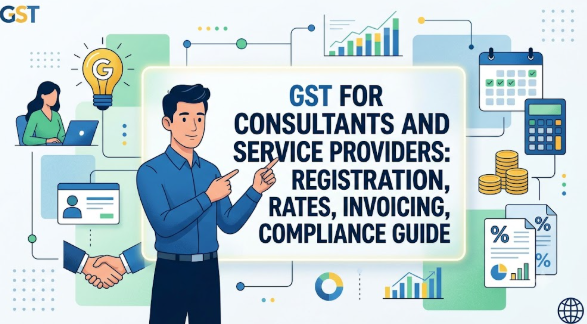
  • GST for Consultants and Service Providers: Registration, Rates, Invoicing, Compliance Guide

    Introduction

    A consultant may begin with one client, a laptop and a simple monthly invoice, but GST responsibilities can become confusing as revenue grows, clients operate in different states or payments arrive from overseas. Many beginners do not know when registration becomes necessary, which GST rate applies, whether expenses qualify for input tax credit or how service invoices should be prepared. A small misunderstanding can create incorrect billing, delayed returns, interest exposure or client disputes. This guide explains GST for Consultants and Service Providers in practical language, covering registration, invoicing, tax collection, returns, records, export services and common risks so freelancers, professionals and small service firms can build a more disciplined compliance process.

    Understanding GST for Consultants and Service Providers in Simple Words

    Goods and Services Tax, commonly called GST, is an indirect tax charged on taxable supplies of goods and services. Consultants and professional service providers generally supply expertise, advice, design, technology, management, marketing, accounting, training or other professional services to clients.

    For a consultant, GST usually works in the following way:

    1. The consultant provides a taxable service.
    2. A GST-compliant invoice is issued.
    3. GST is collected from the client when applicable.
    4. Eligible GST paid on business purchases may be claimed as input tax credit.
    5. The net tax liability is reported and paid through GST returns.

    Professional, technical and business services commonly fall under the 18% GST category, although the correct rate depends on the exact nature and classification of the service. Consultants should not assume that every service automatically attracts the same rate without checking its classification.

    Beginner-Friendly Example

    Suppose a registered management consultant charges ₹100,000 for a domestic consulting assignment and the applicable GST rate is 18%.

    The invoice may show:

    • Professional fee: ₹100,000
    • GST: ₹18,000
    • Total invoice value: ₹118,000

    The ₹18,000 is not ordinary consulting income. It is tax collected from the client and must be handled through the GST compliance system, subject to eligible input tax credit and return reporting.

    Common Misunderstanding

    A common misunderstanding is that GST applies only to companies with offices and employees. In reality, an individual freelancer, sole proprietor, partnership, limited liability partnership or company may become liable depending on turnover, type of supply, location and other registration rules.

    Practical Takeaway

    Do not decide GST liability only by looking at one invoice or one client. Review total PAN-based aggregate turnover, the nature of services, client locations, export conditions and applicable exemptions.

    Why GST for Consultants and Service Providers Is Important

    GST compliance affects more than tax filing. It influences pricing, cash flow, client relationships, business credibility and financial planning.

    It Affects Your Service Pricing

    A consultant must decide whether the quoted fee is exclusive or inclusive of GST. If this is not made clear before the engagement begins, the consultant may have to absorb the tax from the agreed amount.

    For example, a quote of “₹100,000 inclusive of all taxes” creates a different financial result from “₹100,000 plus applicable GST.”

    It Affects Cash Flow

    GST may become payable based on applicable time-of-supply rules even when client payments are delayed. Consultants who spend the tax collected from clients may face pressure when the return and payment deadline arrives.

    A better approach is to maintain a separate GST reserve rather than treating the entire client receipt as available income.

    It Affects Client Input Tax Credit

    Business clients generally expect accurate GST invoices because invoice information can affect their ability to claim input tax credit. Incorrect GSTIN details, tax amounts, place of supply or invoice reporting may lead to reconciliation issues.

    It Affects Business Expenses

    Registered consultants may be able to claim eligible input tax credit on business purchases such as software, professional subscriptions, equipment, office rent and certain support services, subject to legal conditions and restrictions.

    It Affects Long-Term Financial Discipline

    Proper GST records help consultants understand:

    • Revenue before tax
    • GST collected
    • GST paid on expenses
    • Net GST liability
    • Outstanding invoices
    • Client-wise turnover
    • Business profitability

    Practical Scenario

    A technology consultant receives ₹236,000 from a client, including GST, and uses the entire amount for personal and business expenses. When the return becomes due, the consultant has no reserve for the tax component. The better practice is to separate the GST amount immediately after receiving payment and reconcile it against eligible input tax credit.

    The Real Problems Readers Face With GST

    The main challenge is not always the tax rate. The real difficulty is managing several connected rules correctly.

    Lack of Awareness

    Many consultants focus on client delivery and sales but review GST only after crossing a threshold or receiving a request for a GST invoice.

    Confusing Online Advice

    GST rules may differ according to service type, turnover, state, customer location, export status and business structure. Advice written for traders or product sellers may not apply directly to consultants.

    Poor Turnover Tracking

    Consultants sometimes monitor only the amount received in a bank account. Aggregate turnover may require a broader review of taxable supplies, exempt supplies, exports and inter-state supplies across registrations under the same PAN. The statutory definition excludes GST and cess from aggregate turnover.

    Incorrect Rate Assumptions

    Most consultancy and professional services may commonly attract 18%, but exemptions or special provisions can apply to certain services. Classification must come before rate selection.

    Weak Invoice Discipline

    Common invoice errors include:

    • Missing GSTIN
    • Wrong place of supply
    • Wrong tax split
    • Incorrect invoice sequence
    • Missing service description
    • Reporting an invoice in the wrong period
    • Treating reimbursements incorrectly

    Depending Only on Social Media

    Short videos and posts may simplify GST rules excessively. They may also remain online after rules, portal processes or thresholds change.

    No Clear Next Step

    Beginners often do not know whether they should register, revise their contract, change invoice software, maintain a compliance calendar or consult a GST professional.

    The better approach is to create a written compliance workflow based on the consultant’s actual business model.

    How GST for Consultants and Service Providers Works Step by Step

    Step 1: Identify the Exact Service You Provide

    Begin by clearly defining your service. Management consulting, software development, design, legal services, accounting, recruitment, training and digital marketing may not always receive identical treatment. The classification affects the GST rate, place of supply and possible exemptions. A common mistake is writing only “professional charges” on every invoice. A better approach is to describe the actual service, engagement period and relevant service classification after professional review.

    Step 2: Calculate Aggregate Turnover

    Review turnover across India under the same PAN instead of checking only one branch, client or bank account. The general registration threshold for suppliers of services is commonly ₹20 lakh, with a lower threshold applicable in specified special-category jurisdictions. Official guidance also recognises threshold relief for eligible inter-state service suppliers up to the applicable limit. A common mistake is waiting until year-end. A better approach is to maintain a monthly turnover tracker and create an alert before reaching the threshold.

    Step 3: Check Whether Registration Is Required

    Turnover is important, but it is not the only factor. Review whether the service is taxable, exempt, exported, supplied through a particular arrangement or covered by compulsory registration provisions. A person making only exempt supplies may not be required to register merely because turnover exceeds the normal threshold. A common mistake is assuming either that every consultant must register or that nobody below the threshold needs registration. The better approach is a fact-specific review.

    Step 4: Determine the Place of Supply

    Place of supply decides whether the invoice normally carries CGST and SGST or IGST. For many business-to-business services, the recipient’s registered location is important, but special place-of-supply rules apply to certain services. A common mistake is selecting the tax type based only on the client’s billing address. A better approach is to examine the supplier location, recipient status, GST registration and the specific place-of-supply provision.

    Step 5: Confirm the GST Rate and Tax Treatment

    Once the service is classified, verify its applicable rate. Professional, technical and business services commonly fall within the 18% category, but this should not be treated as a universal rule. A common mistake is copying the rate used by another consultant. A better approach is to maintain a written classification note showing why the chosen rate applies.

    Step 6: Issue a Correct GST Invoice

    A registered service provider should issue a tax invoice containing the prescribed details. GST rules generally require an invoice for taxable services within 30 days from the date of supply, with specified exceptions for certain financial-sector suppliers. A common mistake is waiting until payment is received before preparing the invoice. A better approach is to connect invoicing to project completion, milestones or contractual billing dates.

    Step 7: Record Sales, Expenses and Input Tax Credit

    Maintain separate records for taxable sales, exports, exempt supplies, credit notes, advances where relevant, business purchases and blocked credits. A common mistake is claiming GST from every purchase invoice. A better approach is to check business use, invoice validity, supplier reporting, receipt of service, payment conditions and statutory restrictions before taking credit.

    Step 8: Reconcile, Pay and File Returns

    Normal taxpayers commonly report outward supplies through GSTR-1 and summary liability through GSTR-3B. GSTR-3B is a summary return used to declare GST liabilities for the tax period. Eligible taxpayers with aggregate turnover up to ₹5 crore may opt for the QRMP scheme, subject to applicable conditions. A common mistake is filing directly from bank statements. A better approach is to reconcile invoices, credit notes, input tax credit and electronic ledgers before submission.

    Key Factors That Influence GST Compliance

    Documentation

    GST compliance depends heavily on documentation. Engagement letters, contracts, invoices, expense bills, bank records, credit notes and export documents should support the figures reported in returns.

    Common mistake: Keeping invoices only in email inboxes.

    Better approach: Store records by financial year, month, client and document type.

    Filing Accuracy

    Incorrect tax periods, GSTINs or invoice values can affect both the consultant and the client.

    Common mistake: Filing first and reconciling later.

    Better approach: Complete reconciliation before filing.

    Record Keeping

    Good records help establish the nature, location, timing and value of a service.

    Common mistake: Recording only money received.

    Better approach: Maintain invoice date, supply period, payment date, taxable value, GST and outstanding balance separately.

    Compliance Deadlines

    Late returns can create late fees, interest, blocked filing sequences and client credit issues.

    Common mistake: Depending entirely on memory.

    Better approach: Use a compliance calendar with internal deadlines earlier than statutory deadlines.

    Professional Review

    A qualified GST professional can help when the business involves exports, multiple states, mixed services, reimbursements, reverse charge or complex contracts.

    Common mistake: Seeking advice only after receiving a notice.

    Better approach: Review the business model before problems arise.

    Penalty and Interest Risk

    Delayed tax payment, non-registration, incorrect credit or incomplete reporting may create financial exposure.

    Common mistake: Believing a corrected return removes every consequence.

    Better approach: Estimate the tax, interest and documentation impact before making a correction.

    Invoice Discipline

    Invoice quality affects tax payment, revenue accounting and client reconciliation.

    Common mistake: Editing old invoice numbers manually.

    Better approach: Use controlled sequential numbering and formal credit or debit notes.

    Tax Planning Awareness

    GST planning does not mean hiding revenue. It means selecting suitable contracts, pricing terms, filing frequency and documentation processes within the law.

    Common mistake: Quoting an inclusive fee without calculating GST impact.

    Better approach: State clearly whether professional fees are exclusive of GST.

    Detailed Breakdown of GST for Consultants and Service Providers

    GST Registration Threshold for Consultants

    The general threshold commonly applied to service providers is ₹20 lakh of aggregate turnover, with a lower limit in specified special-category jurisdictions. Eligible service providers making inter-state supplies may also receive threshold-based registration relief under notified provisions.

    However, registration should never be decided using the threshold alone. Consultants should check:

    • Whether their supplies are taxable or exempt
    • Whether compulsory registration applies
    • Whether they operate through multiple states
    • Whether they supply through an e-commerce arrangement
    • Whether they provide services outside India
    • Whether they are liable under a special category
    • Whether they want voluntary registration

    A person who registers voluntarily is generally treated as a normal taxable person and must comply accordingly.

    Aggregate Turnover

    Aggregate turnover is calculated on an all-India PAN basis and generally includes taxable supplies, exempt supplies, exports and inter-state supplies while excluding GST and cess.

    This means a consultant should not calculate turnover by looking only at:

    • One GST registration
    • One state
    • One bank account
    • Taxable invoices
    • Amounts received during the month

    GST Rate on Consultancy Services

    Many management, technical, business and professional services commonly attract GST at 18%. Legal and accounting services and many services falling under professional, technical and business classifications are listed at 18% in the official service-rate schedule.

    However, the correct rate depends on classification. Consultants working in education, healthcare, legal practice, government projects, transport, financial services or other specialised sectors should verify whether an exemption, reverse-charge provision or special rate applies.

    CGST, SGST and IGST

    When the location of the supplier and place of supply are in the same state or union territory, the invoice generally contains:

    • CGST
    • SGST or UTGST

    When they are in different states or union territories, the invoice generally contains:

    • IGST

    Example:

    A registered consultant in Karnataka provides a standard business consulting service to a registered client in Karnataka. The invoice may carry CGST and Karnataka SGST.

    If the same consultant provides the service to a registered client in Maharashtra and the place of supply is Maharashtra, IGST may apply.

    The actual decision must follow the applicable place-of-supply rules.

    GST Invoice Requirements

    A tax invoice should generally include:

    • Supplier’s legal name
    • Address
    • GSTIN
    • Unique invoice number
    • Invoice date
    • Client’s name and billing details
    • Client GSTIN where applicable
    • Description of service
    • SAC or service classification where required
    • Taxable value
    • GST rate
    • CGST, SGST or IGST amount
    • Place of supply for inter-state transactions
    • Reverse-charge indication where applicable
    • Signature or authorised authentication

    For taxable services, the invoice is generally required within 30 days from the date of supply, subject to specified exceptions.

    Time of Supply

    Time of supply helps determine when GST liability arises. It can depend on the invoice date, payment date, date of service completion and whether the invoice was issued within the prescribed period.

    This matters because a consultant may have to report tax even when a client has not yet paid.

    A practical control is to maintain three separate dates:

    • Service completion date
    • Invoice date
    • Payment receipt date

    Input Tax Credit for Consultants

    Input tax credit may allow a registered consultant to offset eligible GST paid on business inputs and input services against output GST liability.

    Possible business expenses may include:

    • Accounting software
    • Cloud subscriptions
    • Professional software
    • Office rent
    • Legal and accounting services
    • Business equipment
    • Digital marketing
    • Internet services
    • Subcontracting services
    • Training connected with the business

    Eligibility depends on statutory conditions. A consultant should not claim credit merely because GST appears on an invoice.

    Review whether:

    • The invoice is valid
    • The supply was received
    • The purchase relates to business
    • The supplier has properly reported the invoice
    • The tax has been paid as required
    • The credit is not blocked
    • The claim is made within the permitted time

    Current law generally restricts input tax credit claims after 30 November following the relevant financial year or the filing of the annual return, whichever is earlier, subject to applicable provisions and exceptions.

    GST Returns for Consultants

    Normal registered taxpayers commonly deal with:

    • GSTR-1: Details of outward supplies
    • GSTR-3B: Summary return and tax liability
    • Annual return: Where applicable
    • Other forms: Depending on registration type and transactions

    GSTR-1 may still be required as a nil return when there is no business activity for the period. GSTR-3B can qualify as a nil return only when the prescribed nil-return conditions are satisfied.

    QRMP Scheme

    Eligible taxpayers with PAN-based aggregate turnover up to ₹5 crore may choose quarterly GSTR-1 and GSTR-3B filing with monthly tax payment requirements under the QRMP framework.

    Quarterly filing does not mean ignoring records for three months. Consultants should still reconcile sales, purchases and tax every month.

    GST Composition Option for Small Service Providers

    A separate simplified scheme has been made available for eligible service suppliers with preceding-year turnover up to ₹50 lakh, involving tax at 6%, split between central and state tax, with restrictions and simplified compliance. It is not available for inter-state outward suppliers and does not provide the normal input-tax-credit mechanism.

    This option is not automatically better. A consultant should compare:

    • Client expectations
    • Input tax credit lost
    • Inter-state restrictions
    • Turnover eligibility
    • Effective tax cost
    • Compliance requirements
    • Business growth plans

    Export of Consulting Services

    Export of services can qualify as a zero-rated supply when all legal conditions are met. Zero-rated treatment does not mean the transaction should be ignored in GST records. Official GST guidance recognises exports and supplies to SEZ developers or units as zero-rated supplies.

    Consultants serving foreign clients should check:

    • Supplier location
    • Recipient location
    • Place of supply
    • Payment receipt conditions
    • Relationship between supplier and recipient
    • Contract and invoice wording
    • Letter of Undertaking requirements
    • Foreign inward remittance evidence
    • Return disclosure

    A foreign client alone does not automatically make a service an export.

    Reimbursements and Out-of-Pocket Expenses

    Travel, accommodation, software, courier and other costs recovered from clients may form part of the taxable value unless strict pure-agent conditions are satisfied.

    A common mistake is labelling an amount “reimbursement” and excluding it from GST without examining who received the supply, who was liable to pay and whether all pure-agent conditions were met.

    Reverse Charge

    Under reverse charge, the recipient rather than the supplier pays GST in specified situations. It does not apply to every professional service.

    Consultants should check reverse-charge treatment when dealing with:

    • Certain legal services
    • Services from specified government bodies
    • Import of services
    • Notified categories of service
    • Specified business arrangements

    Never mark an invoice as reverse charge only because the client requests it. Verify the legal category first.

    Cancellation and Suspension Risk

    Continuous non-compliance, non-filing or supplying taxable services without proper invoicing may contribute to proceedings involving suspension or cancellation of registration.

    Registration should therefore be treated as an ongoing responsibility, not a one-time certificate.

    Common Mistakes Beginners Make With GST

    Registering Too Late

    This happens when consultants track only payments instead of aggregate turnover. Late registration may lead to tax exposure for the earlier period.

    Better approach: Review cumulative turnover every month and create a threshold warning.

    Registering Without Understanding Compliance

    Voluntary registration may help some consultants, but it also creates invoicing, return and tax obligations.

    Better approach: Compare the business benefits with the compliance cost before applying.

    Assuming Every Service Is Taxed at 18%

    Although 18% is common, classification and exemptions matter.

    Better approach: Document the nature of the service and verify the relevant entry.

    Charging the Wrong Tax Type

    Using CGST and SGST instead of IGST, or the reverse, may create correction work.

    Better approach: Confirm the place of supply before issuing the invoice.

    Treating GST as Revenue

    GST collected is not ordinary business profit.

    Better approach: Transfer the expected tax amount into a separate reserve.

    Claiming Every Input Tax Credit

    Some purchases may be personal, blocked, unsupported or incorrectly reported.

    Better approach: Use an eligibility checklist before claiming credit.

    Ignoring Nil Returns

    A period with no sales does not always remove the filing requirement.

    Better approach: Check the return status for every tax period.

    Reporting Only Paid Invoices

    GST reporting may depend on invoice and time-of-supply rules, not merely bank receipts.

    Better approach: Reconcile books on an invoice basis.

    Using Incorrect Client GSTINs

    A small typing error can affect the customer’s credit reconciliation.

    Better approach: Validate GSTIN details during client onboarding.

    Ignoring Export Conditions

    A foreign address or payment in foreign currency does not by itself prove export status.

    Better approach: Review every statutory export condition and retain evidence.

    Poor Credit-Note Handling

    Deleting or changing an old invoice can break audit trails.

    Better approach: Use formal credit notes and report them in the correct period.

    Depending Only on Social Media Advice

    General content cannot account for every business model.

    Better approach: Verify important positions with official guidance and a qualified professional.

    Don’t Do This Checklist

    • Do not issue invoices with random numbers.
    • Do not copy another consultant’s GST rate without verification.
    • Do not use personal purchases to inflate input tax credit.
    • Do not spend the GST collected from clients.
    • Do not ignore notices or portal messages.
    • Do not delete cancelled invoices from records.
    • Do not classify every foreign-client invoice as an export.
    • Do not delay reconciliation until year-end.
    • Do not share portal credentials or one-time passwords casually.
    • Do not assume that no payment means no GST liability.
    • Do not claim reimbursements as tax-free automatically.
    • Do not file returns using estimates unless legally and professionally reviewed.

    Practical Real-Life Examples of GST

    Example 1: Independent Management Consultant

    Situation: A consultant’s cumulative service revenue is approaching the registration threshold.
    Challenge: She reviews only the payments received in her main bank account.
    Better action: She prepares an all-India turnover statement covering every client and supply.
    Learning: Registration planning should begin before the threshold is crossed.

    Example 2: Software Freelancer Serving Another State

    Situation: A freelancer in Delhi provides software services to a registered client in Telangana.
    Mistake: He plans to charge CGST and Delhi SGST because his office is in Delhi.
    Better action: He verifies the place of supply and applies IGST where required.
    Learning: The supplier’s address alone does not determine the tax type.

    Example 3: Marketing Consultant With Business Expenses

    Situation: A registered marketing consultant pays GST on software, advertising and a new laptop.
    Challenge: She wants to claim credit for every invoice immediately.
    Better action: She checks business use, invoice validity, supplier reporting and blocked-credit rules.
    Learning: Input tax credit is conditional, not automatic.

    Example 4: Consultant With a Foreign Client

    Situation: An Indian consultant receives fees from a client located overseas.
    Mistake: He assumes every foreign receipt is a zero-rated export.
    Better action: He checks the place of supply, recipient location, payment conditions and LUT requirements.
    Learning: Export treatment depends on satisfying all legal conditions.

    Example 5: Consultant Facing Delayed Payment

    Situation: A consultant issues a GST invoice, but the client delays payment for several months.
    Challenge: The consultant has not reserved money for the possible GST liability.
    Better action: She tracks invoice-based liability separately from cash collection and keeps a tax reserve.
    Learning: Profit planning and GST cash-flow planning are different activities.

    Table 1: Normal GST Scheme and Simplified Service Scheme

    AreaNormal GST SchemeSimplified Scheme for Eligible Service Providers
    Typical tax methodGST charged at the applicable service rateTax paid at the prescribed percentage of turnover
    Input tax creditAvailable subject to conditionsGenerally not available in the normal manner
    Tax invoiceGST tax invoice issuedBill requirements and tax collection restrictions apply
    Inter-state outward supplyGenerally permittedRestricted under scheme conditions
    Client suitabilityOften preferred by GST-registered business clientsMay suit certain small local service businesses
    Decision basisCredit, client profile, expenses and growthTurnover, restrictions and simplicity
    Main riskDetailed reconciliation burdenLost credit and eligibility violations

    Table 2: Common GST Mistake and Better Approach

    Common MistakePossible ImpactBetter Approach
    Monitoring only bank receiptsLate registration or missed turnoverMaintain an invoice and aggregate-turnover tracker
    Using one GST rate for every serviceIncorrect tax collectionVerify service classification
    Selecting tax type from supplier location aloneCGST/SGST and IGST errorsCheck place-of-supply rules
    Claiming all purchase GSTIneligible credit and interest exposureApply an input-credit checklist
    Treating foreign billing as export automaticallyIncorrect zero-ratingVerify every export condition
    Spending GST collectionsCash shortage at filing timeMaintain a separate GST reserve
    Deleting incorrect invoicesBroken audit trailIssue credit or debit notes
    Filing without reconciliationClient mismatches and correctionsReconcile sales, credits and ledgers first

    Tools, Methods and Frameworks Readers Can Use

    Turnover Tracker

    A turnover tracker records every invoice and supply across the PAN. It helps identify when the registration threshold is approaching.

    Include:

    • Invoice number
    • Client
    • State
    • Taxable value
    • Exempt value
    • Export value
    • Cumulative aggregate turnover

    It prevents the mistake of checking only bank deposits.

    GST Invoice Template

    A controlled invoice template helps maintain consistent fields, tax calculations and invoice numbering.

    It should include locked fields for:

    • GSTIN
    • Place of supply
    • SAC
    • Tax rate
    • Tax split
    • Reverse-charge status
    • Payment terms

    It reduces manual typing errors.

    Input Tax Credit Checklist

    Before claiming credit, confirm:

    • The purchase is for business use.
    • A valid tax invoice is available.
    • The service or goods were received.
    • The supplier details match.
    • The credit appears in the relevant statement where required.
    • The credit is not blocked.
    • The claim is within the legal time limit.

    This prevents unsupported credit claims.

    Monthly GST Reconciliation

    Complete a monthly reconciliation even when filing quarterly.

    Match:

    • Sales register
    • GSTR-1 data
    • Credit notes
    • Purchase register
    • Input-credit statement
    • GSTR-3B
    • Electronic cash ledger
    • Electronic credit ledger
    • Bank receipts

    This helps identify mistakes before they accumulate.

    Client Onboarding Form

    Collect the following before beginning work:

    • Legal name
    • GSTIN
    • Billing address
    • State code
    • Registration status
    • Contact person
    • Purchase order terms
    • Tax-deduction requirements
    • Export or SEZ status where relevant

    This reduces invoice disputes.

    GST Compliance Calendar

    Record internal dates for:

    • Invoice closure
    • Expense collection
    • GSTR-1 review
    • Input-credit reconciliation
    • GSTR-3B review
    • Tax funding
    • Return filing
    • Annual review
    • LUT renewal where applicable

    Set internal deadlines several days before the statutory deadline.

    Tax Reserve Method

    Whenever a taxable client payment is received, transfer the estimated GST component into a separate bank sub-account or reserve ledger.

    This does not calculate the final liability, but it protects working capital until reconciliation is completed.

    Expert Tips to Make Better GST Decisions

    1. Separate Professional Fees From GST

    State clearly in proposals whether fees are exclusive of GST. This prevents pricing disputes and protects your professional margin.

    2. Review Turnover Every Month

    Do not wait until the end of the financial year. A monthly review allows time for registration planning and client communication.

    3. Classify the Service Before Choosing the Rate

    Write down what you actually deliver. Classification should come before rate selection, invoice design and tax treatment.

    4. Validate Every Client GSTIN

    Use the client’s legal registration details rather than informal names from emails or purchase orders. This reduces amendment and input-credit problems.

    5. Keep GST Money Separate

    Treat collected tax as a liability. Transfer it into a reserve so that business or personal spending does not create payment pressure.

    6. Reconcile Monthly Even Under QRMP

    Quarterly filing can encourage delay. Monthly reconciliation keeps records current and makes quarterly returns easier.

    7. Check Input Credit Before Claiming It

    An invoice containing GST is only the starting point. Confirm business purpose, legal eligibility and supplier reporting.

    8. Use Credit Notes Instead of Deleting Invoices

    Formal corrections preserve the audit trail. Deleting or renumbering invoices may create mismatches.

    9. Document Export Positions

    Maintain contracts, invoices, LUT records, payment evidence and place-of-supply analysis for foreign-client engagements.

    10. Match Contracts With Tax Treatment

    The engagement letter should explain fees, taxes, reimbursements, milestones and payment terms. Tax positions become harder to defend when the contract is vague.

    11. Review Reimbursements Carefully

    Do not assume travel or software recovered from a client is outside GST. Check valuation and pure-agent conditions.

    12. Protect GST Portal Access

    Limit credential access, use secure devices and review filing activity. Tax accounts contain sensitive financial and identity information.

    13. Respond to Notices Promptly

    A portal notice should not be ignored because it appears automated. Download it, identify the period and obtain professional help when necessary.

    14. Review the Business Model Before Expanding

    A new state office, overseas client, online platform or additional service line may change GST obligations.

    15. Use Professional Advice for Complex Transactions

    Consult a qualified tax professional when dealing with exports, reverse charge, multiple registrations, mixed supplies, departmental notices or material corrections.

    Case Studies: How Better GST Understanding Changes Decisions

    Case Study 1: The Consultant Who Quoted an Inclusive Fee

    Profile: Independent human-resources consultant serving medium-sized companies.

    Situation: The consultant agreed to complete a project for ₹300,000 without stating whether GST was additional.

    Problem: After registration, the client argued that the agreed fee included all taxes.

    Wrong approach: The consultant planned to add GST only after completing the assignment.

    Better approach: For future engagements, the consultant used proposals stating “professional fees plus applicable GST” and obtained written client acceptance.

    Result or learning: The consultant improved pricing clarity and avoided similar disputes. The original matter still required contractual and professional review.

    Key takeaway: GST terms should be agreed before work begins.

    Case Study 2: The Freelancer Who Ignored Aggregate Turnover

    Profile: Software freelancer working through two platforms and several direct clients.

    Situation: Revenue was received in three bank accounts.

    Problem: The freelancer checked each account separately and believed turnover remained below the threshold.

    Wrong approach: Registration planning was based only on direct-client receipts.

    Better approach: A consolidated PAN-based turnover statement was prepared covering platform invoices, direct work and export supplies.

    Result or learning: The freelancer identified the threshold risk early enough to organise records and obtain professional advice.

    Key takeaway: Aggregate turnover is broader than one account or one source of income.

    Case Study 3: The Consultant Who Claimed Unsupported Credit

    Profile: Registered digital-strategy consultant.

    Situation: The consultant claimed GST credit on several expenses, including mixed personal and business purchases.

    Problem: Supporting records did not clearly establish business use.

    Wrong approach: Every invoice containing GST was treated as eligible.

    Better approach: Expenses were classified as eligible, restricted, personal or requiring review. The consultant introduced an approval checklist.

    Result or learning: Future claims became better supported, and personal expenses were kept outside the GST credit process.

    Key takeaway: Input tax credit requires evidence and eligibility, not just an invoice.

    Risk Awareness: What Readers Must Check First

    Registration Risk

    This is the risk of failing to register when legally required or registering without understanding ongoing obligations.

    Risk reduction: Review turnover and compulsory-registration rules regularly.

    Classification Risk

    An incorrect service classification can lead to the wrong rate or exemption.

    Risk reduction: Document the service scope and obtain expert review for uncertain categories.

    Place-of-Supply Risk

    Wrong place-of-supply treatment can produce incorrect CGST, SGST or IGST reporting.

    Risk reduction: Check supplier location, client status and the specific service rule.

    Input Tax Credit Risk

    Unsupported or blocked credit may lead to reversal, interest and disputes.

    Risk reduction: Reconcile purchase invoices and apply a written eligibility test.

    Cash-Flow Risk

    GST may be payable before client collection in some circumstances.

    Risk reduction: Maintain a tax reserve and track overdue invoices.

    Export Risk

    Incorrectly treating a foreign-client invoice as zero-rated can create tax exposure.

    Risk reduction: Verify all export-of-service conditions and retain payment evidence.

    Filing Risk

    Late or incorrect returns can cause fees, interest and client reconciliation problems.

    Risk reduction: Use internal deadlines and review returns before filing.

    Data Privacy Risk

    Portal credentials, invoices and GSTIN records contain sensitive data.

    Risk reduction: Use secure storage, limited access and strong authentication practices.

    Fraud Risk

    Fake consultants, phishing messages and false refund claims may target taxpayers.

    Risk reduction: Verify communications through official channels and never share one-time passwords.

    Misinformation Risk

    Outdated articles may describe old thresholds, forms or portal processes.

    Risk reduction: Verify current requirements using official GST sources and professional advice.

    Checklist Before Taking Action

    • I have clearly identified every service I provide.
    • I have calculated PAN-based aggregate turnover.
    • I have checked whether GST registration is required.
    • I have reviewed whether voluntary registration is beneficial.
    • I have verified the GST rate for each service category.
    • I have checked the place of supply.
    • I know whether CGST and SGST or IGST applies.
    • My contracts state whether fees are exclusive of GST.
    • My invoice template contains the required fields.
    • My invoice numbering is sequential and controlled.
    • I maintain separate sales and purchase registers.
    • I verify input tax credit before claiming it.
    • I reconcile GST records every month.
    • I maintain a reserve for tax payments.
    • I have checked export conditions for overseas clients.
    • I have reviewed reimbursements and pure-agent treatment.
    • I protect GST portal credentials.
    • I monitor return and payment deadlines.
    • I keep copies of returns, challans and acknowledgements.
    • I obtain professional advice for uncertain positions.

    Use this checklist before registration, before issuing a new type of invoice and before filing each return. A completed checklist does not replace legal analysis, but it reduces preventable errors.

    Strategic Insights for Better GST Decision-Making

    Documentation Discipline

    Good documentation is the foundation of GST compliance. Every important number in a return should be traceable to an invoice, credit note, expense record, contract or payment document.

    A useful structure is:

    • Client folder
    • Monthly sales folder
    • Purchase folder
    • Return folder
    • Export folder
    • Notice and correspondence folder

    Filing Accuracy

    Returns should match the underlying books. Frequent amendments may indicate weak invoicing or review controls.

    Introduce a two-stage process:

    1. Preparation by the accountant or internal team
    2. Review by the owner or authorised professional

    Record Maintenance

    Do not keep only PDF invoices. Maintain a structured sales and purchase register that can be filtered by period, client, tax rate and place of supply.

    Professional Review

    An annual GST health check can identify:

    • Incorrect classifications
    • Unclaimed eligible credits
    • Unsupported credits
    • Export-document gaps
    • Turnover mismatches
    • Unreported credit notes
    • Incorrect tax splits
    • Registration issues

    Compliance Calendar Planning

    Divide compliance into four cycles:

    • Daily: Save invoices and documents.
    • Weekly: Update sales, purchases and collections.
    • Monthly: Reconcile turnover, GST and credit.
    • Quarterly or annually: Conduct a deeper review.

    Client-Segment Planning

    Different client types create different GST expectations.

    A consultant serving large registered companies may find normal GST registration commercially useful because clients expect tax invoices and input credit.

    A small consultant serving only local unregistered consumers may evaluate compliance cost differently. The decision must still follow the law.

    Cash-Flow Forecasting

    Create a GST cash-flow forecast using:

    • Expected output GST
    • Eligible input tax credit
    • Reverse-charge liability
    • Cash ledger balance
    • Client collection schedule
    • Refund or export position

    This helps separate tax funding from business profitability.

    Key GST Terms Explained for Beginners

    • GST: Goods and Services Tax is an indirect tax applied to taxable supplies of goods and services.
    • GSTIN: A GST Identification Number is the unique registration number issued to a registered taxpayer.
    • Aggregate Turnover: This is PAN-based all-India turnover calculated according to GST law. It generally includes taxable, exempt, export and inter-state supplies but excludes GST and cess.
    • Taxable Supply: A supply on which GST is chargeable under the applicable law.
    • Exempt Supply: A supply that is wholly exempt, nil-rated or otherwise covered by the statutory definition.
    • Output Tax: GST payable on taxable services supplied by the consultant.
    • Input Tax Credit: Eligible credit of GST paid on business purchases that may be used against output liability, subject to conditions.
    • CGST: Central Goods and Services Tax charged on qualifying intra-state supplies.
    • SGST: State Goods and Services Tax charged with CGST on qualifying intra-state supplies.
    • IGST: Integrated Goods and Services Tax generally charged on inter-state taxable supplies.
    • Place of Supply: The legally determined location used to decide the nature of the transaction and applicable tax type.
    • SAC: Services Accounting Code is used to classify services under GST.
    • Reverse Charge: A mechanism under which the recipient pays GST for specified supplies instead of the supplier.
    • Zero-Rated Supply: Exports and qualifying supplies to SEZ units or developers may be zero-rated, subject to legal conditions.
    • Credit Note: A document used to reduce the taxable value or tax charged on an earlier invoice under applicable conditions.

    Who Should Read This Blog

    Beginners and Students

    This guide builds a practical foundation in GST terminology, registration, invoicing and returns.

    Freelancers

    Independent professionals can use it to understand turnover tracking, client invoices and overseas billing.

    Salaried Employees With Side Income

    Employees offering consulting services outside their jobs can learn why professional receipts must be reviewed separately.

    Small Business Owners

    Owners of service businesses can use the compliance frameworks to improve records and tax planning.

    New Consultants

    Management, technology, marketing, design and human-resources consultants can understand the basic compliance lifecycle.

    Accountants and Finance Teams

    The guide offers checklists for invoicing, input credit and reconciliation.

    Export Service Providers

    Professionals serving overseas clients can understand why export treatment requires more than a foreign invoice.

    Finance Bloggers

    Writers can use the explanations to produce responsible educational content without making unsupported claims.

    People Improving Financial Awareness

    The guide explains how tax collections, revenue, expenses and cash flow should be separated.

    People Trying to Avoid Financial Mistakes

    Anyone concerned about incorrect invoices, missed deadlines or unsupported tax credit can use the warning sections.

    Frequently Asked Questions

    1. What is GST for Consultants and Service Providers?

    GST for Consultants and Service Providers is the tax framework applying to taxable professional or business services supplied by consultants. It covers registration, invoice preparation, tax collection, input tax credit and return filing.

    2. When does a consultant need GST registration?

    The general service-provider threshold is commonly ₹20 lakh of aggregate turnover, with a lower limit in specified special-category jurisdictions. Other compulsory-registration and exemption rules must also be checked before deciding.

    3. What is the GST rate on consultancy services?

    Many professional, technical and business consultancy services commonly attract 18% GST. However, the exact rate depends on service classification, exemptions and special provisions.

    4. Is GST registration required for freelancers?

    Freelancers are not automatically outside GST. Registration depends on aggregate turnover, the nature and location of supplies, exemptions and other applicable rules.

    5. Can a consultant register voluntarily?

    Yes, voluntary registration may be possible. After registration, the consultant is generally treated as a registered taxable person and must follow normal compliance obligations.

    6. Can consultants claim input tax credit?

    Registered consultants may claim eligible input tax credit on qualifying business purchases, subject to invoice, receipt, supplier-reporting, payment, time-limit and blocked-credit conditions.

    7. Should GST be charged to a client in another state?

    An inter-state service generally attracts IGST when the supplier location and place of supply are in different states. The place of supply must be determined under the relevant service rule.

    8. Is GST charged on services provided to foreign clients?

    A service may qualify as a zero-rated export only when all export-of-service conditions are met. A foreign client or foreign currency receipt alone does not prove export status.

    9. Which GST returns do consultants normally file?

    Normal taxpayers commonly file GSTR-1 for outward supplies and GSTR-3B for summary liability. Filing frequency and additional forms depend on turnover, registration type and eligibility.

    10. Can a consultant use the composition scheme?

    Eligible small service providers may consider the separate 6% simplified scheme where the preceding-year turnover and other conditions are satisfied. Restrictions include inter-state outward supplies and loss of normal input tax credit.

    11. When should a GST invoice for services be issued?

    A taxable service invoice is generally required within 30 days from the date of supply, subject to specified exceptions for certain categories of service providers.

    12. What is the best way to manage GST for Consultants and Service Providers?

    Maintain a turnover tracker, controlled invoice system, monthly reconciliation, input-credit checklist, GST reserve and compliance calendar. Obtain qualified professional advice for complex or uncertain transactions.

    Conclusion

    GST for Consultants and Service Providers becomes easier to manage when it is treated as a regular business process rather than a last-minute filing exercise. Consultants should begin by identifying the exact services they provide, calculating PAN-based aggregate turnover and checking whether registration is legally required or commercially useful. Once registered, the next priorities are correct service classification, place-of-supply analysis, invoice timing, tax-rate verification and disciplined record keeping. GST collected from clients should not be confused with professional income, and eligible input tax credit should never be claimed merely because tax appears on a purchase invoice. Every credit should be supported by business purpose, valid documentation and applicable legal conditions. Consultants working with clients in different states should carefully determine whether CGST and SGST or IGST applies, while professionals serving overseas clients should verify all export-of-service conditions before treating an invoice as zero-rated. A foreign client, overseas address or foreign-currency payment is not enough by itself.


  • Complete Guide to Understanding GST for Freelancers in India

    Introduction

    Entering the world of independent work brings freedom, flexibility, and exciting opportunities, but transitioning into self-employment also introduces entirely new responsibilities like handling business taxes. Many beginners start freelancing with passion and skill, only to feel confused and stressed when they hear terms like tax slabs, registration thresholds, and compliance filings. This confusion often leads to delayed registrations, incorrect invoicing, or missed deadlines, which can result in unwanted penalties from tax authorities. This blog will explain the fundamentals of GST for freelancers in India in clear, practical language, detailing who needs to register, how the taxation mechanism functions, and what steps are required to stay compliant. Whether you are a content writer, graphic designer, software developer, or digital marketer, understanding this tax framework will protect your earnings and build business credibility. Practical understanding is always better than making rushed decisions out of panic or ignoring tax laws until a problem arises. Reading this guide will give you structured clarity, helping you navigate your professional journey with confidence and financial peace of mind.

    Understanding GST for Freelancers in India

    What It Is

    The Goods and Services Tax, commonly known as GST, is an indirect tax applied to the supply of goods and services in the country. For independent contractors, GST for freelancers in India acts as a unified tax system that replaces multiple service taxes, streamlining how digital and professional services are billed to clients across domestic and international markets.

    How It Works

    When you provide professional services as an independent provider, you may need to charge this tax on top of your standard fee if your annual revenue crosses specific regulatory thresholds. You then collect this amount from your clients and periodically file returns to deposit the collected tax with the government, or claim adjustments on taxes paid for business expenses through Input Tax Credit.

    Why People Search for It

    Independent workers actively search for this topic to determine whether registration is mandatory for their specific income level, how to raise valid tax invoices, and how to file periodic returns without hiring expensive accountants immediately.

    Real-Life Application

    Freelancers use this system when sending invoices to domestic clients, registering their digital agency on the official tax portal, or filing quarterly and annual returns to maintain a clean compliance record.

    Common Misunderstanding

    A frequent misconception is that every independent worker must register for this tax from day one, regardless of how much money they make. In reality, specific exemption limits apply based on annual turnover and the nature of the services provided.

    Practical Takeaway

    Always track your cumulative gross receipts from all clients on a monthly basis so you know well in advance when your earnings approach the mandatory registration threshold.

    Why GST for Freelancers Is Important

    Impact on Financial Decisions

    Understanding tax compliance directly affects your pricing strategy, cash flow management, and profit margins. If you are registered, your pricing model must account for tax collections, whereas failing to register when legally required can lead to sudden financial liabilities that disrupt your savings.

    Professional Credibility

    Operating with a valid tax registration and issuing compliant invoices builds strong trust with corporate clients, domestic agencies, and international platforms that require proper documentation for their own accounting processes.

    Risk Management and Discipline

    Proper tax awareness encourages long-term financial discipline, ensuring that you keep separate business records, avoid mixing personal funds with professional earnings, and stay completely transparent with regulatory bodies.

    Practical Scenario

    Imagine a freelance web developer earning steadily from multiple domestic clients. By understanding tax requirements early, the developer sets aside a portion of each payment, registers smoothly upon crossing the threshold, and avoids any retrospective penalty notices.

    The Real Problem Readers Face With GST for Freelancers

    Lack of Clear Awareness

    Many independent professionals struggle because tax literature is often filled with complicated legal jargon that is difficult for beginners to interpret without a accounting background.

    Conflicting Online Advice

    The internet is flooded with scattered tips, forums, and outdated articles that give conflicting instructions, leaving readers unsure whether they should register voluntarily or wait.

    Ignoring Compliance Deadlines

    Without a structured system, freelancers often lose track of filing due dates, resulting in late fees, interest charges, and unnecessary administrative stress that distracts from core creative or technical work.

    Depending Solely on Social Media

    Relying on random social media posts instead of official guidelines or qualified professionals often leads to costly errors in classification, invoicing, and tax calculations.

    How GST for Freelancers Works Step by Step

    Step 1: Evaluate Your Annual Turnover

    • What it means: Calculating your total gross receipts from all professional services rendered within a financial year.
    • Why it matters: It determines whether you fall below or exceed the mandatory registration limit set by tax authorities.
    • How to apply it: Maintain a dedicated spreadsheet logging every client payment received throughout the financial year.
    • Practical example: A freelance consultant tracks monthly earnings to see if the cumulative total crosses the service provider threshold.
    • Common mistake: Counting only net earnings after expenses instead of total gross revenue.
    • Better approach: Always calculate turnover based on gross billings before any deductions.

    Step 2: Determine Interstate vs. Intrastate Supplies

    • What it means: Identifying whether your clients are located in your home state or a different state within the country.
    • Why it matters: It dictates whether Central and State taxes apply together or if an Integrated tax applies to the transaction.
    • How to apply it: Check the billing address of every client before generating your invoice.
    • Practical example: Billing a client in Mumbai while operating from Pune involves intrastate tax components.
    • Common mistake: Assuming all domestic transactions follow the exact same tax calculation rules.
    • Better approach: Verify the place of supply rules to apply the correct tax categories on your invoice.

    Step 3: Complete Online Registration

    • What it means: Submitting your identity proofs, address documents, and bank details on the official tax portal.
    • Why it matters: It grants you a unique identification number required to legally collect and deposit taxes.
    • How to apply it: Gather your PAN card, Aadhaar, bank statement, and proof of workplace before filling out the online application.
    • Practical example: Submitting digital KYC documents on the government GST portal to receive an official registration certificate.
    • Common mistake: Entering mismatched business names or incorrect bank account details during the application.
    • Better approach: Double-check all personal and professional documents against your official PAN card before final submission.

    Step 4: Issue Compliant Tax Invoices

    • What it means: Creating structured billing documents that include your unique identification number, serial sequence, and tax breakdowns.
    • Why it matters: Clients need valid tax invoices to claim their own accounting adjustments and deductions.
    • How to apply it: Use accounting software or standardized templates that automatically include all required invoice fields.
    • Practical example: Generating an invoice with explicit tax split lines for a corporate client project.
    • Common mistake: Issuing simple informal receipts that lack mandatory serial numbers and registration details.
    • Better approach: Adopt digital invoicing tools that maintain sequential numbering and automated tax calculations.

    Step 5: Maintain Proper Record Keeping

    • What it means: Storing all issued invoices, client contracts, and expense receipts in an organized digital archive.
    • Why it matters: Organized records make quarterly and annual filings smooth and protect you during official audits.
    • How to apply it: Create dedicated cloud folders categorized by financial year and month.
    • Practical example: Saving every paid client invoice and associated bank remittance advice in a secure drive.
    • Common mistake: Scattering receipts across random chat apps and email threads.
    • Better approach: Implement a strict weekly archiving habit for all financial documents.

    Step 6: File Periodic Returns on Time

    • What it means: Submitting summary statements of your outward supplies and tax liabilities through the online portal.
    • Why it matters: Timely filing prevents late fees, interest penalties, and suspension of your identification number.
    • How to apply it: Log into the portal before the due date, review auto-populated data, and submit your returns.
    • Practical example: Submitting quarterly summary statements for your independent design services.
    • Common mistake: Waiting until the final hours of the due date, risking technical glitches and late fees.
    • Better approach: Prepare your return data a week before the deadline to ensure a stress-free filing process.

    Key Factors That Influence GST Compliance

    Documentation Accuracy

    Maintaining clean, error-free client contracts, invoices, and bank statements is the backbone of smooth tax compliance. Accurate paperwork ensures that your reported turnover matches your actual banking inflows, eliminating discrepancies during official reviews.

    Filing Deadlines and Timelines

    Adhering strictly to monthly or quarterly filing schedules prevents the accumulation of late fees and interest penalties. Missing these windows can complicate your business standing and lead to unnecessary administrative hurdles.

    Place of Supply Rules

    Understanding where a service is legally consumed determines how taxes are levied, especially when working with clients across different states or international borders. Proper classification ensures you apply the correct tax types without overcharging or underpaying.

    Professional Review and Guidance

    Tax laws and portal interfaces evolve frequently. Engaging a qualified tax professional periodically ensures your filing approach remains aligned with current legal amendments and reduces the risk of costly misinterpretations.

    Detailed Breakdown of GST for Freelancers in India

    Basic Meaning and Structure

    Navigating tax obligations requires looking beyond basic definitions and understanding how the taxation mechanism interacts with everyday freelance operations. For independent workers, compliance involves recognizing when your service offerings cross statutory thresholds, registering for the appropriate identifier, and structuring your pricing to account for tax collections without harming client relationships.

    Turnover Thresholds and Exceptions

    In India, service providers generally enjoy a higher exemption threshold compared to product sellers, meaning you do not need to register immediately unless your aggregate turnover crosses the specified statutory limit. However, certain activities, such as providing services to interstate clients or exporting services internationally, involve specific regulatory nuances that require careful evaluation of your business model.

    Export of Services and Zero-Rated Supplies

    Many Indian freelancers work with international clients located abroad. Under current tax frameworks, exporting services can often qualify as a zero-rated supply, meaning you may not need to charge tax to foreign clients, provided you fulfill specific conditions like receiving payments in convertible foreign exchange and maintaining proper export documentation.

    Input Tax Credit Considerations

    Registered workers can often offset the tax paid on business-related purchases—such as software subscriptions, hardware equipment, and professional coworking space rentals—against the tax collected from their clients. Understanding this adjustment mechanism helps optimize your overall business expenses and reduces effective tax outflows.

    Common Mistakes Beginners Make With GST for Freelancers

    Failing to Monitor Gross Turnover

    Many beginners assume that income tracking is only necessary once they hire employees or form a registered company, ignoring the cumulative gross revenue rule that triggers mandatory registration.

    Confusing Net Income with Gross Receipts

    Mistaking take-home profit after expenses for total turnover leads to delayed registrations because freelancers miscalculate their actual statutory standing.

    Missing Periodic Filing Deadlines

    Procrastinating until the last minute often leads to portal traffic congestion, filing errors, and heavy late fees that eat into hard-earned profits.

    Neglecting International Export Rules

    Failing to maintain foreign inward remittance certificates (FIRC) or proper documentation when working with overseas clients can complicate zero-rated tax claims.

    “Don’t Do This” Checklist

    • Do not ignore your cumulative annual gross billings across all platforms.
    • Do not mix personal bank accounts with professional client receipts.
    • Do not issue informal, non-compliant receipts without sequential numbering.
    • Do not wait until the absolute deadline date to file your returns.
    • Do not guess tax rules without verifying official portal guidelines.

    Practical Real-Life Examples of GST for Freelancers

    Scenario 1: The Growing Content Writer

    A freelance writer noticed earnings increasing rapidly across multiple digital platforms. By tracking gross monthly revenue, the writer registered proactively upon crossing the threshold, avoiding retroactive penalty notices.

    Scenario 2: The Global Software Consultant

    A developer working with overseas clients assumed taxes applied to all international earnings. After consulting proper export guidelines, the developer correctly classified earnings as zero-rated supplies while maintaining mandatory foreign exchange certificates.

    Scenario 3: The Graphic Designer’s Invoice

    A designer previously sent simple text messages requesting bank transfers for completed logos. Transitioning to professional tax-compliant invoices with serial numbers improved corporate client trust and streamlined record-keeping.

    Scenario 4: The Last-Minute Filer

    A digital marketer waited until midnight on the due date to file quarterly returns, encountering server slowdowns and late fees. The marketer adopted a new habit of completing data compilation one week early.

    Scenario 5: The Software Expense Adjustment

    A freelance editor purchased professional video editing software and cloud storage. By understanding adjustment mechanisms, the editor properly claimed tax credits on business tools, optimizing operational costs.

    Table 1: Registration Status vs. Compliance Requirements

    Freelance ScenarioRegistration RequirementKey Action Required
    Annual turnover below statutory threshold, domestic clients onlyOptional (Voluntary registration allowed)Maintain income records, issue standard invoices
    Annual turnover exceeds statutory thresholdMandatory registration requiredObtain unique identifier, collect and deposit tax
    Providing services exclusively to international clientsSubject to export rules (Often zero-rated)Maintain FIRC documents, file LUT (Letter of Undertaking)

    Table 2: Common Compliance Mistakes vs. Better Approaches

    Common MistakeRisk InvolvedBetter Approach
    Waiting until the last day to file returnsLate fees, server timeouts, filing errorsCompile data weekly and submit a week in advance
    Mixing personal and business bank transactionsAudit confusion, inaccurate turnover trackingOpen a dedicated current or business bank account
    Issuing informal receipts without serial numbersClient rejection, poor accounting recordsUse standardized digital invoicing software

    Tools, Methods, and Frameworks Readers Can Use

    Digital Invoicing Software

    Using specialized billing tools automates sequential numbering, tax calculations, and professional PDF generation, ensuring every client document meets regulatory standards.

    Monthly Turnover Spreadsheet

    A structured spreadsheet logging all client remittances helps you monitor your cumulative financial year revenue against statutory thresholds in real-time.

    Document Archiving System

    Implementing a secure cloud-based folder structure organized by financial year and month keeps all invoices, client agreements, and tax receipts ready for quick review.

    Professional Tax Calendar

    Setting automated calendar reminders for periodic filing due dates ensures you never miss a submission window or incur avoidable late fees.

    Expert Tips to Make Better Decisions

    • Track your gross billings monthly rather than calculating revenue only at the end of the financial year.
    • Separate your personal savings from your professional client earnings by using a dedicated business bank account.
    • Verify client billing addresses accurately to determine whether local or interstate tax components apply.
    • Maintain digital copies of all client contracts alongside your invoices for complete documentation integrity.
    • Consult a qualified tax professional when your business model expands or involves complex multi-state projects.
    • Read official circulars and updates on the government tax portal rather than relying on unverified internet forums.
    • Keep your login credentials, digital signature certificates, and portal profiles secure and updated.
    • Automate your invoice generation process to eliminate manual typing errors and sequential gaps.
    • Understand the documentation required for international client payments, including foreign inward remittance certificates.
    • Review your financial records quarterly to ensure smooth reconciliation before filing deadlines.
    • Avoid panic decisions by planning your tax reserves ahead of major filing seasons.
    • Keep emergency cash reserves separate from funds allocated for tax liabilities.

    Case Studies: How Better Understanding Changes Decisions

    Case Study 1: The Transition from Confusion to Clarity

    • Profile: A freelance UI/UX designer based in Bangalore.
    • Situation: Earnings grew significantly as the designer secured long-term contracts with various tech startups.
    • Problem: Unsure whether to register for tax collection or continue without formal registration, leading to anxiety.
    • Wrong Approach: Ignoring the growth and assuming digital creative services were entirely exempt from all rules.
    • Better Approach: Calculating cumulative gross receipts, realizing the threshold was crossed, and completing online registration.
    • Result / Learning: Smooth onboarding onto the official tax portal, establishing professional credibility with corporate clients.
    • Key Takeaway: Proactive turnover tracking eliminates regulatory surprises.

    Case Study 2: Managing Global Client Invoices

    • Profile: A freelance copywriter working primarily with US-based agencies.
    • Situation: Received payments in foreign currency and struggled with how to bill international clients correctly.
    • Problem: Charged incorrect tax amounts out of confusion, creating friction with overseas clients.
    • Wrong Approach: Guessing tax application rules without verifying export guidelines.
    • Better Approach: Learning export of service rules, filing the Letter of Undertaking (LUT), and maintaining proper remittance certificates.
    • Result / Learning: Seamless international billing without unnecessary tax deductions for foreign clients.
    • Key Takeaway: Understanding export rules is essential for globally active freelancers.

    Case Study 3: Overcoming Last-Minute Filing Stress

    • Profile: A freelance data analyst who missed multiple filing deadlines.
    • Situation: Accumulated late fees and received warning notices due to disorganized record-keeping.
    • Problem: Procrastinating until the final hours of every quarterly due date.
    • Wrong Approach: Waiting for filing reminders and rushing data compilation at midnight.
    • Better Approach: Implementing a weekly bookkeeping habit and setting automated calendar reminders two weeks prior to deadlines.
    • Result / Learning: Zero late fees, stress-free submissions, and accurate financial reconciliation.
    • Key Takeaway: Routine record-keeping turns tax filing into a simple administrative check.

    Risk Awareness: What Readers Must Check First

    Regulatory and Penalty Risk

    Failing to register when required or missing filing deadlines can lead to heavy financial penalties, interest charges, and legal notices from tax authorities. Always monitor your turnover thresholds closely to stay compliant.

    Documentation and Audit Risk

    Inadequate record-keeping makes it difficult to justify your reported earnings or zero-rated export claims during official reviews. Maintain secure digital archives of every invoice, agreement, and bank statement.

    Misinformation Risk

    Relying on unverified social media advice can lead to incorrect tax classifications and costly compliance errors. Always cross-reference guidance with official portal notifications or certified professionals.

    Checklist Before Taking Action

    • Calculate your total gross annual revenue across all freelance platforms.
    • Verify whether your clients are located within your home state or another state.
    • Check if your service offerings qualify for standard thresholds or special export rules.
    • Set up a dedicated business bank account to separate personal and professional funds.
    • Choose a reliable digital invoicing tool that supports compliant numbering.
    • Organize all client contracts, invoices, and bank statements in secure cloud folders.
    • Mark periodic filing due dates on your professional calendar.
    • Consult a qualified tax expert if you encounter complex multi-state or international transactions.

    Using this checklist before finalizing your client billing and filing procedures ensures complete accuracy, protects your earnings, and builds a sustainable independent career.

    Strategic Insights for Better Decision-Making

    Pricing and Cash Flow Integration

    When your business scales to the point of mandatory registration, your pricing strategy must account for tax collections. Factoring this into your client rate cards ensures that your net take-home earnings remain stable and profitable.

    Export Documentation Discipline

    For independent workers serving overseas clients, maintaining meticulous foreign exchange remittance records is vital. Treating international documentation with the same rigor as domestic paperwork safeguards your zero-rated claims and prevents cash flow bottlenecks.

    Key Terms Explained for Beginners

    • Turnover: The total gross revenue or money received from all professional services before any expense deductions.
    • Input Tax Credit: The mechanism that allows registered workers to offset taxes paid on business purchases against taxes collected from clients.
    • Threshold: The specific financial limit set by regulators that determines when registration becomes mandatory.
    • Place of Supply: The legal location where a service is consumed, which determines the specific tax categories to apply.
    • Letter of Undertaking: A document submitted electronically that allows exporters to supply services without paying integrated tax upfront.
    • Return: The periodic summary statement submitted by registered taxpayers detailing their outward supplies and tax liabilities.
    • Export of Services: Providing professional services from India to clients located outside the country under specific regulatory conditions.
    • Intrastate Supply: Providing services to clients located within the same state where your business is registered.
    • Interstate Supply: Providing services to clients located in a different state from your registered business location.
    • Compliance: The act of adhering strictly to tax laws, registration rules, and filing deadlines established by authorities.

    Who Should Read This Blog

    • Beginner Freelancers: Individuals starting their independent career who need a clear overview of Indian tax obligations.
    • Content Writers and Creators: Independent digital workers looking to understand invoicing and registration rules.
    • Software Developers and Consultants: Tech professionals managing domestic and international client contracts.
    • Graphic and UI/UX Designers: Creative workers seeking structured guidance on financial record-keeping.
    • Finance Bloggers and Learners: Readers expanding their knowledge of professional taxation and compliance frameworks.

    Frequently Asked Questions

    What is GST for freelancers in India?

    It is an indirect taxation system applied to professional services provided by independent contractors once their annual revenue crosses statutory registration thresholds.

    Is registration mandatory for all freelancers?

    No, registration is not mandatory if your annual gross turnover remains below the specific statutory threshold set for service providers in your category.

    How do I calculate my annual turnover for registration?

    You must calculate your total gross receipts from all client billings across every platform before making any business expense deductions.

    How do international clients affect my tax obligations?

    Providing services to overseas clients often qualifies as a zero-rated supply, provided you receive payments in foreign currency and maintain proper export documentation.

    Can I claim tax credits on my business expenses?

    Yes, registered independent workers can offset taxes paid on eligible business-related purchases against the taxes collected from their clients.

    What is the biggest mistake beginners make?

    The most common mistake is failing to monitor cumulative gross earnings, leading to delayed registrations and unexpected penalty notices.

    How often do I need to file tax returns?

    Filing frequency depends on your registration type, typically requiring periodic summary submissions on a monthly or quarterly basis.

    Do I need a separate bank account for freelance work?

    While not legally mandated for every sole proprietor, using a dedicated business bank account simplifies income tracking and audit preparation.

    What happens if I miss a filing deadline?

    Missing due dates results in late fees, interest charges, and potential administrative suspensions on the official tax portal.

    Should I hire a professional accountant?

    Consulting a qualified tax expert is recommended when your business operations expand or when dealing with complex interstate and international transactions.

    How do I raise a compliant invoice?

    A valid invoice must include your unique identification number, sequential serial numbers, clear client billing details, and itemized tax breakdowns.

    What is the best next step after reading this blog?

    Start tracking your gross monthly revenue in a dedicated spreadsheet and verify your current standing against official statutory thresholds.

    Conclusion

    Navigating tax obligations as an independent worker may seem intimidating at first, but breaking the process down into manageable steps makes compliance entirely achievable. By understanding registration thresholds, maintaining accurate invoicing practices, and tracking your gross revenue regularly, you protect your professional career from unexpected regulatory hurdles. Financial awareness empowers you to price your services correctly, manage your cash flow efficiently, and build strong trust with your clients. Remember that proactive organization is always better than reacting to missed deadlines under pressure. Take time today to review your current income records, organize your digital paperwork, and establish a reliable bookkeeping routine. Consulting a qualified professional when your business model grows will ensure your operations remain fully aligned with current legal frameworks. Embrace these habits to build a stable, transparent, and successful independent career with complete peace of mind.

  • Easy Habits for Keeping Your Writing Clear and Engaging on iBlogUp

    Introduction

    Image this , It is late evening, you have just poured your heart into a 1,500-word essay about your deepest passions, industry insights, or a fictional world you have spent months crafting, and you hit “publish” on your favorite social media platform. Within hours, your thoughts are buried beneath an avalanche of viral videos, memes, and algorithmic shifts, leaving your hard work invisible by morning. If this frustration feels familiar, you are not alone; while social media is fantastic for quick interactions, it is rented land where algorithms dictate who sees your voice and when. This exact limitation is why countless creators are rediscovering the power of having a dedicated home on the web—a space where your content belongs to you, your archives remain searchable for years, and your audience can find you effortlessly. Whether you want to establish authority, share creative stories, or build an online portfolio without the headache of complicated technical setups, finding the right free blogging platform changes everything. Platforms like iBlogUp have emerged as natural allies for writers looking to bypass technical barriers and focus purely on crafting great content.

    Why Blogging Still Matters in the Digital Age

    In a world dominated by fleeting status updates and 15-second videos, writing long-form content might seem old-fashioned to some, but seasoned creators know it is more powerful than ever.

    • Personal Branding: Your blog acts as your digital passport, showcasing your unique perspective and expertise to the world in a polished, professional format.
    • Knowledge Sharing: Writing forces you to organize your thoughts clearly, allowing you to pass valuable insights, tutorials, or stories to an engaged audience.
    • Building Authority: Consistently publishing well-researched or thoughtful articles positions you as an expert or a dedicated thought leader within your chosen niche.
    • Long-Term Visibility: Unlike social media posts that vanish in hours, a well-optimized blog post can attract organic search traffic for months or even years.
    • Content Ownership: When you use a reliable personal blogging platform, you retain total control over your archives, formatting, and intellectual property.
    • Search Discoverability: Search engines love structured, high-quality text, making blogs the ultimate vehicle for readers actively looking for answers or inspiration.

    What is iBlogUp?

    iBlogUp is a dynamic community blogging platform designed to strip away the technical friction that stops so many aspiring writers from sharing their work. If you have ever wanted to start a blog for free but felt overwhelmed by domain purchases, hosting servers, plugin updates, and complex content management systems, this platform bridges that gap seamlessly. It is tailor-made for independent creators, students, professionals, and storytellers who want a clean, distraction-free environment to publish articles online free. Rather than forcing you to spend hours wrestling with code or website design, it offers a streamlined, ready-to-use digital publishing home equipped with everything needed to share stories with a global audience.

    Why iBlogUp is Built for Modern Bloggers

    Modern writers need tools that work as fast as their ideas do. Here is a closer look at how key features solve everyday creator hurdles using the Problem $\rightarrow$ Why it Matters $\rightarrow$ How iBlogUp Helps $\rightarrow$ Practical Benefit framework.

    1. Free Blogging Access

    • Problem: Many aspiring writers hesitate to start because commercial hosting, custom domains, and premium builders require upfront financial commitments before they even know if they enjoy blogging.
    • Why it Matters: Removing financial risk encourages experimentation and allows anyone, regardless of budget, to test their voice online.
    • How iBlogUp Helps: It functions as a complete free blog hosting solution, letting users create a blog for free without hidden paywalls or surprise maintenance fees.
    • Practical Benefit: You can focus 100% of your energy on writing rather than worrying about monthly subscription costs.

    2. Personal Subdomain Architecture

    • Problem: Sharing raw documents or posting long articles inside social media comment boxes looks unprofessional and lacks organization.
    • Why it Matters: Having a distinct web address gives your work a professional identity and makes it easy for readers to bookmark your corner of the internet.
    • How iBlogUp Helps: It acts as a reliable free blog with subdomain, providing you with a clean, branded link structure for your articles.
    • Example: Instead of sharing a cluttered file link, Sarah, an aspiring travel writer, shares her travel guides via her own neat subdomain, making her look established from day one.

    3. No-Code Publishing Interface

    • Problem: Traditional self-hosted sites often require managing backend databases, configuring security certificates, and troubleshooting broken plugins.
    • Why it Matters: Writers want to write, not act as accidental web developers or IT troubleshooters.
    • How iBlogUp Helps: It serves as a true no-code blogging platform featuring an intuitive, clean editor where you can draft, format, and publish instantly.
    • Practical Benefit: You save countless hours of technical setup and maintenance, keeping your creative momentum alive.

    4. Built-In Community Discovery

    • Problem: Publishing an article on a brand-new, isolated website often results in the “crickets effect”—publishing great work that nobody sees because there is no existing traffic.
    • Why it Matters: Writers need an audience to stay motivated, and a built-in readership accelerates feedback and engagement.
    • How iBlogUp Helps: As an active global blogging community, it connects your content with readers who are actively exploring fresh perspectives across diverse niches.
    • Practical Benefit: Your articles get immediate exposure opportunities alongside other passionate creators, boosting initial readership naturally.

    Who Should Use iBlogUp?

    Diversity is the heartbeat of great writing, and this platform welcomes a wide spectrum of voices:

    • Bloggers: Looking for a reliable online blogging platform to scale their reach without administrative bloat.
    • Writers: Seeking a dedicated blogging platform for writers to house essays, opinions, and serialized thoughts.
    • Storytellers: Wanting an optimized platform for storytellers to share fiction, memoirs, and narrative pieces.
    • Students: Needing a clean space to document academic research, personal growth, or creative side projects.
    • Teachers: Looking for a digital whiteboard or publishing hub to share educational resources with students and peers.
    • Professionals: Building industry authority by sharing workplace insights, case studies, and thought leadership pieces.
    • Freelancers: Utilizing it as a lightweight portfolio to showcase writing samples to prospective clients.
    • Creative Writers: Experimenting with poetry, short stories, and experimental prose in front of a welcoming audience.
    • Businesses: Publishing company updates, founder journals, and industry commentary without heavy enterprise overhead.
    • Publishing Teams: Leveraging it as a collaborative blogging platform or multi-author blogging platform where multiple voices unite under shared topics.

    Step-by-Step Guide to Start Your Blog on iBlogUp

    Launching your digital publishing home is simpler than you might think. Follow this roadmap to get your first piece live:

    • Step 1: Create your account: Sign up quickly with your basic details to unlock your author dashboard.
    • Step 2: Choose your personal subdomain: Pick a clean, memorable name that reflects your brand or niche.
    • Step 3: Complete your profile: Add a short bio, a profile picture, and links to your social channels so readers know who is behind the words.
    • Step 4: Write your first article: Open the distraction-free editor and start typing your draft.
    • Step 5: Format your blog: Use clear headings, bullet points, and paragraphs to make your article scannable and reader-friendly.
    • Step 6: Publish: Hit the publish button to send your thoughts live onto the free blogging platform.
    • Step 7: Share with readers: Copy your new link and share it across your professional networks, friend circles, and social media.
    • Step 8: Stay consistent: Set a realistic publishing rhythm—whether weekly or bi-weekly—to build long-term momentum.

    How to Grow Your Blog Using iBlogUp

    Getting published is only half the battle; nurturing an audience requires intentional habits:

    • Consistent Publishing: Audiences return when they know fresh content is regularly waiting for them.
    • Writing Quality Content: Focus on solving reader problems, evoking genuine emotion, or delivering unique insights.
    • Organizing Articles: Use clear categories so readers can easily dive into your past archives.
    • Building Your Profile: Keep your author bio engaging and updated so people understand your core topics.
    • Connecting with Readers: Respond to comments and engage genuinely with other writers in the ecosystem.
    • Building Credibility: Back your claims with examples, clear reasoning, and authentic personal experiences.

    Common Blogging Mistakes to Avoid

    1. Depending Only on Social Media

    • Why it happens: Social feeds feel fast and immediate, tempting creators to rely entirely on them for distribution.
    • Impact: Algorithms change overnight, rendering your hard work invisible and leaving you with zero owned assets.
    • Practical Solution: Always publish your primary long-form thoughts on your own dedicated blog space first, using social media merely as a signpost.
    • How iBlogUp Helps: Providing a reliable free blog hosting service ensures your primary content safely lives on a permanent web address you control.

    2. Publishing Inconsistently

    • Why it happens: Writers wait for a burst of rare, perfect inspiration before daring to publish again.
    • Impact: Audience retention drops, and search engines take longer to crawl and rank your pages.
    • Practical Solution: Treat writing like a gentle habit rather than a sporadic event by scheduling small writing blocks weekly.
    • How iBlogUp Helps: The streamlined, simple blogging platform layout removes technical friction, letting you publish thoughts in minutes whenever inspiration strikes.

    3. Ignoring SEO Basics

    • Why it happens: Writers assume great content will automatically find thousands of readers by magic.
    • Impact: Your brilliant article remains buried on page ten of search results.
    • Practical Solution: Naturally incorporate reader search terms into your titles, subheadings, and natural prose.
    • How iBlogUp Helps: Built-in structural optimization ensures search engines can easily crawl, index, and rank your articles.

    4. Poor Formatting

    • Why it happens: Dumping dense, unformatted walls of text straight onto the screen.
    • Impact: Readers feel fatigued within seconds and bounce away from your page.
    • Practical Solution: Break text up using bolding, short paragraphs, bullet points, and subheadings.
    • How iBlogUp Helps: The clean formatting tools make organizing text effortless and visually appealing for mobile and desktop readers alike.

    Tips for Becoming a Successful Blogger

    • Find your niche: Focus on topics you genuinely enjoy researching and discussing for hours on end.
    • Write consistently: Build a sustainable writing schedule that avoids burnout.
    • Focus on readers: Always ask yourself what value the reader will take away from your article.
    • Build authority: Share authentic experiences rather than just regurgitating standard web facts.
    • Improve your writing: Read widely across different genres to sharpen your stylistic voice.
    • Learn basic SEO: Understand how people phrase their questions online so you can answer them effectively.
    • Publish regularly: Keep your digital storefront active with fresh perspectives.

    Professional Insights: Comparison & Features

    Traditional Blogging vs Social Media Publishing

    FeatureTraditional Blogging (e.g., iBlogUp)Social Media Publishing
    OwnershipComplete ownership of your content and archivesRented space subject to platform terms and bans
    DiscoverabilityLong-term organic traffic via search engine indexingShort-lived visibility lasting a few hours
    SEOHigh optimization potential for sustainable growthLow search engine indexing capability
    BrandingProfessional personal subdomain and clean presentationCluttered profile pages surrounded by distractions
    Content LifespanYears of continuous discovery and readingRapid expiration as new posts flood feeds
    Reader EngagementDeep, thoughtful interactions and focused readingQuick reactions, rapid scrolling, and short comments

    Key Features & Benefits of iBlogUp

    FeatureBenefitWhy It Matters
    Zero Setup CostCreate a blog for free instantly without riskEliminates financial barriers for new and budget-conscious writers
    Personal SubdomainProfessional web identity for your writingEstablishes immediate credibility with your visiting readers
    No-Code EditorDistraction-free publishing environmentKeeps your focus strictly on writing rather than technical troubleshooting
    Community DiscoveryAccess to a broader network of readersAccelerates early audience growth and organic feedback loops
    Responsive DesignFlawless reading experience on all devicesEnsures your audience can read your work smoothly on phones and tablets

    Real Creator Experiences

    For years, I posted my short stories and essays on social networks, only to watch them vanish beneath endless advertising and video clips. When I decided to start a blog for free on iBlogUp, everything clicked. The clean interface meant I didn’t need to touch a single line of code, and having my own subdomain made my writing feel legitimate. Within my first month, readers were finding my archives through search engines—something that never happened on social media!

    — Marcus L., Beginner Storyteller

    As a professional freelance writer, I needed a clean, lightning-fast writing platform for bloggers to house my independent thought leadership pieces and portfolio samples. iBlogUp provided the ideal balance of minimalism and power. It allowed me to publish articles online free with zero administrative overhead. My clients love the clean layout, and I love having a permanent home for my voice.

    — Elena R., Professional Writer & Content Strategist

    Core Benefits Summary

    • Benefits for beginners: Zero technical learning curves, intuitive interfaces, and risk-free publishing environments.
    • Benefits for experienced bloggers: Clean archival organization, strong search visibility, and freedom from heavy maintenance costs.
    • Benefits for writers: Dedicated text-focused layouts that celebrate the written word without distracting multimedia noise.
    • Benefits for storytellers: Engaging reading experiences that pull audiences deep into narrative arcs and personal essays.
    • Benefits for collaborative publishing: Multi-author accessibility that brings diverse voices together under a unified digital umbrella.

    Frequently Asked Questions

    • Is iBlogUp free?
      Yes, you can easily start a blog for free and access core publishing features without unexpected costs.
    • Do I need coding knowledge?
      Not at all. It is a completely no-code blogging platform designed so anyone can publish instantly.
    • Can beginners use it?
      Absolutely. It stands out as an ideal blogging website for beginners thanks to its welcoming dashboard.
    • Can I create my own blog?
      Yes, you can easily create your own blog website free with a unique personal identity.
    • What is a personal subdomain?
      It is your own designated web address branch that gives your writing a professional and organized look.
    • Can multiple writers contribute?
      Yes, its flexible structure supports multi-author and collaborative publishing environments smoothly.
    • Is it suitable for long-form articles?
      Yes, the distraction-free environment is specifically optimized for deep, long-form thoughts and essays.
    • Can I build my writing portfolio?
      Many freelancers and authors use it as a sleek, professional digital portfolio to showcase their work.
    • How can readers discover my articles?
      Readers can find your work through direct subdomain sharing, internal community discovery, and organic search engines.
    • Who should use iBlogUp?
      It is ideal for bloggers, writers, students, teachers, freelancers, and anyone eager to publish stories online free.

    Conclusion

    Blogging remains one of the most rewarding ways to leave a lasting footprint on the digital landscape. While social media platforms come and go, your words deserve a permanent home where they can be searched, read, and appreciated for years to come. Owning your content ensures your voice remains entirely yours, protected from shifting algorithms and corporate policy changes. Choosing the right publishing partner removes the friction that stops most people from ever starting, transforming a daunting technical hurdle into an enjoyable creative outlet. Your ideas matter, your stories deserve to be told, and the web is waiting to hear what you have to say.

  • BlogAion Makes Online Story Publishing Simple for Emerging Writers

    Introduction

    In today’s fast-paced digital ecosystem, creators and professionals often watch their best ideas vanish down the endless scroll of social media algorithms or get bogged down by the frustrating technical hurdles of traditional website builders. BlogAion eliminates this friction by offering a clean, minimal publishing platform designed specifically for long-form writing, giving you a dedicated home to own your content, build long-term search visibility, and grow your personal brand without touching a single line of code.

    Why Every Writer Needs a Dedicated Publishing Platform

    To build a sustainable writing habit and a recognizable presence, relying solely on social feeds or third-party feeds isn’t enough. Having a dedicated publishing space offers distinct advantages that shape a writer’s trajectory over time.

    1. True Content Ownership

    When you publish on a dedicated platform, you retain ownership of your words and intellectual property. You aren’t subject to sudden policy updates, platform bans, or algorithmic suppression that can wipe out your archive overnight. Your archive remains intact, accessible, and under your control.

    2. Long-Term Visibility and Search Impact

    Social media posts have a lifespan measured in hours. A well-written, structured blog post, on the other hand, gains value over time. Search engines index long-form articles, allowing readers to discover your work months—or even years—after you hit publish. This creates a compounding effect where past work continues to attract new opportunities.

    3. Personal Branding and Authority

    A scattered collection of social posts doesn’t convey expertise as effectively as a structured publication. A personal publishing platform functions as a living portfolio. Whether you are a consultant seeking clients, a researcher documenting findings, or a creative writer showcasing stories, a central hub instantly establishes professional credibility.

    4. Better Organization and Discovery

    Short-form platforms force thoughts into fragmented threads. A dedicated blog allows you to group related ideas, create series, and present comprehensive arguments. Readers can explore your thought process logically rather than scrolling through a noisy, unrelated feed.

    What is BlogAion?

    BlogAion is a modern publishing platform built for people who want to share meaningful ideas without getting bogged down by technology. It is designed for independent writers, educators, creative storytellers, and organizations who need a clean, distraction-free environment to write and publish long-form content.

    Rather than trying to be an all-in-one site builder with hundreds of themes and overwhelming settings, BlogAion focuses entirely on the writing and reading experience. It addresses a fundamental problem in the publishing world: friction. By removing technical barriers, it allows creators to focus on what matters most—producing quality articles and reaching an audience.

    What Makes BlogAion Different?

    Understanding a platform’s value comes down to how its tools serve your daily workflow. Here is a look at what sets BlogAion apart and why these features matter in practice.

    Distraction-Free, Minimalist Interface

    • Why it matters: Busy dashboards, endless pop-ups, and complicated sidebars pull your attention away from writing.
    • Practical benefit: BlogAion offers an uncluttered editor that puts typography and words first.
    • Example: Instead of spending forty minutes tweaking font margins and widget colors, you open the editor and start writing immediately, staying in a state of creative flow.

    Personal Subdomain Out of the Box

    • Why it matters: Building a brand requires a distinct web address, but setting up custom domain DNS records can be confusing for non-technical users.
    • Practical benefit: You get a personal, clean subdomain instantly upon setup, giving your publication an immediate home.
    • Example: A freelance writer can instantly direct prospective clients to yourname.blogaion.com as a clean, professional portfolio.

    Fast, Responsive Design with Light & Dark Modes

    • Why it matters: Readers view content on everything from high-end monitors to budget smartphones, day and night. Slow loading times drive readers away immediately.
    • Practical benefit: Pages render quickly and scale across device screen sizes automatically, providing a comfortable reading experience in low-light conditions with dark mode support.
    • Example: A reader opening your article on a train ride with a weak mobile connection can load and read your post smoothly without layout shifts.

    Multi-Author Support

    • Why it matters: Writing isn’t always a solo pursuit. Teams, small businesses, and publication groups often need to collaborate.
    • Practical benefit: Multiple contributors can publish under a shared publication brand while preserving individual author profiles.
    • Example: A boutique agency can run a company blog where three different team members draft and publish industry insights under their own names.

    Built-In Community Discovery

    • Why it matters: Launching a brand-new website often feels like shouting into an empty room.
    • Practical benefit: Platform-wide discovery features help bring organic readers to your content, complementing your own promotional efforts.
    • Example: An independent thinker publishing an essay on economics can gain initial readers from fellow platform users browsing built-in topic feeds.

    Who Can Benefit from BlogAion?

    Because of its adaptable and straightforward structure, BlogAion fits a broad variety of publishing needs:

    • Bloggers and Essayists: Writers who need a reliable, clean home for long-form analysis, opinion pieces, and personal essays.
    • Storytellers and Authors: Fiction and non-fiction writers sharing chapters, serialized prose, or commentary on their creative process.
    • Students and Researchers: Academic minds who want to distill complex papers, publish study notes, or document research journeys for a broader audience.
    • Educators and Teachers: Instructors sharing supplementary reading materials, study guides, or educational commentary with students and peers.
    • Freelancers and Consultants: Professionals building thought leadership to attract prospective clients without maintaining an overly complex corporate site.
    • Small Businesses and NGOs: Organizations needing an active blog to share updates, case studies, or mission-driven articles without hiring a web developer.

    Real-Life Scenarios: How Writers Use the Platform

    To see how this works in practice, let’s look at a few common real-world situations:

    Scenario 1: The Freelance Copywriter

    Problem: Sarah loses potential clients because her best work is buried across social media threads and old PDF attachments.

    Solution: She sets up her personal subdomain, transfers her best case studies into well-formatted articles, and links the blog in her email signature.

    Outcome: Prospective clients can quickly read her insights, review her portfolio, and contact her directly.

    Scenario 2: The Independent Educator

    Problem: Mark wants to share weekly historical analysis with his students and open-source history enthusiasts, but school platforms are closed to the public.

    Solution: He publishes short weekly articles complete with structured headings, blockquotes, and images on a public feed.

    Outcome: Students access resources easily, while public readers discover his educational work through search engines.

    Scenario 3: The Startup Team

    Problem: A three-person software team needs a product blog to publish release notes and engineering breakdowns, but they don’t want to dedicate developer hours to setting up a custom site.

    Solution: They launch a collaborative publication using multi-author support.

    Outcome: The team publishes weekly engineering updates within minutes of writing them, leaving their technical resources focused on their core software product.

    Step-by-Step Guide: How to Start Publishing

    Getting your publication online shouldn’t take days. Here is the straightforward process to go from an idea to a live article:

    Step 1: Create Your Account

    Sign up using your preferred credentials. The onboarding process is quick and avoids asking for unnecessary details up front.

    Step 2: Claim Your Personal Subdomain

    Select a clean, memorable web handle for your publication. Pick something that reflects your real name or publication title.

    Step 3: Complete Your Author Profile

    Add a short bio, headshot, and relevant external links. A complete author bio builds trust with new readers who land on your posts.

    Step 4: Draft Your Article

    Open the clean editor. Structure your piece using standard subheadings, paragraphs, and lists to make it readable.

    Step 5: Format Your Content

    Use visual breaks like blockquotes for important notes, bolding for key concepts, and formatted lists to keep your prose engaging and easy to skim.

    Step 6: Review and Publish

    Give your piece a final proofread, check your preview, and hit publish. Your post instantly goes live on your dedicated subdomain.

    Step 7: Share Your Work

    Distribute your new link to your existing networks, email lists, or social profiles to drive initial traffic.

    Step 8: Maintain a Consistent Rhythm

    Set a realistic posting schedule—whether that’s once a week or twice a month—to build long-term search visibility and reader loyalty.

    How Long-Form Publishing Builds Real Growth

    Writing online isn’t just about output; it’s about compounding value over time.

    Regular Publishing ──> Search Indexing ──> Organic Discovery ──> Established Authority
    

    When you consistently produce organized long-form content, several growth mechanisms kick in naturally:

    1. Building Topical Authority: Focusing on a few core topics signals to search engines and readers that you possess real depth of knowledge in your niche.
    2. Creating Digital Assets: Unlike a tweet that expires, a comprehensive article continues to answer questions for readers months after it is posted.
    3. Fostering High-Intent Connections: Readers who spend five to ten minutes reading a complete article form a much deeper connection with your brand than those who glance at a short social post.

    Common Mistakes Writers Make And How to Avoid Them

    Publishing successfully requires avoiding a few common traps that slow down progress.

    Mistake 1: Relying Solely on Social Media Platforms

    • The Problem: Platforms change algorithms, reduce reach, or shut down entirely.
    • The Impact: You risk losing your entire audience and content archive overnight.
    • The Solution: Use social media as a traffic engine, but host your permanent content on a platform you control.

    Mistake 2: Choosing Overly Complex Publishing Tools

    • The Problem: Writers spend hours tweaking plugins, themes, and code instead of writing.
    • The Impact: Creative momentum drops, leading to inconsistent publishing habits.
    • The Solution: Adopt a minimal, pre-configured publishing setup that keeps writing at the center.

    Mistake 3: Poor Formatting and Unreadable Layouts

    • The Problem: Publishing massive blocks of unbroken text without headings or visual breathing room.
    • The Impact: Readers feel overwhelmed and click away within seconds.
    • The Solution: Use clear subheadings, short paragraphs, bullet points, and visual callouts to maintain reader interest.

    Mistake 4: Giving Up Too Early

    • The Problem: Expecting thousands of readers on your first few posts.
    • The Impact: Discouragement leads to abandoned publications.
    • The Solution: Focus on building a body of ten to twenty quality articles first. Organic discovery takes time to build momentum.

    Practical Tips to Get the Most Out of Your Publication

    • Focus on Reader Intent: Write articles that answer specific questions, solve problems, or tell compelling stories.
    • Keep Formatting Clean: Use subheadings (##, ###) to break down long arguments into digestible chunks.
    • Optimize Your Bio: Make it easy for readers to know who you are and where else to find your work.
    • Link Internally: As your library grows, link newer posts back to your older foundational articles to keep readers exploring.
    • Write First, Edit Second: Use the minimalist editor to complete drafts before tweaking style or layout settings.

    Comparing Your Publishing Options

    Traditional Social Feeds vs. Dedicated Blog Publishing

    Comparison PointSocial Media PlatformsDedicated Publishing Platform
    Content OwnershipPlatform owns distribution rulesYou own your content archive
    DiscoverabilityShort-term algorithmic feedLong-term search engine discovery
    Content LifespanHours to daysMonths to years
    Branding ControlGeneric profile templateDedicated subdomain and bio
    Writing FormatCharacter limits, short threadsLong-form, structured essays
    Reader ExperienceFragmented, high-distractionClean, focused, single-reader view

    Key Platform Features and Writer Benefits

    Feature PointWhy It MattersBenefit for Writers
    Minimalist EditorReduces cognitive overload while drafting* Write faster without distraction
    * Focus purely on word quality
    Personal SubdomainGives your blog a distinct identity* Looks professional to clients
    * Easy to share on resumes and socials
    Responsive DesignAdjusts automatically to any device* Readers enjoy a great experience on mobile
    * No custom mobile layout setup needed
    Multi-Author HubsEnables simple team publishing* Manage guest writers seamlessly
    * Scale a publication with multiple voices

    Real Stories from the Field

    Case Study 1: The Independent Strategy Writer

    • The Challenge: Alex, a business strategist, had dozens of long-form articles saved in Google Docs, but felt intimidated by the complexity of building a full WordPress site.
    • The Transition: He set up a publication on BlogAion in under ten minutes and uploaded his first three essays.
    • The Result: Within two months, three of his posts started ranking for niche consulting terms, helping him secure two new enterprise strategy clients without running paid ads.

    Case Study 2: The Academic Educator

    • The Challenge: Maya needed a simple, clean way to post supplementary reading materials for her students without requiring them to register for complex school portals.
    • The Transition: She began posting formatted lecture notes and reading guides on her clean subdomain weekly.
    • The Result: Her students enjoyed the distraction-free reading layout, and educators from other institutions began referencing and sharing her public posts.

    Why Writers Choose BlogAion

                           ┌──> Beginners: Zero setup friction or code
                           │
                           ├──> Professionals: Clean portfolio & subdomain
    Writers Choose BlogAion ┼──> Storytellers: Distraction-free reader view
                           │
                           └──> Teams: Easy multi-author publishing
    

    Frequently Asked Questions

    Is BlogAion free to use?

    Yes, you can create an account, claim your subdomain, and start publishing without initial upfront costs.

    Do I need coding or web design skills to set up a blog?

    No coding knowledge is required. The platform comes pre-configured with a clean layout, so you can focus entirely on writing.

    What is a personal subdomain?

    A personal subdomain gives your publication a unique web address (such as yourname.blogaion.com), making your work easy to find and share professionally.

    Can I use the platform for creative storytelling or fiction?

    Absolutely. The minimal visual design is well-suited for long-form creative writing, serialized stories, and personal essays.

    Can multiple writers publish under a single publication?

    Yes, multi-author support allows teams, literary groups, or organizations to collaborate on a single blog while maintaining distinct author bios.

    How do readers discover my published articles?

    Readers discover content through search engines, direct links you share, and built-in community feeds that feature published work across the platform.

    Is it suitable for building a professional writing portfolio?

    Yes. Having a clean, dedicated space with an author bio and structured articles serves as an effective, modern portfolio for freelancers and consultants.

    Can teachers and students use it for educational publishing?

    Yes. Educators can publish study materials, and students can host research notes or essays in a clean, accessible layout.

    Conclusion

    Building an online presence shouldn’t mean sacrificing ownership of your work or spending all your time acting as a web developer. The most impactful writers online are those who publish consistently, organize their ideas thoughtfully, and build a cumulative archive over time.

    By choosing a publishing space designed to support clarity, speed, and simplicity, you give your ideas room to grow. Stop leaving your best writing at the mercy of shifting social algorithms—give your words a permanent home where readers can find, read, and return to them for years to come.

  • Hospital Care Steps Before and After Best Heart Surgery Treatment

    Introduction

    Choosing where to undergo cardiac surgery is one of the most critical healthcare decisions a person or family will ever face. When diagnosed with a complex cardiovascular condition, navigating the global healthcare system to compare medical centers, clinical specialists, treatment methodologies, and final costs across multiple countries can feel completely overwhelming. Patients and their loved ones frequently encounter fragmented, confusing, or overly promotional information, making it difficult to find objective data they can actually trust. BestHeartSurgery.com was specifically created to simplify this intensive research process, acting as an educational platform that empowers families to research Best heart surgery hospitals, evaluate international clinical expertise, and explore transparent pricing options without feeling pressured by sales-driven medical marketing.

    What is BestHeartSurgery.com?

    BestHeartSurgery.com is a dedicated, independent educational platform and digital research directory designed to guide individuals through the complex landscape of global cardiovascular medicine. The platform acts as an informational hub rather than a medical provider, gathering critical data regarding specialized cardiac institutions, clinical methodologies, and international patient services. It was founded to bridge the massive information gap that exists between complex clinical institutions and everyday families who require clear, objective insight during a time of significant medical stress. By consolidating complex medical data into highly accessible formats, the website serves as a supportive research companion for anyone trying to plan advanced cardiovascular treatment.

    The foundational mission of the platform is centered on democratizing healthcare information and promoting transparency in cardiac care. The overarching vision focuses on a world where a patient’s geographic location or lack of medical expertise never stands in the way of accessing exceptional surgical outcomes. By providing transparent, thoroughly organized data, the platform empowers users to transition from passive healthcare consumers to active, well-informed participants in their own medical journeys. It systematically removes the guesswork from evaluating international healthcare facilities, ensuring that families can verify credentials and research historical outcomes before making a final commitment to a specific institution.

    This digital platform is engineered to benefit a diverse group of global users, including domestic heart patients, international medical tourists, dedicated family caregivers, and individuals proactively seeking a comprehensive medical second opinion. The platform provides exhaustive coverage of global medical centers, with a strong focus on premier cardiac hubs known for structural innovation and high-volume clinical success. Rather than overwhelming users with dense, uninterpreted medical jargon, the website utilizes a compassionate, patient-first approach. It translates sophisticated metrics—such as hospital accreditations, historical clinical volumes, and procedural methodologies—into clear language that anyone can quickly comprehend and utilize to protect their health.

    To understand the practical value of this approach, consider the hypothetical example of a patient named Robert. Robert is a retired teacher who was recently diagnosed with severe coronary artery disease and informed that he requires multi-vessel bypass surgery. Feeling overwhelmed by the sudden diagnosis and unsure whether his local regional hospital possesses the necessary structural specialization for his specific anatomy, Robert begins searching online. Instead of spending endless hours scrolling through confusing, ad-heavy hospital websites that all claim to be the absolute best, Robert utilizes the platform to review specialized cardiovascular facilities, look up historical procedural volumes, and gain a clear understanding of the logistics involved in traveling for high-quality care.

    Why Patients Should Use BestHeartSurgery.com

    When dealing with a serious cardiovascular diagnosis, relying on random internet searches or unverified promotional brochures can lead to misinformed decisions. This platform provides a centralized, deeply structured environment where users can verify the historical track record and structural capabilities of various institutions before setting foot in a clinic. Instead of encountering biased marketing copy, users gain access to systematically organized structural data that allows them to assess which medical institutions truly excel in specific sub-specialties, such as complex valve reconstructions or advanced pediatric interventions.

    The primary benefit of utilizing this platform is the absolute peace of mind that comes from reviewing reliable, well-organized information. Users can perform side-by-side institutional comparisons, assessing vital details such as international accreditations, dedicated cardiac intensive care infrastructure, and the availability of specialized post-operative rehabilitation teams. Furthermore, the platform offers deep insights into surgeon research, allowing families to examine a specialist’s clinical focus, past educational background, and institutional affiliations. This level of transparency ensures that patients are matched with medical professionals who routinely perform the exact procedure required for their specific diagnosis.

    • Objective Hospital Comparison: Users can easily compare the technological infrastructure and specialized cardiac care units of multiple global institutions simultaneously, eliminating the need to browse dozens of separate websites.
    • Detailed Surgeon Profiles: The platform assists in researching historical clinical focus areas, language proficiencies, and professional credentials, ensuring patients select a specialist tailored to their specific anatomy.
    • Clear Procedural Overviews: Families gain access to educational guides detailing exactly what happens during various heart procedures, helping to remove the fear of the unknown.
    • Comprehensive Cost Analysis: The platform outlines the various components of international medical bills, allowing users to anticipate real-world expenses before traveling.
    • Medical Tourism Guidance: International patients receive practical information regarding travel logistics, medical visas, translation services, and specialized inpatient care standard accommodations.
    • Post-Operative Recovery Insights: The site provides comprehensive educational timelines regarding recovery support, active wound management, and necessary lifestyle adaptations.

    Key Benefits of BestHeartSurgery.com

    The platform is meticulously engineered to eliminate the stress, confusion, and massive time commitment typically associated with researching major medical interventions. By consolidating global healthcare data into a standardized, highly searchable format, it allows families to execute detailed, professional-grade healthcare research from the comfort of their own homes. This structured environment directly assists users in avoiding the common pitfalls of medical planning, such as hidden institutional fees, unverified clinical credentials, or choosing a facility that lacks appropriate sub-specialty experience.

    Beyond simply listing medical facilities, the platform serves as an essential roadmap for complete treatment planning. It provides step-by-step clarity on how to coordinate records, what specific questions to ask during a initial consultation, and how to accurately evaluate the total economic impact of care abroad. By presenting information through a completely objective lens, the platform safeguards patients from making emotionally driven choices based solely on flashing advertisements, helping them focus entirely on verified quality metrics, structural safety, and long-term recovery support.

    • Simultaneous Multi-Hospital Tracking: Families can easily evaluate and organize key structural features of various international clinics without losing track of essential details.
    • Deep-Dive Specialist Verification: Users can easily confirm if a specific physician frequently performs specialized operations or primarily focuses on general thoracic medicine.
    • Clarity on Geographic Hubs: The platform provides detailed overviews of prominent medical destinations, highlighting local clinical regulations and international safety standards.
    • Granular Financial Breakdown: It educates patients on often-overlooked expenses, such as pre-operative diagnostic imaging, extended intensive care stays, and post-discharge medications.
    • Demystified Medical Terminology: Complex surgical approaches are broken down into plain, highly accessible English, allowing patients to truly understand their options.
    • Avenues for Direct Connection: The website provides clear, non-promotional pathways for users to securely submit documentation directly to institutional international patient departments.

    Who Can Benefit From BestHeartSurgery.com?

    This platform is specifically designed to support anyone whose life has been disrupted by a complex cardiovascular diagnosis. For the individual patient who has just received a frightening diagnosis, the platform offers an immediate sense of control by providing clear, actionable educational pathways forward. It transforms an intimidating clinical scenario into a manageable, step-by-step research project, allowing patients to actively understand their diagnostic reports and evaluate potential treatment avenues with clarity.

    Family members and primary caregivers often carry the heavy burden of researching treatment options while simultaneously providing daily emotional support to a sick relative. This platform serves as an invaluable asset for these individuals, giving them the exact data they need to verify institutional safety, compare international travel requirements, and ensure their loved one is placed in the safest possible hands. It helps caregivers present clear, organized options to the rest of the family, facilitating collective, confident decision-making.

    For international patients and dedicated medical tourists, navigating healthcare systems across different borders can be exceptionally challenging due to differing regulatory environments, language barriers, and variable pricing structures. The platform provides these travelers with a reliable framework for understanding international hospital accreditations, calculating real-world travel timelines, and identifying facilities that maintain fully staffed international patient service departments. This specialized focus ensures that patients leaving their home countries feel fully supported, culturally respected, and thoroughly prepared for every stage of their medical journey.

    • Newly Diagnosed Patients: Individuals seeking a clear, calm, and objective educational foundation regarding their specific cardiac condition.
    • Dedicated Family Caregivers: Relatives looking to quickly gather reliable institutional data to protect a family member’s health and safety.
    • Global Medical Travelers: International patients requiring verified insights into cross-border medical visas, hospital accommodations, and translation logistics.
    • Second Opinion Seekers: Individuals wishing to cross-reference their local treatment recommendations with global clinical practices and alternative surgical approaches.
    • Budget-Conscious Families: Persons needing to thoroughly analyze the total financial layout of an upcoming intervention to avoid unexpected medical debt.

    How to Use BestHeartSurgery.com

    Navigating the platform is simple, intuitive, and completely free of the aggressive pop-ups or high-pressure sales funnels that characterize many medical tourism websites. A user typically begins their research journey on the homepage by utilizing the centralized, intuitive search functionality to filter information based on their specific geographic preferences or required clinical procedure. The user experience is designed to be highly linear, gently guiding individuals from broad educational overviews down to granular details regarding specific institutional capabilities and logistical planning.

    Once a user selects a specific geographic region or medical facility, they are presented with a thoroughly standardized profile page. Rather than reading generic marketing statements, the user can review hard data points regarding the facility’s international accreditations, the precise languages spoken by the clinical staff, and the specific technological suites available on-site. The platform strongly encourages users to spend time reading through the comprehensive procedural guides and post-operative recovery timelines before initiating direct contact, ensuring they possess a strong foundational understanding of the medical journey ahead.

    • Step 1: Input Core Criteria: Use the primary search dashboard to select your required cardiovascular procedure and preferred geographic research areas.
    • Step 2: Study Hospital Profiles: Systematically review individual institutional listings, focusing on specific quality hallmarks such as JCI accreditations and dedicated cardiac units.
    • Step 3: Analyze Cost Dimensions: Navigate to the dedicated financial tabs to review comprehensive estimates regarding the specific procedure in your target destination.
    • Step 4: Read Procedural Handbooks: Access the site’s extensive library of plain-language educational resources to understand the mechanical details of the operation.
    • Step 5: Evaluate Recovery Timelines: Review the platform’s post-operative guides to understand long-term lifestyle adjustments, physical therapy needs, and follow-up schedules.
    • Step 6: Connect with International Departments: Utilize the secure, non-binding communication portals to transmit clinical records directly to the chosen facility’s international coordination team.

    How BestHeartSurgery.com Helps Compare Heart Surgery Hospitals

    Evaluating a hospital for advanced cardiovascular intervention requires looking at specific structural metrics rather than relying on aesthetic architecture or polite administrative staff. The platform assists patients in looking past surface-level appearances by organizing every single profile around key clinical indicators. Users can easily verify whether an institution holds prestigious international accreditations, such as the Joint Commission International (JCI) stamp of approval, which guarantees that the facility adheres to strict global safety and quality control protocols.

    Furthermore, the platform provides clear insight into the specific technological infrastructure housed within each medical center. For instance, users can discover if a hospital possesses hybrid operating suites—which combine advanced diagnostic imaging with traditional surgical environments—or if they feature the latest generations of robotic-assisted surgical systems. Understanding these technological capabilities allows patients to ascertain whether a facility is truly equipped to perform modern, minimally invasive interventions that significantly reduce recovery times and minimize post-operative discomfort.

    • Verified Global Accreditations: The platform highlights institutions holding JCI or prestigious national accreditations, ensuring strict compliance with international safety benchmarks.
    • Advanced Technological Infrastructure: Profiles detail the presence of modern hybrid operating rooms, advanced cardiac MRI suites, and robotic surgical systems.
    • Dedicated Cardiac Care Units (CCU): Users can confirm the availability of highly specialized, continuously monitored intensive care units reserved exclusively for heart patients.
    • Comprehensive International Support: Detailed listings specify if a hospital provides dedicated airport logistics, language interpreters, and help with medical visas.
    • Multi-Disciplinary Heart Teams: The platform highlights institutions that utilize collaborative teams consisting of interventional cardiologists, cardiac surgeons, and intensive care specialists.

    Finding the Best Heart Surgeons

    Selecting the right medical institution is only half of the journey; identifying the specific clinical specialist who will perform the actual procedure is equally critical. The platform addresses this need by providing comprehensive, non-promotional overviews of prominent cardiac specialists worldwide. These profiles allow families to evaluate a professional’s medical background, specialized clinical fellowships, and historical areas of focus, helping them avoid generalists and find specialists who routinely perform highly technical operations.

    When seeking the best heart surgeons in the world, patients frequently encounter heavily commercialized rankings that prioritize marketing spend over actual clinical experience. The platform changes this dynamic by organizing specialist information entirely around verifiable professional milestones, institutional leadership roles, and documented contributions to peer-reviewed cardiovascular research. This objective presentation allows users to confidently identify leading minds in complex fields, such as structural heart disease repair, advanced aortic reconstructions, and modern mechanical circulatory support.

    For individuals exploring medical travel to highly regarded regional medical hubs, the platform provides a dedicated portal to evaluate the best heart surgeons in India. These detailed listings allow international patients to review specialists who have often completed advanced clinical fellowships at premier medical centers in the United States or the United Kingdom before returning to practice in top-tier domestic institutions. By providing clear insight into a specialist’s total years of active practice and their primary institutional affiliations, the platform helps international families build deep trust in the clinical expertise available to them.

    Understanding Heart Surgery Costs

    One of the most stressful aspects of planning major medical care is the total lack of financial transparency that often characterizes the modern healthcare industry. The platform actively combats this issue by providing comprehensive, highly detailed educational overviews of global treatment costs. Rather than presenting a single, ambiguous price tag that could lead to unexpected expenses later, the platform breaks down the entire financial experience into distinct components, helping families understand exactly what they are paying for.

    When evaluating options across different countries, analyzing the heart surgery cost in India reveals significant financial advantages for self-paying patients or individuals whose domestic insurance policies do not cover advanced treatments. The platform helps users understand that these lower costs are not a reflection of diminished quality, but rather a direct result of lower regional operational overhead, favorable currency exchange rates, and highly efficient institutional workflows. This detailed economic guidance allows families to plan their total financial commitments accurately, including travel, local lodging, and unexpected emergency contingencies.

    To provide a concrete example, a user researching the bypass surgery cost in India through the platform will find structured data explaining how the total cost varies based on whether the surgeon utilizes a traditional on-pump approach or a modern, off-pump (beating heart) technique. Similarly, when investigating the heart valve replacement surgery cost in India, the platform provides vital education regarding how the final invoice is directly influenced by the specific type of prosthetic valve selected—such as a long-lasting mechanical valve that requires lifetime medication, or a biological tissue valve derived from natural sources.

    • Pre-Operative Diagnostic Packages: The platform explains the costs associated with mandatory pre-surgical workups, including coronary angiograms, echocardiograms, and detailed blood panels.
    • Surgical Team and Anesthesia Fees: Profiles help patients understand the separate professional fees charged by the primary operating surgeon, assistant specialists, and the cardiac anesthesiologist.
    • Operating Room and Material Costs: Users learn about standard charges for operating theater use, cardiopulmonary bypass machines, and advanced surgical consumables.
    • Intensive Care Unit (ICU) Inclusions: Financial guides clarify how many routine days of high-dependency ICU monitoring are included in a standard treatment package.
    • Post-Discharge Rehabilitation Care: The platform reminds families to budget for essential post-operative medications, follow-up imaging, and localized physical therapy sessions.

    Comparing Different Heart Surgery Procedures

    A thorough understanding of the specific surgical approach recommended by a physician is essential for reducing pre-operative anxiety and making truly informed decisions. The platform features an extensive educational library dedicated to breaking down complex cardiovascular procedures into highly accessible, step-by-step descriptions. By teaching patients about the structural differences between various interventions, the platform ensures that families can engage in intelligent, collaborative discussions with their medical teams.

    For many patients diagnosed with severe coronary artery disease, locating the best hospitals for bypass surgery is the top priority. The platform helps these individuals by clearly explaining the mechanics of Coronary Artery Bypass Grafting (CABG), outlining how surgeons harvest healthy blood vessels from other parts of the body to successfully reroute blood flow around blocked arteries. The platform details the difference between traditional open-chest approaches and advanced, minimally invasive methods, allowing patients to look for institutions that specialize in the exact technique best suited for their specific medical condition.

    Furthermore, the platform provides dedicated directories to help families locate the best hospitals for minimally invasive heart surgery, an approach that utilizes tiny incisions between the ribs rather than splitting the sternum bone. For parents facing the devastating news of a congenital heart defect in a child, the platform offers a specialized guide to the best hospitals for pediatric cardiac surgery. These specific institutional profiles ensure that vulnerable families can easily identify medical centers that possess dedicated pediatric operating theaters, specialized neonatal intensive care units, and highly trained pediatric cardiac anesthesiologists.

    Why India is a Leading Destination for Heart Surgery

    Over the past two decades, India has successfully transformed itself into a premier global hub for advanced cardiovascular care, drawing thousands of international patients every single year. The platform provides comprehensive, objective coverage of this medical destination, helping global users understand the unique structural factors that drive this popularity. A primary reason for this status is the presence of massively scaled, highly specialized cardiac institutes that perform thousands of complex surgeries annually, resulting in clinical precision and high success rates.

    When analyzing options for heart surgery in India, international patients quickly discover that the nation’s premier private hospitals are fully accredited by the Joint Commission International (JCI), ensuring they meet the exact same rigid safety and operational standards as top clinics in Western Europe or North America. Furthermore, these cutting-edge medical centers are staffed by highly experienced cardiac specialists who have spent years practicing in major Western medical systems before bringing their specialized skills home. This combination of advanced clinical expertise, state-of-the-art medical technology, and highly competitive pricing structures makes the country an exceptionally compelling choice for global patients seeking world-class cardiac care.

    • World-Class Clinical Talent: Many leading Indian cardiac specialists hold active memberships in prestigious international societies and have trained extensively in top Western medical institutions.
    • High-Volume Institutional Expertise: Major Indian cardiac centers perform thousands of complex procedures annually, an exceptional volume that directly correlates with lower complication rates.
    • State-of-the-Art Technology: Premier Indian hospitals feature advanced hybrid operating suites, robotic surgical systems, and cutting-edge post-operative monitoring infrastructure.
    • Dedicated International Patient Services: Top-tier hospitals provide end-to-end support for foreign nationals, including dedicated airport pick-ups, in-hospital translation teams, and help extending medical visas.
    • Immediate Clinical Availability: Unlike many Western public healthcare systems with lengthy waiting lists, international patients traveling to India can usually schedule complex surgeries almost immediately.

    Real-Life Patient Scenarios

    Scenario 1: Comparing Bypass Surgery Options

    John is a 58-year-old software engineer living in an area where local healthcare facilities have limited experience with complex coronary interventions. After being diagnosed with multi-vessel blockages, he felt incredibly anxious about undergoing a traditional open-chest operation at a small local clinic. Using the platform, John was able to filter institutions based on their specific experience with advanced Coronary Artery Bypass Grafting. Within a few hours of research, he successfully identified three world-class regional medical centers that featured high-volume cardiac programs and dedicated hybrid operating suites, allowing him to transition from a state of total panic to a position of informed confidence.

    Scenario 2: Planning Medical Travel to India

    Sarah is an uninsured citizen from a country where the out-of-pocket cost of an open-heart procedure would mean complete financial ruin for her family. Realizing she needed to look beyond her home borders, she utilized the platform to research international medical destinations. Through the platform’s transparent cost breakdown guides, Sarah was able to analyze comprehensive treatment packages at leading JCI-accredited facilities abroad. She was able to confidently compare different medical centers, understand the exact mechanics of international medical visas, and safely coordinate the transfer of her medical records directly to a top-tier global clinic without encountering hidden fees.

    Scenario 3: Researching Specialized Pediatric Care

    David and Maria were completely heartbroken when their newborn daughter was diagnosed with a complex congenital septal defect requiring immediate, highly specialized surgical correction. Recognizing that a standard adult hospital would completely lack the delicate infrastructure required to treat a newborn, they turned to the platform’s specialized directories. By filtering specifically for pediatric cardiac programs, they quickly located a world-renowned medical center equipped with a dedicated neonatal cardiac intensive care unit and staffed by board-certified pediatric cardiac surgeons, ensuring their infant daughter received the safest possible specialized care.

    Scenario 4: Evaluating Modern Minimally Invasive Techniques

    Linda is an active 65-year-old grandmother who was informed that she required surgical intervention to correct a leaking mitral valve. Terrified of the long, painful recovery process typically associated with a traditional sternotomy, she used the platform to research alternative surgical approaches. By studying the platform’s clear, plain-language procedural guides, Linda learned about modern minimally invasive keyhole techniques. She then utilized the directory to identify institutions possessing specialized robotic-assisted surgical suites, allowing her to select a hospital that could perform the repair through a tiny incision and get her back to her active lifestyle much faster.

    Common Mistakes Patients Make

    When dealing with the high emotional stress of a serious cardiovascular diagnosis, it is incredibly easy for patients and their families to make hasty decisions that can negatively impact both their health and their finances. One of the most common errors is choosing a medical facility based entirely on the lowest available price tag. While managing expenses is obviously important, selecting an institution that lacks appropriate technological infrastructure, specialized intensive care units, or high-volume surgical experience can drastically increase the risk of serious post-operative complications, ultimately resulting in much higher emotional and financial costs long-term.

    Another critical error is failing to thoroughly investigate the specific operating surgeon’s historical track record and area of clinical focus. A physician might be an absolute expert at performing routine coronary artery bypass graft operations, yet possess very limited experience when it comes to performing highly delicate, complex structural valve reconstructions or specialized minimally invasive procedures. The platform is explicitly designed to help families systematically avoid these dangerous oversights by providing completely objective, structured data, ensuring that no vital planning step is overlooked during the research process.

    • Chasing the Lowest Price: Selecting a facility based purely on a low quote, while ignoring critical quality safety metrics such as international accreditations and clinical volumes.
    • Overlooking Specialist Focus: Assuming that any general thoracic surgeon is automatically qualified to perform highly technical, sub-specialized structural reconstructions.
    • Neglecting Hospital Accreditations: Failing to verify if a facility actively complies with rigid global safety frameworks, such as those established by the Joint Commission International.
    • Ignoring Post-Operative Recovery: Focusing entirely on the day of the operation while completely forgetting to research the availability of dedicated cardiac rehabilitation programs.
    • Relying on Fragmented Information: Making life-altering medical choices based on incomplete online searches, random forum comments, or biased promotional advertisements.

    Tips for Choosing the Right Heart Surgery Hospital

    Selecting the ideal medical institution for a major cardiovascular intervention requires a methodical, highly disciplined approach to evaluating data. The absolute first step should always be verifying the hospital’s formal international and national accreditations. A JCI accreditation serves as a reliable global guarantee that the facility is strictly evaluated across hundreds of safety endpoints, ranging from sterile operating room protocols to rigorous medication management systems. Patients should completely avoid any facility that refuses to provide transparent evidence of their active accreditation status.

    Secondly, families must look closely at the specific institution’s total procedural volume for the exact operation required. In the world of complex surgery, high volume directly correlates with superior patient outcomes and significantly lower complication rates. A hospital whose surgical teams perform hundreds of valve replacements every single year will possess highly refined clinical workflows, exceptionally sharp intensive care nurses, and post-operative protocols that are fine-tuned to catch and mitigate minor complications before they turn into life-threatening emergencies.

    • Confirm Active JCI Status: Always ensure the institution maintains current accreditation with respected international bodies to guarantee rigid safety standards.
    • Request Specific Procedural Volumes: Inquire about exactly how many times the surgical team performs your specific operation each year to ensure high-volume proficiency.
    • Analyze the Intensive Care Setup: Confirm that the hospital features a dedicated, continuously staffed cardiac intensive care unit separate from the general surgical ICU.
    • Verify Language Translation Services: For international travel, ensure the hospital provides full-time, professional translation staff to prevent critical medical misunderstandings.
    • Insist on Total Cost Transparency: Select institutions that provide comprehensive, binding financial breakdowns detailing all pre-operative, intra-operative, and post-operative charges.
    • Assess Long-Term Rehabilitation: Look for facilities that integrate comprehensive, structured cardiac physical therapy programs directly into their standard discharge planning.

    Table 1: BestHeartSurgery.com vs. Manual Hospital Research

    Research DimensionBestHeartSurgery.com Platform ApproachTraditional Manual Research Pathway
    Hospital ComparisonCentralized, standardized side-by-side data profiles.Browsing dozens of unstandardized, promotional sites.
    Surgeon ComparisonVerified clinical focus areas and credential tracking.Relying on unverified marketing blurbs and web searches.
    Cost ResearchGranular breakdowns of all inclusive package components.Confusing quotes with hidden pre/post-operative fees.
    Procedure InformationPlain-language, completely objective educational guides.Dense, confusing medical jargon or fear-based articles.
    Destination ComparisonStructured overviews of regional travel regulations.Manually hunting for complex international visa rules.
    Time RequiredHighly efficient; comprehensive data accessed in minutes.Weeks of stressful, unorganized internet searching.
    Information OrganizationStandardized layouts built entirely for patient scannability.Fragmented notes, mixed bookmarks, and chaotic spreadsheets.
    Patient ConvenienceCompletely free, independent, self-paced research environment.High-pressure sales calls from aggressive medical brokers.

    Table 2: Heart Surgery Types and What They Treat

    ProcedureCommon PurposeTypical Patients
    CABG (Bypass Surgery)Bypasses severely blocked coronary arteries to restore blood flow.Individuals with advanced coronary artery disease.
    Valve RepairPreserves and fixes the patient’s own leaking or damaged valve tissue.Patients suffering from mitral or aortic valve regurgitation.
    Valve ReplacementReplaces a non-functioning valve with a mechanical or tissue prosthetic.Individuals with severe valvular stenosis or calcification.
    Minimally Invasive SurgeryAccesses the heart via tiny incisions without splitting the sternum.Patients seeking shorter recovery times and lower scarring.
    Pediatric Cardiac SurgeryCorrects structural congenital heart defects present from birth.Infants, toddlers, and young children with heart defects.

    Frequently Asked Questions

    What exactly is BestHeartSurgery.com?

    BestHeartSurgery.com is a completely independent, global educational resource and directory platform designed to help heart patients, family caregivers, and international medical tourists research premier hospitals, compare specialized cardiac specialists, analyze real-world treatment costs, and understand complex surgical procedures in plain language.

    Is BestHeartSurgery.com a medical provider or a clinic?

    No, the platform is strictly an objective educational and research directory; it does not provide direct medical diagnoses, write prescriptions, or perform clinical treatments. Instead, it serves as a supportive information hub that empowers families to make highly informed healthcare choices before connecting with accredited clinical institutions.

    How much does it cost for a patient to use the platform?

    The platform is entirely free to access for all patients, family members, and caregivers worldwide, providing open access to its extensive library of clinical guides, hospital profiles, cost tracking tools, and comprehensive international medical travel checklists without any hidden subscription fees.

    How does the platform assist in comparing international surgery costs?

    The website provides comprehensive economic overviews that break down international healthcare invoices into transparent categories—such as pre-operative testing, surgeon fees, operating room materials, ICU days, and post-discharge care—helping families accurately avoid hidden institutional charges.

    Can I find specialized pediatric cardiac care facilities on this site?

    Yes, the platform features dedicated search filters that allow parents and guardians to instantly locate world-class medical institutions that possess specialized pediatric operating theaters, neonatal intensive care infrastructure, and board-certified pediatric cardiac specialists.

    What makes a hospital a top choice for bypass surgery?

    Top institutions are characterized by high annual procedural volumes for Coronary Artery Bypass Grafting, prestigious international safety accreditations like the JCI stamp, state-of-the-art hybrid operating environments, and dedicated post-operative cardiac intensive care units staffed by specialized nursing teams.

    Why are heart surgery costs so much lower in India?

    The significant cost advantages found in India are a direct result of much lower regional operational overhead, highly efficient institutional workflows at major cardiac centers, favorable currency exchange rates, and localized healthcare economies, rather than any compromise in clinical safety or technology.

    How can I verify if a cardiac specialist is right for my diagnosis?

    The platform provides detailed, non-promotional profiles outlining a specialist’s medical background, specialized clinical fellowships, historical procedural volumes, and precise areas of sub-specialized focus, allowing you to match your unique anatomy with the right physician.

    What is the core difference between valve repair and replacement?

    Valve repair focuses entirely on surgically reconstructing the patient’s own natural tissue to restore proper function, whereas a valve replacement completely removes the damaged biological structure and replaces it with either a long-lasting mechanical prosthetic or a natural tissue valve.

    What are the main benefits of minimally invasive heart surgery?

    By accessing the cardiovascular structure through tiny incisions between the ribs rather than performing a traditional sternotomy, minimally invasive techniques significantly reduce the risk of post-operative infection, minimize blood loss, lower cosmetic scarring, and drastically shorten recovery times.

    Does the platform help with the logistics of medical tourism?

    Yes, it features extensive educational guides detailing the exact steps required for international travel, including how to obtain a dedicated medical visa, coordinating cross-border record transfers, arranging local language translation services, and planning local lodging for family members.

    What is a JCI accreditation, and why does it matter so much?

    Joint Commission International (JCI) accreditation is the gold standard for global healthcare safety, ensuring that an accredited facility actively complies with exceptionally strict international protocols governing surgical sterilization, patient identification, and medication safety.

    Can I securely submit my medical records through the platform?

    Yes, the website provides secure, completely non-binding digital communication portals that allow patients to safely transmit their relevant diagnostic imaging and clinical summaries directly to the international patient coordination departments of their chosen hospitals.

    Why is a hospital’s annual surgical volume important?

    In advanced cardiac medicine, high annual volume directly correlates with superior clinical precision, highly refined team coordination in the operating theater, and drastically lower post-operative complication rates, as the medical staff routinely manages the exact same conditions daily.

    How should a family prepare for a patient’s post-operative recovery?

    Families should utilize the platform’s comprehensive recovery guides to plan for continuous home care assistance, coordinate essential post-discharge medications, arrange localized physical therapy, schedule follow-up diagnostic imaging, and implement mandatory long-term dietary changes.

    Conclusion

    Successfully navigating a major cardiovascular intervention requires look past commercial hospital marketing and focusing entirely on objective quality benchmarks. BestHeartSurgery.com addresses this critical need by functioning as an independent digital sanctuary where families can systematically evaluate global healthcare systems, verify specialist histories, demystify procedural steps, and analyze total medical expenses in one organized location. By replacing fragmented web searches with clear, structured patient education, the platform empowers individuals to transform a stressful situation into a well-planned healthcare strategy. Ultimately, the platform stands as an invaluable, non-promotional educational anchor for global families, ensuring they can locate the absolute Best heart surgery hospitals and approach their upcoming treatment with profound peace of mind.

  • Handling Car Rental Bookings and Vehicle Returns Efficiently with MotoShare

    Introduction

    The vehicle rental industry has seen remarkable growth as more travelers and locals seek flexible transportation options. However, as demand increases, many operators still rely on manual systems like handwritten notebooks, fragmented spreadsheets, and scattered WhatsApp messages to keep track of their business. This reliance on outdated, manual processes often leads to costly errors, such as double bookings, lost customer data, and missed opportunities. In an increasingly digital world, transitioning to a streamlined, automated approach is no longer a luxury but a fundamental necessity for staying competitive. MotoShare emerged to bridge this gap, offering a practical, user-friendly solution that allows businesses to digitize their entire rental workflow, ensuring efficiency and professionalism without the burden of complex software.

    What is MotoShare?

    MotoShare is a digital platform meticulously designed to simplify the complexities of the vehicle rental business. At its core, it acts as a centralized hub for owners and agencies to list their vehicles, manage bookings, and handle customer reservations in one location. The platform was created with a specific mission: to provide small-to-medium-sized rental businesses with the digital tools they need to professionalize their operations.

    By removing the technical and financial barriers associated with expensive enterprise systems, MotoShare enables anyone—from independent fleet owners to established car and bike rental agencies—to manage their inventory effectively. Whether you offer premium cars, scooters, or motorcycles, the platform is built to handle diverse vehicle categories. For example, a local bike rental operator who once struggled to coordinate returns over text messages can now use the platform to see real-time availability and upcoming bookings, effectively eliminating the risk of human error during peak travel seasons.

    Why Modern Vehicle Rental Businesses Need MotoShare

    In the current market, the speed of your response often dictates your success. Customers today expect an online vehicle booking experience where they can check availability instantly rather than waiting for a confirmation phone call. If a customer has to wait hours for a reply, they are likely to book with a competitor who offers a smoother, automated process.

    Beyond customer satisfaction, digital transformation is essential for internal organization. When a business relies on manual notes, information is siloed and vulnerable to being lost or misread. MotoShare provides a digital rental platform that centralizes every aspect of the business. By using a structured rental calendar and booking management system, owners can scale their business without increasing their administrative workload. This shift from reactive firefighting to proactive fleet management allows owners to focus on what matters most: providing excellent service and growing their revenue.

    Key Benefits of MotoShare

    MotoShare offers a suite of features that address the daily pain points of fleet operators. By centralizing operations, the platform helps reduce paperwork, minimize manual entry errors, and create a better customer experience.

    • Completely Free Platform: One of the most significant advantages is its accessibility. It functions as a powerful, cost-effective tool for businesses of all sizes, allowing owners to allocate their capital elsewhere.
    • User-Friendly Dashboard: The interface is designed for simplicity. Even those with limited technical experience can navigate the partner dashboard to manage daily tasks.
    • Vehicle Listings: Owners can easily showcase their inventory with high-quality descriptions and details, making it simple for customers to browse available options.
    • Availability Tracking: The rental calendar gives you a bird’s-eye view of your fleet, preventing the frustration of overlapping reservations.
    • Customer Management: All reservation data is stored securely, allowing for organized follow-ups and better record keeping.
    • Simplified Operations: By moving from notebooks to a digital system, you save hours of administrative time every week.

    Who Should Use MotoShare?

    MotoShare is built for versatility. Whether you are an individual owner looking to rent out a single vehicle or an agency managing a large, multi-location fleet, the platform provides the necessary infrastructure.

    • Car Rental Companies: Agencies looking for a streamlined way to manage daily, weekly, or monthly rentals.
    • Bike and Scooter Rental Operators: Perfect for businesses in tourism-heavy areas that require high-speed booking processes.
    • Motorcycle Rental Agencies: Specialized businesses that need to track unique vehicle details and maintenance schedules.
    • Fleet Owners: Entrepreneurs who manage multiple assets and need a bird’s-eye view of their entire inventory.
    • Tourism and Travel Businesses: Hotels or travel desks that offer rental services as a value-add to their guests.
    • Startups: New entrepreneurs who need a professional, reliable system from day one without the overhead costs of enterprise software.

    Complete MotoShare Registration Process

    Getting started with MotoShare is straightforward. Follow these steps to set up your business profile and begin managing your rentals professionally:

    1. Account Creation: Visit the MotoShare website and initiate the registration process by providing your basic contact and business information.
    2. Profile Completion: Enter comprehensive details about your business. A complete profile builds trust with potential renters.
    3. Vehicle Listing: Upload details for each vehicle, including brand, model, features, and high-quality images.
    4. Pricing Setup: Define your rental rates based on timeframes (hourly, daily, etc.) to ensure clarity for the customer.
    5. Availability Management: Mark your vehicles as available or reserved using the integrated calendar.
    6. Publishing: Once your listings are active, customers can browse your fleet and initiate booking requests.
    7. Booking Management: Monitor your partner dashboard for new requests, which you can accept or manage through the platform’s interface.

    How MotoShare Works

    The customer experience on MotoShare is intuitive, designed to drive conversions. A customer begins by searching for a vehicle based on their location and required dates. They browse available listings, comparing features and pricing. Once they find the perfect match, they send a booking request through the platform.

    Once the request is received, the owner manages the reservation through their dashboard. After confirmation, the rental is officially scheduled. On the day of the rental, the pickup process is simplified because the booking details are already documented digitally. When the vehicle is returned, the owner marks the booking as completed in the system. This structured workflow ensures that every step—from the initial search to the vehicle return—is documented and organized.

    Managing Vehicles with MotoShare

    Your vehicle profile is the face of your business. MotoShare provides the tools to ensure your inventory is presented accurately and professionally. You can categorize vehicles by type, making it easier for customers to filter their searches. Detailed descriptions help set expectations, while clear, high-quality photos significantly increase the likelihood of a booking.

    Maintaining your inventory is also efficient. If a vehicle is undergoing maintenance, you can instantly update its status to “unavailable,” ensuring your calendar remains accurate and preventing double bookings. This level of control allows you to keep your fleet organization in top shape, ensuring your best assets are always ready for customers.

    Managing Bookings and Reservations

    Effective booking management is the backbone of a successful rental business. With MotoShare, you gain full control over incoming requests. Instead of searching through call logs, you can view all upcoming reservations in a clear, organized calendar. When a booking request comes in, you have the necessary information at your fingertips, including the customer’s choice of vehicle and requested duration.

    Using this system to track booking updates and changes allows you to stay proactive. If a customer needs to extend their rental or change a date, you can update the reservation record immediately. By keeping accurate customer records and tracking the lifecycle of each booking, you reduce confusion and ensure that your daily operations run smoothly, even during your busiest periods.

    MotoShare as a Free Vehicle Rental Management Software

    For those searching for free vehicle rental management software, MotoShare provides a comprehensive solution that rivals paid alternatives. It effectively serves as the best vehicle rental management software for businesses that need to balance functionality with cost-efficiency. Because it is a 100% free vehicle rental software, it allows small businesses to compete on a professional level.

    Whether you need free car rental software or free bike rental software, MotoShare adapts to your needs. It functions as a robust car rental management software and bike rental management software by providing specialized fields for vehicle types. As a complete vehicle booking software and vehicle reservation system, it handles the end-to-end process seamlessly. Ultimately, it acts as a reliable rental fleet management software that keeps your business organized without the need for manual record-keeping.

    Table 1: Traditional Rental Management vs. MotoShare

    FeatureTraditional ManagementMotoShare
    Booking ProcessManual (Calls/WhatsApp)Automated Online System
    Customer ManagementNotebooks/Loose PapersDigital Database
    Reservation HandlingProne to human errorCentralized and Secure
    Vehicle AvailabilityManual tracking (often inaccurate)Real-time updates
    Fleet ManagementDisorganizedStructured/Category-based
    Pricing UpdatesTime-consumingInstant/Dashboard-based
    Record KeepingHigh risk of data lossSecure Digital Storage
    Time RequiredVery HighMinimal/Efficient
    ScalabilityDifficultHighly Scalable

    Real-Life Business Scenarios

    To understand how these tools impact daily operations, consider these four common scenarios where digitalization changes the business landscape:

    • The Bike Rental Startup: A new startup struggling with missed calls during peak hours uses MotoShare to list their inventory. They immediately see an increase in direct bookings because customers can see availability 24/7.
    • The Car Rental Agency: A busy agency dealing with constant double-booking conflicts moves their entire fleet to the platform. By centralizing their reservation management, they eliminate overlaps and save hours of administrative time each week.
    • The Tourism Company: A hotel offering scooter rentals to guests streamlines their process by using the digital calendar to track every departure and return, ensuring no vehicle is ever “lost” in the schedule.
    • The Individual Vehicle Owner: An owner who rents out a single premium vehicle uses the platform to manage customer details and rental history professionally, building a portfolio that attracts repeat clients.

    Common Mistakes Rental Businesses Make

    Many business owners inadvertently sabotage their growth by clinging to outdated methods. Here are common pitfalls and how the platform helps you overcome them:

    • Managing Bookings Manually: Relying on memory or notebooks leads to errors. Using a centralized system ensures every booking is recorded accurately.
    • Using WhatsApp-only Communication: Important details can get buried in long chat threads. Moving to a professional booking system ensures information is always retrievable.
    • Double Bookings: Manual calendars often fail to sync. A real-time digital availability tracker prevents two customers from booking the same vehicle.
    • Poor Pricing Management: Setting prices arbitrarily results in lost revenue. A structured management tool allows for consistent, strategic pricing.
    • Outdated Availability: When customers don’t know if a vehicle is free, they move on. Real-time updates keep your fleet moving.
    • Weak Customer Records: Without data, you cannot build a loyal customer base. Digital records allow for better service and future communication.
    • Delayed Responses: Speed is key in rentals. An online portal allows customers to book instantly, removing the need for waiting times.
    • Poor Vehicle Information: Vague listings lead to customer distrust. Providing detailed, organized vehicle profiles builds credibility.

    Common Mistakes While Using MotoShare

    Even with the right tools, success depends on how you use them. Avoid these mistakes to maximize your results:

    • Incomplete Business Profile: Customers are hesitant to book from a blank profile. Ensure all business details are filled out.
    • Poor-Quality Vehicle Images: Your photos are your storefront. Use high-resolution, clear images to attract attention.
    • Incorrect Pricing: Ensure your rates are updated to reflect seasonal demands or vehicle maintenance needs.
    • Missing Vehicle Details: Be descriptive. Mention features like GPS, extra storage, or safety gear to help customers make decisions.
    • Ignoring Booking Requests: Respond to incoming requests promptly to secure the reservation before the customer looks elsewhere.
    • Not Updating Availability: Keep your calendar current to avoid the frustration of canceling a booking due to an unavailable vehicle.
    • Incomplete Rental Information: Always document the full terms and customer details for every transaction to avoid disputes later.

    Best Practices for Using MotoShare

    To get the most out of your experience, consider these industry best practices:

    • Keep Listings Updated: Regularly check your descriptions and photos to ensure they reflect the current state of your fleet.
    • Use High-Quality Photos: Take pictures in natural light and show the vehicle from multiple angles.
    • Maintain Accurate Pricing: Review your rates periodically to ensure they align with market standards.
    • Respond Quickly: Fast communication is one of the most effective ways to build a professional reputation.
    • Update Availability Regularly: Make it a habit to check your calendar at the start and end of each day.
    • Write Detailed Descriptions: The more a customer knows, the more confident they will feel in booking your vehicle.
    • Monitor Bookings Daily: A proactive approach to your dashboard prevents last-minute surprises.
    • Organize Fleet Information: Categorize your vehicles logically to make browsing easy for your customers.

    Table 2: MotoShare Features and Their Business Benefits

    MotoShare FeatureBusiness Benefit
    Vehicle ListingsAttracts customers with professional presentation
    Online BookingEnables 24/7 revenue generation
    Reservation ManagementPrevents errors and double bookings
    Customer ManagementBuilds a database for loyalty and repeat business
    Pricing ManagementAllows for strategic, flexible revenue control
    Availability CalendarProvides real-time fleet visibility
    Fleet OrganizationSimplifies management of diverse vehicle types
    Multi-Vehicle SupportAllows for business scaling and expansion
    Partner DashboardCentralizes all daily operational tasks
    Booking TrackingEnsures transparency throughout the rental period

    Frequently Asked Questions

    1. Is MotoShare really free?
      Yes, it is designed to be accessible as a free tool for rental businesses.
    2. Can I list multiple types of vehicles?
      Absolutely, you can manage cars, bikes, and scooters from a single account.
    3. Does it prevent double bookings?
      Yes, the real-time calendar updates automatically when a vehicle is reserved.
    4. Is it difficult to set up?
      No, the registration process is user-friendly and guided.
    5. Can I see all my bookings in one place?
      Yes, the dashboard provides a central view of all upcoming reservations.
    6. Do I need technical skills?
      No, the platform is designed for anyone to use, regardless of technical background.
    7. How do I update vehicle availability?
      You can easily toggle availability directly from your partner dashboard.
    8. Can I use it for my travel agency?
      Yes, it is an excellent tool for tourism businesses to manage guest rentals.
    9. Are the listings public?
      Yes, your listings are visible to potential customers searching the platform.
    10. How does it handle customer details?
      It stores reservation info securely to help you manage your customer base.

    Conclusion

    Transitioning your business to a digital format is a vital step toward long-term success. By utilizing MotoShare as your primary Free vehicle rental management software, you can move away from the limitations of notebooks and spreadsheets, effectively digitizing your entire workflow. From creating professional vehicle listings and managing online reservations to organizing your fleet and tracking customer data, the platform provides a comprehensive suite of tools designed to save time and increase efficiency. Embracing this technology allows you to focus on growth and service excellence while ensuring your daily operations are both seamless and scalable. For any rental business looking to professionalize their operations, adopting a dedicated system like MotoShare is a practical and effective way to thrive in a competitive market.

  • Recovery Support Standards Patients Expect from Best Cardiac Hospitals Today

    1. Introduction

    Best cardiac hospital selection is a choice that permanently alters the trajectory of a family’s life, transforming a period of profound medical vulnerability into a structured pathway toward healing. When the human heart requires clinical intervention, the margin for error disappears, and the overwhelming noise of marketing brochures, conflicting online reviews, and complex medical terminology only adds to a patient’s anxiety. The challenge is not a lack of healthcare options, but rather the difficulty of finding clear, objective data that separates general medical centers from elite cardiovascular institutions. Patients and their families are forced to make high-stakes choices without a clear way to compare real-world success rates, advanced surgical technologies, or the actual breakdowns of treatment costs. BestCardiacHospitals.com addresses this critical gap by serving as a transparent, centralized resource that simplifies the research process, allowing patients to discover, evaluate, and compare premier international heart care facilities with clarity and absolute confidence.

    2. Why Choosing the Best Cardiac Hospital Matters

    Selecting a highly specialized center for cardiovascular care drastically influences both immediate clinical success and long-term quality of life. The human cardiovascular system is intricate, and managing its disorders requires an environment prepared for both scheduled interventions and sudden, life-threatening emergencies.

    Why Hospital Selection Impacts Outcomes

    • Superior Clinical Outcomes: Specialized heart centers consistently report higher success rates and lower incidence rates for major adverse cardiac events (MACE) during and after procedures.
    • Access to Dedicated Specialists: The top facilities attract elite cardiothoracic surgeons, interventional cardiologists, and electrophysiologists who perform high volumes of specific procedures annually.
    • Advanced Surgical and Diagnostic Infrastructure: Top-tier infrastructure, such as hybrid operating suites, allows teams to transition seamlessly from minimally invasive imaging to open surgery if required.
    • Comprehensive Care Systems: True cardiac care extends beyond the operating room to encompass precise pre-operative optimization, dedicated cardiac anesthesia, and specialized intensive care units.
    • Robust Emergency Preparedness: Complications can arise during complex interventions. A premier hospital features 24/7 rapid response systems, extracorporeal membrane oxygenation (ECMO) capacity, and immediate surgical backup.
    • Reduced Complication and Infection Rates: Strict adherence to international infection control protocols lowers the risk of hospital-acquired infections, which is critical for open-heart surgery recovery.
    • Structured Long-Term Follow-Up: Comprehensive care includes individualized cardiac rehabilitation programs that guide patients safely through lifestyle changes and physical recovery.

    Average Hospital vs. Specialized Cardiac Center

    Feature / CapabilityAverage General HospitalSpecialized Cardiac Center
    Annual Procedure VolumeLow to Moderate (Broad focus)High (Dedicated exclusively to heart care)
    Surgical InfrastructureStandard operating theatersHybrid suites, robotic setups, digital cath labs
    Critical Care UnitsMixed ICU / General Medical ICUDedicated Cardiac ICU (CICU) & CTICU
    Medical Team StructureGeneral specialists on callFull-time, multidisciplinary Heart Teams
    Emergency Response TimeVariable, depending on on-call staffImmediate, 24/7 dedicated cardiac response
    Advanced Life SupportBasic ventilators, standard code cartsECMO, Ventricular Assist Devices (VAD)
    Rehabilitation ServicesGeneral physical therapySpecialized, phase-structured cardiac rehab

    3. What Makes a Hospital One of the Best Cardiac Hospitals?

    Identifying the best cardiology hospitals involves looking beyond modern architecture and assessing the underlying clinical framework. True excellence in cardiac care is defined by a combination of elite medical expertise, advanced technology, stringent safety metrics, and a patient-centric philosophy.

    Elite Medical Expertise and the Heart Team Approach

    The foundation of any elite heart hospital rests on its human capital. A premier facility employs full-time, board-certified specialists across various disciplines:

    • Cardiothoracic and Vascular Surgeons (CTVS): Experts who perform open, minimally invasive, and robotic surgeries on the heart and major blood vessels.
    • Interventional Cardiologists: Specialists who utilize catheters to perform angioplasty, place stents, and repair structural heart defects.
    • Electrophysiologists (EP): Heart rhythm experts who diagnose complex arrhythmias and perform catheter ablations or implant pacemakers and defibrillators.
    • Cardiac Anesthesiologists: Specialists trained to manage the specific physiological demands of a patient undergoing heart surgery.

    The best institutions utilize a formal Multidisciplinary Heart Team approach. Instead of a single physician making a isolated decision, a panel of surgeons, cardiologists, imaging specialists, and intensive care experts collaborate to review complex patient cases and determine the safest, most effective treatment pathway.

    Advanced Infrastructure and Technology

    Top-tier cardiac centers invest heavily in medical technologies that enhance diagnostic precision and surgical safety:

    • Hybrid Operating Rooms: These specialized spaces combine a state-of-the-art surgical operating room with advanced radiological imaging equipment (such as built-in C-arms). This allows doctors to perform catheter-based interventions and open surgeries simultaneously without moving the patient.
    • Robotic-Assisted Surgical Systems: Advanced robotic platforms enable surgeons to perform complex procedures, like mitral valve repairs or coronary artery bypass grafting (CABG), through tiny chest incisions, resulting in less pain and faster recovery.
    • Advanced Diagnostic Facilities: High-definition cardiac MRI, 256-slice CT scanners, three-dimensional echocardiography, and intravascular ultrasound (IVUS) allow for exceptionally accurate mapping of cardiac structures and blockages.
    • Dedicated Cardiac Intensive Care Units (CICU): Post-operative recovery requires highly specialized monitoring. A dedicated CICU or Cardiothoracic Intensive Care Unit (CTICU) is staffed exclusively by critical care fellows and nurses trained to manage post-cardiac surgical recovery and potential hemodynamic fluctuations.
    • Mechanical Circulatory Support (MCS): The presence of advanced life support systems, such as ECMO (Extracorporeal Membrane Oxygenation) and Ventricular Assist Devices (VAD), indicates a hospital’s capability to manage the most critically ill patients.

    Quality, Safety, and International Standards

    Excellence is measured through objective quality standards and clinical metrics:

    • International and National Accreditations: Top global hospitals hold accreditations from respected bodies like Joint Commission International (JCI) or national entities such as the National Accreditation Board for Hospitals & Healthcare Providers (NABH) in India. These certifications ensure rigorous standards of hygiene, patient safety, and administrative transparency.
    • Infection Control Protocols: Maintaining low surgical site infection rates, particularly for sternal incisions, requires strict sterilization, laminar airflow systems in theaters, and highly disciplined post-operative wound care.
    • Clinical Outcome Transparency: Premier institutions systematically track and share their survival rates, readmission rates, and complication rates, proving their commitment to clinical accountability.

    Patient Services and Support Systems

    A comprehensive care experience requires support structures that extend past clinical treatments:

    • International Patient Departments: Dedicated teams that assist global travelers with language interpretation, medical visa documentation, airport transfers, and local accommodation coordination.
    • Structured Cardiac Rehabilitation: Long-term recovery relies on a dedicated team of physiotherapists, dietitians, and psychologists who guide patients through safe exercise regimens and heart-healthy lifestyle changes.

    Comprehensive Hospital Evaluation Checklist

    • Accreditations: Does the hospital hold JCI, NABH, or equivalent international quality certifications?
    • Procedure Volume: Does the facility perform a high volume (hundreds annually) of your specific required procedure?
    • Surgical Infrastructure: Are hybrid operating rooms, robotic surgical suites, and dedicated digital cath labs available?
    • Dedicated Intensive Care: Is there a separate, specialized Cardiac ICU (CICU) staffed by dedicated cardiac intensivists?
    • Multidisciplinary Heart Team: Do cardiologists and cardiothoracic surgeons review complex cases together?
    • 24/7 Emergency Care: Is a fully operational emergency cardiac team present on-site at all hours for immediate heart attack interventions?
    • Advanced Life Support: Does the hospital possess advanced life support infrastructure like ECMO and VAD systems?
    • Surgeon Credentials: Are the staff surgeons board-certified, fellowship-trained, and highly experienced in your specific condition?
    • Infection Rates: Does the hospital maintain publicly documented, low surgical site infection rates?
    • International Patient Services: Is there a dedicated department providing language translation, visa assistance, and continuous support?
    • Cost Transparency: Does the hospital provide clear, itemized pre-treatment cost estimates without hidden charges?
    • Continuity of Care: Are comprehensive cardiac rehabilitation and formal teleconsultation options available for post-discharge follow-up?

    4. How BestCardiacHospitals.com Helps Patients Compare Hospitals

    Finding the ideal medical facility can feel overwhelming due to scattered online data and confusing medical jargon. BestCardiacHospitals.com addresses this by providing an objective, organized platform designed to simplify your research process.

    The platform helps patients move past generic marketing materials and evaluate facilities based on concrete operational capabilities. Rather than declaring one single hospital as definitively superior for every medical scenario, the platform provides the cross-referencing capabilities required to match a hospital’s specific strengths with your individual medical needs.

    Key Capabilities of the Platform

    • Discover Leading Cardiac Hospitals: Users can explore a curated directory of premier global and regional heart care facilities known for clinical excellence.
    • Cross-Border Comparisons: The platform allows patients to easily evaluate infrastructure, technologies, and patient services across different cities or countries side by side.
    • Research Surgeon Expertise: Rather than just reviewing general hospital profiles, users can examine detailed profiles of top cardiac surgeons, noting their specific sub-specialties, volumes, and fellowship backgrounds.
    • Explore Treatment Options: The platform provides educational insights on various procedures, helping patients understand whether they need a traditional open surgery or a minimally invasive alternative.
    • Analyze Technology Availability: Patients can verify if a facility possesses advanced technologies, such as hybrid operating rooms or robotic surgical platforms, before scheduling consultations.
    • Evaluate Treatment Cost Breakdown: The platform assists users in understanding how different hospital tiers and locations influence overall treatment expenses.
    • Navigate Medical Tourism: For patients traveling abroad, the site highlights international patient departments, local visa requirements, and post-treatment recovery support systems.
    • Identify Procedure-Specific Strengths: Users can filter hospitals by specific procedural expertise, distinguishing between facilities optimized for routine angioplasty and those built for complex structural heart repairs.
    • Compare Patient Care Ecosystems: Beyond the operating room, the site evaluates essential post-operative support, including dedicated cardiac rehabilitation and long-term remote follow-up options.

    Best Cardiac Hospitals Around the World

    Different countries have developed specific clinical strengths, operational styles, and value propositions within global cardiovascular medicine. Understanding these regional advantages allows patients to align their specific clinical requirements, budget constraints, and travel preferences with the most suitable global destinations.

    India

    India has established itself as an international hub for high-volume, exceptionally cost-effective cardiac care. The country’s premier private heart networks feature infrastructure that stands on par with Western standards. Indian centers are staffed by highly skilled cardiothoracic surgeons, many of whom have completed fellowships or practiced extensively in Europe or North America. Due to the high volume of patients, Indian cardiac specialists routinely manage rare and highly advanced clinical cases, resulting in exceptional technical precision. Furthermore, the integration of comprehensive international patient care teams, streamlined medical visa procedures, and language translation services makes India a highly practical destination for medical tourism for heart surgery.

    United States

    The United States is a global leader in clinical research, technological innovation, and pioneering complex cardiac treatments. Major academic medical institutions in the U.S. frequently develop new cardiovascular techniques, lead international clinical trials, and introduce cutting-edge medical devices before they become widely available elsewhere. For exceptionally rare conditions, advanced congenital anomalies, or cases requiring experimental therapies, American medical centers offer unparalleled clinical depth. However, the overall cost of treatment in the U.S. is the highest in the world, making it accessible primarily to patients with comprehensive international insurance coverage or substantial personal budgets.

    Germany

    Germany represents the pinnacle of European healthcare precision, structured organization, and rigorous quality control. German heart hospitals are recognized for their early adoption of advanced medical devices and minimally invasive techniques, such as transcatheter aortic valve implantation (TAVI) and endoscopic heart surgery. The country’s medical system operates under strict federal regulations, ensuring high standards of patient safety, hygiene, and clinical documentation across all states. Patients choosing Germany benefit from highly organized treatment pathways, clean clinical environments, and exceptional post-operative inpatient rehabilitation programs.

    Singapore

    Singapore serves as a premier, ultra-modern medical hub for Southeast Asia, known for its pristine clinical environments, advanced technology, and exceptionally efficient healthcare systems. Hospitals in Singapore hold widespread international accreditations and adhere to strict regulatory standards. The medical staff is highly internationalized, and English is the primary language across all operations, ensuring seamless communication. While the cost of cardiac care in Singapore is higher than in neighboring Asian countries, its reputation for safety, efficiency, and clinical precision attracts patients seeking top-tier medical care.

    Japan

    Japan’s cardiac care system is defined by meticulous surgical technique, advanced biomedical research, and early adoption of sophisticated diagnostic technology. Japanese heart centers are global pioneers in minimally invasive interventions, innovative stent designs, and advanced imaging modalities like high-resolution optical coherence tomography (OCT). The national medical culture prioritizes extreme precision, patient safety, and exceptionally thorough post-operative monitoring. Language barriers can sometimes be a consideration for independent international travelers, but major specialized centers in metropolitan areas continue to expand their dedicated international patient divisions.

    South Korea

    South Korea has quickly become a highly advanced medical destination, combining cutting-edge infrastructure with exceptional digital integration and clinical expertise. Korean heart hospitals utilize advanced robotic systems, highly digitized intensive care units, and state-of-the-art diagnostic imaging suites. The country’s medical teams are highly regarded for their research and success rates in interventional cardiology, complex coronary artery bypass grafting, and structural heart procedures. Specialized international clinics within major medical networks provide seamless, coordinated care pathways for overseas patients.

    Turkey

    Positioned at the crossroads of Europe and Asia, Turkey has developed into a popular destination for affordable, high-quality cardiac treatments. The country features numerous modern, private hospital groups accredited by Joint Commission International (JCI). These facilities feature contemporary medical architecture, advanced diagnostic labs, and Western-trained medical teams. Offering a highly favorable balance between affordable treatment costs and modern clinical care, Turkey attracts a steady volume of patients from across Europe, the Middle East, and Central Asia.

    Best Cardiac Hospitals in India

    India’s private healthcare sector features world-class infrastructure and clinical expertise, making it a key destination for advanced cardiac care. Rather than relying on rigid, arbitrary rankings, patients should evaluate Indian heart hospitals using a balanced framework of clinical capabilities, structural resources, and location logistics.

    Critical Comparison Framework for Indian Centers

    • Comprehensive Sub-Specialties: Ensure the facility features fully realized sub-departments for adult cardiothoracic surgery, interventional cardiology, pediatric cardiology, electrophysiology, and vascular surgery.
    • Modern Infrastructure and Equipment: Look for advanced technical infrastructure, including digital flat-panel catheterization labs, hybrid operating suites, intraoperative echocardiography, and dedicated surgical suites optimized for infection control.
    • Dedicated Critical Care Support: The institution must feature a distinct, well-equipped Cardiothoracic Intensive Care Unit (CTICU) staffed 24/7 by dedicated cardiac intensivists, rather than a generic medical ICU.
    • High-Volume Procedure Experience: Choose institutions that record high annual volumes for your required procedure, as high repetition rates correlate strongly with lower complication rates.
    • Advanced Life Support Capabilities: Verify the immediate on-site availability of advanced life support systems, such as ECMO and intra-aortic balloon pumps (IABP), to manage high-risk cases.
    • Integrated Rehabilitation Pathways: A complete recovery requires a dedicated, on-site cardiac rehabilitation department providing supervised physical retraining and dietary planning.
    • International Patient Services Ecosystem: Top Indian centers feature dedicated international lounges, assist with medical visa documentation, provide translation services, and coordinate local accommodation for family members.
    • Geographic Connectivity and Logistics: Consider the hospital’s proximity to major international airports, local transit options, and regional climates, as long post-operative road journeys should be avoided.

    Best Cardiac Surgeons in India

    The success of a complex cardiac procedure depends heavily on the skills, experience, and judgment of your chosen surgeon. India has produced some of the world’s most accomplished cardiothoracic and vascular surgeons, many of whom have refined their skills in top international medical programs.

    Key Factors to Evaluate in a Surgeon

    • Qualifications and Board Certifications: Look for formal specialized degrees, such as an M.Ch (Magister Chirurgiae) in Cardiothoracic and Vascular Surgery, or equivalent international fellowships (e.g., FRCS, FACS).
    • Procedure-Specific Volume: Ask how many times the surgeon has performed your exact required procedure (e.g., robotic mitral valve repair or off-pump CABG) over the past year. High procedure volumes lead to refined technique and improved outcomes.
    • Fellowship and International Training: Surgeons who have completed specialized fellowships at top international heart institutes bring a valuable breadth of knowledge and experience to complex cases.
    • Sub-Specialization Focus: Cardiac surgery is highly specialized. A surgeon who excels at adult valve replacements may not be the ideal choice for complex neonatal congenital heart repairs.
    • Commitment to the Heart Team Model: Look for a surgeon who actively collaborates with interventional cardiologists, imaging experts, and critical care teams to ensure a comprehensive, well-rounded approach to your treatment.

    Questions to Ask Your Cardiac Surgeon

    • What is your personal long-term success and complication rate for this specific heart procedure?
    • How many times have you personally performed this specific operation (e.g., off-pump CABG, valve repair) over the past three years?
    • Based on my current condition, lifestyle, and age, am I a candidate for a minimally invasive or robotic approach?
    • What are the primary risks, potential complications, and alternative treatment options available to me?
    • Who will be part of the surgical and post-operative care team, and who will monitor my recovery in the ICU?
    • What is the expected lifespan of the specific valve or graft type you plan to utilize in my procedure?
    • How long will the procedure take, and what is the typical recovery timeline before I can return to normal activities or fly home?

    8. Best Hospitals for Specific Heart Procedures

    Cardiovascular medicine contains distinct specialties. A hospital that excels in routine interventional care may not possess the highly specialized infrastructure required for complex open surgeries. Patients must evaluate facilities based on their specific procedural requirements.

    Bypass Surgery (CABG)

    Coronary Artery Bypass Grafting (CABG) remains the definitive treatment for advanced multi-vessel coronary artery disease. When evaluating the best hospitals for bypass surgery, look for facilities where surgeons specialize in Total Arterial Revascularization and Off-Pump (Beating Heart) CABG. Off-pump surgery avoids the use of a heart-lung machine, which reduces systemic inflammation and minimizes the risk of neurological complications, such as stroke, particularly in elderly patients. The best facilities feature advanced intraoperative transit time flow measurement (TTFM) systems to verify the blood flow through the new grafts before the patient leaves the operating room.

    Angioplasty

    For patients requiring minimally invasive interventions for coronary artery blockages, the best hospitals for angioplasty offer 24/7 operational digital catheterization labs. These facilities use advanced intravascular imaging technologies, such as Intravascular Ultrasound (IVUS) and Optical Coherence Toxicity (OCT), allowing interventional cardiologists to see blockages from inside the vessel. This ensures incredibly precise stent placement and optimal expansion. Additionally, premier centers utilize Fractional Flow Reserve (FFR) technology to measure blood pressure drops across blockages, ensuring that stents are only placed where they provide clear therapeutic benefits.

    Valve Replacement and Repair

    Managing structural heart conditions—such as aortic stenosis or mitral regurgitation—requires highly precise surgical or catheter-based treatment. The best heart hospitals prioritize valve repair over replacement whenever possible, preserving the patient’s natural tissue and reducing the long-term need for blood thinners. When replacement is necessary, top centers offer advanced mechanical and bioprosthetic options. Furthermore, leading institutions are proficient in advanced, minimally invasive transcatheter procedures like TAVI/TAVR (Transcatheter Aortic Valve Implantation), allowing high-risk or elderly patients to receive a new aortic valve through a small incision in the groin.

    Minimally Invasive Heart Surgery (MICS)

    Minimally Invasive Cardiac Surgery (MICS) avoids the traditional large breastbone incision, accessing the heart through small incisions between the ribs instead. This approach significantly reduces post-operative pain, shortens hospital stays, and allows for a faster return to daily activities. Evaluating hospitals for MICS requires confirming the availability of specialized endoscopic instruments, intraoperative three-dimensional echocardiography, and a surgical team with extensive experience in thoracoscopic access techniques.

    Robotic Heart Surgery

    Robotic-assisted cardiac surgery represents the absolute cutting edge of minimally invasive heart care. Utilizing highly precise robotic arms controlled by a skilled surgeon at a computer console, the hospital can perform complex internal repairs—such as atrial septal defect closures and mitral valve reconstructions—with unmatched visual clarity and dexterity. Patients looking for robotic options should verify that the hospital possesses a dedicated robotic operating theater and a surgical team that holds specific certifications for these advanced systems.

    Heart Failure Treatment

    Managing advanced heart failure requires a comprehensive medical framework that goes beyond standard medication routines. Premier heart failure centers feature dedicated clinics focused on long-term optimization, advanced device implantation (such as cardiac resynchronization therapy pacemakers and implantable cardioverter-defibrillators), and mechanical circulatory support options like Ventricular Assist Devices (VAD). The most advanced centers also feature dedicated heart transplant programs with organized donor networks and specialized post-transplant immunosuppression teams.

    Pediatric Cardiac Surgery

    Treating congenital heart defects in newborns, infants, and children requires an entirely distinct medical infrastructure and specialization. Pediatric cardiac surgery demands highly specialized tools, delicate surgical techniques, and a dedicated Pediatric Cardiac ICU (PCICU). The medical team must include pediatric cardiothoracic surgeons, pediatric cardiologists, and specialized pediatric anesthetists. Top facilities are built to handle complex reconstructions, such as the Norwood, Glenn, and Fontan procedures, ensuring specialized care for the youngest patients.

    9. Heart Surgery Cost in India

    One of the primary reasons international patients choose India for cardiac care is the significant cost advantage, combined with high-quality clinical outcomes. Understanding the various components of these expenses helps patients budget effectively and avoids unexpected financial surprises.

    Understanding the Cost Components

    • Pre-Operative Consultations and Diagnostics: Detailed imaging, blood panels, cardiac catheterization tests, and clearances from other medical specialties.
    • Surgeon and Surgical Team Fees: Fees based on the complexity of the procedure and the surgeon’s overall experience.
    • Operating Room (OR) and Anesthesia Charges: Costs for OR time, single-use surgical kits, specialized gases, and advanced intraoperative monitoring equipment.
    • Implant and Consumable Material Costs: The cost of specialized medical items, such as drug-eluting stents, mechanical or tissue heart valves, pacemakers, and surgical patches.
    • Intensive Care Unit (ICU) Stay: Daily charges for the specialized room, continuous monitoring systems, dedicated nursing care, and respiratory support.
    • General Ward Accommodation: Costs for the step-down room during the later stages of recovery, which vary based on whether you choose a shared, private, or deluxe room.
    • Medications and Support Therapies: In-hospital pharmacy charges for specialized intravenous medications, anti-clotting agents, and pain management.
    • Post-Operative Physiotherapy and Rehabilitation: Supervised physical therapy sessions designed to help the patient regain mobility safely.
    • Follow-Up Care and Teleconsultations: Outpatient reviews, chest X-rays, and remote follow-up consultations prior to traveling home.

    Key Factors That Influence Treatment Costs

    • The Complexity of the Condition: Multi-vessel blockages, combined valve repairs, or re-do surgeries require more time and resources, increasing the overall cost.
    • Hospital Tier and Reputation: Premier, internationally accredited flagship centers generally have higher base pricing structures than smaller regional facilities.
    • The Choice of Medical Implants: Premium, internationally imported tissue valves or specialized bio-resorbable stents cost more than standard, locally manufactured options.
    • Length of Hospital Stay: Any unexpected extensions of time spent in the ICU or general ward due to slow recovery will increase the final bill.
    • Co-existing Health Issues: Managing concurrent medical conditions, such as advanced kidney disease or uncontrolled diabetes, requires additional specialist consultations and medications.

    Estimated Component Proportions of Global Cardiac Surgery Expenses

    Cost Component CategoryApproximate Percentage of Total BillKey Expense Inclusions
    Surgical & Clinical Expertise25% – 30%Surgeon fees, assistant fees, anesthesia management
    Operating Suite & Technology20% – 25%OR time, high-definition imaging, surgical consumables
    Medical Implants & Devices15% – 25%Stents, mechanical/biological valves, conduits
    ICU & Inpatient Room Stays15% – 20%Specialized nursing care, monitors, room board
    Diagnostics & Lab Tests5% – 10%Pre-op CT/MRI, daily blood counts, post-op X-rays
    Rehabilitation & Medication5% – 10%Phase-1 physical therapy, take-home pharmaceuticals

    10. Medical Tourism for Heart Surgery in India

    Traveling abroad for major heart surgery requires meticulous planning, detailed communication, and a clear understanding of the patient journey. India’s well-established medical tourism infrastructure is designed to provide international patients with a structured, stress-free path to treatment.

    Why International Patients Choose India

    • High-Quality Care at a Lower Cost: Patients can access world-class medical infrastructure and highly experienced surgeons at a fraction of the cost of Western healthcare.
    • Minimal Wait Times: Unlike many public health systems globally, private Indian hospitals offer near-immediate admission for urgent cardiac treatments.
    • Language Accessibility: Major medical centers operate entirely in English, and dedicated translation teams are available for other languages, ensuring clear communication throughout your stay.
    • Specialized Infrastructure: Flagship private hospitals feature dedicated international wings and amenities tailored to the needs of global travelers.

    Essential Stages of the International Patient Journey

    1. Remote Pre-Travel Evaluation

    The process begins in your home country. The patient shares recent medical records, including coronary angiograms, echocardiogram reports, and blood panels, through secure digital platforms. Indian clinical teams review these documents, conduct remote video consultations, and provide a preliminary treatment plan, an estimated length of stay, and a detailed cost quote.

    2. Visa Coordination and Travel Setup

    Once the treatment plan is confirmed, the hospital’s international team issues an official Medical Invitation Letter. This document enables the patient and their attendants to obtain a Medical Visa (MED Visa) from their local Indian Embassy or through online e-visa portals. The hospital team can also assist with scheduling local transport, recommending nearby hotels, and arranging airport pickups via specialized medical transport if required.

    3. In-Hospital Admission and Treatment

    Upon arrival at the hospital, the patient is assigned an international care coordinator who manages registration, financial deposits, and language interpretation. The patient undergoes final pre-operative diagnostic clearances, meets the surgical team, and is admitted to the pre-operative wing before the procedure.

    4. Recovery, Rehabilitation, and Discharge

    Following the procedure, the patient moves from the Cardiac ICU to a step-down ward as they recover. Here, the focus shifts to wound healing and basic mobility, supported by the hospital’s dedicated physical therapy team. Upon reaching stable health milestones, the patient receives a detailed discharge summary, initial recovery medications, and clear instructions for their continued care.

    5. Local Recovery and the Journey Home

    Patients typically stay at a nearby hotel or recovery resort for 10 to 14 days after discharge. This allows them to attend follow-up wound checks and receive their final clearance to fly from the surgeon. The medical team also helps establish a long-term plan for remote follow-up care with the patient’s local doctor back home.

    Hospital Comparison Checklist

    When assessing multiple heart care facilities, it is essential to use a consistent framework to evaluate their operational capabilities. This structured methodology helps you filter your choices based on verifiable clinical metrics and resource availability.

    Comprehensive Comparison Parameters

    • Accreditation and Quality Controls: Verify that the hospital holds valid certifications from JCI, NABH, or equivalent international bodies, ensuring adherence to global safety and hygiene standards.
    • Technology and Infrastructure Focus: Check for specialized facilities, such as hybrid operating rooms, advanced digital cath labs, and dedicated cardiac surgical suites.
    • Specialized Intensive Care Units: Ensure the hospital features a dedicated Cardiac ICU staffed by full-time intensivists, rather than a generic general ICU.
    • Clinical Department Breadth: Look for comprehensive sub-specialties, including interventional cardiology, adult cardiothoracic surgery, pediatric cardiology, and electrophysiology.
    • Surgeon Credentials and Experience: Evaluate the team’s medical certifications, international fellowships, and overall procedure volumes for your specific condition.
    • 24/7 Emergency Responsiveness: Confirm that the hospital has a fully operational emergency department capable of performing immediate angioplasty at any hour.
    • Dedicated Rehabilitation Programs: Look for structured, on-site phase-1 and phase-2 cardiac rehabilitation services to support long-term recovery.
    • International Patient Services Ecosystem: Ensure the facility provides dedicated support for international travelers, including language translation, visa assistance, and travel coordination.
    • Financial Transparency: Choose hospitals that offer clear, itemized cost estimates and transparent pricing structures to help you avoid unexpected charges.
    • Telehealth and Remote Follow-Up: Verify that the hospital provides reliable digital teleconsultation options, ensuring seamless continuity of care after you return home.

    Common Mistakes Patients Make

    Navigating the complex world of heart care can be challenging. Avoiding common pitfalls during your research helps ensure you select a facility that is truly aligned with your specific medical needs.

    Key Missteps to Avoid

    • Choosing Solely Based on Cost: Selecting the least expensive option can sometimes lead to hidden fees, lower-quality implants, or less experienced staff. Prioritize clinical value, surgeon expertise, and safety over the lowest price.
    • Overlooking Surgeon Experience: A hospital may have modern facilities, but the skills and procedure volume of the specific surgeon performing your operation are critical to a successful outcome.
    • Neglecting Quality Accreditations: Skipping a verification of JCI or national accreditations increases the risk of choosing a facility with inconsistent hygiene standards or safety protocols.
    • Underestimating Post-Operative Rehabilitation: Successful heart care extends beyond the operating room. Omitting a structured cardiac rehabilitation program can slow your physical recovery and impact long-term health.
    • Failing to Ask About Procedure-Specific Success Rates: Do not rely solely on general hospital reputations. Ask for documented success and complication rates for your specific required procedure.
    • Skipping a Second Opinion: Relying on a single medical opinion can limit your options. Seeking a second opinion helps clarify your diagnosis and can reveal less invasive treatment alternatives.
    • Relying Only on Advertising: Avoid making decisions based purely on promotional brochures or polished advertisements. Focus on objective data, verifiable clinical metrics, and independent patient reviews.

    Critical Mistakes to Avoid Checklist

    • Mistake: Choosing a facility based only on the lowest price quote without checking the quality of the implants or the experience of the medical team.
    • Mistake: Assuming a well-known general hospital is automatically the best choice for a complex, specialized pediatric heart surgery.
    • Mistake: Forgetting to check if the hospital has a dedicated Cardiac ICU with full-time intensivists on site.
    • Mistake: Skipping a second opinion, which could offer less invasive treatment alternatives like advanced angioplasty instead of open surgery.
    • Mistake: Choosing a surgeon based on general reputation rather than their specific annual volume for your exact procedure.
    • Mistake: Booking international medical travel without securing written confirmation of post-treatment “fit-to-fly” timelines and recovery steps.
    • Mistake: Overlooking the availability of structured, long-term remote follow-up options once you return home.

    13. Real Patient Scenarios

    Evaluating real-world examples can help clarify how different patients navigate the process of comparing and selecting a cardiac hospital based on their unique medical conditions, budgets, and travel needs.

    Scenario 1: The High-Risk Corporate Executive

    A 52-year-old executive was diagnosed with complex three-vessel coronary artery disease. Given his active career, his primary goals were minimizing recovery time and reducing the risk of cognitive side effects. When comparing hospitals, he looked for facilities that specialized in Off-Pump (Beating-Heart) CABG and offered Total Arterial Revascularization using the internal mammary arteries, which provide better long-term durability than vein grafts from the leg. He chose a premier, internationally accredited heart center featuring advanced hybrid operating rooms and a dedicated cardiothoracic intensive care unit, prioritizing surgical precision and advanced infrastructure over cost considerations.

    Scenario 2: The International Patient on a Budget

    A 64-year-old retired teacher living in East Africa required an aortic valve replacement due to severe aortic stenosis. Her local medical facilities lacked the infrastructure for complex open-heart surgery, and her personal savings required a budget-conscious choice. She compared several internationally accredited hospitals in India using a structured platform. Her decision focused on facilities that offered comprehensive international patient packages, including clear upfront cost estimates, visa assistance, and language support. She selected a high-volume cardiac center in a well-connected Indian metro city that provided an affordable, all-inclusive care package, ensuring world-class surgical care within her financial means.

    Scenario 3: The Family Seeking Congenital Heart Care

    A young couple discovered their six-month-old infant had a complex congenital heart defect requiring an advanced arterial switch operation. Their main priority was finding specialized clinical expertise rather than general hospital fame. They compared institutions based on the presence of a dedicated Pediatric Cardiac Surgery department and a specialized Pediatric Cardiac ICU (PCICU) staffed by full-time pediatric intensive care experts. They selected a dedicated children’s heart hospital with a proven track record of handling high annual volumes of neonatal heart reconstructions, ensuring their child received highly specialized care.

    14. Frequently Asked Questions

    What makes a cardiac hospital the best?

    A premier cardiac hospital is defined by holding recognized international accreditations (like JCI), maintaining high annual procedure volumes, utilizing advanced infrastructure like hybrid operating rooms, and employing full-time, multidisciplinary heart teams.

    How do I compare cardiac hospitals?

    You can effectively compare facilities by evaluating their specific accreditations, checking the availability of advanced medical technologies, reviewing the qualifications of their surgical staff, analyzing their clinical success rates, and ensuring they provide clear, transparent pricing structures.

    Is India a good destination for heart surgery?

    Yes, India is globally recognized for its high-volume private heart networks, which feature advanced medical infrastructure and highly skilled, Western-trained surgeons, offering world-class care at a highly competitive cost.

    What should I ask before choosing a hospital?

    Key questions include asking about the hospital’s international accreditations, the annual volume of your specific procedure performed there, the presence of a dedicated Cardiac ICU, and their documented post-operative infection rates.

    How do I compare cardiac surgeons?

    Compare surgeons by verifying their formal board certifications and international fellowships, asking about their personal experience and annual volumes for your specific procedure, and ensuring they participate in a collaborative, team-based care model.

    Which hospital is best for bypass surgery?

    The ideal hospital for bypass surgery is one that specializes in advanced off-pump (beating-heart) techniques and total arterial revascularization, supported by a dedicated cardiothoracic intensive care unit.

    Which hospital is best for angioplasty?

    Look for a hospital with 24/7 operational digital catheterization labs that routinely utilize advanced intravascular imaging tools, such as IVUS, OCT, and FFR, to ensure highly precise stent placement.

    What affects heart surgery costs?

    Overall costs are influenced by the complexity of the medical condition, the specific tier and location of the hospital, the type of medical implants utilized, the length of the ICU stay, and the management of any co-existing health issues.

    How do international patients plan treatment in India?

    The process involves sharing your digital medical records for a remote consultation, obtaining a dedicated Indian Medical Visa via a hospital invitation letter, and coordinating your travel and stay with the hospital’s international patient services department.

    What services should I expect from a cardiac hospital?

    A comprehensive care experience should include precise diagnostic mapping, a collaborative heart team approach, dedicated intensive care monitoring, seamless international patient support, and a structured cardiac rehabilitation program.

    Can I fly immediately after heart surgery?

    No, patients generally need to wait 10 to 14 days after discharge, allowing for follow-up wound checks and a formal “fit-to-fly” certification from their surgeon before undertaking international air travel.

    What is the difference between a general ICU and a Cardiac ICU?

    A dedicated Cardiac ICU is staffed exclusively by specialized cardiac intensivists and nurses trained to manage post-operative heart recovery, advanced cardiac medications, and mechanical life support systems.

    Why is a second opinion important for heart care?

    A second opinion helps confirm your diagnosis and ensures you are aware of all available treatment pathways, which can sometimes reveal less invasive treatment options like advanced angioplasty instead of open surgery.

    What is a hybrid operating room?

    A hybrid operating room combines the sterile environment of a traditional surgical theater with advanced radiological imaging systems, allowing medical teams to perform catheter-based interventions and open surgeries simultaneously if needed.

    How long does cardiac rehabilitation last?

    A comprehensive cardiac rehabilitation program typically begins during your hospital stay and continues as an outpatient program for 6 to 12 weeks or longer, depending on your individual recovery progress.

    15. Conclusion

    Navigating a complex cardiovascular diagnosis is undoubtedly one of life’s most challenging experiences, but the hospital you choose determines the level of safety, precision, and support you receive along the way. Finding true excellence in heart care requires looking past architectural aesthetics and focusing instead on verifiable metrics: the collaborative decision-making of a multidisciplinary heart team, the specialized environment of a dedicated Cardiac ICU, and a surgeon’s specific volume of experience with your exact procedure. From routine coronary interventions to advanced, minimally invasive structural repairs across global borders, being well-informed is your greatest asset in achieving an optimal clinical outcome. While the medical choices can feel overwhelming, you do not have to research them in isolation. BestCardiacHospitals.com simplifies this complex journey by organizing critical data on elite international facilities, top surgical specialists, procedure-specific technologies, and medical tourism support into one clear framework, ensuring you can choose your healthcare partner with complete peace of mind.

  • Preparing for Same-Day Procedures at Best Eye Hospitals Without Confusion

    1. Introduction

    Best eye hospitals are specialized medical facilities designed to protect, restore, and enhance human vision. Choosing where to undergo vision correction or treatment is one of the most critical healthcare decisions a person can make. Whether you require standard cataract removal, advanced laser vision correction like LASIK, or complex retinal repair, the quality of the eye clinic you select directly impacts your long-term quality of life. This guide is built to help patients, families, and medical travelers compare leading eye centers around the globe. By focusing on essential comparison metrics—such as hospital infrastructure, modern technology, surgeon qualifications, and clear pricing—this resource empowers you to make informed decisions for your vision care needs.

    2. Why Choosing the Best Eye Hospital Matters

    Choosing the right eye hospital is vital because your eyes are delicate organs that require highly precise care. A specialized eye hospital offers access to custom treatment plans, advanced diagnostic machinery, and sterile surgical environments that significantly reduce the risk of post-operative infections. Furthermore, top-tier eye hospitals employ dedicated specialists who deal exclusively with specific parts of the eye, such as the cornea, retina, or optic nerve. Receiving care from an institution that prioritizes state-of-the-art technology and patient safety ensures higher success rates, faster recovery times, and the peace of mind that comes from knowing your sight is in the hands of recognized experts.

    3. What Makes a Hospital One of the Best Eye Hospitals?

    Identifying a world-class eye hospital involves evaluating several key indicators. It goes far beyond simply checking the cleanliness of the lobby or reading a few online reviews. Outstanding eye centers share a set of core features that guarantee consistent, high-quality patient care.

    Global and National Accreditations

    Accreditations serve as proof that a hospital meets strict international and national safety and quality standards. Look for certifications from:

    • Joint Commission International (JCI): The gold standard for global healthcare quality and patient safety.
    • National Accreditation Board for Hospitals & Healthcare Providers (NABH): The premier accreditation standard for hospitals in India, ensuring rigorous operational guidelines.
    • ISO Certifications: Indicating high standards of quality management and sterile environments.

    Advanced Diagnostic and Surgical Technology

    The best eye hospitals invest heavily in modern technology to diagnose and treat eye conditions with extreme accuracy. Essential equipment includes:

    • Optical Coherence Tomography (OCT Scans): For detailed cross-sectional imaging of the retina.
    • Corneal Topography: To map the surface curvature of the eye before laser surgeries.
    • Femtosecond Lasers: Used for bladeless cataract surgery and precise LASIK flaps.
    • SMILE Laser Systems: Representing the latest, minimally invasive technology for vision correction surgery.

    Multidisciplinary Subspecialties

    An outstanding eye hospital does not just offer general eye exams. It houses dedicated clinics for specific conditions, such as:

    • Cataract and Refractive Surgery: Dedicated to removing cloudy lenses and correcting vision.
    • Vitreoretinal Services: Focusing on complex retina, macula, and vitreous humor treatments.
    • Glaucoma Management: Providing medical, laser, and surgical solutions to manage intraocular pressure.
    • Pediatric Ophthalmology: Specialized care for children’s eye diseases and squint correction.
    • Corneal and External Diseases: Specialized in corneal transplants and treating dry eye syndromes.

    Hospital Evaluation Checklist

    Before booking an appointment, use this practical checklist to evaluate any eye care facility:

    • Does the hospital hold recognized national or international accreditations (JCI, NABH)?
    • Are the surgeons board-certified with fellowships in their respective subspecialties?
    • Does the hospital have modern diagnostic tools like OCT scans and corneal topography?
    • Is the surgical theater equipped with high-precision, blade-free laser systems?
    • Does the hospital have a dedicated department for international patient coordination?
    • Are there clear, transparent pricing packages without hidden administrative fees?
    • Does the hospital provide clear guidelines for post-surgery recovery and emergency care?
    • What are the patient satisfaction rates and long-term treatment success metrics?

    4. How BestEyeHospitals.com Helps Patients Compare Hospitals

    Finding the right hospital on your own can feel overwhelming. Patients often find themselves visiting dozens of different websites, trying to decode medical jargon, and struggling to find honest pricing. This is where Best Eye Hospitals acts as a helpful bridge.

    The platform is built specifically to simplify your research process:

    • Compare Eye Hospitals: Easily view and compare world-class eye care facilities side-by-side based on their accreditations, size, and regional reputation.
    • Compare Ophthalmologists: Browse detailed profiles of top eye specialists, including their qualifications, fellowships, years of experience, and surgical specialties.
    • Compare Treatments: Learn about the differences between various surgical methods so you can discuss the best options with your doctor.
    • Compare Technologies: See which hospitals offer advanced tools like SMILE laser systems, bladeless cataract surgery, and custom wavefront LASIK.
    • Compare Surgery Options: Understand the pros and cons of different procedures, helping you choose the safest path for your vision correction surgery.
    • Compare Destinations: For those seeking medical tourism, the platform highlights the strengths of different global destinations, with a deep focus on major hubs like India.
    • Compare Treatment Costs: Access clear cost breakdowns of popular eye surgeries, helping you budget accurately.
    • Compare Hospital Facilities: Look into amenities like day-care surgery suites, in-house pharmacies, diagnostic labs, and optical shops.
    • Research Hospitals Before Treatment: Read structured, verified information that helps you build a realistic picture of your treatment journey before you pack your bags.
    • Explore Medical Tourism Information: Get access to practical guides on travel arrangements, medical visas, local stays, and recovery support.

    By using Best Eye Hospitals, you can skip the confusing search process and find reliable, structured information in one single location.

    5. Best Eye Hospitals Around the World

    Different countries have developed unique strengths in ophthalmology. When comparing global options, patients look at cost, access to cutting-edge research, and ease of travel.

    India

    India has established itself as a premier destination for eye care. It offers a rare combination of world-class medical expertise, highly advanced laser technology, and highly affordable surgery packages. Indian eye hospitals routinely treat thousands of international patients annually, especially for cataract surgery, retina procedures, and vision correction surgery.

    Singapore

    Singapore is known for its high clinical standards, highly sterile surgical environments, and swift access to the latest optical innovations. While treatment costs are higher than in other Asian countries, Singapore remains a preferred choice for patients seeking highly complex vitreoretinal or corneal surgeries.

    Germany

    Germany is a leader in medical engineering and precision manufacturing, which extends directly to its eye care. German clinics are renowned for incorporating early-stage technological innovations, particularly in laser vision correction and customized intraocular lenses (IOLs).

    Japan

    Japan excels in retinal research, stem-cell applications for vision restoration, and micro-incision surgery. Japanese hospitals offer incredibly precise diagnostic pathways and exceptionally high-quality standard patient care.

    South Korea

    Widely celebrated for its rapid adoption of advanced laser systems, South Korea is a major hub for refractive procedures like LASIK, LASEK, and SMILE. The country features highly streamlined, modern clinic environments and fast patient turnaround times.

    USA

    The United States leads the world in basic ophthalmology research, clinical trials, and the development of new surgical devices. It remains a key destination for highly rare or experimental eye conditions, though overall treatment costs are among the highest globally.

    Turkey

    Turkey has grown rapidly as an eye care destination for patients from Europe, Central Asia, and the Middle East. It combines affordable laser eye surgeries with attractive, complete medical tourism packages that cover local transport, hotel stays, and hospital care.

    6. Best Eye Hospitals in India

    India’s eye care network is highly regarded worldwide. The country’s premier institutions perform massive volumes of successful surgeries daily, leading to highly skilled surgeons and exceptionally low complication rates. When researching the best eye hospitals in India, look closely at how they perform across these operational categories:

    • Infrastructure: Look for dedicated, multi-story buildings exclusively designed for eye care, featuring distinct wings for diagnostics, surgery, and outpatient recovery.
    • Eye Specialties: Ensure the hospital has specialized, separate departments for cornea, retina, glaucoma, pediatric care, and low-vision rehabilitation.
    • Technology: Top Indian hospitals use advanced platforms such as the Alcon Wavelight, Zeiss VisuMax, and advanced phacoemulsification systems for modern cataract removal.
    • Surgeon Expertise: Confirm that the hospital’s senior doctors hold fellowships from reputed national or international bodies and have performed thousands of successful surgeries.
    • Surgical Facilities: The hospital should have dedicated modular operating theaters with positive-pressure laminar airflow systems to guarantee complete sterility.
    • Emergency Eye Care: Check if the hospital offers a round-the-clock, 24/7 emergency service for sudden eye trauma, acute glaucoma attacks, or sudden vision loss.
    • Rehabilitation Services: Comprehensive hospitals provide vision therapy, squint exercises, and dedicated low-vision aids departments to help patients maximize their functional sight.
    • International Patient Services: Specialized departments should assist travelers with single-point contact persons, visa invitation letters, language translators, and local transport.
    • Accessibility: Choose hospitals located in major metropolitan areas with easy access to international airports, hotels, and local transport networks.
    • Reputation: Look for hospitals with solid track records, numerous positive patient testimonials, and recognition in national healthcare rankings.

    7. Best Eye Doctors in India

    The success of any eye surgery depends heavily on the skill and hands of your chosen specialist. The best eye doctors in India are highly trained, with many having completed advanced training and fellowships in North America, Europe, or at India’s own premier eye institutes.

    Key Factors to Evaluate in an Eye Specialist

    • Qualifications: Look for credentials like MBBS followed by an MS or MD in Ophthalmology, or a DNB (Diplomate of National Board) in Ophthalmology.
    • Fellowships: A fellowship indicates that the surgeon spent 1 to 2 years specializing in a specific area of the eye, such as corneal diseases or vitreoretinal surgery.
    • Surgical Experience: Ask about the doctor’s surgical volume. Surgeons who perform hundreds of procedures each year typically have lower complication rates.
    • Subspecialties: Ensure your doctor matches your exact problem. A cataract specialist is not always the best choice for a complex retinal detachment.
    • Communication Style: A great doctor explains complex medical issues in clear, simple terms and outlines the benefits and risks of each treatment option.
    • Second Opinions: Trusted specialists welcome second opinions and are always happy to share diagnostic records to help patients feel secure.
    • Patient Education: Choose a doctor who takes the time to explain your condition using diagrams or digital models.
    • Follow-Up Care: Make sure your surgeon remains directly involved in your post-operative recovery assessments rather than passing you off entirely to junior staff.

    Questions to Ask Your Eye Surgeon

    Before agreeing to any surgical procedure, consider asking your ophthalmologist these direct questions during your consultation:

    1. What are your specific qualifications and clinical fellowships?
    2. How many times have you performed this specific surgery?
    3. What is the success and complication rate of this procedure at your clinic?
    4. Are there alternative treatment paths available for my condition?
    5. Which specific technology or laser system will you be using for my procedure?
    6. What should I expect during the recovery period, and how long does it take?
    7. Who will handle my follow-up appointments, and what happens if I face an emergency?

    8. Best Hospitals for Different Eye Treatments

    Different eye treatments require specialized setups, distinct operating room environments, and highly specific surgeon skill sets. Let us look at what patients should compare before choosing a hospital for key procedures.

    Cataract Surgery

    Cataracts, which cause a clouding of the eye’s natural lens, are highly treatable. When comparing hospitals for cataract surgery:

    • Verify the availability of advanced Phacoemulsification and Femtosecond Laser-Assisted Cataract Surgery (FLACS).
    • Check the range of Intraocular Lenses (IOLs) offered, including monofocal, multifocal, extended depth of focus (EDOF), and toric lenses.
    • Look for dedicated day-care suites where you can rest comfortably for a few hours post-surgery before returning home.

    LASIK Surgery

    LASIK is popular for reducing dependency on glasses. When comparing clinics:

    • Ensure the hospital uses modern, blade-free (all-laser) technology.
    • Check if they offer advanced wavefront-guided treatments that map the eye’s unique imperfections.
    • Confirm that they perform exhaustive pre-LASIK examinations to measure corneal thickness, ensuring you are a safe candidate for the procedure.

    SMILE Laser Surgery

    SMILE (Small Incision Lenticule Extraction) is a newer, flapless laser vision correction method.

    • Compare hospitals based on their access to specialized laser systems, like the Zeiss VisuMax.
    • Ensure the surgeon has completed specific, certified training for the SMILE technique, as it requires high micro-surgical precision.

    Retina Surgery

    The retina is the light-sensitive tissue lining the back of the eye. Retinal treatments are highly complex.

    • Compare hospitals on the availability of advanced vitrectomy systems and green/yellow laser photocoagulation units.
    • Check for 24/7 availability of retinal specialists, as retinal detachments require immediate surgical intervention to save vision.

    Corneal Transplant

    Corneal transplantation involves replacing damaged corneal tissue with healthy donor tissue.

    • Look for hospitals with established connections to certified eye banks to ensure minimal waiting times for donor tissue.
    • Choose centers experienced in advanced lamellar techniques (like DSEK, DMEK, or DALK), which replace only the damaged layers of the cornea rather than the entire structure.

    Glaucoma Surgery

    Glaucoma is often called the “silent thief of sight” due to gradual vision loss from high eye pressure.

    • Compare hospitals based on their diagnostic suite, including automated visual field analyzers and OCT imaging.
    • Look for clinics offering advanced micro-invasive glaucoma surgery (MIGS) alongside traditional trabeculectomy procedures.

    Squint Surgery

    Squint (strabismus) surgery corrects the misalignment of the eyes.

    • Seek hospitals with dedicated pediatric ophthalmology departments, as squints are often diagnosed and treated during childhood.
    • Confirm that the clinic uses specialized orthoptic evaluation tools to plan the surgery carefully.

    Vitrectomy

    Vitrectomy is the surgical removal of the vitreous gel from the eye, often performed to treat severe diabetic retinopathy or macular holes.

    • Choose a hospital that offers micro-incision vitrectomy surgery (MIVS), which uses ultra-fine instruments to speed up healing.
    • Ensure the facility is equipped with specialized surgical viewing systems to give the surgeon optimal visibility.

    9. Cataract Surgery Cost in India

    One of the main reasons patients travel to India for eye care is the highly affordable pricing. Indian eye hospitals offer top-tier care at a fraction of Western costs.

    What Influences Cataract Surgery Costs?

    The final cost of cataract surgery depends on several practical components:

    • Consultation & Diagnostics: Initial evaluations, including biometry measurements to calculate lens power.
    • Lens Selection (IOL): The type of lens you choose plays a huge role. Basic monofocal lenses are very affordable, while advanced premium lenses (multifocal, trifocal, or EDOF) increase the total cost.
    • Surgical Technique: Standard manual phacoemulsification is highly cost-effective, while advanced robotic or Femtosecond laser-assisted surgery costs more.
    • Surgeon Experience: Highly reputed senior surgeons or department heads may charge higher professional fees.
    • Hospital Category: General wards, twin-sharing rooms, or private deluxe suites come with different pricing.
    • Post-Surgery Support: Post-operative eye drops, protective eyewear, and scheduled follow-up visits.

    Cataract Surgery Cost Matrix

    Below is a comparative look at estimated cost ranges across different clinical tiers in India to help you budget effectively:

    Category / Lens TypeGovernment / Charitable ClinicsPrivate Eye HospitalsPremium Eye Care Centers
    Monofocal Lens (Indian)Very LowLowModerate
    Monofocal Lens (Imported)LowModerateHigh
    Multifocal / Trifocal LensModerateHighVery High
    Femtosecond (Laser-Assisted)N/A (Rarely available)HighPremium

    10. LASIK Surgery Cost in India

    LASIK surgery costs vary widely depending on the technology used to reshape the cornea.

    Cost-Influencing Factors

    • The Technology Employed: Standard microkeratome (blade) LASIK is the most budget-friendly option. Femto-LASIK (bladeless or all-laser) sits in the middle, while premium procedures like SMILE or Contoura Vision cost more.
    • Pre-Surgery Screenings: Rigorous tests such as corneal topography and pachymetry to confirm corneal thickness and structure.
    • Surgeon’s Standing: Surgeons with extensive refractive experience often charge a premium for their expertise.
    • Hospital Facilities: High-end clinics with advanced clean-room technology and backup power systems reflect these investments in their pricing.
    • Follow-Up Care: Post-treatment check-ups and protective drops over a 3-to-6-month period.

    Value vs. Cost

    While price is a major factor, selecting the cheapest option for laser vision correction is not always recommended. Investing in modern, customized laser technology reduces the risk of long-term side effects like dry eyes or night glare, offering better overall value.

    11. Medical Tourism for Eye Surgery in India

    India has become a global destination for patients seeking high-quality, affordable eye care. The combination of highly skilled doctors, quick scheduling, and comfortable recovery options makes it a smart choice for international patients.

    Why Patients Choose India

    • High Quality at Lower Cost: World-class care at up to 70% less than in Western nations.
    • Minimal Wait Times: Quick scheduling allows patients to get diagnosed and treated without long delays.
    • English-Speaking Staff: Excellent communication across medical teams reduces travel anxiety.

    Managing Your Medical Travel Journey

    • Choosing the Hospital: Research and select your clinic before traveling. Platforms like Best Eye Hospitals allow you to compare facilities and verify details in advance.
    • Travel Planning: Coordinate with the hospital’s international patient desk to organize medical visas, flight bookings, and local accommodation.
    • Visa Requirements: Apply for an Indian Medical Visa (M-Visa), which requires an official invitation letter from your chosen hospital.
    • Arrival & Transport: Many top-tier hospitals arrange airport pick-up services to take you directly to your hotel or clinic.
    • Local Stays: Choose guest houses or hotels near the clinic to minimize travel time on dusty roads after your surgery.
    • Language Support: Leading centers employ dedicated translators for non-English speaking patients.
    • Post-Surgery Recovery: Most eye surgeries are outpatient procedures, but you will need to rest in a clean environment for a few days before your final check-up.
    • Follow-Up Plans: Ensure you receive a comprehensive medical summary and clear instructions for your local doctor back home.
    • Returning Home: Obtain a “fit-to-fly” certificate from your surgeon before booking your return flight.

    12. Eye Hospital Comparison Checklist

    When comparing multiple eye care facilities, use this reference table to evaluate and score each hospital’s capabilities:

    Comparison MetricHospital Option AHospital Option BHospital Option C
    Accreditation (JCI / NABH)Yes / NoYes / NoYes / No
    Blade-free Laser TechYes / NoYes / NoYes / No
    Fellowship-Trained SurgeonsYes / NoYes / NoYes / No
    In-House Diagnostics (OCT)Yes / NoYes / NoYes / No
    Day-Care Surgery UnitsYes / NoYes / NoYes / No
    Int’l Patient DepartmentYes / NoYes / NoYes / No
    Transparent Package CostsYes / NoYes / NoYes / No
    Online TeleconsultationYes / NoYes / NoYes / No
    Emergency Eye Care SupportYes / NoYes / NoYes / No

    13. Common Mistakes Patients Make

    When selecting an eye hospital, avoiding common pitfalls can save you from unexpected costs or disappointing medical outcomes.

    • Choosing Only by Price: Opting for the cheapest clinic can mean outdated technology or less experienced surgeons, which increases the risk of complications.
    • Ignoring Surgeon Experience: A hospital may have great equipment, but the skill and experience of your specific surgeon is what determines the success of your procedure.
    • Not Verifying the Technology: Assuming all lasers or lenses are the same can lead to outdated treatments. Always ask about the exact brand and model of technology being used.
    • Ignoring Post-Operative Care Plans: Eye surgery recovery requires careful follow-up. Choosing a clinic that does not offer structured post-operative check-ups can lead to unmanaged complications.
    • Agreeing to Unnecessary Procedures: Some commercial centers may push premium packages or extra scans you do not really need. Seek a clear explanation of why every test is necessary.
    • Skipping a Second Opinion: Many patients rush into surgery out of fear. A second opinion from an independent specialist can confirm if surgery is truly your best option.

    14. Real Patient Scenarios

    Scenario A: Local Senior Citizen Seeking Cataract Surgery

    • Patient Profile: A retired teacher living in a suburban area with developing cataracts in both eyes.
    • Priority: Safe, comfortable treatment with minimal travel and transparent pricing.
    • Decision Pathway: The patient compares local accredited private hospitals. They choose a clinic that offers day-care surgery options, transparent multi-tier package pricing, and an experienced surgeon specializing in advanced micro-incision cataract surgery.

    Scenario B: Young Professional Seeking Vision Correction

    • Patient Profile: A software engineer who wants to get rid of glasses.
    • Priority: Access to advanced, safe laser technology to minimize recovery time and dry eye risks.
    • Decision Pathway: The patient researches clinics offering SMILE and Contoura Vision. They choose a premium eye center equipped with advanced laser platforms and a surgeon who has performed thousands of successful refractive procedures.

    Scenario C: Complex Retina Treatment for a Diabetic Patient

    • Patient Profile: A middle-aged patient with diabetic retinopathy who needs specialized retinal laser therapy.
    • Priority: Highly specialized vitreoretinal care and emergency support.
    • Decision Pathway: The patient avoids general laser clinics and seeks a large, multi-specialty eye hospital with a dedicated retina department, advanced OCT diagnostic tools, and 24/7 emergency support.

    Scenario D: International Traveler Seeking Medical Tourism in India

    • Patient Profile: An expatriate from East Africa seeking high-quality, affordable corneal transplant surgery.
    • Priority: Excellent clinical quality, clear visa help, and smooth travel logistics.
    • Decision Pathway: The patient uses Best Eye Hospitals to find and compare JCI-accredited hospitals in India. They choose a facility with a dedicated international patient department that helps coordinate their medical visa, airport transfers, and local hotel stays.

    15. Frequently Asked Questions

    What makes an eye hospital one of the best?

    The best eye hospitals combine recognized accreditations (like JCI or NABH), highly experienced fellowship-trained specialists, advanced diagnostic and laser technology, and high standards of patient safety.

    How do I compare eye hospitals?

    Look at key features including national or international accreditations, surgeon credentials, the range of specialized departments, access to modern technology, transparent pricing, and verified patient reviews.

    Is India a good destination for eye surgery?

    Yes. India is highly regarded for its world-class eye specialists, advanced technology, and exceptionally affordable pricing, making it a leading global destination for medical tourism.

    How do I choose an eye surgeon?

    Look for a board-certified ophthalmologist who has completed specialized clinical fellowships in your specific area of need and has a strong track record of successful procedures.

    Which hospital is best for cataract surgery?

    The best choice is an accredited hospital that offers a wide selection of premium intraocular lenses (IOLs) and utilizes advanced phacoemulsification or laser-assisted surgical techniques.

    Which hospital is best for LASIK?

    Choose a facility that specializes in refractive surgeries, utilizes modern blade-free laser platforms, and performs thorough pre-LASIK safety evaluations.

    What affects cataract surgery costs?

    Cataract surgery costs are influenced by the type of intraocular lens (IOL) you choose, the surgical technique (laser-assisted vs. manual), the surgeon’s experience, and your choice of hospital room.

    What affects LASIK surgery costs?

    LASIK costs vary based on the specific technology used (such as standard, bladeless Femto, SMILE, or Contoura), the surgeon’s expertise, and the level of post-operative care included.

    How do international patients plan eye treatment?

    Most patients begin by consulting online platforms like Best Eye Hospitals, gathering medical records, receiving remote consultations, obtaining a medical visa invitation, and organizing local travel and stay support with the help of the hospital’s international desk.

    What services should I expect from a specialized eye hospital?

    You should expect highly accurate diagnostic suites, sterile operating rooms, dedicated recovery spaces, an in-house pharmacy, optical services, and clear, structured follow-up guidelines.

    Can I undergo LASIK if I have dry eyes?

    Severe dry eye is often a counter-indicator for traditional LASIK. However, a specialized hospital can run detailed tests to see if alternative procedures like SMILE or PRK might be a safer option for you.

    How long do I need to stay in India for cataract surgery?

    Most surgeons recommend staying in the country for 7 to 10 days. This allows enough time for pre-surgery tests, the outpatient procedure, and essential post-operative follow-up visits before you fly home.

    Are diagnostic tests included in the surgery package?

    Some hospitals bundle initial diagnostic scans into their surgery packages, while others bill them separately. Always ask for a clear, written breakdown of what is included in your package before starting treatment.

    What is the difference between JCI and NABH accreditations?

    JCI (Joint Commission International) is a US-based organization that evaluates global healthcare standards. NABH (National Accreditation Board for Hospitals) is India’s premier national accreditation board. Both indicate that a hospital maintains exceptionally high patient safety and quality standards.

    How can I verify an eye doctor’s credentials?

    You can search national medical council registers, look up the doctor’s profile on the hospital’s official website, and check for active memberships in reputed ophthalmological societies.

    16. Conclusion

    Comparing your treatment options is the single most important step in protecting and restoring your vision. By taking the time to evaluate clinic accreditations, surgeon expertise, and the latest technology, you can avoid common pitfalls and find the highest quality care. Whether you are seeking a local clinic for cataract surgery or planning a medical trip to India for advanced vision correction, making an informed decision ensures a safer journey and better visual outcomes.

    Platforms like Best Eye Hospitals are designed to make this process simple and stress-free. By bringing together verified details on leading hospitals, top specialists, surgical technologies, and clear treatment costs in one easy-to-use platform, you can plan your eye care journey with complete confidence.

  • Complete GST Registration Amendment Guide for Small Businesses

    Introduction

    Running a small business requires constant adaptation, but many owners feel deeply confused when structural operations shift, requiring a sudden GST portal registration update. Suppose your enterprise relocates to a larger commercial facility, changes its core partnership structure, or introduces a new operational category. In that case, your digital tax profile must instantly reflect reality.

    Ignoring these operational changes or delaying a required filing out of fear of portal complexity can lead to frozen input tax credits, heavy financial penalties, or the cancellation of your GSTIN. This deep-dive GST Registration Amendment Guide breaks down every step of the modification journey. It helps small enterprise leaders, local merchants, and independent service providers navigate online updates with confidence. Instead of treating system compliance as an afterthought, building a clear, proactive understanding ensures your commercial operations remain continuous, transparent, and completely protected from regulatory friction.

    What is GST Registration Amendments ?

    A GST registration amendment is simply the official process of updating your commercial entity’s registered information on the government’s tax network. Think of it as updating the billing or address details on a critical business utility account, but with formal legal documentation attached. When you initially register for GST, you provide specific data points, including your physical workplace address, mobile phone numbers, primary email channels, and stakeholder structures.

    When any of these operational parameters change in the physical world, the law requires you to amend GST registration online within 15 days of the event. A common misunderstanding among beginners is believing that any small adjustment to a business profile requires hiring an external team or completely re-registering for a new GST identification number. In reality, the portal features a modular self-service framework built to handle updates efficiently. The foundational takeaway here is simple: your legal documentation must always match your real-world activities to keep your input tax mechanisms functioning properly.

    Why Keeping Your GST Profile Updated Is Important

    Maintaining an accurate digital tax profile directly impacts day-to-day business finances, commercial banking options, and invoice acceptance among corporate clients. When your physical operational hubs or structural ownership parameters shift without a corresponding system update, your B2B clients may face major friction trying to claim their Input Tax Credit (ITC).

    Consider a quick scenario: A regional wholesale distributor moves into a larger warehouse hub to store seasonal inventory but forgets to process a core fields amendment on the portal. When a tax officer conducts a routine localized site inspection or checks physical transit e-way bills against the primary system data, the address mismatch flags the business as non-compliant. This can result in an immediate operational freeze. Proactive portal profile updates ensure smooth corporate transactions, keep your credit mechanisms open, and build long-term institutional trust with regional suppliers, logistics partners, and banking entities.

    The Real Problems Taxpayers Face With Portal Changes

    The biggest hurdle small businesses face is navigating confusing online advice and navigating complex digital user interfaces without clear steps. Many entrepreneurs attempt updates based on generalized social media commentary, leading to incorrect document formats or mismatched data entries that delay approval.

    Furthermore, users frequently miss the distinction between simple information updates and high-priority legal changes, causing them to miss the mandatory 15-day application window. When these delays prompt an official Clarification Notice from the system, anxiety sets in, and users often upload irrelevant paperwork in a panic. This lack of clear guidance converts basic administrative updates into major disruptions, costing small business owners valuable time that should be spent on growth.

    10. How to Amend GST Registration Online Step by Step

    Step 1: Secure System Authentication

    Access the central government tax portal using your primary business credentials to open a secure session directly tied to your GSTIN record, which protects your entity’s legal data. To apply this, visit the official tax network page, enter your alphanumeric username and password, solve the security captcha, and choose the login action. A common mistake here is attempting profile modifications via public networks or using unverified third-party search links, which exposes sensitive account data. A better approach is to bookmark the official government tax portal URL and use a private, secure network to log in safely.

    Step 2: Navigate to Services Tab

    Locate the official application pathways hidden within the primary menu architecture to correctly route your request to the appropriate digital processing engine. To apply this, select the ‘Services’ tab from the top navigation panel, click ‘Registration’, and select either ‘Amendment of Registration Core Fields’ or ‘Amendment of Registration Non-Core Fields’ depending on what you need to change. A common mistake is accidentally selecting the cancellation workflow instead of the modification pathway due to rushed clicking. A better approach is to read the dashboard menu items slowly to ensure you select the exact path required for your updates.

    Step 3: Modify Address or Place of Business

    Update the physical coordinates and location documentation for your enterprise hubs so that tax officers can seamlessly verify your real-world workplace location during routine audits. To apply this, open the address sub-window, update the pin code, geographic coordinates, and structural address lines, and upload an updated rent agreement or property deed. A common mistake is typing an incorrect PIN code or omitting specific room, suite, or floor numbers from the official fields. A better approach is to match your online address entries word-for-word with your active utility bills or official property ownership deeds.

    Step 4: Update Stakeholder Information

    Adjust the partner profiles, director list, or management rosters tied to the primary enterprise identity to keep company ownership records completely transparent for regulatory reviews. To apply this, open the ‘Promoters/Partners’ window, select the edit option on an existing file or click ‘Add New’, input the updated identity metrics, and attach identification scans. A common mistake is modifying stakeholder names or birth dates without matching the spelling on their PAN cards, causing an instant database mismatch. A better approach is to pull individual stakeholder data points directly from their official identity cards before typing them into the portal.

    Step 5: Adjust Goods and Services Classification

    Realign the Harmonized System Nomenclature (HSN) or Service Accounting Codes (SAC) associated with your primary commercial catalog to ensure your sales transactions match the correct tax rates. To apply this, go to the ‘Goods and Services’ tab, search for relevant HSN or SAC numbers using clear industry keywords, select the top five codes that reflect your high-volume offerings, and save your selection. A common mistake is listing dozens of irrelevant codes in an attempt to cover every potential business idea, which triggers manual review flags from tax authorities. A better approach is to only select the specific codes that reflect your actual current commercial offerings.

    Step 6: Refresh Authorized Signatory Contact Details

    Update your mobile contact numbers and corporate email channels within the profile to ensure you receive system alerts and time-sensitive compliance notices early. To apply this, access the ‘Authorized Signatory’ sub-window, replace the outdated contact details with your current communication lines, and trigger the immediate verification option. A common mistake is assigning these account alerts to temporary staff members or using unmonitored email address lines that skip daily reviews. A better approach is to use stable, long-term corporate contact channels managed directly by the primary business owner.

    Step 7: Perform Document Upload Validation

    Attach clear proof files to back up your requested profile changes so that regional tax officers have the necessary documentation to review and approve your updates. To apply this, review the document upload panel, verify that your files are saved in accepted formats like PDF or JPEG, ensure they stay below the maximum file size limit, and execute the upload. A common mistake is uploading blurry smartphone photos or outdated utility bills, which lead to quick application rejections by the reviewing officer. A better approach is to use clean, high-resolution document scans and verify their legibility before clicking submit.

    Step 8: Finalize Digital Signature Authorization

    Authenticate and submit your completed application using your official digital signature keys to provide the final validation needed to start the official verification process. To apply this, complete the verification checklist, select the authorized signatory name from the drop-down menu, click ‘Submit with DSC’ or ‘Submit with EVC’, and enter the verification code sent to your mobile. A common mistake is letting your digital signature token expire right before attempting a time-sensitive submission, which causes unnecessary delays. A better approach is to keep your digital token drivers updated and test your signature access well ahead of filing deadlines.

    Key Factors That Influence Your GST Amendment Request

    When modifying your tax profile, several operational factors affect how quickly your application is reviewed and approved by regulatory authorities:

    • Documentation Quality: Every modification requires clear supporting evidence. Uploading ambiguous rent arrangements or unnotarized property proofs will cause delays.
    • Filing Accuracy: The spelling of names, PAN cards, structural addresses, and boundary coordinates must exactly match your official documentation.
    • Compliance Deadlines: Processing amendments within the mandatory 15-day window keeps your entity out of high-risk review queues.
    • Professional Review: Having a qualified specialist verify complex structural updates prevents common procedural errors.
    • Penalty Risks: Unresolved delays can lead to the suspension of your GSTIN, interrupting your ability to issue valid invoices.
    • Invoice Discipline: Your outward tax documents must always display your updated business addresses to remain valid.

    Detailed Breakdown of Core vs. Non-Core Modification Fields

    Understanding the operational differences between core and non-core modification pathways is essential for managing your business planning. Core adjustments change the legal foundation of your tax identity and require manual review by a jurisdictional officer. Non-core modifications, on the other hand, are simple information updates that process automatically via system validation.

    Structural Modification Architecture

    Operational AttributesCore Fields Modification PathwayNon-Core Fields Modification Pathway
    System Field ScopeLegal Title, Principal Work Location, Corporate Promoters.Mobile Numbers, Secondary Email Channels, HSN Codes.
    Official Review ProcessRequires manual inspection and approval by a tax officer.Processes automatically via system validation.
    Approval TimelineTakes roughly 15 business days after submission.Instant profile updates upon OTP validation.
    Document RequirementsRequires formal legal proofs, deeds, and partnership agreements.Requires minimal validation uploads.
    Operational ImpactHigh; affects invoice verification and banking structures.Low; mainly impacts routine system communications.

    Common Mistakes Beginners Make With System Updates

    • Following Casual Online Advice: Modifying primary profiles based on unverified tips rather than official government circulars.
    • Ignoring the 15-Day Rule: Believing changes can be made at the end of the financial year, which can lead to late fees.
    • Mismatched Physical Evidence: Uploading a utilities receipt that displays a name different from your registered property deed.
    • Typing Errors in Critical Fields: Misspelling names or entering wrong PAN sequences, which halts the validation process.
    • Using Unverified Contact Channels: Assigning account alerts to temporary staff members who might leave the company.
    • Ignoring System Clarification Notices: Forgetting to check the portal for follow-up questions from tax officers, leading to automatic rejections.

    Don’t Do This Checklist:

    • Never upload low-resolution or illegible smartphone photos of property deeds.
    • Do not leave open clarification queries unresolved for more than 7 days.
    • Avoid using personal bank accounts for business transactions without updating your profile details.
    • Do not change your primary trade name without updating your physical signage and commercial invoices.

    Practical Real-Life Examples of Business Profile Corrections

    • Situation: A local retail merchant moves their store two blocks away to a larger facility.
    • Mistake: They continue issuing invoices under the old address for six months to avoid portal paperwork.
    • Better Action: They submit a core address amendment within 10 days, attaching the new lease agreement.
    • Learning: Keeping your location data updated prevents transit e-way bill disputes and keeps inventory tracking smooth.
    • Situation: An online service provider changes their primary corporate contact number.
    • Mistake: They forget to update the system, missing a time-sensitive clarification notice.
    • Better Action: They route the update through the non-core field wizard to instantly link their new active line.
    • Learning: Maintaining open, verified communication channels protects your business from missing urgent compliance alerts.
    • Situation: A partnership firm brings on a third active equity investor.
    • Mistake: They delay updating their profile until the next tax return cycle.
    • Better Action: They submit a core amendment within the 15-day window, uploading the updated partnership deed.
    • Learning: Keeping your stakeholder records accurate maintains your banking credibility and ensures smooth corporate transitions.
    • Situation: A manufacturing group adds a new consumer electronic line to their traditional plastic plant.
    • Mistake: They ship new products under old HSN categories, which leads to incorrect tax rates.
    • Better Action: They update their goods catalog on the portal before launching the new product line.
    • Learning: Aligning your HSN codes with your actual product offerings prevents audit flags and pricing discrepancies.
    • Situation: An exporter notices a small typo in the legal name on their registration certificate.
    • Mistake: They ignore the typo because their bank account matches their correct name.
    • Better Action: They immediately file a core profile correction backed by their official PAN certificate.
    • Learning: Correcting foundational data early prevents sudden custom holds and cross-border payment freezes.

    Frameworks and Structural Checklists for Clear Tracking

    Managing the GST registration modification timeline requires a clear, organized approach. Use the structured workflow tracking tool below to monitor your application’s progress and stay on top of the review process.

    Modification Workflow Tracking Tool

    StepPhase DescriptionKey DeliverableTarget Timeline
    01Gathering Document EvidenceGathering utility bills, deeds, and partnership agreements.Days 01 – 03
    02Form Data EntryTyping updated information into the portal wizard.Day 04
    03Digital Key ValidationAuthenticating data inputs using EVC or DSC keys.Day 05
    04Tracking Application ProgressMonitoring the ARN status on the portal dashboard.Days 06 – 12
    05Resolving System QueriesResponding quickly to any clarification requests.Within 7 days
    06Receiving Final ApprovalDownloading your updated registration certificate.Day 15

    Methods, Verification Tools, and Document Assessment Systems

    To ensure your profile modifications go smoothly, use these practical steps and verification methods:

    • Official ARN Tracking Engine: Enter your Application Reference Number (ARN) into the portal’s services tool to see real-time status updates on your request.
    • Document Resolution Verification: Double-check that all attached PDFs are saved in a clean, high-contrast format below 100 KB to prevent system upload errors.
    • PAN Data Comparison System: Cross-reference name strings character-for-character with central tax databases before finalizing entries.
    • Geographic Coordinate Locator: Use mapping tools to find the exact latitude and longitude for your new business location, as required by the system interface.

    Expert Tips to Make Better Profile Decisions

    • Review Your Profile Every Quarter: Schedule regular checks to ensure your portal details always match your physical operations.
    • Act Within the 15-Day Window: Submit changes quickly to stay compliant and avoid unnecessary penalties.
    • Match Names Word-for-Word: Ensure all partner names are spelled exactly as they appear on their PAN cards.
    • Keep High-Resolution Scans Handy: Store clear, digital copies of all property deeds and utility bills for quick uploads.
    • Link Stable Corporate Contacts: Use long-term corporate email channels rather than temporary accounts for system alerts.
    • Check for Clarification Requests Weekly: Monitor your dashboard regularly after submitting changes to catch any follow-up questions early.
    • Verify Boundaries with Landlord Documents: Ensure the address entries on your lease match your landlord’s official property deeds.
    • Update Your Invoice Layouts Promptly: Realign your billing systems as soon as your core address changes are approved.
    • Clean Up Outdated Industry HSN Codes: Remove old product categories you no longer sell to keep your profile clean.
    • Keep Digital Tokens Up to Date: Renew your signature profiles well before their expiration dates.
    • Consult Experts for Complex Transitions: Work with a qualified tax professional when changing company structures or moving across state lines.

    Case Studies: How Proactive Profiling Changes Business Outcomes

    Case Study 1: The Cost of Delaying Address Updates

    • Profile: A regional logistics provider operating a fleet of mid-sized trucks.
    • Situation: The company relocated its main depot to a larger industrial zone to accommodate more vehicles.
    • Problem: They delayed updating their registered address because of peak delivery season workflows.
    • Wrong Approach: Operating out of the new location while using their old address on e-way bills for three months.
    • Better Approach: Filing an immediate core address amendment with their new lease agreement before shifting operations.
    • Result: A mobile tax squad flagged the address mismatch during a routine check, holding a high-value shipment and issuing a penalty notice.
    • Key Takeaway: Real-world moves must match your digital registration details to keep supply chains moving smoothly.

    Case Study 2: Fast Action Resolves an Automated System Flag

    • Profile: A family-owned premium spice exporter with growing international sales.
    • Situation: The business updated its management structure after a senior partner retired.
    • Problem: The change triggered an automated system query, requesting an updated partnership deed.
    • Wrong Approach: Ignoring the alert and hoping it would resolve itself during the next annual return filing.
    • Better Approach: Uploading a clear, notarized copy of the updated partnership deed within 48 hours of receiving the system notice.
    • Result: The amendment was approved within a week, ensuring their export documentation and customs clearance remained completely unaffected.
    • Key Takeaway: Responding quickly to portal clarification notices prevents simple updates from turning into business delays.

    Case Study 3: Cleaning Up Product Codes Streamlines Client Compliance

    • Profile: A digital design studio expanding into specialized hardware manufacturing.
    • Situation: The company introduced physical component product lines alongside its traditional consulting services.
    • Problem: Enterprise clients could not reconcile the studio’s service bills against their new physical product purchases.
    • Wrong Approach: Processing sales under general service codes, which created tax rate discrepancies for corporate clients.
    • Better Approach: Filing a non-core amendment to add the correct HSN categories for physical electronics before shipping products.
    • Result: Client systems processed the invoices seamlessly, allowing corporate buyers to claim their input tax credits without delays.
    • Key Takeaway: Keeping your HSN profiles updated makes it easy for corporate clients to work with you.

    Risk Awareness: What Enterprise Leaders Must Check First

    Modifying your tax profile involves several compliance details that require careful attention:

    • Operational Interruption Risks: If a core amendment is rejected due to poor documentation, your business profile goes into a review hold. This can cause corporate clients to pause payments until your records are clear.
    • Evidence Validation Rigor: Regional tax officers manually review core field modifications. Providing incomplete or unnotarized lease agreements can lead to automatic application rejections.
    • Cross-Border Profile Alignment: For businesses handling international trade, your registered tax data must exactly match your customs and export profiles to prevent clearing delays at shipping hubs.

    Essential Checklist Before Submitting Portal Changes

    • Verify that the primary modification request falls into the correct core or non-core pathway.
    • Check that all uploaded documents are saved as clean, high-contrast scans under the maximum file size limit.
    • Confirm that all partner names are spelled exactly as they appear on their active PAN cards.
    • Verify that the physical address lines match your utility bills and property deeds word-for-word.
    • Test your electronic signature tokens and ensure your digital security keys are active.
    • Review your dashboard history to ensure no previous tax disputes or open queries remain unresolved.

    Using this preparation checklist ensures your application moves smoothly through automated validation engines, avoiding the common mistakes that cause administrative delays.

    Strategic Insights for Long-Term Compliance Management

    • Build a Systematic Compliance Calendar: Treat profile modifications as an essential operational step that must be completed whenever your business structure shifts.
    • Maintain a Centralized Document Vault: Store high-resolution digital copies of all property deeds, utility receipts, and corporate identity cards in a secure, accessible location.
    • Keep Communication Channels Separate: Use dedicated, long-term corporate email lines and mobile numbers for system alerts, ensuring you never miss an official notice when staff changes occur.

    Key Compliance Terms Explained for Beginners

    • Core Fields: High-priority data points within your tax registration (like your legal title or main address) that require manual review and approval by an officer.
    • Non-Core Fields: Basic profile information (like secondary contact numbers or product codes) that updates automatically through rapid system validation.
    • Application Reference Number (ARN): A unique alphanumeric tracking string generated by the portal that allows you to monitor the status of your modification request.
    • Jurisdictional Officer: The assigned regional tax authority representative responsible for reviewing, validating, and approving core profile adjustments.
    • Clarification Notice: A formal system request issued when an officer needs better documentation or corrected data to process your application.
    • Input Tax Credit (ITC): The mechanism that allows businesses to offset the tax paid on purchases against the tax collected on sales, which requires an accurate profile to function smoothly.
    • Harmonized System Nomenclature (HSN): A standardized international coding framework used to categorize physical goods for precise tax rate application.
    • Service Accounting Code (SAC): A specialized numerical classification system used to identify and tax different types of commercial services.
    • Electronic Verification Code (EVC): A secure, time-sensitive single-use password sent to your registered mobile line to validate portal submissions.
    • Digital Signature Certificate (DSC): A secure digital identity key used to sign online applications, ensuring high-level security for corporate filings.

    Who Should Read This Strategic Operations Manual

    • Small Business Owners: To safely manage location changes and structural updates without facing unexpected penalties.
    • E-commerce Merchants: To smoothly adjust their product catalogs and add new warehouse hubs as their operations grow.
    • Corporate Tax Administrators: To establish clear, reliable workflows for managing routine profile updates across multiple business locations.

    Frequently Asked Questions

    1. What is a core field amendment in GST registration?
      A core field amendment involves modifying high-priority legal details on your registration profile—such as your legal/trade name, primary workplace address, or stakeholder structure. Because these changes alter the foundational identity of your business, they require manual review and formal approval by a jurisdictional tax officer.
    2. How long does the system take to process an online GST amendment?
      Non-core updates (like updating secondary contact numbers or minor product codes) process almost instantly via system-automated verification once you enter the OTP. Core modifications generally take around 15 business days to clear, depending on the response time of the reviewing tax officer and the accuracy of your paperwork.
    3. Can I modify my primary PAN information through the online amendment workflow?
      No. The primary Permanent Account Number (PAN) is the structural backbone of your specific GSTIN. If your organizational status changes in a way that requires a new PAN (e.g., converting from a sole proprietorship to a private limited company), you cannot amend the existing profile; you must apply for a fresh GST registration.
    4. What documentation is required to update a business address on the portal?
      You must upload a formal proof of ownership or occupancy. For rented premises, this means a registered lease agreement along with a recent utility bill (like electricity, gas, or water) showing the landlord’s name and exact address. For owned properties, a property deed or index copy alongside a matching utility bill is required.
    5. What should I do if a tax officer rejects my modification request?
      First, access your dashboard to view the official “Show Cause Notice” or rejection order to understand the exact discrepancy (e.g., blurry documents, name mismatches). You can then file a clarification response addressing the specific issue or submit a fresh amendment application with corrected paperwork.
    6. Is there a government fee for processing profile modifications online?
      No. The official government tax portal does not charge any processing or filing fees for submitting either core or non-core registration amendment requests.
    7. What are the consequences of missing the mandatory 15-day amendment window?
      Delaying your filing after a structural business change occurs can flag your profile in the automated compliance system. This can lead to unexpected show-cause notices, fine levies, or a temporary suspension of your GSTIN, which prevents your B2B buyers from claiming their Input Tax Credits.
    8. Can a business add multiple additional places of business using the online wizard?
      Yes. If you are expanding operations, opening secondary branches, or utilizing new fulfillment warehouses within the same state, you can add them simultaneously under the “Additional Places of Business” tab within the core amendment section.
    9. Why does the electronic signature token (DSC/EVC) sometimes fail during final submission?
      Signature failures are usually caused by browser compatibility issues, missing or outdated digital signer driver utilities (like emSigner), or an expired Digital Signature Certificate token. Ensuring your system’s Java environment and driver tools are updated typically resolves the issue.
    10. Do my corporate invoices need to display my updated address immediately?
      Yes. The moment your core address amendment status updates to “Approved” on the portal, your outward transactional invoices must display the new location details to ensure your clients face zero friction during their automated internal tax reconciliations.

    Conclusion

    Maintaining an accurate digital tax profile is an essential part of running a healthy business, not just an administrative chore. As your enterprise grows, shifts locations, or updates its management team, your registration records must always reflect those real-world changes. Staying proactive with your filings protects your cash flow, keeps your input tax credits moving smoothly, and saves you from the stress of unexpected system rejections or penalties.

    Take a moment to review your current business documentation against your online tax profile. If you see any discrepancies, gather your property deeds or corporate identification cards, log into the central portal, and submit the necessary updates within the required window. For complex structural shifts or cross-border moves, consider consulting a qualified tax professional to guide you through the process. Keeping your registration clean and accurate protects your business operations, builds institutional trust, and ensures long-term commercial success.

  • GST Registration Cancellation Process: Complete Compliance Guide for Indian Businesses

    Introduction

    Closing a business does not automatically close its GST registration, and falling below a turnover threshold does not always mean that a taxpayer can immediately stop filing returns. Many small business owners assume that GST responsibilities end when sales stop, a shop closes, a partnership changes, or a business is transferred. This misunderstanding can lead to pending returns, notices, interest, late fees, stock-related tax liabilities, and complications when applying for another registration. The GST Registration Cancellation Process provides a formal method for ending a registration when legally appropriate. This guide explains voluntary cancellation, officer-initiated cancellation, documentation, portal filing, pending compliance, GSTR-10, stock adjustment, revocation, and post-cancellation responsibilities. It is designed to help taxpayers understand the process before taking action, while recognising that complicated cases should be reviewed by a qualified GST professional.

    Understanding GST Registration Cancellation

    GST registration cancellation means formally ending the validity of a Goods and Services Tax registration number, commonly called a GSTIN. Once cancellation becomes effective, the taxpayer generally cannot continue using that GSTIN to collect GST, issue GST tax invoices, claim fresh input tax credit, or represent the business as actively registered for periods after the effective cancellation date.

    Cancellation may occur in two main ways:

    • The registered person voluntarily applies for cancellation.
    • The proper officer initiates cancellation because of non-compliance or another legally recognised reason.

    A voluntary application is generally submitted electronically in Form GST REG-16 through the GST portal. The portal currently provides reasons such as closure of business, discontinuance, transfer, merger, demerger, change in constitution resulting in a new PAN, death of a sole proprietor, or the taxpayer ceasing to be liable for registration. ple, suppose a sole proprietor permanently closes a retail shop. Stopping sales is not enough. The proprietor should complete pending GST returns, reconcile stock and input tax credit, determine outstanding liability, and submit the cancellation application.

    A common misunderstanding is that cancellation removes old liabilities. It does not. Tax, interest, penalties, return obligations, or other liabilities relating to the period before cancellation may still be determined and recovered after the GSTIN has been cancelled. tical takeaway is simple: GST cancellation should be treated as a controlled compliance closure, not merely as a portal formality.

    Why the GST Registration Cancellation Process Is Important

    The GST Registration Cancellation Process is important because an active registration carries continuing legal and compliance responsibilities. Even when a business has no sales, applicable returns may still need to be filed until cancellation or another legally valid status applies.

    Proper cancellation helps a taxpayer:

    • End unnecessary return-filing obligations after the effective cancellation date.
    • Prevent the GSTIN from remaining active after business closure.
    • Reconcile GST collected from customers before operations ended.
    • Identify unpaid tax, interest, late fees, and penalties.
    • Calculate tax or input tax credit adjustments on closing stock and capital goods.
    • Protect customers from receiving invoices under an invalid GSTIN.
    • Maintain clean records for future registrations, audits, loans, investments, or business transfers.
    • Reduce the risk of notices caused by repeated non-filing.
    • Document the genuine date and reason for closure.

    Consider a small consultancy that stops providing services but leaves its GST registration active. The owner assumes that no turnover means no work is required. Over time, return defaults and portal notices may accumulate. A better approach is to review whether registration remains compulsory and, where cancellation is legally permitted, complete the process promptly.

    Cancellation is therefore connected not only with tax compliance but also with financial discipline, record accuracy, cash-flow planning, legal risk, and responsible business closure.

    The Real Problem Readers Face With GST Registration Cancellation

    Most problems arise because taxpayers take action before understanding what cancellation actually involves.

    Lack of awareness

    A person may stop business activity without knowing that the GSTIN remains active. As a result, returns, notices, and other obligations may continue.

    Confusing online advice

    Search results often provide outdated timelines, incomplete portal instructions, or general statements that do not consider compulsory-registration provisions. A turnover reduction alone may not establish eligibility for cancellation.

    Pending returns

    Taxpayers sometimes attempt cancellation while earlier GSTR-1, GSTR-3B, composition returns, TDS or other applicable statements remain pending. These defaults can delay processing and create additional liability.

    Incorrect cancellation date

    Choosing an unsupported retrospective date can create inconsistencies with invoices, e-way bills, bank entries, books of account, or returns already filed.

    Unreconciled stock

    Goods, semi-finished goods, finished goods, and capital goods may carry input tax credit implications when registration is cancelled. Ignoring them can understate the final liability.

    Confusion between cancellation and revocation

    Cancellation ends a registration. Revocation restores a registration cancelled by the tax officer. A voluntarily cancelled registration is not normally restored through the revocation route.

    Dependence on informal advice

    Friends, social media posts, or unverified videos may suggest that a nil return history automatically makes cancellation simple. Every registration should instead be reviewed using its actual returns, stock, turnover, invoices, liabilities, and reason for cancellation.

    The correct next step is to prepare a complete GST closure file before submitting the application.

    How the GST Registration Cancellation Process Works Step by Step

    Step 1: Confirm Whether Cancellation Is Legally Appropriate

    The first step is to determine why the registration should be cancelled. The taxpayer may have closed the business, transferred it, changed its constitution in a way that creates a new PAN, stopped making taxable supplies, or ceased to be liable for registration. This matters because the selected reason affects the effective date, supporting records, stock treatment, and information required on the portal. For example, a proprietorship converted into a company will normally involve a different PAN and registration structure. A common mistake is cancelling merely because turnover has declined, without checking compulsory-registration provisions or the nature of supplies. The better approach is to prepare a written eligibility note showing turnover, business activities, states of operation, e-commerce activities, taxable supplies, and the precise legal reason for cancellation.

    Step 2: Review the GST Profile and Registration Details

    The taxpayer should check the legal name, trade name, principal place of business, additional places, authorised signatories, bank information, registration type, and jurisdiction. This review helps identify whether the issue requires cancellation or only an amendment. For example, a change in business address or contact details may generally be handled through an amendment rather than cancelling the entire GSTIN. The GST portal requires amendments to registration information through the applicable core or non-core amendment process. mistake is cancelling a valid GSTIN because the business changed its address or partners. The better approach is to distinguish a change that preserves the PAN and legal entity from a change that creates a different PAN or ends the existing business.

    Step 3: Complete Pending Returns and Reconcile Turnover

    Before filing cancellation, the taxpayer should identify every pending GST return or statement up to the proposed effective date. Sales in GSTR-1 should be reconciled with tax paid through GSTR-3B, e-invoices where applicable, e-way bills, credit notes, debit notes, accounting records, and bank receipts. This matters because cancellation does not remove liabilities relating to earlier periods. le, if sales invoices were issued in the final month but omitted from GSTR-1 or GSTR-3B, they should be corrected through the legally available mechanism. A common mistake is submitting REG-16 first and attempting to reconstruct records later. The better approach is to prepare a month-by-month compliance checklist and resolve material differences before filing.

    Step 4: Prepare the Closing Stock and Input Tax Credit Calculation

    The taxpayer must identify inputs held in stock, inputs contained in semi-finished or finished goods, and relevant capital goods or plant and machinery immediately before the effective cancellation date. The cancellation application requires stock and corresponding liability information where applicable. The portal manual allows the taxpayer to enter stock liability and offset it using the electronic cash ledger, electronic credit ledger, or both, subject to the applicable rules. le, a retailer may still hold goods purchased with input tax credit when the shop closes. A common mistake is reporting zero stock simply because no physical count was conducted. The better approach is to perform a documented stock count, reconcile it with purchase records, and have the tax calculation professionally reviewed.

    Step 5: Collect the Supporting Documents

    Supporting records should establish the reason, date, and financial effect of cancellation. Depending on the case, these may include a closure declaration, partnership dissolution deed, sale or transfer agreement, merger or demerger documents, death certificate, succession documents, new GSTIN details, board resolution, stock statement, final trial balance, fixed-asset register, lease-termination record, and return reconciliation. The purpose is not to upload unnecessary documents, but to create a consistent evidence trail. A common mistake is attaching a general letter that does not match the selected reason or proposed date. The better approach is to use a clear covering note listing the reason, relevant date, business status, pending compliance position, stock position, and attached evidence.

    Step 6: Submit Form GST REG-16 on the GST Portal

    The taxpayer can log in to the GST portal and navigate through Services > Registration > Application for Cancellation of Registration. The application requires the reason for cancellation, proposed effective date, details of the latest return, stock information, tax liability, business-transfer information where relevant, and verification by the authorised signatory. le, when a business is transferred, the transferee’s GSTIN may need to be provided where applicable. A common mistake is choosing “Others” even when a specific reason is available. The better approach is to select the most accurate portal reason and ensure every figure matches the books, returns, stock records, and supporting documents.

    Step 7: Track the Application and Respond to Clarifications

    After submission, an acknowledgement or application reference number is generated. The registration may display a suspended status while cancellation proceedings are pending. The taxpayer should regularly review notices and orders on the portal and monitor the registered email and mobile number. The portal explains that a GSTIN may show as suspended when cancellation is initiated and will change according to the final outcome. ficer requests clarification, the taxpayer should reply with complete and consistent evidence within the permitted period. A common mistake is assuming that submitting REG-16 completes the process. The better approach is to download the filed application, preserve the ARN, maintain portal access, and track the application until the final order is issued.

    Step 8: Download the Cancellation Order and Complete Final Compliance

    When the proper officer approves cancellation, an order is generally issued in Form GST REG-19, stating the effective date and any directions relating to dues. The taxpayer should download the order and verify that the effective date matches the intended closure. After cancellation, a normal taxpayer who is required to file a final return must submit Form GSTR-10 within three months from the cancellation date or the date of the cancellation order, whichever is later. mistake is treating the cancellation order as the final task. The better approach is to complete GSTR-10 where applicable, reconcile the electronic ledgers, preserve records, close invoice series, and document any remaining tax, refund, annual-return, audit, or litigation responsibilities.

    Key Factors That Influence GST Registration Cancellation

    Documentation accuracy

    The reason, proposed cancellation date, stock figures, return history, and evidence should tell the same story. Contradictions can lead to clarification or rejection.

    Filing accuracy

    Sales, purchases, output tax, reverse-charge liability, input tax credit, credit notes, and debit notes should be reconciled before closure.

    Record keeping

    Invoices, e-invoices, e-way bills, ledgers, stock registers, agreements, payment challans, returns, and portal acknowledgements should remain accessible after cancellation.

    Compliance deadlines

    Cancellation does not automatically remove pending return deadlines. GSTR-10, where applicable, has its own deadline based on the cancellation date or order date. k and capital-goods liability

    Input tax credit attributable to closing stock and relevant capital goods may create a liability. Physical stock, accounting stock, and GST records should therefore be reconciled.

    Proposed effective date

    The date should align with the actual closure, transfer, death, change in constitution, or loss of registration liability. An unsupported date may conflict with invoices and returns.

    Professional review

    A qualified professional is particularly useful where there is substantial stock, blocked credit, litigation, retrospective cancellation, multiple GSTINs, business transfer, merger, death of a proprietor, or a difference between books and returns.

    Penalty and recovery risk

    Tax, interest, late fees, penalties, and earlier liabilities may remain recoverable even after cancellation. Cancellation should never be used as an attempt to escape unresolved compliance. led Breakdown of the GST Registration Cancellation Process

    Voluntary cancellation by the taxpayer

    Voluntary cancellation is initiated by the registered person or, in the case of a deceased sole proprietor, by the legal heir or eligible representative. The application is submitted in GST REG-16.

    Common reasons include:

    • Permanent closure or discontinuance of business.
    • Transfer of business through sale, lease, merger, amalgamation, or demerger.
    • Change in constitution that results in a different PAN.
    • The person ceasing to be liable for GST registration.
    • Death of a sole proprietor.
    • Another genuine reason supported by evidence.

    The taxpayer should not use voluntary cancellation merely to avoid a temporary compliance problem. Where the business continues and registration remains compulsory, cancelling the GSTIN may create additional legal and operational risk.

    Cancellation after a change in business constitution

    Not every change in constitution requires cancellation. A change that creates a new PAN generally requires a new registration structure, while certain changes within the same PAN may be handled through amendment.

    For example:

    • Proprietorship converted into a private limited company: generally involves a new PAN.
    • Change in trade name without a PAN change: generally an amendment issue.
    • Admission or retirement of partners without ending the existing PAN: review amendment requirements.
    • Sale of the entire business: examine transfer provisions, liabilities, stock, and credit transfer.

    The mistake is focusing only on the business name. The better approach is to review whether the underlying “person” and PAN continue.

    Cancellation following business transfer

    A transfer may involve stock, assets, contracts, employees, liabilities, unutilised credit, and an existing invoice trail. The transferor should not cancel before ensuring that the transferee’s registration and related compliance are properly addressed.

    Where legal conditions are satisfied, input tax credit and liabilities may require separate treatment. In a succession following the death of a proprietor, official guidance recognises that unutilised input tax credit may be transferred to the successor through the prescribed mechanism where the business is continued and liabilities are transferred. er practice is to coordinate cancellation, new registration, business-transfer documents, closing stock, credit transfer, and opening records of the successor.

    Officer-initiated or suo moto cancellation

    A proper officer may initiate cancellation where there is a reason under GST law, including certain return defaults, invoice-related violations, non-existent business premises, fraud, or other non-compliance.

    The taxpayer must ordinarily receive a show-cause notice and a reasonable opportunity to respond. GST portal guidance confirms that a notice is issued before suo moto cancellation and that the taxpayer can file clarification through the portal. e prescribed process:

    • A show-cause notice may be issued in GST REG-17.
    • A reply is furnished in GST REG-18.
    • The taxpayer is generally required to show cause within seven working days.
    • Cancellation may be ordered through GST REG-19.
    • Proceedings may be dropped through GST REG-20 when the reply is satisfactory. the notice is a serious mistake. Even where the taxpayer accepts that cancellation is appropriate, the effective date and stated reason may affect earlier returns, invoices, tax liability, input tax credit, and the ability to seek restoration.

    Suspension during cancellation proceedings

    A GSTIN may be shown as suspended while voluntary or officer-initiated cancellation proceedings are pending. Suspension is not the same as final cancellation.

    During this period, taxpayers should avoid assuming that normal business can continue without restriction. They should review the suspension communication, return position, invoicing rules, and portal instructions with a professional.

    The portal displays the GSTIN status, effective date, and reason for cancellation or suspension in the taxpayer profile. k and input tax credit adjustment

    Cancellation may require payment relating to:

    • Inputs held in stock.
    • Inputs contained in semi-finished goods.
    • Inputs contained in finished goods.
    • Capital goods or plant and machinery, where applicable.
    • Other unpaid output or reverse-charge liabilities.

    The precise amount should be calculated under the applicable provisions. A taxpayer should not simply reverse the full electronic credit ledger balance or ignore stock because the correct treatment depends on the facts.

    The official portal cancellation process provides fields for stock value, corresponding tax liability, and offset through the electronic cash or credit ledger. l return in Form GSTR-10

    GSTR-10 is called the final return. It reports relevant details following cancellation and includes information concerning stock held immediately before the effective cancellation date.

    It must generally be filed within three months from:

    • The date of cancellation; or
    • The date of the cancellation order,

    whichever is later. portal lists certain categories that are not required to file GSTR-10, including Input Service Distributors, non-resident taxable persons, TDS deductors, composition taxpayers, TCS collectors, and specified OIDAR registrations. Taxpayers should verify their exact registration type rather than assuming that the form applies or does not apply. can be accessed through Services > Returns > Final Return on the GST portal. equences of not filing the final return

    Where GSTR-10 is required but not filed, a notice may be issued in GSTR-3A. Continued non-filing can lead to an assessment based on information available to the officer. Official cancellation guidance discusses assessment in GST ASMT-13 where the final return remains unfiled after notice. er approach is to calendar the final-return deadline immediately after receiving the cancellation order.

    Annual return after cancellation

    Cancellation during a financial year does not necessarily remove annual-return responsibilities for the period in which the person was registered. The GST portal states that GSTR-9 can be filed where registration was cancelled during the relevant financial year, subject to the taxpayer otherwise being required to file it. s should therefore separately review:

    • GSTR-10.
    • GSTR-9 or another applicable annual return.
    • Reconciliation obligations.
    • Audit, assessment, appeal, or notice proceedings.
    • Record-retention requirements.

    Revocation of officer-initiated cancellation

    Revocation means restoring a GST registration cancelled by the proper officer. It is not normally the route for reversing a voluntary cancellation requested by the taxpayer.

    The taxpayer applies through Services > Registration > Application for Revocation of Cancelled Registration using the earlier portal credentials. ncellation occurred because returns were not filed, the taxpayer generally needs to file the pending returns and pay applicable tax, interest, penalty, and late fees before seeking revocation.

    Current GST portal guidance describes revocation filing without condonation up to 90 days from the cancellation order and filing with condonation within 91 to 270 days, subject to the applicable approval process. Since timelines and functionality may be amended, taxpayers should verify the live portal and current law when taking action. n Mistakes Beginners Make With GST Registration Cancellation

    Cancelling before completing the books

    This happens when a taxpayer wants to close compliance quickly. It is risky because stock, invoices, credit notes, liabilities, and input tax credit may remain unreconciled.

    Better approach: Finalise the books up to the intended cancellation date first.

    Selecting the wrong reason

    Choosing “ceased to be liable” when the business actually closed, transferred, or changed PAN may create inconsistent records.

    Better approach: Select the portal reason that most accurately reflects the legal event.

    Choosing an unsupported effective date

    A retrospective date may conflict with tax invoices, bank receipts, e-way bills, or returns.

    Better approach: Prepare documentary evidence supporting the selected date.

    Ignoring pending returns

    Cancellation does not remove the liability to file or correct returns for earlier periods.

    Better approach: Create a return-status report and complete all applicable filings.

    Reporting incorrect stock

    Taxpayers may report nil stock without conducting a physical count.

    Better approach: Reconcile stock records, purchases, sales, damaged goods, goods in transit, and goods lying with job workers.

    Assuming the electronic credit balance will be refunded

    Unutilised input tax credit does not automatically become refundable merely because registration is cancelled.

    Better approach: Review the legally permitted treatment of each credit balance with a qualified professional.

    Ignoring notices after submitting REG-16

    The officer may request clarification or supporting evidence.

    Better approach: Continue monitoring the portal, registered email, and phone until the final order is received.

    Continuing to issue GST invoices

    Issuing tax invoices using a cancelled GSTIN can create problems for the supplier and recipient.

    Better approach: Stop using the GSTIN according to the effective cancellation status and obtain professional guidance during suspension.

    Forgetting GSTR-10

    Many taxpayers believe REG-19 completes the process.

    Better approach: Check whether GSTR-10 applies and record its three-month deadline. ting cancellation as a way to remove dues

    Earlier liabilities remain enforceable.

    Better approach: Prepare a separate liability and litigation schedule covering every period before cancellation.

    Applying for a new GSTIN without resolving the old registration

    An unresolved cancellation caused by non-compliance can attract scrutiny during a fresh registration application. CBIC guidance notes that continuing defaults under an earlier cancelled registration may be considered during verification of a new registration. approach:** Resolve revocation, return defaults, or cancellation issues before seeking a replacement registration where possible.

    Depending only on informal advice

    GST cancellation can involve legal, accounting, inventory, technology, and documentation issues.

    Better approach: Verify information through the GST portal, applicable notifications, orders, and a qualified professional.

    Don’t Do This Checklist

    • Do not stop filing merely because business activity has stopped.
    • Do not backdate cancellation without evidence.
    • Do not enter estimated stock figures without reconciliation.
    • Do not hide taxable sales made before closure.
    • Do not ignore GST REG-17 or another portal notice.
    • Do not continue issuing tax invoices after the effective cancellation date.
    • Do not assume cancellation clears tax, interest, late fees, or penalties.
    • Do not share portal passwords or one-time passwords with unauthorised persons.
    • Do not discard invoices, stock records, returns, and cancellation orders.
    • Do not apply for a fresh GSTIN merely to escape an unresolved earlier default.

    Practical Real-Life Examples of GST Registration Cancellation

    Example 1: Closure of a retail shop

    A shop owner permanently closes after clearing most inventory but leaves some taxable goods in storage. The mistake would be reporting zero stock and immediately applying for cancellation. The better action is to conduct a physical stock count, reconcile input tax credit, file pending returns, calculate the applicable liability, and then submit REG-16. The learning is that physical closure and GST closure are separate processes.

    Example 2: Freelancer falling below the registration threshold

    A consultant’s turnover declines substantially and the consultant wants to cancel GST registration. The challenge is that turnover alone may not answer whether registration remains compulsory. The better action is to review the nature of services, place of supply, state operations, and other registration provisions. The learning is that eligibility should be checked before cancellation, not assumed from one financial figure.

    Example 3: Proprietorship converted into a company

    A sole proprietor incorporates a private limited company and begins transferring contracts and assets. The mistake would be continuing to use the proprietorship GSTIN for invoices issued by the company. The better action is to obtain the appropriate registration for the company, determine the transfer date, reconcile the old business, and cancel the proprietorship registration with supporting documents. The learning is that a new PAN normally requires a separate GST identity.

    Example 4: Registration cancelled for return defaults

    A small business misses several returns and later discovers that the officer has cancelled its registration. Applying for a fresh GSTIN without resolving the old one may create further scrutiny. The better action is to examine the cancellation order, file pending returns where permitted, discharge liabilities, and seek revocation within the applicable period. The learning is that officer cancellation and voluntary cancellation require different remedies.

    Example 5: Death of a sole proprietor

    The proprietor of a trading business dies while stock, receivables, and input tax credit remain in the business. The family’s challenge is deciding whether to close or continue the activity through a successor. The better action is to obtain professional advice, register the successor where required, document the transfer of business and liabilities, and file cancellation through the legal-heir process. The learning is that cancellation should be coordinated with succession and credit-transfer requirements. seful Tables for Better Understanding

    Table 1: GST Cancellation Situations and Better Compliance Actions

    SituationLikely compliance routeImportant recordsCommon mistakeBetter approach
    Permanent business closureVoluntary cancellation through REG-16Closure proof, final books, stock statementStopping returns before cancellationComplete returns and reconcile stock first
    Transfer or sale of businessNew registration and cancellation reviewTransfer agreement, transferee GSTIN, stock recordsCancelling before transfer documentationCoordinate both entities’ effective dates
    Constitution change with new PANNew GST registration and cancellation of old GSTINIncorporation or reconstitution recordsTreating it as a simple amendmentReview PAN and legal-entity change
    Turnover reductionEligibility review before cancellationTurnover calculation, supply detailsAssuming low turnover always permits cancellationCheck compulsory-registration rules
    Officer cancellationReply, revocation, appeal, or compliance correctionREG-17, REG-19, returns, payment proofApplying for voluntary cancellationUse the remedy relevant to the officer’s order
    Death of sole proprietorLegal-heir cancellation and succession reviewDeath certificate, succession and transfer recordsClosing GST without addressing stock and successorCoordinate cancellation with business succession

    Table 2: Important GST Forms Connected With Cancellation

    FormGeneral purposeFiled or issued byPractical action
    GST REG-16Application for cancellationTaxpayer or eligible legal heirEnter accurate reason, date, stock, and liability
    GST REG-17Show-cause notice for cancellationProper officerRead the grounds and reply within the stated period
    GST REG-18Reply to cancellation noticeTaxpayerSubmit facts, returns, payments, and supporting evidence
    GST REG-19Cancellation orderProper officerVerify effective date, reason, and directions
    GST REG-20Order dropping cancellation proceedingsProper officerConfirm that GSTIN status returns to the appropriate active status
    GST REG-21Application for revocationTaxpayer whose registration was cancelled by officerCorrect defaults and explain why restoration is justified
    GST REG-22Revocation orderProper officerResume compliance and file returns for the required periods
    GSTR-10Final return after cancellation, where applicableCancelled taxpayerFile within the prescribed three-month period

    Tools, Methods, and Frameworks Readers Can Use

    GST closure checklist

    A GST closure checklist lists returns, notices, tax payments, stock, assets, credit balances, documents, and deadlines. It prevents the taxpayer from focusing only on REG-16 while missing GSTR-10 or earlier liabilities.

    Return reconciliation sheet

    This sheet compares accounting turnover with GSTR-1, GSTR-3B, e-invoices, e-way bills, and bank receipts. It helps detect invoices omitted from returns or differences caused by credit notes and timing.

    Stock verification sheet

    A stock sheet should record quantity, purchase value, tax rate, input tax credit history, location, damaged stock, goods in transit, and goods with job workers. It reduces the risk of unsupported stock declarations.

    Cancellation-document index

    This is a numbered list of every document supporting the cancellation reason and date. Beginners can use it to ensure that the covering note, portal entries, and attachments remain consistent.

    Compliance calendar

    A calendar should include pending return dates, notice-response dates, cancellation follow-up, revocation deadline where applicable, GSTR-10, annual return, and record-review dates.

    Liability review framework

    Divide potential liabilities into:

    • Output tax.
    • Reverse-charge tax.
    • Input tax credit adjustment.
    • Interest.
    • Late fees.
    • Penalties.
    • Demand orders.
    • Appeals or disputed amounts.

    This separation helps prevent one liability from being overlooked because another has already been paid.

    Portal activity file

    Save copies of the application, ARN, notices, replies, payment challans, ledger extracts, orders, and final returns. This creates an evidence trail if a portal status or effective date is later questioned.

    Expert Tips to Make Better GST Cancellation Decisions

    1. Confirm the legal reason before using the portal

    The selected reason controls the information and documents needed. Prepare a one-page explanation of why cancellation is legally appropriate before opening REG-16.

    2. Reconcile books before choosing the cancellation date

    Your date should agree with the final invoice, closure deed, transfer agreement, bank activity, stock records, and return periods. Do not choose a convenient date that contradicts business records.

    3. Separate “no business” from “no compliance”

    A business may have no sales but still have return, stock, tax, notice, or annual-return obligations. Review all compliance periods until cancellation becomes effective.

    4. Conduct a physical stock verification

    Accounting stock may differ from actual stock because of damage, theft, samples, unrecorded sales, goods in transit, or goods held by job workers. Document and resolve these differences.

    5. Review the electronic ledgers

    Download the electronic cash ledger, credit ledger, and liability register. Understand what each balance represents and whether any payment, adjustment, transfer, or refund procedure is separately available.

    6. Do not ignore small mismatches

    A small turnover difference can indicate omitted invoices or incorrect tax treatment. Correcting it before cancellation is usually easier than explaining it during a later notice.

    7. Keep the registered email and mobile active

    Cancellation notices, clarification requests, and orders may be communicated electronically. Losing access can cause missed deadlines.

    8. Read the effective date in REG-19 carefully

    Do not look only at whether the application was approved. The effective date determines the periods before and after cancellation and can affect invoices, returns, and liability.

    9. Calendar GSTR-10 separately

    The final-return deadline is connected to the later of the cancellation date or order date. Record it immediately instead of relying on memory. Distinguish revocation from a fresh registration

    Revocation seeks restoration of an officer-cancelled GSTIN. A fresh registration creates a different compliance process and does not automatically resolve earlier defaults.

    11. Preserve records after cancellation

    The cancellation order does not make old invoices, purchase records, returns, and stock documents irrelevant. They may be required during assessment, audit, appeal, customer verification, or financial due diligence.

    12. Seek professional review for complex closures

    Professional support is particularly valuable for transfers, mergers, multiple states, retrospective orders, large credit balances, capital goods, death of a proprietor, unresolved notices, or significant stock.

    Case Studies: How Better Understanding Changes Decisions

    Case Study 1: Small trader closing a loss-making store

    Profile: Arun operated a registered electronics shop.

    Situation: After continued losses, he stopped sales and vacated the rented premises.

    Problem: His accountant discovered that the GSTIN was still active, two returns were pending, and physical stock did not match the inventory ledger.

    Wrong approach: Arun initially planned to enter zero stock in REG-16 and use the shop-vacation date as the cancellation date without further review.

    Better approach: He completed a physical stock count, reconciled damaged and unsold goods, filed pending returns, checked the electronic ledgers, calculated the applicable closing liability, and attached closure evidence.

    Result or learning: The process created a clear trail explaining the closure date, stock position, and liabilities. It also reduced the risk of conflicting information during officer review.

    Key takeaway: A genuine business closure still requires accurate closing accounts and GST reconciliation.

    Case Study 2: Consultant facing suo moto cancellation

    Profile: Meera provided marketing services as an independent consultant.

    Situation: During a personal emergency, she missed several GST filings and did not monitor portal notices.

    Problem: Her registration was cancelled by the proper officer.

    Wrong approach: She considered obtaining a new GST registration under the same business without resolving the earlier defaults.

    Better approach: Meera downloaded the cancellation order, identified the reason and effective date, completed pending returns, paid the applicable tax, interest, and late fees, and filed a revocation application with supporting explanations within the available timeline.

    Result or learning: She understood that correcting the cause of cancellation was more important than simply seeking another GSTIN.

    Key takeaway: Officer-initiated cancellation should be addressed through the appropriate statutory remedy and correction of the original non-compliance.

    Case Study 3: Family continuing a deceased proprietor’s business

    Profile: A family-owned wholesale business operated as a sole proprietorship.

    Situation: The proprietor died while the business had inventory, customer receivables, supplier liabilities, and unused input tax credit.

    Problem: Family members were unsure whether they could continue using the old GSTIN.

    Wrong approach: They initially continued invoicing under the deceased proprietor’s registration.

    Better approach: The family obtained professional advice, stopped incorrect invoicing, registered the successor where required, documented transfer of the business and liabilities, examined the prescribed credit-transfer mechanism, and submitted the cancellation application with the necessary succession documents.

    Result or learning: The GST transition was aligned with legal succession, accounting records, stock, and customer invoices.

    Key takeaway: Death of a proprietor requires coordinated action; GST cancellation should not be handled separately from succession and business transfer.

    Risk Awareness: What Readers Must Check First

    Compliance risk

    This is the risk of failing to file returns, reply to notices, pay tax, or complete the final return.

    Risk reduction: Prepare a compliance-status report covering every tax period and form.

    Tax liability risk

    Output tax, reverse charge, stock adjustments, interest, or earlier demand may remain unpaid.

    Risk reduction: Reconcile returns with the general ledger, sales register, purchase register, and tax ledgers.

    Input tax credit risk

    Incorrectly retaining, reversing, transferring, or using credit can create a demand.

    Risk reduction: Review invoice eligibility, stock linkage, capital goods, blocked credit, and any transfer provisions.

    Documentation risk

    The cancellation reason may not match the attached evidence.

    Risk reduction: Use a document index and a written factual chronology.

    Effective-date risk

    An incorrect retrospective date may invalidate the apparent treatment of invoices or returns.

    Risk reduction: Match the date with actual business events and documentary proof.

    Fraud and data-privacy risk

    Unauthorised persons may misuse GST credentials, digital signatures, one-time passwords, or business records.

    Risk reduction: Restrict access, change passwords after staff departures, and preserve filing logs.

    Customer-credit risk

    Customers may face input tax credit questions if invoices are issued under a cancelled or invalid GSTIN.

    Risk reduction: Communicate the business transition clearly and ensure invoices use the correct legal entity and registration.

    Recovery risk

    Cancellation does not prevent the department from determining and recovering earlier dues. eduction:** Maintain reserves and records for unresolved periods, notices, or assessments.

    Revocation deadline risk

    A taxpayer may lose the easier restoration route by failing to act within the applicable period.

    Risk reduction: Download the cancellation order immediately, identify the service date, and verify the live deadline on the GST portal.

    Misinformation risk

    Old articles may describe forms, deadlines, or portal paths that have changed.

    Risk reduction: Verify current information through official GST resources and professional advice before filing.

    Checklist Before Taking Action

    • The legal reason for cancellation has been identified.
    • Registration is no longer compulsory after reviewing the nature of supplies.
    • The proposed effective date is supported by records.
    • All GST registrations under the PAN have been reviewed separately.
    • Pending returns and statements have been identified.
    • GSTR-1 and GSTR-3B have been reconciled with the books.
    • Credit notes, debit notes, advances, and reverse-charge liabilities have been checked.
    • E-invoices and e-way bills have been reconciled where applicable.
    • A physical stock count has been completed.
    • Input tax credit connected with closing stock has been reviewed.
    • Capital goods and fixed assets have been examined.
    • Electronic cash, credit, and liability ledgers have been downloaded.
    • Tax, interest, late fees, penalties, and demands have been listed.
    • Supporting closure, transfer, succession, or reconstitution documents are ready.
    • The new GSTIN has been obtained where a successor entity requires registration.
    • The authorised signatory has valid portal and verification access.
    • GST REG-16 has been reviewed before submission.
    • The ARN has been saved.
    • Notices and clarification deadlines are being monitored.
    • The cancellation order and effective date have been verified.
    • GSTR-10 applicability and deadline have been recorded.
    • Annual-return applicability has been reviewed separately.
    • Records will remain safely preserved after cancellation.
    • Professional advice has been considered for complex issues.

    Use this checklist as a control document rather than a one-time reading exercise. Mark each item only after verifying the supporting evidence. Any unresolved item should be investigated before the application is filed.

    Strategic Insights for Better GST Decision-Making

    Build documentation discipline

    GST compliance depends on evidence. Every cancellation should have a clear chronology covering the final business transaction, closure or transfer event, last invoice, last return, stock count, and application date.

    Prioritise filing accuracy over speed

    A rapidly submitted application with incorrect figures may create more work than a carefully prepared application. Accuracy in stock, turnover, dates, and liabilities is more valuable than filing immediately without review.

    Maintain a compliance calendar

    A cancellation calendar should include:

    • Return completion.
    • Tax payment.
    • Cancellation application.
    • Clarification response.
    • Cancellation order review.
    • GSTR-10.
    • Annual return.
    • Record-retention review.
    • Appeal or revocation, where relevant.

    Review each GSTIN independently

    A business with registrations in several states should not assume that cancellation of one registration ends the others. Each GSTIN has its own return history, stock, ledgers, notices, jurisdiction, and cancellation order.

    Plan transfers before stopping the old entity

    Where a business is sold, inherited, merged, or reconstituted, the new entity may need registration before it starts issuing invoices. Poor sequencing can create a period in which invoices are issued under the wrong GSTIN.

    Separate disputed and undisputed liabilities

    Paying undisputed liability does not necessarily mean accepting a disputed demand. Maintain separate schedules and obtain professional advice before making decisions affecting appeals or litigation.

    Review customer and supplier communication

    Inform relevant parties when the invoicing entity, GSTIN, bank account, or legal name changes. Clear communication reduces incorrect invoices and credit disputes.

    Use cancellation as part of a wider business-closure plan

    GST is only one element. A proper closure may also involve income tax, TDS, payroll, company or partnership filings, professional tax, trade licences, bank accounts, contracts, employees, creditors, debtors, and record retention.

    Key Terms Explained for Beginners

    • GSTIN: A Goods and Services Tax Identification Number assigned to a registered person for GST compliance.
    • Cancellation: The formal ending of a GST registration from an effective date determined through the applicable process.
    • Voluntary cancellation: Cancellation requested by the registered taxpayer or an eligible legal heir using GST REG-16.
    • Suo moto cancellation: Cancellation initiated by the proper officer because of a legal or compliance-related reason.
    • Suspension: A temporary registration status during which cancellation proceedings are pending. It is different from a final cancellation order.
    • GST REG-16: The application used by a taxpayer to request cancellation of registration.
    • GST REG-17: A show-cause notice asking the taxpayer to explain why registration should not be cancelled.
    • GST REG-18: The taxpayer’s reply to a cancellation show-cause notice.
    • GST REG-19: The order through which the proper officer cancels a GST registration.
    • Revocation: Restoration of a registration that was cancelled by the proper officer, subject to applicable conditions.
    • GSTR-10: The final return filed after cancellation by taxpayers to whom the form applies.
    • Input tax credit: Eligible GST paid on business purchases that may be used against output GST liability, subject to legal conditions.
    • Closing stock: Inputs, semi-finished goods, finished goods, and other inventory remaining immediately before the effective cancellation date.
    • Electronic credit ledger: The GST portal ledger that records available input tax credit under the relevant tax heads.
    • Effective cancellation date: The date from which the GST registration is treated as cancelled. It may differ from the date on which the order is issued.

    Who Should Read This Blog

    Beginners

    The guide explains forms, steps, stock adjustment, notices, and final compliance without assuming advanced GST knowledge.

    Students

    Commerce, accounting, finance, and taxation students can use it to understand the practical difference between cancellation, suspension, and revocation.

    Salaried employees with side businesses

    Employees running freelance, consulting, online, or trading activities can learn why ending the activity does not automatically cancel GST registration.

    Small business owners

    Retailers, manufacturers, service providers, professionals, and family businesses can use the checklists to organise business closure.

    New investors and partners

    People investing in or acquiring a business can review whether the seller’s GST registration, stock, returns, and liabilities have been properly addressed.

    Traders

    Goods traders can understand the importance of physical stock, purchase invoices, input tax credit, and the final effective date.

    Loan seekers

    Business owners closing an entity may need clean tax records when applying for finance personally or through a new business.

    Crypto learners and digital-service providers

    People earning business income from technology, digital assets, consulting, or online services should obtain professional advice on whether GST registration remains required before cancelling.

    Casino-content creators and affiliate publishers

    Content publishers earning fees, commissions, or other business receipts should review the nature and place of supply rather than cancelling solely because income is irregular.

    Finance bloggers

    Writers can use the guide to explain cancellation responsibly without implying that it removes earlier liabilities.

    Accountants and compliance staff

    The detailed process, risk sections, and case studies can support client onboarding and closure checklists.

    People trying to avoid financial mistakes

    Anyone ending, selling, transferring, or restructuring a business can use the guide to identify questions that should be resolved before taking action.

    Frequently Asked Questions

    1. What is the GST Registration Cancellation Process?

    The GST Registration Cancellation Process is the formal procedure used to close a GST registration when a business shuts down, is transferred, changes its legal structure, or is no longer required to remain registered. Voluntary cancellation is generally requested by filing Form GST REG-16 on the GST portal.

    2. Can GST registration be cancelled online?

    Yes, eligible taxpayers can apply online through the GST portal. After logging in, go to Services > Registration > Application for Cancellation of Registration, provide the required details, upload supporting documents, complete verification, and submit the application.

    3. Which form is used for voluntary GST registration cancellation?

    Form GST REG-16 is used to apply for voluntary cancellation of GST registration. The taxpayer must provide the reason for cancellation, proposed effective date, details of the latest return, closing stock information, tax liability, and other relevant details.

    4. What are the common reasons for cancelling GST registration?

    Common reasons include permanent business closure, discontinuance of taxable activities, transfer or sale of business, merger or demerger, change in business constitution resulting in a new PAN, death of a sole proprietor, or the taxpayer no longer being liable for registration.

    5. Can GST registration be cancelled when turnover falls below the threshold?

    A taxpayer may apply for cancellation if registration is no longer legally required. However, low turnover alone may not always be sufficient because certain businesses must remain registered regardless of turnover. Eligibility should be checked before submitting the application.

    6. What documents are required for GST cancellation?

    The required documents depend on the reason for cancellation. They may include a business closure declaration, dissolution deed, transfer agreement, death certificate, new GSTIN details, board resolution, final accounts, closing stock statement, and supporting proof of the effective cancellation date.

    7. Do pending GST returns need to be filed before cancellation?

    Taxpayers should identify and complete all applicable pending returns and payments up to the effective cancellation date. Cancellation does not remove earlier return obligations, unpaid tax, interest, late fees, penalties, or other liabilities.

    8. What happens to closing stock after GST registration is cancelled?

    The taxpayer may have to calculate and pay an applicable amount relating to input tax credit claimed on inputs, semi-finished goods, finished goods, capital goods, or plant and machinery held immediately before cancellation. A proper physical and accounting stock reconciliation should be completed.

    9. What is GSTR-10?

    GSTR-10 is the final GST return filed by applicable taxpayers after their GST registration has been cancelled. It contains details relating to closing stock, tax liability, and other final compliance information connected with the cancelled registration.

    10. What is the due date for filing GSTR-10?

    GSTR-10 must generally be filed within three months from the effective date of cancellation or the date of the cancellation order, whichever is later. Taxpayers should calculate and record this deadline immediately after receiving the cancellation order.

    11. Can a cancelled GST registration be restored?

    A GST registration cancelled by the tax officer may be restored by applying for revocation, subject to the applicable conditions and time limit. The taxpayer may need to file pending returns, pay tax, interest, late fees, and penalties, and explain the reason for non-compliance.

    12. Does GST cancellation remove previous tax liabilities?

    No, cancellation of GST registration does not remove previous tax liabilities. Tax, interest, penalties, late fees, assessments, or other dues relating to periods before cancellation can still be determined and recovered by the tax authorities.

    Conclusion

    The GST Registration Cancellation Process is more than simply deactivating a GSTIN. Taxpayers should first complete pending returns, reconcile turnover, verify closing stock, review input tax credit, pay applicable liabilities, and submit accurate details through GST REG-16. After receiving the cancellation order, they should also check whether GSTR-10 and other final compliance requirements apply. Cancellation does not remove earlier tax dues, interest, penalties, or record-keeping responsibilities. Careful planning, correct documentation, and timely responses to GST notices can help prevent future disputes. Businesses facing transfers, structural changes, stock adjustments, or officer-initiated cancellation should consider guidance from a qualified GST professional before taking action.