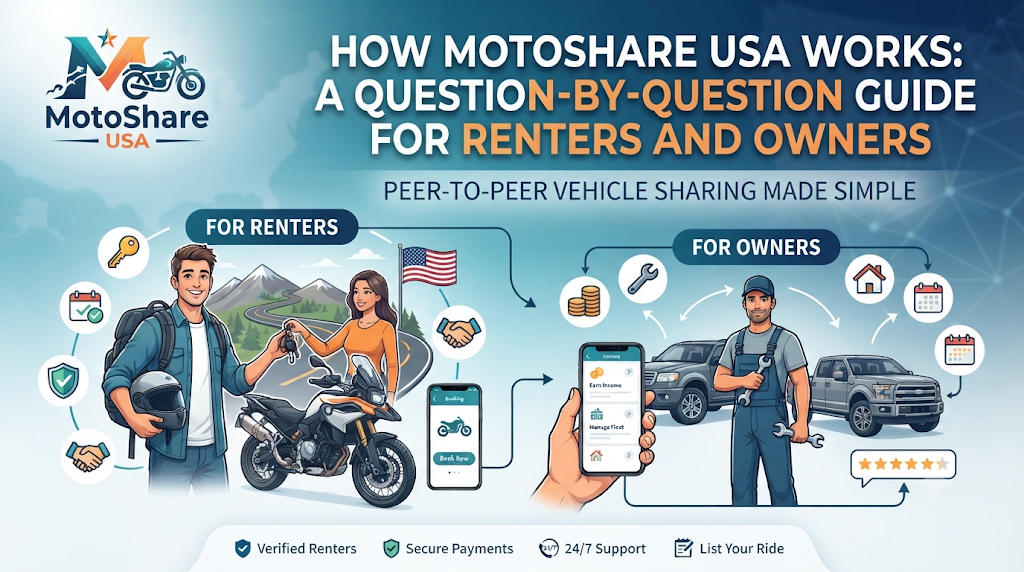
Plenty of people need a vehicle for a short time. A visitor may want a car for a long weekend. A rider may want a motorcycle for a single road trip. A traveler may only need a scooter to cover a few local errands. At the same time, plenty of owners have vehicles that sit unused for long stretches.
MotoShare USA is an online marketplace that sits between these two groups. It lists motorcycles, cars, and scooters from independent owners and rental service providers across the United States. This guide answers the questions people most often have about how that kind of marketplace works, one question at a time.
What Exactly Is MotoShare USA?
It is an online vehicle rental marketplace. People who want a motorcycle, car, or scooter can search by location and browse listings. Vehicle owners and rental businesses can list what they have and reach people who are searching.
The platform is not built around one company’s fleet. Its role is closer to a meeting place. Visitors explore categories and compare options from participating providers. Owners and businesses put their vehicles in front of potential customers.
The platform describes itself as free to use, with no additional marketplace commissions or booking fees. That statement is about the marketplace. It does not say what an individual provider charges, and it does not cover taxes or other costs. Each listing still needs a careful read.
MotoShare USA does not own every vehicle shown, and not every rental is between two private individuals. Some listings come from rental businesses.
How Is a Marketplace Different From a Regular Rental Company?
A regular rental company owns its vehicles, chooses its own terms, and runs each booking itself. A peer-to-peer marketplace works another way. The vehicles come from many sources, and each owner or provider decides what to list and how to describe it.
That has two practical effects:
- More variety. A renter can compare listings from several sources instead of one fleet.
- More variation. Terms, conditions, and booking steps may differ from one listing to the next.
This is why people consider the model. They want temporary transport, access to different vehicle types, and a way to find options near where they are. Owners, for their part, get a way to make a vehicle available.
It would be wrong to say a marketplace is always cheaper or always better. Vehicle choice, availability, terms, and suitability all depend on the individual listing and provider. The marketplace gives you a place to compare. It does not decide the outcome for you.
What Can Renters Find?
Motorcycles
Many riders begin with a search for “motorcycle rentals near me.” The search shows what is close. The next job is to decide whether a listed bike suits the plan.
Start by choosing a location. Then compare the motorcycles shown, read the details each owner has written, and check the rental period. Think about the ride itself. A long highway day and a short scenic loop ask different things of a bike. Availability can change, so a motorcycle that appears today may be booked on your dates. Some renters may also need to meet requirements set by the owner or provider.
Behind these listings is the idea of peer-to-peer motorcycle rental. It links people who own motorcycles with people who want to ride one for a while. Three roles can appear: owners who list their own bikes, rental service providers who list bikes from their stock, and renters who search and arrange bookings. The usual path is to find a bike, read its details, choose a rental period, and follow the booking steps on the listing.
Cars
Cars fit the widest range of needs. People look for them for everyday transport, family visits, leisure trips, weekend getaways, road trips, and short gaps when their own car is not available. The search is usually “car rentals near me,” followed by a closer look at what comes up.
The cars shown depend on what local owners and providers have listed. Check the vehicle details, think about passengers and luggage, and compare the rental period with your dates.
Peer-to-peer car rental follows the same pattern as the motorcycle model. Independent owners make cars available, and renters find a listing, read it, and arrange a booking. The main difference from a traditional rental company is where the cars come from and who sets the terms.
Scooters
A scooter suits short trips. It is easy to park and simple to use in a small area, so it can work well for a visitor who stays in one place. Anyone looking at “scooter rentals near me” should confirm the scooter type, the pickup area, and the rental period. They should also ask whether it suits the route. Scooters are not offered in every location, and renters may need to meet specific requirements.
Why Do Place-Based Searches Matter? The Hilton Head Island Example
Most vehicle rentals are tied to a place. People want a vehicle where they are going, not somewhere else. That is why location search sits at the center of a marketplace. Hilton Head Island shows how it works.
Searching for a car
Visitors to the island often need transport for getting around, for holidays, and for trips to nearby places. A search for “car rental Hilton Head Island” is a natural step for anyone planning a stay. The supplied description says the platform’s island pages have shown car and motorcycle listings. Listings change often, though. Check the live pages for your own dates, and do not assume prices, vehicle models, or counts from a general description.
Searching for a motorcycle
Some visitors would rather ride. For them, “motorcycle rental Hilton Head Island” is the more useful search. Local listings show which bikes are offered nearby and what details each owner has provided. It helps to keep two ideas apart. The general opportunity is that a marketplace can link riders with local owners. Confirmed inventory is a different thing, and only the current listings can show it.
What Can Owners Do?
Motorcycle owners
An owner who wonders, “Could I rent out my motorcycle?” usually has a bike that sits idle for part of the year. A marketplace lets that owner reach people who are already looking.
The strength of a listing comes from a few habits:
- Accurate details. Describe the bike as it really is.
- Sensible rental periods. Choose periods that suit how you want to share it.
- Clear conditions. Tell renters what to expect before they ask.
- Timely replies. Look through requests and booking arrangements promptly.
- Fresh information. Update the listing when something changes.
No platform can promise bookings, income, or steady demand. Outcomes depend on the season, the location, the listing, and the renter’s needs.
Car owners
A car owner who searches “list my car for rent” faces similar choices. Gather the vehicle’s information first. Add relevant details. Write the rental conditions in plain words. Review rental periods and booking requests as they arrive, and keep the listing current.
Do not assume anything about approval rules, payouts, or insurance. Check those directly on the platform.
What About Rental Businesses and Software?
A business that handles many vehicles needs a way to keep track of them. Rental management software is built for that. In general, it helps a business keep bookings, vehicles, and customer information in order.
MotoShare advertises free car rental software built around three areas:
- Booking administration, for handling bookings
- Fleet operations, for managing vehicles
- Customer records, for keeping customer information
The supplied description stops there, and so does this guide. Whether the software is available on the US platform, and how complete it is, should be confirmed before any business relies on it.
How Does a Renter Get Started?
- Pick the vehicle type. Decide whether a motorcycle, car, or scooter fits the trip. This keeps the search focused.
- Search by location. Enter the place where you need the vehicle.
- Explore the listings. Look through what participating owners and providers have posted.
- Review the details. Read the vehicle information, the rental period, and the terms.
- Follow the booking process. Use the steps shown for that listing.
The exact process may vary by listing and provider.
How Does an Owner Get Started?
- Choose the vehicle you want to list.
- Prepare accurate information and relevant details about it.
- Create or submit the listing through the platform’s own process.
- Review enquiries and booking requests as they arrive.
- Keep the listing and rental information updated.
Do not assume that listings are approved automatically. The platform’s own instructions come first.
Where Do People Go Wrong?
Most trouble in vehicle rentals comes from missing or outdated information. Here are the common slips, each paired with a better habit.
Renters:
- Instead of picking a vehicle from the photo alone, try reading the full listing first.
- Instead of ignoring the rental period or location, try confirming both at the start.
- Instead of skipping the conditions, try reading them and asking the provider about anything unclear.
- Instead of assuming the vehicle is free right now, try checking your exact dates.
- Instead of choosing the first vehicle you like, try asking whether it suits the distance, the passengers, and the luggage.
Owners:
- Instead of a short, vague description, try including what a renter would want to know.
- Instead of leaving old availability on the page, try updating it when plans change.
- Instead of leaving conditions unsaid, try writing them out in advance.
- Instead of letting enquiries sit, try replying promptly.
- Instead of overstating the vehicle, try being honest about its condition and what it suits.
What Does a Realistic Scenario Look Like?
The renter. Tom is planning a three-day trip to Hilton Head Island and wants to ride rather than drive. He chooses “motorcycle” as the vehicle type and enters the island as his location. He scrolls through the listings and picks out two that look suitable.
For each, he reads the vehicle details and thinks about the kind of riding he has planned. He checks the rental period against his dates and reads the conditions the owner has stated. One bike is not free for his full trip, so he drops it. For the other, he follows the booking process shown on the listing.
The owner. Lena has a car she uses only on weekdays. She decides to list it for weekend rentals. She gathers accurate details, states her rental conditions clearly, and chooses periods she is comfortable with. After the listing goes up, she checks for enquiries and updates the page when her schedule changes. She does not count on a set number of bookings, since demand is never certain.
Short Answers to Common Questions
Who is MotoShare USA for?
It is for renters who want a motorcycle, car, or scooter, and for owners and rental businesses who want to list vehicles.
Is the platform a traditional rental company?
No. It connects renters with independent owners and rental service providers, and it is not described as operating only its own fleet.
Can I be sure a listed vehicle is free?
No. Availability changes, so check the listing for your exact dates.
Are there vehicles on Hilton Head Island?
The supplied description says the island pages have shown car and motorcycle listings. Check the current pages to see what is available now.
What should I read before I book?
Read the vehicle details, the rental period, the location, and the conditions. Then ask whether the vehicle suits your trip.
How should an owner begin?
Gather accurate details and create a listing through the platform’s own process. Confirm the exact steps there.
Can I count on income from listing?
No. No platform can promise bookings or earnings.
Does “free to use” mean I will pay nothing?
Not necessarily. The platform says it adds no marketplace commissions or booking fees, but providers may set their own charges, and taxes or other costs may apply.
Does the platform offer rental software?
It advertises free software for booking administration, fleet operations, and customer records. Confirm US availability and the full feature set before relying on it.
Conclusion
MotoShare USA gives renters and owners a common place to find each other. Renters can search for motorcycles, cars, and scooters by location. Owners and businesses can list vehicles to reach them. The advertised management software adds a further option for businesses, though it should be confirmed first.
For anyone using a marketplace like this, the live listing is the best source of truth. It shows what is actually available, on what terms, and for which dates.