Category: Uncategorized

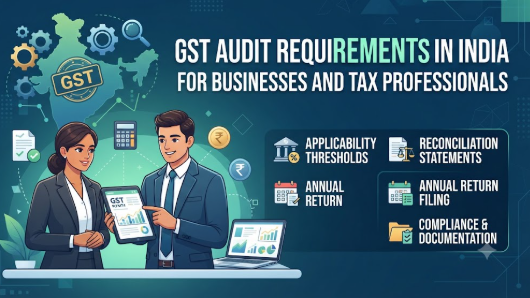
  • GST Audit Requirements in India for Businesses and Tax Professionals

    Introduction

    GST compliance does not end with filing monthly returns. Many businesses later find differences between their accounting records, GSTR-1, GSTR-3B, GSTR-2B and annual financial statements. These differences may relate to unreported invoices, incorrect input tax credit, credit notes, reverse charge or turnover recorded under multiple GST registrations. Understanding GST Audit Requirements in India helps business owners, accountants and tax professionals identify such issues before they lead to notices, interest or penalties. This guide explains GSTR-9, GSTR-9C, turnover limits, departmental audits, special audits, required documents and practical reconciliation steps in simple language.


    What Are GST Audit Requirements in India?

    GST audit requirements refer to the procedures used to examine a registered person’s:

    • Accounting records
    • GST returns
    • Sales and purchase transactions
    • Tax payments
    • Input tax credit claims
    • Refunds
    • Exemptions
    • Tax rates
    • Supporting documents
    • Overall compliance with GST law

    In simple terms, GST audit and reconciliation help determine whether the information reported to the GST authorities is complete, accurate and supported by business records.

    The phrase “GST audit” is commonly used for several different activities. These should not be confused with one another.

    Annual GST reconciliation

    A taxpayer may need to file:

    • Form GSTR-9 as the annual return
    • Form GSTR-9C as the self-certified reconciliation statement

    Form GSTR-9C is generally applicable when aggregate turnover during the financial year exceeds ₹5 crore. Under the current framework, it is self-certified by the taxpayer rather than certified as a GST audit report by a Chartered Accountant or Cost Accountant.

    Departmental GST audit

    Tax officers may conduct an audit under Section 65 of the CGST Act. This can involve checking books, invoices, returns, input tax credit, tax rates, exemptions and refunds.

    Special GST audit

    A special audit under Section 66 may be directed when an officer considers that the value declared may not be correct or input tax credit may not be within normal limits. It is conducted by a Chartered Accountant or Cost Accountant nominated by the Commissioner.

    Internal GST review

    Many responsible businesses conduct an internal GST review even when GSTR-9C is not mandatory. This is not a separate statutory audit, but it can help identify errors before they result in notices, interest or penalties.

    Simple illustration

    Suppose a company reports annual taxable sales of ₹8.20 crore in its accounting records but only ₹7.95 crore in GST returns.

    The ₹25 lakh difference may have arisen from unreported invoices, incorrect credit notes, timing differences or non-GST income included in the books. The reconciliation process must identify the reason and determine whether additional GST is payable.


    Why GST Audit Compliance Is Important

    GST compliance is not limited to filing monthly returns. Every return becomes part of a larger financial trail.

    The department may compare information from:

    • GSTR-1
    • GSTR-3B
    • GSTR-2B
    • E-invoices
    • E-way bills
    • Annual financial statements
    • Income-tax records
    • TDS and TCS information
    • Import and export records
    • Bank transactions
    • Customer and supplier declarations

    A difference does not automatically mean tax evasion. It may be caused by timing, classification or accounting treatment. However, unexplained differences may lead to scrutiny.

    It helps prevent tax shortfalls

    Reconciliation can identify invoices that were recorded in the books but omitted from GST returns.

    It protects eligible input tax credit

    A business may have valid purchase invoices but may still face difficulty if the supplier has not reported them correctly or if the credit is restricted under GST law.

    It supports accurate financial reporting

    GST turnover, tax liabilities and input tax credit balances should agree with the financial statements and supporting ledgers.

    It improves cash-flow planning

    An unexpected tax shortfall discovered after year-end may create financial pressure. Regular reconciliation helps businesses identify liabilities earlier.

    It strengthens lender and investor confidence

    Clean tax records can support due diligence conducted by banks, investors, buyers and other stakeholders.

    It reduces notice-related stress

    Businesses with organised records can respond to departmental queries faster and more accurately.

    Practical situation

    A wholesaler notices a ₹6 lakh difference between input tax credit claimed in GSTR-3B and eligible credit appearing in GSTR-2B.

    Instead of ignoring the difference, the business reviews invoice dates, supplier filings, import documents and blocked credits. It finds that ₹2 lakh relates to eligible import IGST, ₹1 lakh was reported late by suppliers and ₹3 lakh is unsupported.

    The business can then take corrective action based on the nature of each difference.


    Detailed Breakdown of GST Audit Requirements in India

    Current Legal Framework for GST Audits

    The current GST audit framework has three major parts:

    1. Annual return and self-certified reconciliation
    2. Departmental audit by tax authorities
    3. Special audit by a nominated professional

    The earlier requirement under which specified taxpayers had to get their accounts audited under GST by a Chartered Accountant or Cost Accountant was removed.

    From 1 August 2021, Rule 80 provides that taxpayers whose aggregate turnover exceeds ₹5 crore during a financial year must furnish a self-certified reconciliation statement in Form GSTR-9C with Form GSTR-9. The normal statutory due date is 31 December following the end of the relevant financial year, unless extended.

    The change is important because:

    • The responsibility for certification now lies with the taxpayer.
    • Management must understand significant reconciliations.
    • Professional assistance may still be advisable.
    • Incorrect self-certification can create compliance exposure.
    • Financial statements and GST records must still be reconciled carefully.

    Types of GST Audits and Annual Compliance

    Annual return in Form GSTR-9

    Form GSTR-9 is an annual return containing consolidated information relating to:

    • Outward supplies
    • Inward supplies
    • Input tax credit
    • Tax paid
    • Refunds
    • Demands
    • Previous-year transactions reported later
    • HSN-wise details, where applicable

    The GST portal requires taxpayers to file all applicable GSTR-1 or IFF statements and GSTR-3B returns for the relevant year before filing GSTR-9.

    Reconciliation statement in Form GSTR-9C

    Form GSTR-9C compares the figures reported in GST returns with the audited annual financial statements.

    It primarily covers:

    • Turnover reconciliation
    • Taxable turnover reconciliation
    • Rate-wise tax liability
    • Tax paid reconciliation
    • Input tax credit reconciliation
    • Reasons for differences
    • Additional liability, where applicable

    Departmental audit under Section 65

    A departmental audit is conducted by authorised tax officers.

    It may cover:

    • One financial year
    • Part of a financial year
    • Multiple financial years
    • Records maintained at the business premises
    • Records submitted to the department’s office

    Special audit under Section 66

    A special audit is conducted by a Chartered Accountant or Cost Accountant nominated by the Commissioner.

    It may be ordered even when the taxpayer’s accounts have already been audited under another law.

    Internal GST health check

    An internal GST health check may be conducted monthly, quarterly or annually.

    It can cover:

    • Sales reconciliation
    • Purchase reconciliation
    • Vendor compliance
    • E-invoice matching
    • E-way bill matching
    • Reverse charge review
    • Tax-rate verification
    • Place-of-supply verification
    • Credit note review
    • Input tax credit eligibility

    GST Audit Turnover Limits and Applicability

    Table 1: General GST Annual Compliance Position

    Aggregate turnover positionGeneral annual compliance positionImportant consideration
    Up to ₹2 croreGSTR-9 may be exempted for a financial year through a specific government notificationVerify the notification applicable to the exact financial year
    Above ₹2 crore and up to ₹5 croreGSTR-9 is generally required, while GSTR-9C is generally not requiredComplete all periodic returns and reconcile turnover and ITC
    Above ₹5 croreGSTR-9 and self-certified GSTR-9C are generally requiredReconcile GST returns with audited annual financial statements
    Taxpayer selected under Section 65Departmental audit may apply regardless of turnoverRespond to Form GST ADT-01 and maintain complete records
    Taxpayer directed under Section 66Special audit may apply regardless of turnoverAudit is conducted by a CA or CMA nominated by the Commissioner

    Understanding Aggregate Turnover

    Aggregate turnover is not limited to the turnover of one GST registration.

    It is generally calculated on an all-India PAN basis and includes:

    • Taxable supplies
    • Exempt supplies
    • Zero-rated supplies
    • Exports
    • Inter-state supplies
    • Supplies made by different branches under the same PAN
    • Outward supplies on which tax is payable by the recipient under reverse charge

    It generally excludes:

    • CGST
    • SGST
    • UTGST
    • IGST
    • Compensation cess
    • Inward supplies on which tax is payable under reverse charge

    CBIC guidance confirms that aggregate turnover is computed on an all-India basis and that inward supplies liable to reverse charge are not included.

    Multiple GST registrations under one PAN

    Suppose a company has:

    • Delhi GSTIN turnover: ₹2.40 crore
    • Haryana GSTIN turnover: ₹1.80 crore
    • Maharashtra GSTIN turnover: ₹1.50 crore

    The all-India aggregate turnover is ₹5.70 crore.

    The threshold analysis should therefore not be performed by looking at each GSTIN in isolation.

    At the same time, GSTR-9 is filed at the GSTIN level. A person with multiple registrations must prepare the annual return separately for each applicable registration.

    This means that businesses may need:

    • State-wise trial balances
    • GSTIN-wise revenue allocation
    • Branch-level input tax credit records
    • Cross-charge or ISD documentation
    • State-wise reconciliation workings

    GSTR-9 Annual Return Requirements

    Form GSTR-9 provides an annual summary of GST transactions.

    Main categories covered

    The form generally includes:

    • Taxable outward supplies
    • Exempt supplies
    • Nil-rated supplies
    • Non-GST supplies
    • Export supplies
    • Supplies to SEZ units or developers
    • Advances
    • Reverse charge transactions
    • Input tax credit claimed
    • Input tax credit reversed
    • Ineligible input tax credit
    • Tax paid
    • Refunds
    • Demands
    • HSN-wise details
    • Previous-year transactions reported during the permitted period

    The GST portal auto-populates several fields using information already filed in GSTR-1 and GSTR-3B. Table 8A is populated using GSTR-2A or GSTR-2B data, depending on the relevant financial year.

    General exclusions

    The GST portal identifies certain categories that are not required to file GSTR-9, including:

    • Casual taxable persons
    • Non-resident taxable persons
    • Input Service Distributors
    • Certain OIDAR service providers
    • Persons covered by specific statutory exclusions or notifications

    Taxpayers should verify their exact category instead of relying only on turnover.

    Important filing conditions

    Before filing GSTR-9:

    • All applicable GSTR-1 or IFF statements must be filed.
    • All applicable GSTR-3B returns must be filed.
    • Annual figures should be reconciled with books.
    • Additional liability should be calculated.
    • Late fee, where applicable, should be paid.
    • The final draft should be reviewed before submission.

    GSTR-9 cannot be revised after filing. The GST portal allows taxpayers to preview the draft before submission, making the review stage especially important.

    Additional tax liability

    A taxpayer can disclose additional liability in GSTR-9 if it was not reported earlier.

    The additional liability is generally paid through Form GST DRC-03 using the electronic cash ledger. Unclaimed input tax credit cannot be newly claimed through GSTR-9.


    GSTR-9C Reconciliation Statement Requirements

    GSTR-9C is not simply a duplicate of the annual return. It reconciles the annual GST information with the financial statements.

    GSTR-9C applicability

    Under the current Rule 80 framework, GSTR-9C is generally required when aggregate turnover during the financial year exceeds ₹5 crore.

    The form is self-certified by the taxpayer.

    The removal of compulsory CA or CMA certification does not prevent a business from seeking professional assistance. For complex businesses, independent review can reduce the risk of inaccurate self-certification.

    Main reconciliations in GSTR-9C

    Gross turnover

    The business compares turnover from:

    • Audited financial statements
    • GST returns
    • Branch records
    • State-wise financial data
    • GSTR-9

    Adjusted annual turnover

    Adjustments may be needed for:

    • Unbilled revenue
    • Advances
    • Credit notes
    • Debit notes
    • Deemed supplies
    • Schedule I supplies
    • Turnover reported in another financial year
    • Non-GST income
    • Foreign exchange differences
    • Sales returns
    • Branch transfers

    Taxable turnover

    The business must separate:

    • Taxable supplies
    • Exempt supplies
    • Nil-rated supplies
    • Non-GST supplies
    • Zero-rated supplies without payment of tax
    • Supplies on which the recipient pays tax under reverse charge

    Tax liability

    Tax payable should be reviewed rate-wise and compared with:

    • GSTR-1
    • GSTR-3B
    • GSTR-9
    • Output GST ledgers
    • E-invoice data

    Input tax credit

    Input tax credit should be reconciled among:

    • Purchase register
    • General ledger
    • GSTR-3B
    • GSTR-2B
    • Import documents
    • Input Service Distributor credits
    • Reverse charge payments
    • Capital goods register
    • Expense ledgers

    Additional liability

    Unreconciled differences may result in:

    • Additional tax
    • Interest
    • Input tax credit reversal
    • Explanatory disclosure
    • Further professional review

    Departmental Audit Under Section 65

    A departmental audit can be initiated for any registered person selected by the tax authorities. There is no general turnover-based protection from such an audit.

    Audit notice

    The proper officer issues a notice in Form GST ADT-01.

    The registered person must generally receive at least 15 working days’ notice before the audit begins.

    Audit location

    The audit may be conducted:

    • At the taxpayer’s place of business
    • At the tax department’s office
    • Through electronic submission of records
    • Through a combination of physical and electronic verification

    Audit period

    The audit may cover:

    • A financial year
    • Part of a financial year
    • Multiple financial years

    Areas examined

    Tax officers may verify:

    • Books of account
    • GST returns
    • Turnover
    • Exemptions
    • Deductions
    • Tax rates
    • Input tax credit
    • Refund claims
    • Reverse charge liability
    • Place of supply
    • E-invoices
    • E-way bills
    • Related-party transactions
    • Supporting records

    The official audit rules specifically permit verification of the correctness of turnover, exemptions, deductions, tax rates, input tax credit, refunds and other relevant matters.

    Time allowed for completion

    A departmental audit is ordinarily required to be completed within three months from its commencement.

    The Commissioner may extend this period by a further period not exceeding six months where the prescribed conditions are satisfied.

    Audit findings

    After considering the taxpayer’s explanation, findings are communicated through Form GST ADT-02.

    Where an audit detects short payment, wrongful input tax credit, erroneous refund or another non-compliance, further proceedings may be initiated under the applicable provisions.


    Special Audit Under Section 66

    A special audit is different from a routine departmental audit.

    It may be ordered during scrutiny, inquiry, investigation or another proceeding when the officer considers that:

    • The value declared may not be correct.
    • Input tax credit claimed may not be within normal limits.
    • The case is complex.
    • A detailed professional examination is necessary.

    Who orders the audit?

    An Assistant Commissioner or an officer above that rank may direct a special audit with prior approval of the Commissioner.

    Who conducts it?

    The audit is conducted by a Chartered Accountant or Cost Accountant nominated by the Commissioner.

    The taxpayer does not independently select the auditor.

    Applicable form

    The direction is issued in Form GST ADT-03.

    The findings are communicated in Form GST ADT-04.

    Time limit

    The nominated professional generally submits the report within 90 days.

    The period may be extended by a further 90 days for sufficient reasons.

    Audit cost

    The cost of the special audit, including the professional’s remuneration, is determined and paid by the Commissioner.

    Opportunity of being heard

    Where material from the special audit is proposed to be used against the taxpayer, the registered person must be given an opportunity of being heard.


    Records and Documents Required

    A well-prepared business should maintain records throughout the year rather than collecting documents only after receiving a notice.

    Registration records

    • GST registration certificate
    • Amendments to registration
    • Details of additional places of business
    • Authorised signatory details
    • Branch and GSTIN list

    Financial records

    • Audited financial statements
    • Balance sheet
    • Profit and loss account
    • Trial balance
    • General ledger
    • Cash book
    • Bank book
    • Journal register
    • Fixed asset register
    • Stock records

    Sales records

    • Tax invoices
    • Bills of supply
    • Export invoices
    • E-invoices
    • Credit notes
    • Debit notes
    • Delivery challans
    • Advance receipts
    • Customer ledgers
    • Sales register
    • E-way bill data

    Purchase and expense records

    • Purchase invoices
    • Expense vouchers
    • Vendor ledgers
    • Import bills of entry
    • Reverse charge invoices
    • Payment records
    • Capital asset invoices
    • Input Service Distributor documents

    GST records

    • GSTR-1
    • GSTR-3B
    • GSTR-2A
    • GSTR-2B
    • GSTR-9
    • GSTR-9C
    • GSTR-7 or GSTR-8 data, where relevant
    • Electronic cash ledger
    • Electronic credit ledger
    • Electronic liability register
    • DRC-03 payment records
    • Refund applications
    • Departmental notices and replies

    Special supporting documents

    • Agreements
    • Purchase orders
    • Work orders
    • Job-work challans
    • Export documentation
    • Letter of undertaking
    • SEZ endorsements
    • Related-party valuation workings
    • Place-of-supply analysis
    • Exemption notifications
    • Tax-rate opinions

    GST rules require relevant accounts, invoices, bills of supply, credit and debit notes, delivery challans and records relating to stock, inward supplies and outward supplies to be preserved for the statutory period.


    Step-by-Step Practical Guide to GST Audit Preparation

    Step 1: Determine the applicable turnover

    What it means

    Calculate aggregate turnover across all GST registrations held under the same PAN.

    Why it matters

    The turnover determines whether GSTR-9C may be applicable and whether an annual-return exemption may be available.

    How to apply it

    Combine:

    • Taxable turnover
    • Exempt turnover
    • Export turnover
    • Inter-state turnover
    • Turnover of every branch under the PAN

    Exclude GST and inward reverse charge supplies.

    Practical application

    A company with three GSTINs showing ₹2 crore, ₹1.75 crore and ₹1.50 crore has aggregate turnover of ₹5.25 crore, subject to final reconciliation.


    Step 2: Confirm the taxpayer category

    What it means

    Check whether the registration is regular, composition, ISD, casual, non-resident, TDS, TCS or another category.

    Why it matters

    Different categories have different annual filing requirements.

    How to apply it

    Review:

    • Registration certificate
    • Return filing history
    • Composition status
    • Cancellation or suspension periods
    • Conversion between schemes

    Practical application

    A taxpayer that moved from composition to the regular scheme during the year may have different reporting obligations for each period.


    Step 3: Download complete GST data

    What it means

    Collect all filed returns, auto-populated statements and electronic ledgers.

    Why it matters

    Reconciliation cannot be completed reliably using accounting data alone.

    How to apply it

    Download:

    • GSTR-1 summaries
    • GSTR-3B returns
    • GSTR-2B statements
    • Electronic ledgers
    • E-invoice records
    • E-way bill records
    • Annual-return system summaries

    Practical application

    A business creates month-wise folders containing returns, challans, invoice data and reconciliation files.


    Step 4: Reconcile outward supplies

    What it means

    Compare sales reported in the books with GSTR-1, GSTR-3B and e-invoice data.

    Why it matters

    Differences may lead to short payment, excess payment or incorrect reporting.

    How to apply it

    Check:

    • Invoice number
    • Invoice date
    • GSTIN
    • Taxable value
    • Tax rate
    • Place of supply
    • Credit notes
    • Debit notes
    • Export status
    • Reverse charge classification

    Practical application

    An invoice recorded in March but uploaded in April should be identified as a timing difference rather than left unexplained.


    Step 5: Reconcile input tax credit

    What it means

    Compare input tax credit claimed with purchase records and GSTR-2B.

    Why it matters

    Unsupported or ineligible credit may result in reversal, interest and further proceedings.

    How to apply it

    Classify differences into:

    • Supplier filed late
    • Invoice missing from GSTR-2B
    • Import IGST
    • Reverse charge credit
    • Blocked credit
    • Duplicate claim
    • Credit claimed under the wrong GSTIN
    • Credit not claimed
    • Credit requiring reversal

    Practical application

    Motor vehicle expenses, employee-related expenses and personal expenditure should be reviewed separately for blocked-credit restrictions.


    Step 6: Review tax payments and reverse charge

    What it means

    Verify whether all output tax and reverse charge liabilities were paid correctly.

    Why it matters

    Reverse charge entries are commonly missed because the supplier may not charge GST on the invoice.

    How to apply it

    Review:

    • Legal fees
    • Director-related services, where applicable
    • Goods transport agency services
    • Import of services
    • Sponsorship
    • Security services in covered cases
    • Other notified supplies

    Practical application

    A foreign software subscription used by an Indian business may require review under import-of-service and reverse-charge provisions.


    Step 7: Prepare annual reconciliation workings

    What it means

    Create clear schedules supporting every major difference.

    Why it matters

    A single unexplained figure in GSTR-9C can create future difficulties.

    How to apply it

    Prepare:

    • Turnover reconciliation
    • Taxable turnover reconciliation
    • Tax-rate reconciliation
    • Tax-paid reconciliation
    • Input tax credit reconciliation
    • Expense-wise ITC schedule
    • Additional liability schedule
    • GSTIN-wise trial balance

    Practical application

    Non-GST income such as interest is separately identified instead of being mixed with taxable operating revenue.


    Step 8: Conduct management review before filing

    What it means

    The authorised signatory and responsible finance personnel review the final return and reconciliation.

    Why it matters

    GSTR-9 cannot be revised after filing, and GSTR-9C is self-certified.

    How to apply it

    Management should review:

    • Major differences
    • Tax shortfalls
    • ITC reversals
    • Legal positions
    • Supporting evidence
    • Additional payments
    • Final declarations

    Practical application

    The finance head signs a documented review note confirming that major reconciliations and payments have been examined.


    Five Practical Real-Life Examples

    Example 1: Sales invoice omitted from GSTR-1

    Situation: A service invoice of ₹5 lakh was recorded in the books but omitted from GSTR-1 and GSTR-3B.

    Challenge: The annual books show higher revenue than GST returns.

    Better action: Calculate the applicable tax and interest, consider payment through the prescribed process, and disclose the difference correctly.

    Learning: Monthly sales reconciliation can prevent year-end tax shortfalls.

    Example 2: Supplier invoice missing from GSTR-2B

    Situation: A business claimed input tax credit on an invoice that never appeared in GSTR-2B.

    Challenge: The supplier did not report the invoice under the correct GSTIN.

    Better action: Contact the supplier, verify the invoice and determine whether the credit must be reversed or otherwise treated under the applicable law.

    Learning: Possessing an invoice alone may not resolve every ITC eligibility issue.

    Example 3: Credit note entered only in books

    Situation: A customer returned goods and the business entered a credit note in its accounting software but did not report it in GST returns.

    Challenge: Book turnover became lower than GST turnover.

    Better action: Check the permitted reporting period and determine the correct GST treatment before preparing the annual return.

    Learning: Financial credit notes and GST credit notes must be reviewed separately.

    Example 4: Multiple GSTIN turnover ignored

    Situation: A company checked each state registration separately and concluded that none crossed ₹5 crore.

    Challenge: The combined PAN-based aggregate turnover exceeded ₹5 crore.

    Better action: Calculate all-India aggregate turnover first and then prepare GSTIN-wise annual compliance.

    Learning: Threshold analysis should not be limited to one state registration.

    Example 5: Personal expense included in input tax credit

    Situation: GST on personal travel and non-business expenditure was claimed through the company’s GSTR-3B.

    Challenge: The expenditure did not satisfy business-use and eligibility conditions.

    Better action: Identify the ineligible credit, reverse it where required and strengthen expense-approval controls.

    Learning: Every invoice bearing the company’s GSTIN does not automatically create eligible input tax credit.


    Common Problems Readers Face

    Lack of clarity about the meaning of GST audit

    Many businesses continue to use outdated information and assume that GSTR-9C must still be certified by a Chartered Accountant.

    The present system requires self-certification for eligible taxpayers, although professional review may remain useful.

    Incorrect turnover calculation

    Businesses may:

    • Exclude exempt supplies
    • Ignore branch turnover
    • Ignore export turnover
    • Calculate turnover GSTIN-wise instead of PAN-wise
    • Include GST in turnover
    • Include inward reverse charge supplies incorrectly

    Weak monthly reconciliation

    When reconciliation is postponed until year-end, the finance team may need to review thousands of invoices within a short period.

    Overdependence on auto-populated data

    Auto-populated figures are useful, but they do not replace accounting verification.

    Incorrect source returns can produce incorrect annual figures.

    Unexplained GSTR-1 and GSTR-3B differences

    A business may report invoices in GSTR-1 but fail to pay the corresponding liability in GSTR-3B.

    Poor input tax credit controls

    Common problems include:

    • Duplicate credit
    • Credit claimed under the wrong GSTIN
    • Blocked credit
    • Missing supplier invoices
    • Credit claimed before receiving goods or services
    • Failure to reverse credit where required
    • Incorrect treatment of capital goods

    Ignoring reverse charge

    Reverse charge liabilities may be missed because the supplier’s invoice does not contain normal GST.

    Incomplete branch accounting

    Businesses with multiple GSTINs may not maintain state-wise trial balances, making GSTR-9C preparation difficult.

    Unsupported exemptions

    A supply may be treated as exempt without preserving the relevant notification, agreement or supporting evidence.

    Filing without final review

    Because GSTR-9 cannot be revised, premature filing can create permanent reporting inconsistencies.


    Mistakes to Avoid

    Using an outdated GST audit threshold

    The earlier GST audit framework should not be confused with the current self-certified GSTR-9C requirement.

    Assuming professional review is unnecessary

    Self-certification does not mean that complex tax positions should be handled without qualified advice.

    Matching only total turnover

    A total turnover match can hide errors in:

    • Tax rate
    • Place of supply
    • Taxable classification
    • Exempt classification
    • Export reporting
    • Reverse charge
    • Credit notes

    Ignoring GSTR-2B differences

    Differences should be classified and explained rather than carried forward without review.

    Treating GSTR-9 as a revision return

    GSTR-9 is not a general replacement for correcting every historical return.

    It can report specified annual information and additional liability, but it cannot be used to claim previously unclaimed ITC.

    Using balancing figures without evidence

    Do not insert arbitrary adjustments merely to make the books and returns agree.

    Filing GSTR-9 before completing GSTR-9C

    Where GSTR-9C is applicable, the annual-return obligation is not treated as complete until both forms are furnished. CBIC has clarified that late fee may continue until the complete annual return, including GSTR-9C where applicable, is filed.

    Ignoring notices

    A notice should be reviewed immediately and assigned to a responsible person.

    Sharing portal credentials carelessly

    GST login credentials, digital signatures, OTPs and sensitive financial data should be protected.

    Don’t Do This Checklist

    • Do not calculate turnover using only one GSTIN.
    • Do not claim every purchase invoice as eligible ITC.
    • Do not ignore reverse charge transactions.
    • Do not file GSTR-9 without previewing the final return.
    • Do not use unsupported turnover adjustments.
    • Do not submit false explanations for reconciliation differences.
    • Do not depend entirely on accounting software classification.
    • Do not ignore cancelled invoices and credit notes.
    • Do not delay responding to Form GST ADT-01.
    • Do not alter records after receiving an audit notice without maintaining a transparent correction trail.
    • Do not share digital signature access with unauthorised persons.
    • Do not treat self-certification as a routine formality.

    Table 2: Common Reconciliation Differences and Correct Response

    Reconciliation differencePossible reasonBetter compliance response
    Books turnover higher than GSTR-1Unreported invoice, timing difference or non-GST incomeIdentify invoice-level difference and determine tax liability
    GSTR-1 turnover higher than booksDuplicate invoice, advance reporting or accounting omissionTrace the transaction and correct the accounting or GST treatment
    GSTR-3B liability lower than GSTR-1Tax not paid on reported invoicesCalculate shortfall and applicable interest
    ITC in GSTR-3B higher than GSTR-2BMissing supplier filing, blocked credit, import or reverse charge differenceClassify each item and retain supporting documents
    ITC in books higher than GSTR-3BCredit not claimed, timing issue or ineligible creditDetermine whether credit was legally available within the prescribed period
    Financial revenue higher than GST turnoverNon-GST income, branch allocation or unbilled revenuePrepare a documented turnover reconciliation
    E-way bill value higher than sales registerCancelled movement, delivery challan, stock transfer or duplicate e-way billMatch document-wise and retain cancellation evidence
    Export turnover mismatchForeign exchange difference, shipping bill timing or invoice amendmentReconcile invoice, shipping and receipt records
    Credit note mismatchNote not reported or treated as a financial adjustment onlyReview GST eligibility and reporting timeline
    Tax rate differenceWrong HSN, SAC or classificationObtain a reasoned classification review

    Tools, Methods and Compliance Frameworks

    GST compliance calendar

    Maintain a calendar containing:

    • GSTR-1 due dates
    • GSTR-3B due dates
    • Annual return timeline
    • Vendor follow-up dates
    • Reconciliation dates
    • Notice-response deadlines
    • LUT renewal
    • Refund deadlines
    • E-invoice and e-way bill reviews

    Monthly turnover reconciliation

    Use a standard worksheet containing:

    • Book turnover
    • GSTR-1 turnover
    • GSTR-3B turnover
    • E-invoice turnover
    • E-way bill value
    • Difference
    • Explanation
    • Corrective action
    • Person responsible
    • Closure date

    Input tax credit reconciliation tool

    Maintain invoice-level fields such as:

    • Supplier GSTIN
    • Invoice number
    • Invoice date
    • Taxable value
    • GST amount
    • GSTR-2B status
    • ITC eligibility
    • Payment status
    • Goods or service receipt status
    • Reversal requirement
    • Follow-up status

    GST risk register

    Assign every issue:

    • Risk description
    • Relevant GSTIN
    • Tax period
    • Potential tax amount
    • Interest exposure
    • Supporting document
    • Responsible employee
    • Target closure date
    • Final treatment

    Vendor compliance scorecard

    Classify suppliers based on:

    • Invoice accuracy
    • Timely GSTR-1 filing
    • Correct GSTIN reporting
    • Credit note cooperation
    • Response time
    • Frequency of GSTR-2B mismatches

    Four-way matching framework

    For outward supplies, match:

    1. Accounting records
    2. GSTR-1
    3. GSTR-3B
    4. E-invoice or e-way bill information

    For inward supplies, match:

    1. Purchase register
    2. Supplier invoice
    3. GSTR-2B
    4. Evidence of receipt and payment

    Document indexing method

    Use consistent file names containing:

    • Financial year
    • GSTIN
    • Return type
    • Tax period
    • Document category
    • Version number

    This makes records easier to retrieve during an audit.


    Expert Tips

    1. Reconcile monthly instead of annually. Small monthly differences are easier to investigate than a large year-end mismatch.
    2. Calculate aggregate turnover at PAN level. Include every registration and all relevant categories of outward supply.
    3. Maintain GSTIN-wise financial records. Multi-state businesses should avoid relying only on one consolidated trial balance.
    4. Review GSTR-1 and GSTR-3B differences every month. A reported invoice without corresponding tax payment can create immediate exposure.
    5. Create an ITC eligibility matrix. Classify expenses as eligible, blocked, proportionately reversible or requiring legal review.
    6. Track supplier compliance. Regular follow-up reduces long-pending GSTR-2B differences.
    7. Review reverse charge separately. Do not rely only on supplier invoices to identify the liability.
    8. Document every material adjustment. A reconciliation entry should have a clear working paper and supporting evidence.
    9. Preview GSTR-9 carefully. The form cannot be revised after filing.
    10. Involve management in GSTR-9C review. Self-certification creates direct responsibility for the taxpayer and authorised signatory.
    11. Keep legal positions in writing. Maintain notes for exemptions, tax rates, place of supply and related-party valuation.
    12. Protect GST data. Limit access to portal credentials, OTPs, digital signatures and confidential financial files.
    13. Prepare for audit before receiving notice. A year-wise electronic document repository reduces response time.
    14. Do not use artificial balancing figures. Unexplained adjustments can be more damaging than a properly disclosed difference.
    15. Seek qualified advice for material issues. Complex classification, valuation, ITC and cross-border matters should be professionally reviewed.

    Three Detailed Case Studies

    Case Study 1: Multi-State Trading Company Crossing the Threshold

    Profile

    A trading company operates in Delhi, Uttar Pradesh and Rajasthan under three GST registrations.

    Situation

    Each individual GSTIN had turnover below ₹5 crore. The finance team therefore assumed that GSTR-9C was not applicable.

    Problem

    The team calculated turnover separately for each state instead of calculating aggregate turnover across all registrations under the PAN.

    Wrong approach

    The company planned to file only GSTR-9 for the registrations with turnover above the annually notified small-taxpayer limit.

    It did not prepare state-wise reconciliations with audited financial statements.

    Better approach

    The company combined taxable, exempt and inter-state supplies across all GSTINs.

    The all-India aggregate turnover exceeded ₹5 crore. It then:

    • Prepared GSTIN-wise trial balances
    • Allocated head-office income and expenses
    • Reconciled branch transfers
    • Reviewed input tax credit distribution
    • Prepared separate annual-return workings for each registration
    • Obtained a professional review before self-certification

    Result or learning

    The company identified the correct compliance position before the filing deadline and avoided incomplete annual-return filing.

    Key takeaway

    GST audit turnover limits should be evaluated on the basis of aggregate turnover under the PAN, while annual filings are prepared at the applicable GSTIN level.


    Case Study 2: Service Company With Excess Input Tax Credit

    Profile

    A technology consulting company purchases software, cloud services, professional services and office equipment.

    Situation

    The purchase register showed input tax credit of ₹48 lakh, while GSTR-2B reflected ₹42 lakh.

    Problem

    The finance team initially treated the entire ₹6 lakh difference as supplier non-compliance.

    Wrong approach

    It continued carrying the difference in a reconciliation account without investigating invoice-level reasons.

    Better approach

    The company divided the difference into:

    • ₹1.50 lakh relating to import IGST
    • ₹80,000 relating to reverse charge credit
    • ₹1.20 lakh reported late by suppliers
    • ₹1 lakh claimed twice
    • ₹90,000 relating to blocked employee expenses
    • ₹60,000 reported under the wrong GSTIN

    The company then took corrective steps for each category rather than treating all differences alike.

    Result or learning

    Duplicate and blocked credits were identified, supplier corrections were requested, and valid non-GSTR-2B items were supported with proper records.

    Key takeaway

    An ITC mismatch is not one single problem. Every difference must be classified according to its legal and documentary nature.


    Case Study 3: Manufacturer Receiving a Departmental Audit Notice

    Profile

    A medium-sized manufacturer maintains inventory, job-work, e-way bill and production records.

    Situation

    The company received Form GST ADT-01 for a departmental audit covering multiple tax periods.

    Problem

    Records were stored across different systems, and the finance team had never reconciled production, stock movement and outward supply data.

    Wrong approach

    Management initially planned to submit only GST returns and audited financial statements.

    Better approach

    The company created an audit-response team and assembled:

    • Registration documents
    • Trial balances
    • Sales and purchase registers
    • Stock registers
    • Production records
    • Job-work challans
    • E-way bill data
    • Input tax credit schedules
    • Reverse charge workings
    • Exemption documents
    • Tax-rate notes
    • Reconciliation explanations

    Each departmental query was tracked through a response register.

    Result or learning

    The company responded in an organised manner, explained genuine timing differences and identified a limited tax shortfall before the audit was finalised.

    Key takeaway

    A departmental GST audit examines much more than the annual return. Operational, inventory and documentary controls are equally important.


    Risk Awareness Section

    Tax liability risk

    Unreported sales, incorrect tax rates or missed reverse charge transactions can result in additional tax liability.

    Interest risk

    Interest may arise where tax has been paid after the applicable due date.

    Input tax credit risk

    Credit may be questioned because of:

    • Missing invoices
    • Supplier non-reporting
    • Blocked-credit restrictions
    • Non-business use
    • Duplicate claims
    • Wrong GSTIN
    • Failure to satisfy prescribed conditions

    Departmental audit risk

    Any registered person may be selected for departmental audit based on the applicable administrative and risk-selection process.

    Special audit risk

    Complex valuation or unusual input tax credit patterns can result in a special audit direction.

    Documentation risk

    A correct transaction may still become difficult to defend if agreements, invoices, transport documents or payment evidence are unavailable.

    Classification risk

    Incorrect HSN, SAC, exemption or tax rate can affect tax liability across multiple periods.

    Cash-flow risk

    A large year-end tax adjustment can affect working capital, loan repayments and operating expenses.

    Technology risk

    Incorrect accounting-system mapping may repeatedly send transactions to the wrong GST return field.

    Fraud risk

    Fake invoices, circular trading, identity misuse and unauthorised input tax credit can create severe exposure.

    Data privacy risk

    GST audit records may contain bank information, customer details, pricing data, employee information and commercial agreements.

    Access should be restricted and monitored.

    Legal and compliance risk

    GST law, rules, notifications, circulars and portal functions can change. Businesses should verify current requirements and consult a qualified GST professional for material matters.


    Checklist Before Taking Action

    • Confirm the taxpayer’s GST registration category.
    • Calculate all-India aggregate turnover under the PAN.
    • Include taxable, exempt, zero-rated and inter-state outward supplies.
    • Exclude GST and inward reverse charge supplies from aggregate turnover.
    • Review the annual notification applicable to the financial year.
    • Confirm whether GSTR-9 is required.
    • Confirm whether GSTR-9C is required.
    • Identify every GSTIN requiring annual compliance.
    • Complete all applicable GSTR-1, IFF and GSTR-3B filings.
    • Download GSTR-1, GSTR-3B and GSTR-2B data.
    • Download electronic cash, credit and liability ledgers.
    • Reconcile book turnover with GSTR-1.
    • Reconcile GSTR-1 liability with GSTR-3B.
    • Reconcile purchase register credit with GSTR-2B.
    • Review import IGST and reverse charge credit separately.
    • Check blocked and ineligible input tax credit.
    • Review exempt, nil-rated and non-GST supplies.
    • Verify exports, LUT records and SEZ documentation.
    • Match e-invoice data with the sales register.
    • Match e-way bills with invoices, stock transfers and delivery challans.
    • Review credit notes, debit notes and sales returns.
    • Review advances and unbilled revenue.
    • Prepare GSTIN-wise trial balances.
    • Reconcile tax rates and classification.
    • Calculate additional tax and interest exposure.
    • Keep emergency working capital available for valid tax shortfalls.
    • Avoid unsupported adjustments or balancing figures.
    • Document the reason for every material difference.
    • Protect GST login credentials and digital signatures.
    • Review the draft GSTR-9 before filing.
    • Obtain management approval for material adjustments.
    • Arrange professional review for complex issues.
    • Preserve final workings and supporting documents.
    • Maintain a written compliance plan for the next financial year.

    Advanced Insights for Serious Readers

    Materiality should not replace legal compliance

    Financial-statement auditors commonly use materiality thresholds. GST reporting, however, is transaction-based.

    A difference that appears financially small may still be important where it:

    • Repeats across several months
    • Involves an incorrect tax rate
    • Affects input tax credit eligibility
    • Relates to an exemption
    • Indicates a system error
    • Concerns a related-party supply

    Build reconciliation at transaction level

    Summary-level matching can hide:

    • Duplicate invoices
    • Wrong GSTINs
    • Incorrect place of supply
    • Tax-rate errors
    • Invoice timing problems
    • Customer-type classification errors

    Transaction-level reconciliation creates a stronger audit trail.

    Use a bridge between financial statements and GSTIN records

    Multi-GSTIN businesses should prepare a structured bridge:

    1. Consolidated financial-statement revenue
    2. Less non-GST and non-operating income
    3. Add or subtract timing adjustments
    4. Allocate revenue to each GSTIN
    5. Reconcile each GSTIN to GSTR-9
    6. Document cross-charges and branch transactions

    Review internal controls, not only figures

    A strong GST review should assess:

    • Who creates customer masters
    • Who selects GST rates
    • Who approves ITC
    • Who files returns
    • Who reviews amendments
    • Who controls digital signatures
    • Who monitors vendor compliance
    • Who responds to notices

    Establish position-based tax limits

    Management may define internal review levels, such as:

    • Routine differences handled by the GST executive
    • Medium-value differences reviewed by the finance manager
    • Material legal issues reviewed by the tax head
    • High-risk matters referred to an external professional

    These are internal governance limits and do not replace statutory obligations.

    Monitor recurring causes

    A repeated mismatch often indicates a process failure rather than an isolated error.

    Examples include:

    • Wrong accounting mapping
    • Incorrect GSTIN master
    • Delayed credit notes
    • Manual invoice upload
    • Weak vendor onboarding
    • Incorrect branch allocation

    Correcting the root cause is more valuable than repeatedly passing year-end adjustments.

    Prepare an audit defence file

    For major tax positions, maintain a file containing:

    • Transaction summary
    • Legal provision
    • Relevant notification or circular
    • Agreement
    • Invoice sample
    • Accounting treatment
    • GST return treatment
    • Management approval
    • Professional opinion, where obtained

    Key Terms Explained

    • Aggregate turnover: The combined all-India value of specified outward supplies made by persons under the same PAN, excluding GST and inward reverse charge supplies.
    • GSTR-9: The annual return filed by applicable regular GST taxpayers.
    • GSTR-9C: A self-certified statement reconciling GST annual-return figures with audited annual financial statements.
    • GSTR-1: A statement containing details of outward supplies.
    • GSTR-3B: A summary return through which taxpayers report and pay GST liability and claim eligible input tax credit.
    • GSTR-2B: A static input tax credit statement generated from supplier and other prescribed information.
    • Input tax credit: Eligible GST paid on business purchases that may be used against output tax liability, subject to conditions.
    • Output tax: GST payable on taxable outward supplies, excluding tax payable under reverse charge in the hands of the recipient.
    • Reverse charge: A mechanism under which the recipient, rather than the supplier, is liable to pay GST on specified supplies.
    • Taxable turnover: The portion of turnover on which GST is payable after considering permitted exclusions and exemptions.
    • Exempt supply: A supply attracting a nil rate or wholly exempt from GST and other supplies included in the statutory definition.
    • Zero-rated supply: Certain export and SEZ supplies receiving specified GST treatment.
    • Departmental audit: An audit conducted by authorised GST officers under Section 65.
    • Special audit: An audit conducted by a CA or CMA nominated by the Commissioner under Section 66.
    • GST ADT-01: The notice issued for a departmental audit.
    • GST ADT-02: The form used to communicate departmental audit findings.
    • GST ADT-03: The direction issued for a special audit.
    • GST ADT-04: The form used to communicate special audit findings.
    • DRC-03: A form commonly used for voluntary payment of tax, interest or other applicable amounts.
    • Reconciliation: The process of comparing two or more sets of financial or tax information and explaining the differences.

    Who Should Read This Blog

    This guide is particularly useful for:

    • Beginners learning GST compliance
    • Accountants preparing annual GST returns
    • Business owners supervising finance teams
    • Startups crossing higher turnover levels
    • Companies operating in multiple states
    • Small and medium enterprises
    • Freelancers and consultants with GST registration
    • Manufacturers maintaining stock and job-work records
    • Traders managing large invoice volumes
    • Exporters and SEZ suppliers
    • Finance managers responsible for GSTR-9C
    • Tax professionals assisting with reconciliations
    • Students studying indirect taxation
    • Directors signing self-certified GST statements
    • Businesses that have received GST notices
    • Organisations preparing for departmental audit

    Frequently Asked Questions

    1. Is GST audit mandatory for every registered business?

    No. The earlier compulsory annual GST audit by a Chartered Accountant or Cost Accountant has been removed. However, annual-return filing, self-certified GSTR-9C, departmental audit or special audit may apply depending on turnover, taxpayer category and departmental action.

    2. What is the current GST audit turnover limit?

    Form GSTR-9C is generally applicable when aggregate turnover during a financial year exceeds ₹5 crore. GSTR-9 applicability must be checked separately, including any exemption notification issued for the relevant year.

    3. Who certifies GSTR-9C under the current rules?

    GSTR-9C is self-certified by the taxpayer or authorised signatory. Businesses may still obtain professional assistance to prepare and review the reconciliation, especially where transactions are complex or material.

    4. Are GSTR-9 and GSTR-9C the same?

    No. GSTR-9 is the annual GST return containing consolidated transaction information. GSTR-9C reconciles the figures reported in the annual return with the audited annual financial statements.

    5. How is turnover calculated for GST Audit Requirements in India?

    Aggregate turnover is generally calculated across all GST registrations under the same PAN on an all-India basis. It includes taxable, exempt, export and inter-state outward supplies but excludes GST and inward reverse charge supplies.

    6. Is the ₹5 crore limit checked GSTIN-wise?

    The threshold is based on aggregate turnover, which is a PAN-based all-India concept. However, annual returns and reconciliation statements are prepared at the applicable GSTIN level, making state-wise financial records important.

    7. Can a business below the GSTR-9C limit face a GST audit?

    Yes. Departmental audit under Section 65 and special audit under Section 66 are not restricted only to taxpayers crossing the GSTR-9C turnover limit. A smaller taxpayer may also be selected or directed for audit.

    8. What is the normal due date for GSTR-9 and GSTR-9C?

    The normal statutory due date is 31 December following the end of the relevant financial year, unless the government extends the date. Taxpayers should verify the due date applicable to their specific year.

    9. Can GSTR-9 be revised after filing?

    No. The GST portal states that GSTR-9 cannot be revised after it has been filed. Taxpayers should therefore preview the form, review all reconciliations and obtain appropriate approval before submission.

    10. Can unclaimed input tax credit be claimed through GSTR-9?

    No. GSTR-9 cannot be used to claim input tax credit that was not claimed earlier. ITC availability must be examined under the applicable statutory time limits and return provisions.

    11. What happens when GSTR-9C is filed late?

    Where GSTR-9C is applicable, CBIC has clarified that the annual return is not complete until both GSTR-9 and GSTR-9C are filed. Late fee exposure may therefore continue until the complete annual return is furnished.

    12. How should a beginner prepare for GST Audit Requirements in India?

    Start by calculating aggregate turnover, confirming applicable forms and downloading all GST data. Reconcile sales, tax payments and input tax credit, document every difference, review additional liability and seek professional assistance for material issues.


    Conclusion

    GST Audit Requirements in India are important for maintaining accurate tax records and avoiding unnecessary compliance problems. Although compulsory CA or CMA certification of GSTR-9C has been removed, eligible taxpayers must still file the annual return and self-certified reconciliation statement based on the applicable turnover limit. Businesses should regularly reconcile sales, tax liability, input tax credit, reverse charge and financial statements instead of waiting until year-end. Proper records, clear explanations and timely professional advice can help reduce risks and make annual GST compliance easier and more reliable.


  • Local Goa Experiences Filled with Food Culture Music and Traditions

    Introduction

    Arriving on the sun-soaked shores of India’s most famous coastal escape should trigger instant relaxation, yet piecing together a trip often feels like solving a complex puzzle because travellers must juggle information about beaches, historic attractions, local transport, seasonal weather, regional food, water sports, and nightlife just to avoid heavy traffic and over-scheduling. The GoaOrbit
    platform solves this challenge by gathering all of these vital details into one accessible place, serving as a comprehensive travel planning platform that empowers you to discover the absolute best places to visit in Goa while building a balanced, stress-free holiday schedule tailored to your exact pace.

    What Travellers Can Find on GoaOrbit

    The platform serves as a complete digital resource designed to assist all kinds of holidaymakers. Instead of guessing which beach is family-friendly or which market is open on Wednesdays, you can use the structured data to sort through attractions based on practical categories.

    The platform covers a broad range of holiday elements, ensuring you do not miss out on key experiences:

    • Goa attractions: Comprehensive details on historic forts, old churches, spice plantations, and scenic nature reserves.
    • Beaches: Insights into both the high-energy shores of the upper coast and the calm bays of the lower coast.
    • North Goa: Information on historic sites, bustling flea markets, and lively coastal stretches.
    • South Goa: Details about heritage mansions, quiet fishing villages, and pristine sands.
    • Things to do: Suggestions for outdoor excursions, historical walking tours, and cultural discoveries.
    • Water sports: Guidelines on popular ocean adventures, river boat trips, and underwater experiences.
    • Nightlife: Overviews of popular clubs, evening beach shacks, night markets, and music venues.
    • Food experiences: Information on traditional curry houses, beachside dining, and classic Portuguese-influenced eateries.
    • Itineraries: Structured daily schedules designed for short weekend breaks or extended family vacations.
    • Best travel season: Weather breakdowns explaining the differences between the busy winter months, the quiet rainy season, and the summer months.
    • Accommodation areas: Guidance on choosing the right neighborhood based on your budget and daily plans.
    • Transport: Practical tips on hiring local scooters, booking taxis, and using public shuttle options.
    • Travel budgets: Tips on how to balance your daily expenses for food, entry tickets, and local commuting.
    • Local culture: Insights into traditional lifestyle, village customs, and regional history.
    • Festivals: Details on seasonal events, annual carnivals, and village feast days.
    • Safety tips: Basic precautions regarding ocean swimming, night travel, and handling rental vehicles.
    • Nearby attractions: Ideas for short detours into neighbouring nature sanctuaries or waterfalls.

    By exploring these categories on the platform, you can quickly build a balanced picture of what to expect during your stay. This saves you from arriving with unrealistic expectations or missing hidden spots located just a few minutes away from your hotel.

    Benefits of Using GoaOrbit

    Using a dedicated platform simplifies your holiday preparations by removing guesswork. Instead of relying on fragmented forum posts or outdated blogs, you get structured insights that help you make realistic choices about your daily route.

    Here are the primary benefits of using the platform for your holiday preparation:

    • Find travel information in one place: Access details about stays, sights, and transport without switching between multiple websites.
    • Compare North Goa and South Goa: Easily understand the contrasting vibes of the two districts to pick the right base for your group.
    • Discover famous and lesser-known beaches: Learn about iconic coastlines as well as hidden, quiet coves.
    • Explore activities for different traveller types: Find suitable recommendations whether you are travelling with children, a partner, or solo.
    • Build short and long itineraries: Use proven route structures to avoid spending all your time driving on the road.
    • Understand seasonal travel: Learn what changes between the dry winter months and the heavy monsoon period.
    • Learn about local food and culture: Discover regional dishes and traditional customs before you arrive.
    • Plan water sports carefully: Understand what types of ocean activities are available and what to look for regarding operators.
    • Explore nightlife options: Identify the right evening venues, from quiet acoustic lounges to high-energy dance floors.
    • Select suitable accommodation areas: Choose the best town to stay in so you are close to your preferred sights.
    • Save travel research time: Find verified logistical details quickly, leaving you more time to pack and prepare.
    • Make a more balanced travel plan: Mix busy sightseeing mornings with relaxing afternoon breaks effectively.

    With these comprehensive insights, the platform helps you shift from a generic holiday plan to a customized travel experience that matches your timeline and budget perfectly.

    Finding the Best Places to Visit in Goa

    Every visitor looks for something different during a holiday. Some want to spend hours exploring centuries-old architecture, while others prefer to sit by the ocean with a cool drink. The secret to a successful trip is realizing that the best places to visit in Goa are the ones that align with your personal energy and interests.

    The region offers a diverse mix of points of interest that go far beyond standard beach views:

    • Beaches: Wide sandy stretches perfect for sunbathing, walking, or enjoying ocean sunsets.
    • Forts: Historic coastal fortifications like Aguada, Chapora, and Cabo de Rama that offer panoramic views.
    • Churches: Monumental structures in Old Goa that showcase stunning colonial architecture and deep history.
    • Markets: Vibrant weekly shopping areas like the Anjuna flea market or the local daily markets in Mapusa.
    • Waterfalls: Refreshing inland natural wonders like Dudhsagar, especially spectacular after the rains.
    • Villages: Quiet residential areas like Saligao or Assagao where traditional homes and old trees line the roads.
    • Viewpoints: Elevated hills and cliff edges ideal for evening photography and catching the sunset.
    • Wildlife areas: Protected green zones like the Bhagwan Mahavir Sanctuary, home to diverse local flora and fauna.
    • Heritage streets: Colorful lanes like the Fontainhas Latin Quarter in Panaji, filled with old Portuguese-style houses.
    • Cultural attractions: Local museums, art galleries, and cultural centers that showcase regional history.

    The platform helps you analyze these locations by detailing their exact position, standard travel times, seasonal accessibility, and suitability for different age groups. This keeps you from planning a long drive to an inland waterfall when your group would actually prefer a relaxed morning at a coastal fort.

    How to Choose the Right Goa Attractions

    • Check the total travel distance from your hotel base before setting out in the morning.
    • Match the destination with your group’s physical comfort, especially when travelling with kids or seniors.
    • Research the best hour of the day to visit to avoid peak midday heat or heavy holiday crowds.
    • Verify if the attraction requires specific dress codes, particularly when visiting active religious shrines.
    • Confirm whether the attraction is fully accessible during the specific season of your visit.

    By using these filters and planning steps, you can create a daily schedule that feels rewarding rather than exhausting.

    Exploring the Best Beaches in Goa

    The long coastline is the main reason millions of people visit this region every year. However, not all coastal stretches are the same. Some are packed with music, stalls, and boats, while others offer nothing but coconut trees and open sand. Understanding these differences ensures you spend your days on the shore that matches your mood.

    Lively Beaches

    If you enjoy high energy, abundant food choices, and constant activity, the northern coastal belt is the place to be. These locations are excellent for social travellers, groups of friends, and first-time visitors who want to be in the center of the action.

    • Baga: Famous for its continuous line of shacks, energetic music, evening crowds, and endless water activities.
    • Calangute: A massive, bustling beach popular with domestic tour groups, filled with local souvenir stalls and eateries.
    • Candolim: A slightly more organized extension of the main strip, offering excellent beachfront dining and clear sand.
    • Anjuna: Known for its rocky shoreline, alternative lifestyle history, weekly markets, and classic evening beach venues.

    These lively spots are ideal if you want easy access to shopping, varied food menus, abundant crowds, and vibrant evening entertainment right on the sand.

    Peaceful Beaches

    For those who prefer reading a book, listening to the waves, or taking long walks without interruption, the southern coast provides a much quieter alternative. These spots are highly recommended for couples, honeymooners, and families seeking a slower pace.

    • Palolem: A beautiful, crescent-shaped bay with calm waters, colourful wooden huts, and a relaxed, laid-back community feel.
    • Agonda: A long, wide stretch of quiet sand that serves as a nesting site for turtles, perfect for meditative walks.
    • Varca: Known for its soft, white sand, clean environment, and luxurious, secluded resort properties.
    • Cavelossim: A peaceful meeting point where the Sal River joins the sea, featuring clean shores and upscale dining options.

    These peaceful shores focus on deep relaxation, scenic photography, quiet accommodation, and minimalist beach days away from commercial noise.

    The platform allows you to view the best beaches in Goa side by side, making it simple to choose between an active day out on the northern sands or a quiet afternoon resting under a palm tree in the south.

    Comparing North Goa and South Goa

    When planning your trip, the biggest initial decision is deciding whether to base yourself in the northern district or the southern district. The two regions have distinct atmospheres, and choosing the wrong one can change the entire character of your vacation. North Goa is fast-paced and social, while South Goa focuses on slow living and natural beauty.

    North Goa May Suit Travellers Looking For

    • Nightlife: A massive concentration of evening clubs, beach parties, and music lounges.
    • Busy beaches: Shacks that stay active late into the night with large crowds and music.
    • Markets: Famous night bazaars, street shopping lanes, and holiday souvenir stalls.
    • Shopping: High-end boutiques, local designer stores, and busy commercial streets.
    • Water sports: Quick access to speedboats, parasailing, and group banana boat rides.
    • Clubs: Iconic dance floors and entertainment venues that operate throughout the week.
    • Popular attractions: Historic forts that are easy to reach from major hotel zones.
    • Group travel: Plenty of large budget hotels and shared villas close to main roads.

    South Goa May Suit Travellers Looking For

    • Peaceful beaches: Uncrowded stretches of clean sand with minimal commercial noise.
    • Nature: Dense coconut groves, clean rivers, and proximity to wildlife reserves.
    • Romantic stays: Secluded beach huts and private villas designed for couples.
    • Family holidays: Safe, quiet resort environments with open spaces for children to play.
    • Quiet villages: Old residential lanes where you can see traditional lifestyle up close.
    • Luxury resorts: Expansive five-star properties with private beach access and massive gardens.
    • Relaxed travel: A slow daily pace without the stress of heavy traffic or crowded sights.
    • Scenic drives: Empty, winding roads lined with green fields and traditional architecture.

    To help you visualize these differences quickly, consider this comparative breakdown before choosing your accommodation hub.

    Travel Area Comparison

    Travel AreaNorth GoaSouth GoaBest For
    BeachesBusy and activeQuiet and spaciousDifferent travel moods
    NightlifeMore clubs and partiesMore relaxed eveningsGroups or couples
    Water sportsWidely availableAvailable at selected beachesAdventure travellers
    AccommodationBudget to luxuryResorts and peaceful staysAll budgets
    AttractionsMarkets, forts and nightlifeNature, villages and quiet beachesDifferent interests
    Travel styleEnergeticRelaxedShort or slow holidays

    By studying these clear distinctions on the platform, you can pick a base that aligns with your daily energy level, ensuring you do not end up stuck in traffic when you want peace, or stranded in silence when you want to dance.

    Things to Do in Goa

    A common travel mistake is assuming that this coastal state is only about sitting on the sand. If you limit yourself to the beach, you miss out on the rich history, natural beauty, and unique local experiences that make this region special. There are countless things to do in Goa that can fill your days with adventure, learning, and great food.

    You can mix and match these popular activities depending on what your group enjoys:

    • Sunset cruises: Relaxing evening boat trips along the Mandovi River with traditional music and dance displays.
    • Dolphin-watching trips: Early morning boat rides out into the Arabian Sea to spot local marine life.
    • Heritage walks: Guided walking tours through old residential zones like Fontainhas to see historic architecture.
    • Church visits: Exploring the massive, historic cathedrals of Old Goa to learn about regional religious history.
    • Fort visits: Climbing the stone ramparts of Reis Magos or Chapora for incredible views of the ocean.
    • Market shopping: Bargaining for spices, clothes, and local crafts at busy weekly street bazaars.
    • Local food tours: Spending an afternoon tasting traditional street foods and classic regional curries.
    • Casino visits: Testing your luck at the unique floating gaming vessels anchored in the river near Panaji.
    • Beach activities: Taking long morning walks, collecting shells, or playing beach volleyball with friends.
    • Village visits: Riding a bicycle through quiet inland paths to see old Portuguese-style homes.
    • Waterfall trips: Organizing a day trip to see majestic forest waterfalls deep inside the Western Ghats.
    • Cultural events: Attending local art gallery openings, theatre shows, or traditional dance performances.
    • Nature walks: Exploring spice plantations to learn how cardamom, pepper, and vanilla are grown locally.
    • Photography: Capturing the bright yellow walls, old wells, and unique windows of historic neighbourhoods.
    • Live music: Spending a relaxed evening listening to local bands perform acoustic sets at village taverns.

    When picking your daily activities, look at your group’s age, general fitness level, available travel days, current weather conditions, and budget. The platform helps you sort through these diverse options so you can easily include a mix of outdoor action, historic exploration, and relaxing downtime in your itinerary.

    Building a Goa Itinerary with GoaOrbit

    Creating a step-by-step travel plan keeps you from wasting time wondering what to do next each morning. A good schedule maps out your days geographically so you spend less time sitting in traffic and more time enjoying your destinations.

    Follow this logical step-by-step process to build your personal holiday schedule:

    1. Decide the number of travel days: Pin down your exact arrival and departure times so you know how many full days you have.
    2. Choose North Goa, South Goa, or both: Pick your geographic focus based on whether you want high energy, deep relaxation, or a mix of both.
    3. Select the main beaches: Choose two or three coastal spots that match your style for sunbathing or walking.
    4. Add heritage and cultural attractions: Pick a few historic forts, old churches, or colourful neighbourhoods to explore during the cooler morning hours.
    5. Choose water sports or nature activities: Schedule your ocean adventures or spice plantation visits for specific half-day blocks.
    6. Add local food experiences: Mark out specific local shacks, traditional curry houses, or fine dining spots you want to try for lunch and dinner.
    7. Include nightlife if suitable: Plan which evenings you want to visit night markets, live music venues, or coastal clubs.
    8. Calculate travel time: Realistically estimate how long it takes to move between inland sights and coastal zones.
    9. Keep time for rest: Avoid over-scheduling your days; leave a few hours open in the afternoon to sit by the pool or rest.
    10. Check the season and weather: Adjust your outdoor plans based on seasonal heat or unexpected rainy days.
    11. Select the accommodation area: Book a hotel that serves as a central base for the specific sights you have chosen.
    12. Finalize the plan: Write down your final daily schedule, leaving room for spontaneous discoveries along the way.

    To give you a starting point, look at this structured overview of how to balance your days depending on the total length of your holiday.

    Simple Goa Itinerary Planner

    Trip LengthSuggested FocusMain ExperiencesPlanning Tip
    2 daysOne part of GoaBeaches and key attractionsAvoid long travel
    3 daysNorth or South GoaBeaches, food and sightseeingChoose one main base
    5 daysNorth and South GoaBeaches, heritage and activitiesAdd one relaxed day
    7 daysComplete Goa tripBeaches, culture, nature and nightlifeBalance travel and rest
    More than 7 daysSlow Goa holidayVillages, hidden places and local lifeExplore fewer places deeply

    Using these templates as a guide ensures your Goa itinerary remains practical, enjoyable, and free from stressful, exhausting road journeys.

    Choosing the Best Time to Visit Goa

    The coastal region changes dramatically throughout the year, meaning your experience will depend heavily on the month you visit. There is no single perfect month, as each season appeals to a different kind of traveller. Understanding the local climate cycle helps you pack the right clothes and set realistic expectations for your holiday.

    Winter Season (November to February)

    This is the peak holiday period, drawing the largest crowds of the year. The weather is pleasantly warm during the day and comfortably cool at night, making it ideal for outdoor exploration.

    • Pleasant weather: Low humidity and clear blue skies make beach days highly enjoyable.
    • Beaches: All beach shacks are fully operational, offering complete food menus and lounge chairs.
    • Sightseeing: Perfect conditions for walking through historic forts and exploring old town streets.
    • Festivals: The season is packed with open-air music events, food festivals, and vibrant New Year celebrations.
    • Nightlife: Every major club and beach venue operates at full capacity with regular events.
    • Larger crowds: Expect busy roads, popular sights packed with people, and bustling beach areas.
    • Higher demand: Flight tickets, car rentals, and hotel stays face peak pricing during these months.

    Summer Season (March to May)

    As the heat and humidity rise, the pace of life slows down significantly. This is an excellent time for budget-conscious travellers who want to avoid massive tourist crowds.

    • Hot weather: Midday temperatures can be intense, requiring light cotton clothing and sunscreen.
    • Lower crowds: Sights and beaches are much quieter, giving you a more peaceful look at the region.
    • Indoor planning: Spend the hot afternoon hours resting in air-conditioned spaces or visiting indoor museums.
    • Early morning and evening activities: Plan your fort walks, beach visits, and shopping trips before 9 AM or after 4 PM.

    Monsoon Season (June to October)

    The arrival of the rainy season transforms the landscape into a vibrant tropical paradise. If you love nature, photography, and quiet countryside drives, this season offers an incredible experience.

    • Green landscapes: The hills, fields, and village lanes turn exceptionally lush and beautiful.
    • Waterfalls: Inland forest streams and major falls like Dudhsagar run at full capacity.
    • Fewer beach activities: Standard temporary beach shacks are taken down, and ocean swimming is prohibited due to rough waves.
    • Rain delays: Heavy downpours can cause localized traffic slowdowns and outdoor plans may need adjustment.
    • Slippery roads: Extra caution is required when riding rented two-wheelers on wet, winding village roads.
    • Limited water sports: Ocean-based adventure activities are completely paused for safety during these months.

    Festival Periods

    Special times like the winter carnival, local village feasts, and Christmas week bring unique cultural elements to the region.

    • Local celebrations: Experience colourful street parades, traditional music, and unique village decorations.
    • Events: Special cultural showcases and community food gatherings happen across different towns.
    • Crowds: Accommodation near celebration hubs books out months in advance.
    • Transport pressure: Finding local taxis or rental cars during major holiday weeks requires early booking.

    By checking the best time to visit Goa on the platform, you can align your vacation goals with the seasonal weather, ensuring you don’t arrive looking for quiet contemplation during peak festival weeks, or looking for ocean diving during the heavy monsoon rains.

    Finding Water Sports in Goa

    For many visitors, an ocean holiday is incomplete without a bit of adventure on the water. The local coastline offers a wide variety of aquatic activities that cater to different comfort levels, whether you want a high-speed thrill or a calm paddle through coastal mangroves.

    You can try out several popular activities along the coast:

    • Parasailing: Enjoying a bird’s-eye view of the coastline while towed behind a speed boat.
    • Jet skiing: Powering across the ocean waves on a fast personal watercraft.
    • Banana boat rides: A fun, bumpy group activity where a speedboat pulls an inflatable tube filled with riders.
    • Scuba diving: Exploring underwater coral formations and marine life around specialized coastal islands.
    • Kayaking: A peaceful way to paddle through quiet inland rivers, backwaters, and mangrove forests.
    • Speed boating: Taking a fast coastal cruise to enjoy the wind and ocean views.
    • Snorkelling: Swimming near the surface with a mask and fins to observe shallow-water fish.
    • River rafting: Seasonal white-water adventures on inland jungle rivers during the rainy months.
    • Paddleboarding: Testing your balance by standing on a wide board and paddling through calm bays.

    What to Check Before Booking Water Sports

    • Operator experience: Ask how long the crew has been running trips in the local area.
    • Safety equipment: Ensure that high-quality, properly fitting life jackets are provided to every participant.
    • Weather: Avoid ocean activities if the sky looks dark, winds are high, or waves are unusually rough.
    • Age limits: Confirm whether the specific activity is safe and permitted for young children or senior citizens.
    • Fitness needs: Check if the sport requires strong swimming skills or specific physical strength.
    • Activity duration: Verify exactly how many minutes you will spend on the water versus waiting on the shore.
    • Inclusions: Clarify if the price covers safety gear, basic training, and boat transport to the activity site.
    • Insurance: Ask about the operator’s basic medical coverage and safety certifications.
    • Emergency support: Confirm if the crew has a dedicated rescue boat or first-aid kit on hand.
    • Cancellation conditions: Understand if you can get a refund if the weather turns bad unexpectedly.

    Using the platform helps you research the locations where various water sports in Goa take place, allowing you to choose the right beach for your adventures while keeping these critical safety checks in mind before making any final bookings.

    Exploring Goa Nightlife

    When the sun goes down, the region takes on an entirely new energy. The evening entertainment scene here is famous across the country, offering everything from quiet acoustic sessions by the water to world-class music venues. No matter your musical taste or budget, you can find a comfortable place to enjoy the evening hours.

    You can explore several distinct types of evening entertainment:

    • Clubs: Large indoor and outdoor dance venues featuring electronic music and professional sound systems.
    • Bars: Cozy neighborhood taverns and modern cocktail lounges serving local drinks and snacks.
    • Beach parties: Casual gatherings on the sand where music plays under the stars near coastal shacks.
    • Casinos: Unique offshore gaming vessels operating on the river, offering dining and entertainment packages.
    • Night markets: Seasonal evening bazaars combining shopping stalls, street food, and live musical performances.
    • Live music: Restaurants and pubs hosting local bands playing classic rock, pop, and jazz covers.
    • Sunset venues: Cliffside lounges designed for enjoying a slow drink while watching the sun drop below the horizon.
    • Cultural events: Evening traditional dance showcases and classical music concerts held in town halls.
    • Late-night food places: Local street side carts serving hot chorico bread and traditional light meals long past midnight.

    Your evening choices will often depend on your accommodation location, personal budget, preferred music style, group size, and available transport options. It is also wise to check venue dress codes and opening days, as some places operate only on weekends outside the peak winter season.

    Nightlife Safety Reminder: Always arrange a reliable return ride before heading out for the evening, as finding taxis late at night can be difficult. Keep a close eye on your personal belongings in crowded venues, know your alcohol limits, and respect the privacy and peacefulness of local village residential areas when driving back to your hotel.

    Using the platform helps you navigate the diverse world of Goa nightlife, allowing you to discover the right entertainment hubs while planning a fun, safe evening out with your friends or family.

    Choosing the Right Area to Stay

    Picking the correct neighborhood to set up your holiday base is essential for a smooth trip. If you choose an area too far from the sights you want to see, you will spend your vacation stuck in traffic or spending too much money on daily taxis.

    Consider these recommended areas based on different travel styles:

    • Nightlife travellers: Look for rooms near Baga, Calangute, or Anjuna to stay close to the evening action.
    • Families: Consider peaceful residential pockets like Candolim or Varca that offer clean surroundings and easy beach access.
    • Couples: Choose secluded beach zones like Palolem or scenic hillsides in Assagao for maximum privacy.
    • Solo travellers: Opt for budget guest houses or social hostels in Panaji or Arambol to meet fellow visitors.
    • Budget travellers: Look for local homestays slightly inland in towns like Mapusa or Porvorim.
    • Luxury travellers: Focus on upscale five-star resort enclaves located along the clean sands of Cavelossim or Sinquerim.
    • Quiet holidays: Seek out tiny heritage villages like Aldona or Siolim away from the main tourist routes.
    • Long stays: Look for monthly apartment or villa rentals in quiet, green residential areas like Mandrem.

    Before finalizing any room booking, check the exact walking distance to the nearest beach, the availability of nearby restaurants, local parking options, ambient noise levels, and overall safety. The platform helps you explore these different regional hubs, ensuring you understand the unique character of each neighborhood before committing to a hotel booking.

    Planning Transport Around Goa

    Getting from place to place efficiently requires a bit of upfront thought, as the region is spread out and public transport does not always run directly to hidden tourist sights. Having a clear plan for your daily commute keeps you moving comfortably without unexpected delays.

    You can choose from several common transportation methods depending on your budget:

    • Airport transfers: Pre-booked prepaid taxis or scheduled airport shuttle buses running to major beach hubs.
    • Railway stations: Local auto-rickshaws and taxi stands located right outside major transit terminals like Madgaon or Thivim.
    • Taxis: App-based rides or local tourist taxis available outside hotels for full-day sightseeing hire.
    • Rental cars: Self-drive vehicles that offer great comfort and safety for families travelling long distances.
    • Rental scooters: A highly popular, budget-friendly way for couples and solo travellers to navigate narrow lanes.
    • Local buses: Economical public buses connecting major towns like Panaji, Margao, and Mapusa.
    • Private drivers: Hiring a car along with an experienced local driver who knows the regional routes well.
    • Walking areas: Exploring compact historic zones like Fontainhas or small beach strips on foot.
    • Travel between North and South Goa: Utilizing main national highways or scenic coastal routes for longer transit days.

    Practical Transport Reminders

    • Always carry a valid driving licence and any required rental paperwork when operating vehicles.
    • Make sure both the driver and the pillion passenger wear proper safety helmets on two-wheelers.
    • Never drive or ride under the influence of alcohol; use local taxi services instead.
    • Check the vehicle for any existing scratches or mechanical issues before signing the rental agreement.
    • Confirm local parking rules at beaches and historic sites to avoid fines or vehicle towing.
    • Keep emergency contact numbers and your hotel’s exact address saved on your mobile phone.

    Taking the time to organize your transport using the structured advice on the platform ensures you can travel between northern historic sights and southern beaches smoothly, safely, and within your holiday budget.

    Enjoying Goan Food and Local Culture

    One of the most rewarding parts of any holiday is diving into the local culinary scene and understanding the unique cultural traditions of the region. The food here is a wonderful blend of vibrant coastal spices and classic Portuguese culinary influences, offering options that delight both seafood lovers and vegetarians alike.

    Be sure to sample these authentic dishes and explore these unique food venues during your trip:

    • Seafood: Freshly prepared fish curry rice, prawn balchao, and traditional pan-fried fish caught daily.
    • Vegetarian Goan dishes: Delicious local preparations like vegetable xacuti, khatkhatem stew, and mushroom caldin.
    • Local breads: Freshly baked poee, undo, and paderia breads collected from village bakers each morning.
    • Traditional sweets: Layered bebinca cake, dodol pudding, and sweet coconut-filled pancakes.
    • Beach shacks: Casual wooden dining spots right on the sand, perfect for long lunches and evening snacks.
    • Local markets: Busy morning stalls filled with traditional pickles, strings of spicy sausages, and home-made vinegar.
    • Village food: Small, family-run eateries that serve authentic home-style lunches at very modest prices.
    • Portuguese-influenced dishes: Classic recipes like chicken vindaloo and feijoada stew cooked using traditional methods.
    • Food festivals: Seasonal public events celebrating local culinary arts, traditional sweets, and street food creations.
    • Cooking experiences: Spending a morning learning how to grind traditional spice pastes from experienced local cooks.

    Respectful Cultural Behaviour

    • Dress modestly and appropriately when visiting active temples, historical churches, or village shrines.
    • Always ask for polite permission before taking photographs of local residents or their private homes.
    • Keep noise levels low when driving through quiet residential villages during the warm afternoon hours.
    • Avoid leaving plastic bottles or food wrappers behind on public beaches or forest trails.
    • Purchase fruits, crafts, and souvenirs from small independent roadside vendors to support the local economy.
    • Follow all posted safety guidelines, swimming warnings, and local environmental rules carefully.

    The platform makes it easy to locate genuine culinary spots and heritage highlights, allowing you to enjoy an authentic taste of regional life while showing proper respect to the local communities that welcome you.

    Practical Goa Travel Example

    To see how these planning elements come together, let us look at a realistic travel example. This is a fictional scenario showing how a family uses the platform to organize a balanced five-day coastal holiday without over-complicating their daily schedule.

    Here is the step-by-step process they follow:

    1. Compare North and South Goa: The family reviews regional details on the platform and decides to spend three days exploring northern sights and two days relaxing in the quieter south.
    2. Select suitable beaches: They pick Candolim for its excellent family dining options and Palolem for its calm, shallow swimming waters.
    3. Build a five-day itinerary: They design a clear Goa itinerary that groups nearby sights together, keeping their driving times under an hour each morning.
    4. Choose an accommodation area: They book a central hotel base in a quiet pocket of Candolim so they can easily walk to restaurants in the evening.
    5. Add heritage attractions: They plan a cool morning walk through the historic streets of Old Goa and an afternoon exploring Fort Aguada.
    6. Select one water activity: The family schedules a gentle dolphin-watching boat trip for their third morning, ensuring it suits both the children and the parents.
    7. Plan local food experiences: They use the platform’s food guides to find a traditional village lunchroom serving authentic fish curry rice.
    8. Check the travel season: Travelling in November, they pack light cotton clothing and hats, knowing the weather will be sunny and dry.
    9. Arrange local transport: They pre-book a reliable rental car for the entire trip to ensure comfortable, safe family travel between districts.
    10. Keep time for rest: They leave every afternoon between 2 PM and 4 PM free for the kids to rest at the hotel, avoiding the hottest hours of the day.

    By following this organized method, the family enjoys a smooth, fun, and varied holiday, proving that a little bit of structured preparation goes a long way.

    Common Goa Travel Mistakes

    Even experienced holidaymakers can make missteps when visiting this popular coastal destination for the first time. Being aware of these common planning errors helps you avoid unnecessary stress, unexpected expenses, and wasted hours during your hard-earned vacation days.

    Keep these common travel pitfalls in mind so you can avoid them entirely:

    • Planning too many places: Trying to see five major sights across different districts in a single day, leading to exhaustion.
    • Underestimating travel time: Forgetting that narrow, winding village lanes mean driving twenty kilometers can take an hour.
    • Choosing the wrong base: Booking a room in a quiet southern town when you actually want to visit northern dance clubs every night.
    • Ignoring seasonal conditions: Planning an ocean swimming trip during the heavy monsoon months when beaches are closed for safety.
    • Booking unsafe activities: Joining unregulated water sports operators who do not provide proper life jackets or trained guides.
    • Not checking transport: Arriving late at night without researching how to secure a certified airport taxi ride.
    • Planning water sports during unsuitable weather: Insisting on going out on boats during high winds or heavy rainfall.
    • Ignoring local rules: Disregarding signs about dress codes at historical religious monuments or driving scooters without helmets.
    • Overplanning nightlife: Booking early morning history tours immediately after planning a late-night club visit.
    • Carrying too much luggage: Packing heavy winter clothes or excessive bags for a holiday that only requires light cottons and sandals.
    • Forgetting sun and rain protection: Walking around historic ruins at midday without a water bottle, hat, or sunscreen.
    • Depending only on social media photographs: Assuming every beach will look completely empty, leading to disappointment at popular commercial hubs.

    What to Check Before Finalizing a Goa Trip

    • Confirm that your hotel room booking includes active air conditioning, especially for summer travel.
    • Verify that your rental vehicle paperwork is up to date and includes valid insurance forms.
    • Check the current local weather forecast to see if you need to pack umbrellas or rain jackets.
    • Look up the standard opening hours for specific museums or forts you want to explore.
    • Make sure you have saved offline digital copies of your travel route maps and hotel addresses.

    Avoiding these simple mistakes ensures your vacation remains relaxing, safe, and focused on enjoying the beautiful coastal environment.

    Responsible Goa Travel

    As visitor numbers grow each year, it is more important than ever to practice mindful travel habits. Preserving the natural beauty, clean waters, and unique village traditions ensures that future generations can enjoy this tropical paradise just as much as we do today.

    You can easily support the local community by following these simple guidelines:

    • Keep beaches clean: Always carry your trash back to your hotel or use the designated waste bins placed along the shore.
    • Avoid single-use plastic: Bring a reusable water bottle along on your daily sightseeing trips to reduce plastic waste.
    • Respect village communities: Drive slowly through residential lanes and keep music volumes down during late-night hours.
    • Follow wildlife rules: Keep a safe distance from animals during boat trips or forest walks, and never feed wild creatures.
    • Avoid damaging natural places: Stay on marked paths when exploring spice plantations, forest reserves, or delicate coastal dunes.
    • Support local businesses: Spend your money at independent family-run guest houses, traditional eateries, and local craft stalls.
    • Ask before taking photographs: Show basic politeness by asking residents for permission before snapping pictures of them or their homes.
    • Respect religious places: Follow all posted rules regarding footwear removal and quiet behavior inside historic shrines.
    • Avoid loud behaviour in quiet areas: Match your personal energy with your surroundings, especially when visiting peaceful southern shores.
    • Follow water sports safety rules: Listen carefully to your safety instructors and always wear your life jacket properly.
    • Use transport responsibly: Park your rental cars and scooters only in designated spaces to avoid blocking narrow public roads.

    By keeping these mindful habits in mind, you can use the platform’s insights to plan a rewarding holiday that positively supports the local environment and the welcoming communities you visit.

    Benefits for Different Types of Travellers

    The great thing about this coastal region is its incredible versatility. It doesn’t matter if you are planning a busy budget trip with university friends or a slow, luxurious holiday for senior family members; the destination can be adapted to fit your precise needs. The platform helps filter information so every traveler group finds exactly what they need.

    Families

    Travelling with children or extended relatives requires extra attention to comfort, safety, and logistical ease.

    • Family-friendly beaches: Discover clean shores with gentle waves, shallow waters, and easy access to clean public facilities.
    • Easy itineraries: Learn how to create relaxed daily schedules that include afternoon rest times and minimal car travel.
    • Suitable activities: Find points of interest that entertain all ages, from historic spice farms to gentle dolphin boat cruises.
    • Safer travel planning: Access reliable details on reputable transport options and well-lit residential neighborhoods.

    Couples

    Whether it is a quick weekend escape or a formal honeymoon trip, creating a sense of privacy and romance is key.

    • Romantic beaches: Identify quiet, scenic bays where you can walk along the sand without large tourist crowds.
    • Sunset experiences: Discover the best elevated cliffs, quiet river points, and seaside lounges for evening views.
    • Quiet stays: Locate boutique guest houses, hidden heritage villas, and eco-resorts hidden away in green valleys.
    • Scenic dining: Find excellent recommendations for candlelit beachfront tables and high-quality regional restaurants.

    Solo Travellers

    Exploring on your own offers incredible freedom, but it also means you need clear details on safety, transport, and social hubs.

    • Transport information: Learn the best ways to navigate regional roads independently using budget scooter rentals or local buses.
    • Activity ideas: Discover guided heritage walks, cooking classes, and group excursions where you can meet fellow travelers.
    • Safe area research: Identify well-frequented, friendly neighborhoods with active street lighting and helpful local hosts.
    • Flexible itineraries: Use adaptable daily plans that let you change your route based on spontaneous daily discoveries.

    Groups of Friends

    When travelling with a big group, the focus is usually on shared adventures, vibrant evening dining, and lively ocean action.

    • Nightlife: Find the best spots for evening music, lively beach shacks, and active night markets.
    • Water sports: Identify beaches that offer group banana boat rides, jet ski packages, and ocean boat rentals.
    • Busy beaches: Locate high-energy coastal stretches lined with affordable shared accommodation options.
    • Group activities: Plan fun day trips to historic forts or inland waterfalls where your friends can make lasting memories together.

    Senior Travellers

    For mature holidaymakers, a successful trip focuses on physical comfort, accessible sights, clean transport, and a peaceful daily pace.

    • Relaxed itineraries: Avoid crowded spaces and long walks; focus on accessible viewpoints and slow scenic drives.
    • Easy transport: Learn how to hire reliable private cars with experienced drivers for stress-free travel.
    • Quiet stays: Find peaceful resort properties with beautiful garden walks, elevators, and quiet dining rooms.
    • Less demanding attractions: Focus on smooth historic museums, spice farm tours, and scenic river boat cruises.

    By matching these specific traveller profiles with the structured data available on the platform, you can ensure that every member of your group enjoys a comfortable, customized holiday that satisfies their personal travel desires.

    Frequently Asked Questions

    How can a traveler use GoaOrbit to decide between booking a hotel in the northern district versus the southern district?

    The platform provides detailed profiles of each region’s unique atmosphere, beach styles, and traffic conditions. By reviewing these guides, you can see that North Goa is ideal if you want easy access to busy markets, water sports, and active clubs. Alternatively, if your goal is to find quiet white-sand shores, luxury resorts, and a slow daily pace, the platform’s South Goa section will guide you toward the right southern base.

    Does GoaOrbit offer pre-made daily travel schedules for visitors who only have a three-day weekend available?

    Yes, the platform features clear, geography-focused route templates designed specifically for short weekend breaks. These schedules group nearby attractions together—such as matching a historic fort visit with a nearby beach lunch—ensuring you spend your limited holiday hours enjoying the sights rather than wasting time sitting in heavy highway traffic.

    How does the beach information on GoaOrbit help families find safe shores for young children to swim?

    The platform categorizes coastal strips by their wave strength, crowd levels, and shoreline safety. Families can use these insights to avoid rocky shores or beaches known for sudden deep drop-offs. Instead, the guides direct parents toward wide, shallow bays with calm waters and active lifeguard stations, ensuring a much safer environment for children.

    What kind of advice does GoaOrbit offer for planning a comfortable family vacation with elderly relatives?

    The platform highlights accessible points of interest that do not require strenuous climbing or long walks over uneven terrain. It recommends smooth experiences like spice plantation lunches, accessible river cruises, and quiet resort zones, while providing practical advice on hiring comfortable private cars with drivers to ensure maximum physical comfort for senior travellers.

    Can I use GoaOrbit to verify what safety precautions to look for before booking an ocean adventure activity?

    While the platform lists the various types of water activities available across different beaches, it also provides a helpful checklist of safety signs to watch for. It advises travellers to directly verify the operator’s experience, check that high-quality life jackets fit properly, and evaluate local weather conditions before paying for any speed boat or diving excursion.

    Where on GoaOrbit should a group look to find the most up-to-date options for evening music venues?

    The platform features a dedicated nightlife section that breaks down evening options by location and music style. Whether your group is searching for large open-air venues along the northern coast, casual acoustic live music at village taverns, or vibrant night markets, the guides help you identify the right neighborhood hubs for your evening outings.

    What major changes should a traveler expect when reading GoaOrbit’s guide to the local monsoon season?

    The rainy season guides explain that the landscape turns exceptionally green and beautiful, making it ideal for visiting inland waterfalls and spice farms. However, the platform also directly alerts visitors that temporary beach shacks are taken down, ocean swimming is strictly prohibited due to rough waves, and water sports are completely paused for safety.

    How does GoaOrbit assist food lovers in discovering genuine regional dishes away from standard tourist restaurants?

    The platform provides dedicated food and culture guides that highlight classic regional specialties like fish curry rice, xacuti, and traditional baked breads. It directs hungry travellers away from generic resort menus and toward authentic village eateries, historic neighborhood taverns, and local markets where traditional cooking methods are still practiced.

    Does GoaOrbit provide specific tips on what logistical details to check before booking an inland homestay?

    Yes, the platform offers practical advice on evaluating accommodation neighborhoods. It reminds travellers looking at inland homestays to check the exact distance to the coast, verify the availability of local restaurant options within walking distance, confirm parking spaces, and research scooter hire options so they can move around easily.

    How can adventurous travellers use GoaOrbit to discover historic sights located away from the main beach strips?

    The platform maps out diverse interior attractions, including lesser-known inland forts, ancient rock carvings, and quiet heritage villages. By using these guides, adventurous visitors can easily plan day trips into the hinterlands to discover regional history and colonial architecture that most mainstream beach tourists miss entirely.

    Key Takeaways

    • GoaOrbit’s role: The platform acts as a centralized guide, simplifying your entire holiday preparation process by gathering essential travel facts in one place.
    • Goa attractions: Sights extend far beyond the coast, offering a rich mix of historic forts, old churches, spice farms, and inland waterfalls.
    • Beaches: Coastal choices vary dramatically, making it essential to choose between active northern strips and quiet southern bays.
    • North and South Goa: The two districts offer completely different atmospheres; picking the right one depends on your desire for high energy or deep relaxation.
    • Itinerary planning: Building a geographically logical daily schedule prevents you from wasting valuable holiday hours sitting in road traffic.
    • Travel season: The weather changes the character of the region completely; ensure your holiday goals align with winter sunshine, summer values, or monsoon greenery.
    • Water sports: Ocean adventures are abundant, but always prioritize safety checks and operator quality before heading out onto the water.
    • Nightlife: Evening entertainment covers a wide spectrum, from energetic dance floors to quiet, relaxed live acoustic music by the river.
    • Accommodation: Booking your hotel base in the right neighborhood keeps you close to your preferred sights and saves on daily travel costs.
    • Transport: Organizing your airport rides and vehicle rentals early ensures safe, stress-free commuting throughout your stay.
    • Responsible travel: Practicing simple conservation habits helps protect the beautiful coastal environment and supports local village communities.

    Conclusion

    Crafting an exceptional holiday comes down to understanding the unique layout and diverse rhythms of this vibrant tropical state. The secret to a fulfilling trip lies in recognizing that a balanced holiday requires more than just picking a hotel at random. By taking the time to separate the high-energy coastal stretches from the quiet, palm-lined sanctuaries, you can ensure your daily environment perfectly matches your desired pace. Mixing historical discoveries with authentic food experiences creates a rich, memorable journey that goes far deeper than a standard beach vacation.

    Utilizing a comprehensive resource like the GoaOrbit platform gives you the operational clarity needed to build a seamless travel plan. Instead of relying on guesswork or generic brochures, you gain access to structured insights that help you pick the right base, schedule realistic routes, and respect the local heritage. This practical approach ensures you maximize your time on the ground while keeping your travel budget and group logistics perfectly under control.

    As you finalize your plans, always make it a habit to double-check real-time weather alerts, seasonal opening hours, local transport terms, and the safety credentials of adventure activities before setting out. Staying adaptable and respecting the local communities ensures your journey remains safe, smooth, and deeply rewarding. With the right information in hand, you are fully equipped to experience the very best places to visit in Goa on your own terms.

  • Choosing Best Cosmetic Hospitals for Safe Plastic Surgery Abroad

    Introduction

    Embarking on a cosmetic surgery journey involves a significant amount of personal research, and it is completely normal to feel overwhelmed by the sheer volume of choices regarding clinics, specialists, and varying international prices. When you are looking at different destinations, trying to decode complex medical options on your own can quickly lead to information fatigue. Utilizing a specialized cosmetic treatment comparison resource like Best Cosmetic Hospitals provides you with a clear, structured framework to evaluate the Best Cosmetic Hospitals in the World, study surgeon backgrounds, compare regional pricing, and understand international patient services safely. This guide acts as an educational roadmap to help you organize your personal research, giving you the tools to explore your options responsibly without offering medical diagnoses or dictating which surgical path is right for your life.

    What Patients Can Research on Best Cosmetic Hospitals

    When you begin looking into elective medical procedures, the sheer volume of choices can make it difficult to know where to start your journey. A dedicated cosmetic treatment comparison resource serves as a structured, user-friendly starting point where you can gather foundational knowledge before speaking directly with medical specialists. On this platform, you can research accredited cosmetic hospitals, view detailed backgrounds of plastic surgeons, and explore various treatment countries that fit your general preferences.

    The platform allows you to look closely at different procedure options, helping you understand the technical differences between various surgical methods. You can also review the types of hospital facilities available, look into basic surgeon credentials, and observe how cost differences fluctuate depending on the region. Understanding recovery expectations and reading about international-patient services are also key features that help you figure out what to expect after an operation.

    Additionally, the platform guides you on how to request formal treatment quotations and provides essential medical travel information to make your planning smoother. The educational content is designed to help you become a more informed, confident self-advocate during your medical journey. It is important to remember that while this platform is an excellent tool for initial research, it does not replace a doctor’s visit. All final medical advice, suitability checks, and treatment decisions must come directly from a qualified healthcare professional who has examined you in person.

    Benefits of Using Best Cosmetic Hospitals

    Taking the time to research thoroughly before undergoing any medical procedure can significantly improve your overall experience and peace of mind. By using a centralized platform, you can easily compare cosmetic hospitals and research plastic surgeons without having to browse dozens of messy, unverified websites. You can look deep into surgeon qualifications, compare different treatment countries, and explore clear procedure information that explains everything in plain English.

    One of the greatest advantages is the ability to compare costs by country, which helps you understand what a typical treatment quote might actually include. This prevents you from being caught off guard by hidden fees once you arrive at a clinic. The platform also teaches you about specific recovery needs and helps you prepare intelligent questions to ask your doctors during your first consultation.

    Furthermore, you can research medical travel logistics so that you are fully prepared for the journey home. This comprehensive approach encourages you to avoid making price-only decisions, which can sometimes lead to compromised care. By saving time and finding reliable information all in one place, you are empowered to make more informed, balanced choices for your health. Keep in mind that while the platform helps organize your research, it does not guarantee specific safety levels, hospital quality, surgeon performance, or final medical results.

    Comparing Cosmetic Hospitals

    Evaluating Hospital Infrastructure and Standards

    Not all medical facilities are set up the same way, so evaluating the infrastructure of a hospital is a crucial safety step. You should always look into the specific hospital licence and check for international or national accreditations where applicable. A high-quality facility should have advanced operating rooms, dedicated anaesthesia support, and fully equipped emergency care units to handle unexpected situations safely.

    It is also vital to ask about their daily infection control protocols and whether specialists are available on-site 24/7. The quality of the recovery facilities and the structured follow-up care they provide will directly impact how comfortably you heal. Good communication and robust international-patient support are also necessary if you are traveling from another country. The platform helps you organize this extensive research so you can see how different facilities stack up against each other.

    Hospital Selection Checklist

    • Verify the current hospital licence with the local department of health.
    • Check if the facility has a dedicated intensive care or emergency backup unit.
    • Confirm that the nursing staff speaks a language you understand fluently.
    • Ask about the hospital’s specific protocols for preventing post-surgery infections.

    Researching Cosmetic Surgeons

    Finding a medical professional to perform your procedure requires looking past clever marketing campaigns or social media fame. When researching the Best Cosmetic Surgeons in the World, you need to verify their official medical qualifications and active professional registration with their local medical board. Look closely at their formal plastic surgery training, their specific procedure specialization, and how many years of relevant experience they have performing the exact surgery you want.

    It is also helpful to check their official hospital affiliations, as reputable hospitals usually perform rigorous background checks before allowing doctors to use their operating rooms. During your research, pay attention to their consultation style and look at verified before-and-after photographs of previous patients with similar body types. Make sure you also understand their follow-up care systems and their official revision policy in case minor adjustments are needed later.

    Choosing a specialist based solely on social media popularity or the lowest possible price can expose you to unnecessary risks. You should always take the extra step to independently verify a doctor’s credentials with the correct national medical authority before booking anything.

    Exploring Cosmetic Surgery Abroad

    Thousands of people travel across borders every year for medical care, and there are several reasons why Cosmetic Surgery Abroad has grown so popular. Many patients travel to access specific procedure availability, highly renowned specialist experience, or significant cost differences that make treatments more accessible. Some destinations also excel at providing comprehensive international-patient services and advanced surgical techniques that might not be common in your hometown.

    However, traveling for surgery also brings unique challenges that require careful, realistic planning. You must think about the physical realities of travel after surgery, potential language barriers with clinic staff, and how you will manage follow-up care once you return home. There is also the logistical challenge of transferring medical records, dealing with potential complications long-distance, navigating visa rules, and paying for unexpected accommodation costs if your recovery takes longer than planned.

    Longer recovery stays are often necessary before a doctor will clear you to board an airplane safely. The platform helps you thoroughly research these pros and cons so you can plan appropriately. It is important to approach this topic neutrally, as overseas surgery is not always automatically cheaper, safer, or better for everyone.

    Comparing the Best Countries for Plastic Surgery

    When you are looking at different global options, finding the Best Countries for Plastic Surgery involves analyzing much more than just the baseline price tag. You should look into the national medical standards, how strictly the government regulates local hospitals, and the formal training requirements for surgeons in that region. It is also wise to check procedure availability, local language support, and the actual travel distance from your home country, as long flights can impact your recovery.

    Look into the local visa requirements, the typical recovery environment, and what kind of formal follow-up arrangements can be made between international and local doctors. Price transparency and the availability of emergency care are also vital factors to consider. Finally, research what legal protections are available to international patients in that specific jurisdiction if something goes wrong.

    The ideal destination depends entirely on your specific procedure, unique medical needs, travel limits, personal budget, and recovery plan. No single country is the perfect choice for every individual patient.

    Table 1: Comparing Cosmetic Surgery Destinations

    Comparison AreaWhat Patients Should ResearchHow Best Cosmetic Hospitals HelpsWhat to Confirm
    Hospital standardsLicence, facilities and safety systemsSupports hospital researchCurrent accreditation and services
    Surgeon backgroundTraining, registration and experienceSupports surgeon comparisonCredentials with the medical authority
    Procedure optionsTechnique and suitabilityProvides procedure informationPersonal suitability during consultation
    Treatment costFees and included servicesSupports cost comparisonComplete written quotation
    Recovery planningStay length and follow-upProvides planning guidanceSurgeon’s recovery instructions
    Medical travelFlights, visa and local supportHelps patients compare destinationsCurrent travel requirements

    Using this structured table helps you break down your research into manageable pieces so you do not feel overwhelmed by the details. By comparing each destination side-by-side across these core areas, you can spot potential logistical gaps early in your planning process.

    Remember that every country operates under its own legal and medical framework, which means what is standard practice in one region might be handled differently in another. Taking the time to verify these points ensures that your expectations align with reality.

    Understanding Plastic Surgery Cost by Country

    The total price of medical care can vary dramatically around the world, and understanding the specific reasons behind this helps you budget realistically. The total Plastic Surgery Cost by Country is influenced by regional surgeon fees, local hospital charges, anaesthesia costs, and mandatory pre-op medical tests. You must also account for specialized medical materials, such as specific implant brands, sterile dressings, or custom post-surgery compression garments.

    Other expenses that quickly add up include post-op medications, follow-up appointments, local hotel accommodations, ground transport, and international flights. It is also smart to consider the potential cost of revision care and how shifting currency exchange rates might alter your final bill.

    The platform helps you compare these estimated costs across different regions so you can see the bigger financial picture. However, you should always remember that online prices are only general estimates meant for initial planning. You should always request a personalized, itemized written quotation from the clinic before making financial commitments.

    Table 2: What a Cosmetic Surgery Quote May Include

    Cost AreaPossible InclusionImportant Question
    Surgeon feeConsultation and procedure feeAre follow-up visits included?
    Hospital feeOperating room and nursing careHow many hospital nights are included?
    AnaesthesiaAnaesthetist and medicinesIs this charged separately?
    Medical testsBlood tests and health checksWhich tests are needed?
    Medical materialsImplants, dressings or garmentsWhich products or brands are used?
    Recovery careMedicines and follow-upWhat happens after discharge?
    Travel costsFlights, stay and transportAre these separate from treatment costs?

    Comparing Rhinoplasty Costs

    Rhinoplasty is a surgical procedure performed to change the external shape or internal structure of the nose, often helping to improve breathing or alter facial symmetry. When researching the Rhinoplasty Cost by Country, several unique factors come into play that cause prices to vary. For instance, a secondary or revision surgery is almost always more expensive than a primary surgery because the anatomy is more complex to navigate.

    The price will also change depending on whether you need simple cosmetic reshaping or intricate, breathing-related structural work on your septum. A surgeon’s individual experience level, the specific surgical technique used, local hospital facility charges, anaesthesia fees, and pre-op medical tests all shape the final cost.

    Using the platform helps you compare these different variables alongside regional cost estimates and typical recovery needs. It is vital to remember that only a qualified, board-certified surgeon can determine if you are a good physical candidate for this procedure during a private consultation.

    Comparing Liposuction Costs

    Liposuction is a surgical technique used to remove stubborn pockets of fat from specific areas of the body, such as the abdomen, hips, thighs, or arms. It is highly important for patients to understand that this procedure is a body-contouring method, not a general weight-loss treatment or a cure for obesity. The total Liposuction Cost by Country depends largely on how many separate body areas you choose to treat during a single surgical session.

    The specific treatment technique used—such as ultrasound-assisted, laser-assisted, or traditional tumescent liposuction—will also impact the final price. Additional cost factors include the surgeon’s professional fees, the facility operating room charges, specialized anaesthesia support, custom compression garments for healing, and post-op recovery care.

    The platform allows you to compare these diverse options side-by-side so you can see how different clinics package their services. Always keep in mind that liposuction carries real surgical risks and requires a thorough, independent medical assessment to ensure it is safe for your body.

    Comparing Breast Augmentation Costs

    Breast augmentation is a surgical procedure aimed at increasing the size, changing the shape, or altering the texture of the breasts using specialized implants or fat transfer techniques. When analyzing the Breast Augmentation Cost by Country, the type of implant you choose plays a significant role in the overall pricing. Silicone gel implants, structured saline implants, and highly cohesive ergonomic implants all carry different manufacturer price points.

    The specific brand of the implant, the surgical placement technique, the surgeon’s experience level, hospital operating room fees, and anaesthesia services will also guide the final cost. You must also budget for pre-surgery health tests, specialized supportive post-op brassieres, follow-up medical care, and the long-term cost of monitoring your implants over the coming decade.

    The platform helps you break down these financial differences clearly so you can understand what you are paying for. Please remember that medical platforms provide educational descriptions and do not promise or guarantee a specific physical appearance or aesthetic result.

    Comparing Tummy Tuck Costs

    A tummy tuck, known medically as a abdominoplasty, is a surgical procedure designed to remove excess skin and fat from the abdomen while restoring weakened or separated muscles. The overall Tummy Tuck Cost by Country varies widely based on whether you require a full, extensive abdominoplasty or a limited, mini tummy tuck. If your surgery requires significant internal muscle repair due to pregnancy or major weight loss, the complexity and time in the operating room will increase the price.

    Many patients combine this surgery with other contouring procedures, which also alters the total surgical invoice. Standard cost components include the surgeon’s fee, the required overnight hospital stay, professional anaesthesia services, routine medical tests, post-op recovery garments, and long-term follow-up care.

    Using the platform allows you to research how different hospitals handle these packages across various countries, making it easier to see what is included in their baseline rates. This helps you build a realistic financial plan for both the surgery and the vital healing weeks that follow.

    Comparing Hair Transplant Costs

    A hair transplant is a minimally invasive procedure that moves individual hair follicles from a dense donor area of the scalp to areas experiencing thinning or balding. The two most common modern methods are Follicular Unit Extraction (FUE) and Follicular Unit Transplantation (FUT), both of which require distinct tools and steps. The total Hair Transplant Cost by Country is calculated primarily by the number of individual hair grafts required to achieve your personal goals.

    The specific extraction technique used, the experience of the primary surgeon versus the technical clinical team, hospital or clinic standards, and the total hours spent in the procedure chair all affect the price. You must also consider the cost of specialized post-op medications, recovery care packages, and the potential need for future sessions if your hair loss continues over time.

    The platform helps you compare these clinic environments and pricing structures globally. You should always be cautious about choosing a provider based only on the lowest promotional package price, as quality and safety should always remain your top priorities.

    Planning Recovery

    Planning your recovery time with the same care you put into choosing a surgeon is absolutely vital for a safe, successful medical outcome. You need to look into the recommended stay length in the city where your surgery takes place before it is safe to travel home. Your body will require significant rest, meticulous wound care, and specific prescribed medications to manage discomfort and prevent infection.

    You must schedule formal follow-up visits with your care team to check on how your incisions are healing before you board a plane, as flying too soon after surgery can increase the risk of serious blood clots. Having a dedicated companion or family member to support you during the initial days is incredibly helpful for managing daily tasks.

    You should also look into how long you must stay away from work, understand specific exercise restrictions, and learn the warning signs that mean you need to contact your medical team immediately. The platform helps you learn about general recovery timelines and questions to consider. However, you must always follow the specific, personalized recovery instructions provided by your treating surgeon above all else.

    Questions to Ask Hospitals and Surgeons

    When you schedule an initial consultation, going prepared with a list of practical questions helps you evaluate whether a provider is right for you.

    1. Are you fully licensed and board-certified to perform this specific procedure in your country?
    2. How many times have you performed this exact surgical technique over the past year?
    3. Where will the surgery take place, and is that specific facility fully accredited?
    4. Who will be providing the anaesthesia support, and what are their professional qualifications?
    5. What are the main risks and potential complications associated with this specific surgery?
    6. Based on my unique anatomy, what kind of realistic physical results can I expect?
    7. Can you provide a fully itemized written quotation detailing every single included fee?
    8. How long do I need to stay locally in the area before it is safe for me to travel home?
    9. Who will be responsible for managing my follow-up care while I am recovering locally?
    10. What specific protocols are in place if an unexpected medical complication develops?
    11. What is your official cancellation and refund policy if my travel plans change?
    12. How will my official medical records be shared securely with my doctors back home?

    Using the research tools on the platform helps you gather basic facts early on so you can use your live consultation time to ask these deeper, safety-focused questions.

    Practical Patient Research Example

    A Case Study for Research Purposes

    To see how these research tools work in practice, let us look at a example of a patient named Sarah who wants to explore her options for a primary rhinoplasty. This story is entirely an illustrative example to show the research process and is not a real patient testimonial or a guarantee of a specific medical outcome.

    Sarah begins by using Best Cosmetic Hospitals to read comprehensive procedure information so she understands the difference between open and closed surgical techniques. Next, she uses the platform to compare three different countries she is open to visiting, looking closely at their medical travel requirements, local flight times, and general hospital regulation systems.

    Through the platform, Sarah shortlists four accredited hospitals that have dedicated international-patient wings and reviews the professional backgrounds of several surgeons registered there. She uses the cost comparison features to understand the typical price ranges in those regions, ensuring she does not just pick the cheapest offer blindly.

    Sarah then requests detailed, written quotations from her shortlisted options to see what is included regarding anaesthesia and overnight stays. She reads up on the typical recovery timelines for rhinoplasty so she can request the appropriate amount of time off from her job. Finally, she schedules online consultations to discuss potential risks and takes all this organized data to her local family doctor to make a final, well-informed decision with a qualified professional.

    Common Mistakes to Avoid

    One of the most frequent errors patients make when looking into cosmetic care is choosing a clinic based entirely on the lowest available price tag. Another common trap is trusting social media popularity or follower counts instead of verifying a surgeon’s actual medical board registrations and formal training. Patients also sometimes ignore hospital safety standards, assuming every operating room is identical, or they compare incomplete quotations that leave out vital fees.

    Underestimating the true length and emotional toll of the recovery period is another mistake, as is planning tourist activities or heavy sightseeing too soon after an operation. Skipping the arrangement of local follow-up care before leaving home can leave you stranded if you face minor healing issues later.

    It is also highly dangerous to hide your past medical history, current medications, or allergies from your surgical team, as this information is vital for your safety under anaesthesia. Finally, avoid paying large non-refundable fees before checking the cancellation terms, and never believe extreme, guaranteed-result claims.

    What to Check Before Making a Decision

    • Confirm the surgeon’s registration directly with their official national medical board.
    • Read through every line of the written contract and check the exact cancellation clauses.
    • Ensure you have a written plan for medical care back home if a complication arises.
    • Verify that all emergency care fees are clearly explained in your financial paperwork.

    Making Safer and Better-Informed Choices

    The key to a positive medical experience is dedicating ample time to careful, objective research before making any final commitments. By comparing several different options side-by-side, you gain a clearer perspective on what constitutes a reasonable price, a safe facility, and a properly qualified specialist. Always take the time to verify credentials directly with official regulatory bodies and look closely at the specific hospital standards of the facility you are considering.

    Make sure you understand the absolute full cost of your trip—including accommodations and recovery supplies—and ask your care team upfront about the specific risks tied to your procedure. Developing a realistic recovery plan and getting a second independent medical opinion are excellent ways to protect your long-term health.

    Be completely transparent when sharing your medical history, as this allows doctors to keep you safe during surgery. Avoid any clinics that apply aggressive sales pressure or try to rush your choice. Take all the time you need to think things over, plan your follow-up care meticulously, and remember that no website can ever completely guarantee safety or specific medical treatment results.

    Frequently Asked Questions

    How can I verify if a clinic listed on Best Cosmetic Hospitals has up-to-date hospital standards?

    You can use the hospital profiles on the platform to view their listed credentials and affiliations. After gathering this initial information, you should cross-reference the clinic’s current licence number directly with the local department of health or the national medical regulatory body in that country. This independent check ensures the facility maintains active compliance with local safety laws and infection control protocols before you travel.

    Does Best Cosmetic Hospitals show if a surgeon is officially registered with a national medical board?

    Yes, the platform provides detailed profiles that highlight a professional’s formal education, training background, and professional registrations. However, medical board statuses can change, so patients should always use the registration details found on the platform to do an independent look-up on the official government medical registry website of the surgeon’s practicing country to confirm their active standing.

    Can I rely entirely on the initial price estimates provided by Best Cosmetic Hospitals?

    The cost figures displayed on the platform serve as excellent educational benchmarks to help you understand general regional pricing trends. They are not final binding offers. Because every patient has a unique anatomy and specific health needs, you must use the platform to contact clinics directly and request a comprehensive, personalized written quotation that details your exact care requirements.

    How does Best Cosmetic Hospitals help me plan my follow-up care if I choose to travel overseas?

    The platform offers dedicated resources and educational guides that explain the typical recovery timelines and post-op requirements for various procedures. By understanding these timelines through the platform, you can plan exactly how many days you need to stay near the clinic and prepare a structured plan to share with your local family doctor for continued monitoring when you return home.

    Why should I use Best Cosmetic Hospitals to compare procedure costs instead of just searching online?

    Searching the open web often leads to disorganized, conflicting price quotes that frequently leave out hidden fees like anaesthesia, operating room hire, or post-op garments. The platform organizes this data systematically, helping you understand the individual components of a medical bill so you can make an accurate, apples-to-apples financial comparison between different global clinics.

    How can I find out what specific international accreditations a facility holds on Best Cosmetic Hospitals?

    The platform lists structural details and safety frameworks for various clinics within their dedicated profiles. When you browse a hospital’s page, look for recognized international healthcare quality marks. You can then visit the official website of that specific accrediting organization to verify that the hospital’s quality certification is still active and valid.

    Does Best Cosmetic Hospitals assist me in preparing for an online video consultation with a surgeon?

    The platform provides comprehensive educational guides and suggested question checklists that help you prepare thoroughly for your first live conversation. By using these platform resources, you can write down vital questions regarding surgical techniques, complication rates, and revision policies, ensuring you get the most out of your private consultation with the specialist.

    How can I use the platform to research a clinic’s official revision policy if I am unhappy with my results?

    You can use the platform to identify the core contact channels and profile details for individual medical centers. During your initial research phase on the platform, you can flag this topic as a priority and then ask the clinic directly for their official, written policy regarding secondary touch-ups or corrective care costs.

    Can I find details about specialized recovery support services for international patients on the platform?

    Yes, the platform highlights the various amenities and international-patient services that specific hospitals provide, such as on-site recovery translation support, airport transfers, and dedicated coordination teams. This allows you to evaluate how comfortable your healing environment will be while you are far away from your regular home support system.

    How does Best Cosmetic Hospitals recommend I involve my local family doctor in this research process?

    The platform encourages a patient-first approach to safety by providing organized data sheets and procedure outlines that you can easily print out. You can take this compiled information directly to your local family doctor to discuss whether an elective surgery is safe for your health history, helping you make a balanced decision with an independent expert.

    Conclusion

    Making an informed choice about your elective care requires a careful balance of objective data, logistical planning, and realistic safety expectations. By exploring the data provided by the Best Cosmetic Hospitals in the World platform, you can systematically sort through hospital credentials, specialist track records, cost variables, and recovery expectations before ever booking a flight. While utilizing an online research platform is an invaluable step for organizing your thoughts and obtaining comprehensive treatment quotations, it is essential to remember that digital content cannot replace the personalized insight of an in-person physical evaluation or direct medical advice from a licensed doctor. We encourage you to weigh your choices with care, verify all safety standards independently, ask detailed questions about surgical risks, and give yourself the necessary time to make a confident, unhurried decision for your long-term well-being.

  • A Clear DevOps Roadmap for Building Strong Modern Engineering Skills

    Introduction

    In modern software engineering, speed without stability is a liability, and stability without speed is obsolescence. This balancing act is exactly why engineering organizations have shifted away from siloed development and operations teams toward a unified culture of automation and shared responsibility.

    Navigating this domain requires a clear understanding of the best DevOps tools, a structured DevOps roadmap, and an objective framework to measure engineering productivity. Whether you are searching for the best DevOps course to kickstart your career, preparing with targeted DevOps interview questions, or trying to optimize your organization’s delivery flow using advanced DORA metrics tools, this guide provides a practical, industry-proven blueprint.

    Why This Topic Matters

    The demand for high-performing engineering organizations has never been more intense. Businesses face mounting pressure to deploy features rapidly while ensuring near-perfect uptime. Manual infrastructure provisioning, brittle deployment scripts, and fragmented monitoring are no longer sustainable.

    Embracing automated pipelines, cloud automation, and proactive observability directly addresses these bottlenecks. For individual developers and operations professionals, mastering these core DevOps engineer skills opens up access to premium DevOps engineer salary bands and resilient career growth. For businesses, scaling these practices boosts engineering velocity, lowers the Change Failure Rate, and builds a culture focused on continuous improvement.

    Industry Overview

    The software delivery landscape has evolved significantly over the past two decades:

    1. The Evolution of DevOps: What began as a cultural movement to bridge the gap between development and operations has matured into a disciplined engineering practice.
    2. Modern Cloud-Native Engineering: The mainstream adoption of microservices, immutable infrastructure, and cloud computing requires an automation-first mindset.
    3. The Rise of Kubernetes and Containers: Containerization has standardized how applications are packaged, moved, and scaled across hybrid environments.
    4. Platform Engineering and SRE: Organizations are shifting toward building Internal Developer Platforms (IDPs). Site Reliability Engineering (SRE) applies software engineering principles directly to operational and reliability challenges.
    5. Engineering Intelligence: Modern management relies on data rather than intuition. Using engineering intelligence platforms allows organizations to objectively measure delivery capabilities, clear operational bottlenecks, and track developer velocity.

    Core Concepts

    Understanding the foundational pillars of cloud automation is essential before diving into tools and workflows:

    • Continuous Integration / Continuous Delivery (CI/CD): The backbone of automated software delivery. Continuous Integration ensures code changes are automatically tested and merged into a shared repository. Continuous Delivery ensures that the validated code can be deployed safely to production at any moment.
    • Containers and Orchestration: Technologies like Docker isolate applications with their dependencies, while Kubernetes orchestrates these containers across clusters of machines to ensure high availability and scale.
    • Infrastructure as Code (IaC): The practice of managing and provisioning computing infrastructure through machine-readable definition files, rather than physical hardware configuration or interactive configuration tools.
    • Observability and Monitoring: Moving beyond simple uptime checks to deep systemic visibility. It combines metrics, logs, and traces to understand system states and debug complex, distributed failures.
    • DevSecOps: Integrating security compliance practices directly into the core CI/CD pipeline rather than treating it as an afterthought.
    • GitOps: An operational framework that takes DevOps best practices used for application development—such as version control, collaboration, compliance, and CI/CD—and applies them to infrastructure automation.

    Step-by-Step Explanation: The Engineering Delivery Lifecycle

    Building a reliable software delivery pipeline requires a structured, step-by-step approach:

    Step 1: Version Control and Collaborative Development

    Every line of application code and configuration script must live in a centralized, version-controlled repository using Git. Platforms like GitHub or GitLab serve as the single source of truth, managing code reviews through pull requests and triggering automated workflows.

    Step 2: Continuous Integration and Artifact Generation

    When code is committed, a CI server automatically triggers a build. The environment runs linting, static analysis, unit tests, and security scans. If all validations pass, the code is packaged into an immutable artifact, such as a Docker container image, and pushed to a secure registry.

    Step 3: Infrastructure Provisioning

    Instead of manually clicking through cloud consoles, engineers define environments declaratively using IaC tools. This approach ensures environments are identical across development, staging, and production, eliminating the classic “it works on my machine” dilemma.

    Step 4: Continuous Deployment and Automated Release Management

    The compiled application artifact is deployed to target environments using strategies like blue-green deployments or canary releases. This minimizes user impact if a bug makes it past testing.

    Step 5: Continuous Observability and Feedback Loops

    Once live, the application is continuously monitored. Telemetry data feeds back into the engineering ecosystem, giving teams the insights needed to troubleshoot incidents quickly and keep systems stable.

    Benefits of Modern Engineering Practices

    Implementing these practices offers measurable advantages across engineering organizations:

    • Accelerated Deployment Velocity: Teams can ship software multiple times a day instead of waiting for quarterly release windows.
    • Enhanced Collaboration: Breaking down organizational silos fosters shared code ownership and aligns incentives across development, security, and operations teams.
    • Improved System Reliability: Automated testing, canary deployments, and automated rollbacks drastically reduce user-facing errors.
    • Minimized Operational Downtime: Advanced observability helps teams catch anomalies early, reducing the time required to isolate and fix production bugs.
    • Increased Engineering Productivity: Automating repetitive, manual work allows developers to focus on building features that deliver real business value.

    Common Challenges and Solutions

    ChallengeRoot CausePractical Solution
    Tooling Complexity & SprawlAdopting too many tools without standardizing processes.Establish a centralized Platform Engineering team to build curated templates.
    Pervasive Skill GapsFast-changing technologies leaving teams behind.Provide structured learning paths, team bootcamps, and targeted certifications.
    Security BottlenecksTreating security checks as a final manual gate before release.Shift security left by running automated container and code scans inside the CI pipeline.
    Organizational ResistanceCultural inertia and fear of fast deployment cycles.Start with a small pilot project, demonstrate clear success, and share the metrics company-wide.

    Best Practices

    • Embrace Immutability: Never make direct modifications to production infrastructure or running containers. Rebuild and redeploy artifacts from scratch to prevent configuration drift.
    • Shift Left on Everything: Move testing, security audits, and budget tracking as early in the software development lifecycle as possible.
    • Automate To Eliminate Toil: If a task is repetitive, manual, and lacks long-term value, script it or automate it out of existence.
    • Design for High Observability: Treat metrics, logs, and trace collection as core feature requirements, not details to figure out after an outage.
    • Treat Failure as a Learning Opportunity: Conduct blameless post-mortems after incidents to address the systemic root causes rather than blaming individuals.

    Practical Examples and Real-World Use Cases

    Startup Growth Acceleration

    A fast-growing fintech startup was struggling with bi-weekly, manual application deployments that frequently led to database inconsistencies. By introducing declarative infrastructure pipelines and automated staging environments, they cut deployment times from four hours to under ten minutes, keeping pace with user growth.

    Enterprise Modernization

    A legacy retail organization migrated a monolithic backend to a microservices architecture running on Kubernetes. Incorporating automated canary deployments allowed them to safely run code experiments on 1% of live traffic, eliminating the risk of site-wide outages during peak shopping holidays.

    Recommended Tools

    Choosing the right components for your delivery pipeline is essential. The following standardized comparison highlights the best DevOps tools available across the engineering ecosystem:

    Best DevOps Tools Comparison

    ToolCategoryPrimary Use CaseBest For
    GitVersion ControlDistributed code history trackingEvery development team
    GitHubCode CollaborationPull requests, code review, and CI/CD actionsOpen-source and enterprise collaboration
    DockerContainerizationApplication packaging and environment isolationStandardizing local and cloud runtimes
    KubernetesOrchestrationContainer scheduling and automated scalingManaging production microservices at scale
    TerraformInfrastructure as CodeDeclarative multi-cloud infrastructure provisioningCloud architecture and multi-cloud teams
    AnsibleConfiguration ManagementApplication deployment and node configurationHybrid cloud environment management
    GitLab CICI/CD PlatformsEnd-to-end integrated delivery pipelinesTeams wanting a single DevOps platform
    JenkinsCI/CD PlatformsHighly customizable build automationEnterprise environments with complex legacy flows
    PrometheusObservabilityTime-series metric collection and alertingCloud-native, Kubernetes-focused monitoring
    GrafanaObservabilityMetric visualization and multi-source dashboardsUnified dashboarding across the organization

    Career Opportunities

    Developing DevOps engineer skills opens doors to a variety of specialized roles across the industry:

    • DevOps Engineer: Focuses on building, maintaining, and optimizing automated delivery pipelines and shared infrastructure.
    • Site Reliability Engineer (SRE): Uses software engineering practices to solve operational, availability, and reliability problems.
    • Platform Engineer: Designs and builds internal developer platforms to make self-service infrastructure easy for product teams.
    • DevSecOps Engineer: Specializes in embedding security controls, compliance checks, and vulnerability scanning directly into active pipelines.

    Salary Insights

    The specialized nature of infrastructure engineering makes it one of the most highly compensated areas in technology.

    Several key factors influence total compensation within these bands:

    1. Production Kubernetes Experience: The ability to scale clusters under heavy production loads commands a premium.
    2. Advanced Automation Skills: Moving beyond basic scripting to build comprehensive, declarative infrastructure pipelines.
    3. Cloud Architecture Specialization: Deep expertise across AWS, Azure, or Google Cloud environments.
    4. Targeted Industry Certifications: Earning validated credentials that match your specific engineering focus.

    Certifications & Learning Path

    Earning the best DevOps certifications validates your technical capabilities and helps accelerate career progression. The table below outlines the top credentials across the industry:

    DevOps Certifications Comparison

    CertificationProviderSkill LevelFocus Area
    CKA (Certified Kubernetes Admin)The Linux FoundationIntermediateKubernetes cluster administration and core operations
    AWS DevOps Engineer ProfessionalAmazon Web ServicesAdvancedAdvanced cloud provisioning and continuous delivery on AWS
    Azure DevOps Engineer ExpertMicrosoftAdvancedEnterprise DevOps strategies and tooling design on Azure
    Google Cloud DevOps EngineerGoogle CloudAdvancedManaging reliable service delivery and metrics inside GCP
    HashiCorp Certified: Terraform AssociateHashiCorpBeginnerDeclarative infrastructure as code principles and execution

    DevOps Roadmap

    Beginner Level

    • Foundational Systems Knowledge: Master basic Linux system administration, networking essentials, and file systems.
    • Version Control System: Learn advanced Git workflows, branching strategies, and repository management.
    • Basic Automation Scripting: Get comfortable automating repetitive system tasks using Bash or Python.

    Intermediate Level

    • Continuous Integration Foundations: Build basic multi-stage linting and testing pipelines using GitHub Actions or GitLab CI.
    • Containerization Essentials: Learn to write optimized, secure Dockerfiles and manage multi-container apps with Docker Compose.
    • Cloud Architecture Basics: Learn the core compute, storage, and networking concepts of at least one major cloud provider (like AWS).

    Advanced Level

    • Enterprise Orchestration: Deploy, scale, and secure production-grade microservices running on Kubernetes.
    • Advanced Declarative Infrastructure: Standardize infrastructure deployments across environments using modular Terraform code.
    • Observability Architecture: Build production dashboards using Prometheus and Grafana to track systems health.

    DevOps Projects

    Beginner Projects

    • Automated Static Website Deployment: Set up a static site on cloud storage (like AWS S3) and build a GitHub Actions workflow to update it automatically whenever you push code changes.
    • Application Containerization: Take a simple multi-service local application (like a Node.js API with a MongoDB database), containerize it with Docker, and orchestrate it locally using Docker Compose.

    Intermediate Projects

    • Declarative Infrastructure Provisioning: Write modular Terraform configurations to provision a highly available Virtual Private Cloud (VPC) complete with public/private subnets and load balancers on a public cloud.
    • Automated CI/CD Deployment Pipeline: Build a robust GitLab CI workflow that compiles an application, runs comprehensive unit tests, builds a Docker image, scans it for security flaws, and pushes it to a secure repository.

    Advanced Projects

    • Production-Grade GitOps Kubernetes Pipeline: Set up a Kubernetes cluster configured with ArgoCD or Flux to implement GitOps. The pipeline should monitor an infrastructure repository and automatically sync changes using canary deployments.
    • Unified Enterprise Observability Stack: Deploy a complete Prometheus, Grafana, and Loki stack inside a Kubernetes cluster to collect system metrics and centralize application logs across multiple running microservices.

    Engineering Metrics & Performance Measurement

    You cannot optimize what you do not measure. Evaluating your delivery pipeline objectively requires tracking data-driven engineering metrics:

    • Deployment Frequency: Measures how often an organization successfully releases code to production.
    • Lead Time for Changes: The total time it takes for a committed code change to successfully run in production.
    • Change Failure Rate: The percentage of production deployments that result in service degradation, rollbacks, or require immediate hotfixes.
    • Mean Time to Recovery (MTTR): The average time required to fully restore service delivery after an unexpected production outage.
    • SLO Compliance & Error Budgets: Tracking performance against targets ensures teams manage stability effectively without slowing down feature delivery.

    Technical Performance Insights

    Evaluating software delivery performance relies heavily on key efficiency indicators. The data visualization below demonstrates the inverse relationship between pipeline delivery automation and team recovery timelines:

    As organizations implement automated testing and continuous, declarative delivery patterns, their Lead Time for Changes drops significantly. Crucially, advanced automation also lowers MTTR by enabling faster incident isolation and automated rollbacks.

    How BestDevOps Helps Professionals

    Developing a career in engineering automation requires high-quality, up-to-date guidance. BestDevOps.com serves as a trusted platform for engineers working to advance their skills:

    • Curated DevOps Tutorials: Clear, hands-on guides designed to help you master challenging tools and configuration patterns.
    • Comprehensive Learning Paths: A structured DevOps roadmap to help you move systematically from beginner concepts to advanced infrastructure engineering.
    • Targeted Interview Preparation: Real-world collections of DevOps interview questions to help you land your next engineering role.
    • Deep Tool Evaluations: Detailed breakdowns of the best DevOps tools to help you make informed architecture decisions.

    How DevOpsIQ Helps Engineering Teams

    Tracking team performance manually can lead to fragmented data and siloed teams. The DevOpsIQ platform provides organizations with clear visibility into their software delivery performance:

    • Automated DORA Metrics Tracking: Get instant insight into your true deployment frequency, change failure rates, and lead times without manual data gathering.
    • Unified Engineering Visibility: Connects with version control, CI/CD tools, and monitoring systems to provide a single view of engineering health.
    • Proactive MTTR Monitoring: Deep analytics tools that help teams identify bottlenecks, streamline incident response, and reduce downtime.
    • Reliability Insights: Monitors your SLO compliance and tracks error budgets to help you balance feature delivery with platform stability.

    Frequently Asked Questions

    1. What are the best DevOps tools for beginners to learn first?

    Beginners should start by mastering Git for version control, Docker for application containerization, and a modern automation system like GitHub Actions.

    2. How can I transition from a traditional System Administrator role to a DevOps Engineer?

    Focus on learning infrastructure as code (such as Terraform), understanding continuous integration principles, and gaining hands-on experience with cloud automation platforms.

    3. Why are DORA metrics considered the gold standard for engineering teams?

    DORA metrics provide an objective, data-driven framework that links software delivery performance directly to business outcomes, avoiding superficial vanity metrics.

    4. Which is the best DevOps course for someone starting out completely fresh?

    The best courses offer hands-on labs covering Linux fundamentals, basic scripting, container architecture, and practical CI/CD tool implementations.

    5. What is the average DevOps engineer salary for a mid-level professional?

    Mid-level professionals generally see salaries ranging between $110,000 and $155,000, depending heavily on location, cloud specialization, and technical skills.

    6. How does Platform Engineering differ from traditional DevOps practices?

    DevOps is a cultural philosophy focused on shared responsibilities, while Platform Engineering builds internal developer platforms (IDPs) to offer product teams self-service infrastructure.

    7. Is learning Kubernetes absolutely mandatory to work in the field?

    While not strictly required for entry-level roles, mastering Kubernetes is essential for advanced positions, platform engineering roles, and managing scalable, microservice architectures.

    8. What is the most effective way to prepare for a technical architecture interview?

    Review core engineering principles, practice coding production infrastructure scenarios, and study real-world DevOps interview questions focused on systems recovery.

    9. How do automated rollbacks help lower a team’s production MTTR?

    Automated rollbacks quickly revert failed deployments to the last known stable state the moment an alert triggers, bypassing manual troubleshooting and reducing downtime.

    10. Why should an organization adopt GitOps practices?

    GitOps ensures that all infrastructure changes are versioned, reviewable, and auditable through Git, making deployments predictable and simplifying disaster recovery.

    Conclusion

    Maximizing engineering potential requires a thoughtful mix of modern tooling, continuous learning, and clear visibility into delivery workflows. Building out a predictable, automated release pipeline allows engineering teams to ship reliable software faster while eliminating repetitive manual tasks. As you advance along your learning path, staying focused on core automation skills and recognized industry certifications will prepare you to solve complex cloud infrastructure challenges.

    True operational excellence goes beyond adopting new tools; it requires tracking clear engineering metrics to guide team improvement. Platforms like BestDevOps.com offer the practical tutorials, interview guides, and structured career roadmaps needed to stay ahead. At the same time, platforms like DevOpsIQ give organizations the real-time data, DORA metrics tracking, and reliability insights required to build high-performing engineering teams.

    Looking forward, the industry continues to move toward more resilient, automated systems. Trends like automated operations platforms and self-service engineering portals are reshaping the field. By focusing on data-driven metrics, reliable architecture patterns, and continuous learning, you can build an engineering ecosystem that delivers lasting business value.

  • Best Cultural and Heritage Destinations in India to Explore with HolidayLandmark

    Introduction

    We have all been there: you open dozens of browser tabs, trying to align an incredible destination with a reliable cab driver, a clean stay, a knowledgeable local guide, and a decent place to eat without getting caught in a tourist trap. Planning a trip to India often feels like a full-time job because the pieces of the puzzle are scattered all over the internet. That is exactly why holidaylandmark
    is such a game-changer for modern travellers—it pulls all of these separate elements together into one friendly, easy-to-use platform. When you are searching for the Best Places to Visit in India, HolidayLandmark acts as your personal digital compass, pointing you toward verified destinations, curated trips, local organizers, independent tour guides, traditional homestays, and authentic regional food experiences. Beyond standard sightseeing, the platform gives you direct access to immersive village tourism, historic pilgrimage travel, thrilling adventure activities, insightful travel articles, and lively forum discussions with people who know the terrain best. This guide will show you exactly how HolidayLandmark takes the headache out of travel planning, transforming a stressful logistics checklist into a smooth, authentic, and unforgettable journey.

    What Travellers Can Discover on HolidayLandmark

    HolidayLandmark operates as a comprehensive travel discovery platform designed to help you transition smoothly from basic destination research to practical trip planning. Instead of offering cookie-cutter holiday packages, the platform focuses on giving you access to diverse travel information and authentic local experiences. By browsing the site, you can uncover hidden regional gems through destination discovery and explore specific itineraries in the trip discovery section. The platform features detailed local organizer profiles and connects you with knowledgeable local tour guides who know their areas intimately.

    If you prefer a more personal touch over standard hotels, HolidayLandmark highlights unique homestays and local stays that allow you to experience authentic Indian hospitality firsthand. Food lovers can explore dedicated regional food experiences, while those trying to figure out how to get around can look into local transport options. The platform also shines a spotlight on immersive cultural activities, traditional village tourism, spiritual pilgrimage journeys, and exhilarating outdoor adventure experiences.

    To help build your knowledge base before you pack your bags, the platform offers an insightful travel blog filled with practical tips, alongside active forum and community discussions where real people share their first-hand travel insights. It is important to remember that while HolidayLandmark helps travellers discover and connect with these incredible travel options, it functions as a discovery directory. This means you should always communicate directly with the listed providers to confirm final service details, current pricing, and availability before making any final commitments.

    How HolidayLandmark Helps Travellers Choose the Right Destination

    With a country as vast and diverse as India, simply deciding where to go can be a massive challenge. HolidayLandmark makes this process much easier by allowing you to filter and compare destination ideas based on your specific travel needs. Instead of looking at generic lists, you can research destinations by region, local weather patterns, or your preferred travel season. You can also narrow down your choices by matching ideas to your budget, number of days, group size, and the age group of those travelling with you.

    The platform is particularly helpful for aligning your trip with specific travel interests. Whether you are looking for a high-intensity adventure interest, a deeply relaxing cultural interest, a historic spiritual interest, or a trip tailored to a specific fitness level, the platform’s detailed destination information, curated trips, and travel articles help you visualize the experience beforehand. By reading through these resources and exploring the profiles of regional organizers, you gain a clear understanding of which specific places will suit your travel style.

    To make your decision process even easier, you can use this simple HolidayLandmark destination checklist to evaluate any potential spot:

    • Best season: Check if the current weather matches your comfort levels.
    • Travel time: Understand how long it takes to reach the destination from major transit hubs.
    • Local transport: See what options are available for moving around internally.
    • Stay options: Verify if the area offers the types of homestays or local lodgings you prefer.
    • Main activities: Make sure the core attractions match your primary travel interests.
    • Guide availability: Check if there are knowledgeable local guides registered for the area.
    • Physical requirements: Ensure the terrain matches the fitness level of everyone in your group.
    • Local customs: Learn about regional dress codes, traditions, and community etiquette.

    Exploring Different Parts of India with HolidayLandmark

    HolidayLandmark allows you to dive deep into the unique fabric of India’s distinct geographical regions. Rather than just giving you a dry list of city names, the platform connects every single region with practical travel information, trips, guides, stays, organizers, local food, and transport options.

    North India Through HolidayLandmark

    When exploring North India, the platform helps you discover historic heritage cities, majestic forts, and palaces across areas like Delhi, Jaipur, and Agra. You can easily find mountain villages, Himalayan destinations, and adventurous activities in Manali, Kashmir, or Ladakh. If you are planning a spiritual journey, HolidayLandmark provides excellent context for major pilgrimage routes in Varanasi, Rishikesh, or the golden city of Amritsar. Use the platform to find regional organizers who can arrange local food walks or secure mountain guides who understand the high-altitude terrain safely.

    South India Through HolidayLandmark

    South India is famous for its intricate temples, serene backwaters, and lush coffee regions. By using HolidayLandmark, you can look beyond standard itineraries to find peaceful homestays tucked away in Coorg, Munnar, or the hills of Karnataka. You can research local transport for coastal travel through Kerala and Alleppey, or connect with guides who specialize in the architectural history of Hampi, Tamil Nadu, and Mysuru. The platform helps you discover local organizers who can arrange traditional regional food experiences and wildlife viewing trips.

    East India Through HolidayLandmark

    East India offers an incredible mix of sprawling tea regions, dense forests, and ancient cultural destinations. Through HolidayLandmark, you can explore the mist-covered hills of West Bengal, coastal travel spots in Odisha, and traditional villages that showcase rich folk heritages. The platform assists you in finding local stays near heritage sites, identifying regional transport options, and connecting with organizers who can guide you through local food trails, sacred temples, and community-led mangrove or forest tours.

    West India Through HolidayLandmark

    From the vast desert travel tracks of Rajasthan to the sun-soaked beaches of Goa and Gujarat, West India is filled with vibrant experiences. HolidayLandmark helps you navigate these popular zones by highlighting local organizer profiles that offer authentic folk culture performances and regional food experiences. You can search for experienced guides to take you through historic heritage cities, locate wildlife safaris in arid national parks, and find comfortable local stays away from the main tourist crowds.

    Central India Through HolidayLandmark

    Central India is the heart of the country’s wildlife reserves, ancient temples, and historic places. HolidayLandmark serves as an excellent starting point for planning nature travel through the deep forests of Madhya Pradesh and Chhattisgarh. You can use the platform to learn about tribal culture, find organizers who arrange responsible national park safaris, and locate guides who can explain the complex histories behind ancient temple carvings and remote fortresses.

    Northeast India Through HolidayLandmark

    Northeast India is a paradise of untouched mountains, dramatic waterfalls, and unique local communities. HolidayLandmark helps you plan trips to this pristine region by connecting you with specialized local organizers who understand the specific trekking paths, community festivals, and forest reserves of the seven sister states. You can use the platform to search for community-based village stays, learn about regional transport over mountainous roads, and prepare yourself for an immersive cultural experience.

    Finding Local Activities and Experiences on HolidayLandmark

    A truly great trip is defined by the things you actually do, not just the landmarks you look at from a distance. HolidayLandmark places a heavy emphasis on helping travellers discover immersive things to do across India. By exploring the platform’s experience options, you can find guided heritage walks, bustling local market visits, and regional food experiences like traditional cooking activities. You can also explore authentic village visits, traditional craft workshops, and vibrant cultural programs. For outdoor lovers, the platform highlights wildlife trips, trekking routes, scenic camping spots, spiritual visits, guided sightseeing, nature activities, and community experiences.

    To make sure you choose the right activities, HolidayLandmark allows you to compare different options based on practical parameters:

    • Age and Fitness: Ensure the physical demands of a trek or walk are safe for your group.
    • Group Size and Time: Check if an activity fits your available time and accommodates everyone.
    • Season and Availability: Learn if the experience operates during your specific travel month.
    • Safety Needs: Evaluate if the activity requires specialized gear or protective measures.

    By utilizing the platform to connect with local organizers, you gain access to invaluable local knowledge. These organizers can explain the cultural context of a festival, guide you through a market safely, and help you understand the subtle nuances of the experience far better than a generic guidebook ever could.

    Building a Better India Itinerary with HolidayLandmark

    Creating a balanced itinerary requires a step-by-step approach to ensure you don’t burn out during your travels. HolidayLandmark can be utilized systematically to build a smooth, realistic plan for your trip to India.

    Here is a simple, effective sequence you can follow:

    1. Search HolidayLandmark for destination ideas: Look for regions that match your core interests.
    2. Read destination and travel information: Understand the geography, culture, and general vibe of the area.
    3. Explore relevant trips: See how existing itineraries structure their days in that specific region.
    4. Review local organizers: Look through profiles to see who operates successfully in the area.
    5. Compare guides, stays, food, transport, and activities: Evaluate the various components available.
    6. Choose the main experiences: Select the core activities around which you will build your days.
    7. Calculate travel and rest time: Ensure you are not spending all your time sitting in transit.
    8. Share dates, group size, and travel needs: Connect with organizers to discuss your timeframe.
    9. Ask about prices and inclusions: Get clear clarity on what a specific tour or service covers.
    10. Check weather and safety: Look up the seasonal conditions for your exact travel window.
    11. Confirm the final plan: Finalize all your arrangements directly with your chosen providers.
    12. Keep some free time: Leave open slots in your schedule for spontaneous local discoveries.

    To give you an idea of how this looks in practice, here is a sample seven-day HolidayLandmark-assisted itinerary. Please keep in mind that this is only an illustrative example to show how you can combine different platform resources into a single cohesive trip:

    • Day 1: Destination Research & Arrival: Arrive in your chosen regional hub, check into a verified local stay, and spend the afternoon resting and adjusting to the local environment.
    • Day 2: Heritage Sightseeing with a Local Guide: Meet up with an expert guide discovered on the platform for an insightful morning heritage walk through historic streets, monuments, and markets.
    • Day 3: Immersive Regional Food Experience: Dedicate the day to local culinary traditions. Take a guided market tour to see fresh spices, followed by an afternoon traditional cooking activity with a local host.
    • Day 4: Transition via Local Transport: Utilize a recommended regional transport service to move safely from the city hub out into a scenic rural or mountainous district.
    • Day 5: Authentic Village Tourism Experience: Spend the day visiting a rural community village. Learn about traditional farming, watch local craft workshops, and enjoy a traditional home-cooked meal.
    • Day 6: Light Adventure & Nature Activity: Head out for an optional light adventure activity, such as a guided nature walk through a nearby forest reserve or a gentle boat ride along a scenic river path.
    • Day 7: Cultural Program & Departure: Attend a morning traditional music or dance program, pick up some fair-trade local crafts, and head to the transit station for your journey home.

    Table 1: How HolidayLandmark Supports Trip Planning

    Planning StageHolidayLandmark ResourceTraveller ActionWhat to Confirm
    Destination researchDestination and travel contentShortlist suitable placesSeason and access
    Trip discoveryDiscover TripsCompare experiencesDates and inclusions
    Organizer searchDiscover OrganizersReview local providersProfile and service details
    Stay planningHomestays and local staysCompare accommodationLocation and facilities
    Activity planningGuides and experiencesSelect activitiesTiming and suitability
    Final planningOrganizer communicationConfirm the itineraryPrice and cancellation

    Using HolidayLandmark to Choose the Best Travel Season

    India’s weather varies dramatically throughout the year, meaning a destination that is perfect in January might be incredibly challenging in July. HolidayLandmark’s destination content, trips, organizer listings, blog articles, and forum discussions are excellent tools for helping you understand these seasonal shifts.

    HolidayLandmark Ideas for Winter Travel

    The winter months (typically October to March) are ideal for exploring heritage cities, embarking on desert travel adventures, and booking wildlife trips. Because the weather is pleasantly cool, it is the perfect time for extensive outdoor sightseeing and cultural activities in plains and desert regions. HolidayLandmark can help you find excellent local guides and walking tours during this peak travel window.

    HolidayLandmark Ideas for Summer Travel

    When the plains heat up between April and June, HolidayLandmark can guide you toward refreshing summer travel options in the high-altitude mountains and northern hill stations. You can use the platform to search for cooler regions, discover scenic alpine treks, and find mountain homestays where you can escape the intense summer heat.

    HolidayLandmark Ideas for Monsoon Travel

    The rainy season (July to September) transforms parts of India into incredibly lush, green landscapes. HolidayLandmark can help you discover scenic waterfalls and relaxing wellness stays that thrive during this period, alongside selected village experiences. However, the platform’s articles and forums will also remind you to prepare for possible rain delays, road problems, regional landslides, and sudden activity cancellations.

    HolidayLandmark Support for Festival Travel

    Travelling during major Indian festivals offers an unmatched look into local culture, but it requires careful planning. HolidayLandmark helps you track local celebrations so you can plan ahead for the inevitable large crowds, transport pressures, and high accommodation demands that come with major festive seasons.

    HolidayLandmark Support for Pilgrimage Seasons

    Many sacred mountain shrines operate on strict seasonal schedules. HolidayLandmark provides vital context on route openings, local weather patterns, and walking distances. It helps you evaluate crowd levels, locate nearby stays, arrange transport, and find local help to accommodate senior traveller needs or specific physical restrictions.

    HolidayLandmark Support for Adventure Seasons

    Outdoor activities like trekking, white-water rafting, skiing, camping, and scuba diving are entirely dependent on seasonal weather and safety conditions. HolidayLandmark allows you to browse adventure trips based on the right operational months, though you must always remember to confirm the absolute latest local weather and safety updates directly with your organizer before setting out.

    Table 2: HolidayLandmark Experience Selection Guide

    Travel InterestHolidayLandmark CategoryExample ExperienceWhat to Check
    CultureGuides and cultural tripsHeritage walkLanguage and duration
    Local lifeHomestays and village tourismLocal stayFacilities and house rules
    Spiritual travelPilgrimage tripsTemple routeTiming and walking distance
    AdventureAdventure activitiesTrekking or raftingSafety and fitness
    FoodFood experiencesRegional mealFood preferences
    TransportLocal transportTransfer servicePickup point and vehicle

    Finding Local Guides Through HolidayLandmark

    A knowledgeable guide can completely transform a good trip into an unforgettable one. HolidayLandmark makes it simple to discover independent local guides and regional organizers who bring the history, culture, architecture, and traditions of their hometowns to life. A guide found through the platform can explain complex religious customs, point out the best authentic stalls during a market visit, introduce you to unique regional foods, navigate lesser-known places, and help overcome local language barriers along optimal routes.

    When browsing guide options on HolidayLandmark, you should systematically check the following details:

    • Organizer Profile: Review their overall background and experience level.
    • Languages Spoken: Ensure they can communicate clearly in your preferred language.
    • Destination Knowledge: Confirm they specialize in the specific monuments or regions you are visiting.
    • Service Details: Look over the proposed duration, total group size, and designated meeting point.
    • Inclusions & Cost: Clarify what the price covers, such as entry tickets or local transport.
    • Reviews & Verification: Look for any available platform reviews or verification details to gauge their reliability.

    Always ensure that you communicate directly with the guide or organizer to confirm all these final details before your trip actually begins.

    Discovering Homestays Through HolidayLandmark

    Choosing a homestay over a standard commercial hotel is one of the best ways to experience real India. HolidayLandmark features a wide array of homestays and local stays that put you in direct contact with welcoming local hosts. These accommodations are perfect for travellers who value warm hospitality, home-cooked regional food, authentic cultural learning, and a firsthand look at village life. Hosts are often incredibly happy to provide personal travel suggestions, making homestays a wonderful base for slower travel and longer, immersive stays.

    Because homestays are private family residences rather than commercial hotels, you should use the platform to discover them and then confirm these practical logistics directly with the host:

    • Location & Access: Check the exact location and see if the property has direct road access.
    • Room & Facilities: Confirm the room type, bathroom setups, general cleanliness, and internet availability.
    • Meals & House Rules: Ask about included meals, check-in times, payment methods, and cancellation terms.
    • Suitability: Ensure the setup matches your group, especially if you are travelling with young children or seniors.

    Exploring Village Tourism Through HolidayLandmark

    If you want to experience the quiet rhythms of rural India, HolidayLandmark can connect you with fascinating village and community-based experiences. Through the platform, you can discover activities centered around traditional farming, local crafts, folk traditions, and regional food. You can learn about traditional homes, attend community festivals, observe rural lifestyles, and take part in peaceful nature activities. The platform connects you with local organizers who understand these communities deeply and can facilitate meaningful, respectful cross-cultural exchanges.

    When participating in village tourism, it is vital to practice responsible travel habits. Always respect the privacy of the local residents and ask for explicit permission before taking photographs of people or their homes. Be careful to follow all local customs, respect religious practices, and avoid disrupting the daily work of the community. Make a conscious effort to reduce your waste, follow your host’s specific instructions, and support the local economy by buying handmade regional products fairly.

    Planning Pilgrimage Travel Through HolidayLandmark

    India features some of the most historic and sacred pilgrimage sites in the world, drawing millions of visitors each year. HolidayLandmark acts as a practical starting point by helping you find essential pilgrimage information, local transport providers, nearby stays, and experienced route guidance. The platform helps you map out your route planning, check temple or shrine timings, and understand seasonal openings so you don’t arrive to closed doors.

    Spiritual travel often involves unique physical and logistical challenges. You can use HolidayLandmark to research regional weather, expected walking distances, challenging altitudes, and necessary health preparations. It also gives you insight into crowd levels, local food options, appropriate dress rules, and regional customs. If you are travelling with family, you can use the platform to find organizers who can arrange special transport or accessible lodgings to support senior traveller needs. Always treat the platform as your research foundation and verify current seasonal rules directly before you set out.

    Finding Adventure Activities Through HolidayLandmark

    For travellers looking for an adrenaline rush, HolidayLandmark is a fantastic directory for discovering adventure trips and local activity organizers. The platform showcases a wide range of thrilling options, including trekking, white-water rafting, scenic camping, paragliding, rock climbing, and wildlife safaris. You can also explore regional cycling routes, winter skiing, coastal scuba diving, desert activities, and remote nature walks.

    Adventure travel is exciting, but it is never entirely risk-free. When you discover an activity organizer on HolidayLandmark, you must take the responsibility to check these vital safety details directly with them:

    • Experience & Gear: Ask about their professional experience and the quality of their safety equipment.
    • Fitness & Health: Check the exact fitness requirements, age limits, and health restrictions for the activity.
    • Emergency Support: Verify what emergency protocols and support systems they have in place.
    • Inclusions & Permits: Confirm if they handle necessary forest permissions, insurance needs, and safety gear inclusions.

    How HolidayLandmark Connects Travellers with Local Organizers

    Local organizers are the backbone of the HolidayLandmark platform. These regional experts use their deep local knowledge to help with destination information, tour guides, local stays, authentic food experiences, and transport. They can also arrange immersive cultural activities, village tourism excursions, pilgrimage travel support, and outdoor adventure trips. HolidayLandmark makes it easy to discover these providers and establish a direct connection with them.

    Before you finalize any travel plans with an organizer you found on the platform, make sure to follow this practical checklist:

    1. Read the complete organizer profile: Understand their background and areas of expertise.
    2. Understand the service: Make sure you know exactly what kind of experience they are offering.
    3. Check reviews or verification details: Look at available feedback to evaluate their past performance.
    4. Share your full travel requirements: Clearly explain your dates, group size, and any special needs.
    5. Ask clear questions: Don’t hesitate to ask about physical demands or itinerary details.
    6. Request the total price: Ensure there are no hidden fees or unexpected surcharges.
    7. Confirm inclusions and exclusions: Know exactly who pays for entry tickets, meals, and local transport.
    8. Check payment terms: Understand how and when payments need to be made.
    9. Check cancellation rules: Know what happens to your money if your plans suddenly change.
    10. Keep written communication: Save your messages and confirmation details for easy reference later.

    Using the HolidayLandmark Blog and Forum for Better Planning

    Beyond its extensive directory listings, HolidayLandmark offers two highly valuable planning resources: an informative travel blog and an active community forum. By reading through the travel blog, you can learn about distinct destinations, find interesting things to do, explore seasonal travel advice, and discover lesser-known places away from the usual tourist crowds. The community forum allows you to read through real traveller discussions, compare different itinerary ideas, ask specific destination questions, and learn directly from the experiences of fellow travellers and locals.

    While these community spaces are wonderful for gathering inspiration and gathering personal tips, remember that travel logistics change constantly. You should always double-check time-sensitive information such as monument opening hours, local weather alerts, current prices, changing entry rules, transport schedules, required regional permits, and current road conditions before finalizing your trip.

    A Practical HolidayLandmark Travel Planning Example

    To see how all these platform features work together in the real world, let’s look at a realistic family travel example. Imagine a family of four planning a week-long trip to Rajasthan. They want a balanced vacation that combines heritage sightseeing, authentic local food, traditional village tourism, a comfortable homestay, a knowledgeable local guide, smooth transport, and one light adventure activity.

    First, the family visits HolidayLandmark to explore destinations and read through detailed travel information about the region. They use the trip discovery section to find existing trip outlines, which helps them understand how to pace their days. Next, they review various local organizer profiles based in the area. Through the platform’s directory, they discover a highly rated local homestay run by a family outside of Jaipur, allowing them to experience authentic regional hospitality.

    They message the homestay host to ask questions about room sizes and to arrange authentic local food experiences, including a traditional family dinner. To handle their sightseeing, they use HolidayLandmark to connect with a certified local guide who can lead them on a morning heritage walk through historic forts. They also coordinate with a transport provider listed on the platform to secure a reliable vehicle for their regional transfers. Finally, they add a light adventure activity by booking a guided countryside camel ride through an organizer they discovered on the site. By checking the weather advice on the HolidayLandmark blog, they pack the right clothing, confirm all final details directly with their various providers, and set off on a perfectly organized, well-rounded family vacation.

    Common Mistakes to Avoid on HolidayLandmark

    When using a travel discovery platform like HolidayLandmark, avoiding a few common pitfalls can save you from unexpected stress during your trip:

    • Not reading full trip details: Always read the fine print regarding what an activity involves.
    • Assuming transport is included: Never assume an organizer provides transfers unless it is explicitly stated.
    • Not checking organizer information: Take the time to look through profiles and ask clarifying questions.
    • Ignoring cancellation rules: Make sure you understand the refund policy before committing.
    • Paying without clear terms: Always get a clear breakdown of costs and inclusions in writing.
    • Not confirming meeting points: Know exactly where and when you are supposed to meet your guide.
    • Ignoring fitness needs: Don’t book an intense trek or long walking tour if your group cannot handle it.
    • Not checking the season: Make sure your destination is pleasant and accessible during your travel month.
    • Planning too many activities: Leave breathing room in your schedule so you don’t burn out.
    • Forgetting food requirements: Inform your hosts or guides about allergies or dietary restrictions in advance.
    • Depending only on photographs: Read descriptions and text carefully rather than just relying on pretty pictures.
    • Expecting a hotel experience at a homestay: Remember that homestays are personal family homes.
    • Treating adventure as risk-free: Always prioritize safety gear, professional guides, and local rules.

    What to Check Before Confirming Through HolidayLandmark

    Before you finalize any experience, run through this quick final check: verify the total price and exact inclusions, confirm the meeting location and time, check the cancellation policy, verify the provider’s direct contact details, and double-check that the activity matches the physical capabilities of everyone in your travel group.

    Travelling Responsibly with HolidayLandmark

    HolidayLandmark’s heavy focus on local travel makes it incredibly easy for users to practice responsible tourism. By choosing independent local organizers, supporting family-run homestays, and hiring regional tour guides, you ensure that your travel budget directly benefits the communities you are visiting. The platform encourages you to try authentic local food and buy handmade regional crafts directly from local artisans, keeping traditional economies alive.

    Using the platform to explore meaningful, community-based experiences also means being a respectful guest. You can use HolidayLandmark’s resources to learn about regional customs, appropriate dress codes, and sacred site etiquette before you arrive. By choosing slower, community-focused travel, you reduce your environmental footprint, protect natural wildlife habitats, minimize waste, and build genuine, positive connections with village communities, leaving a positive impact long after your journey ends.

    Frequently Asked Questions

    Can I customize an itinerary idea that I find through the HolidayLandmark trip discovery section?

    Yes, you absolutely can. HolidayLandmark is a discovery platform designed to give you travel inspiration and connect you with local experts. When you find an interesting trip outline on the platform, you can reach out directly to the listed local organizer or guide to discuss your specific preferences. You can ask them to modify the duration, add specific cultural experiences, adjust the physical difficulty, or incorporate family-friendly stops to create a tailor-made itinerary that perfectly matches your group’s needs.

    How do I communicate safely and effectively with a local provider listed on HolidayLandmark?

    When you find an organizer, guide, or homestay host on HolidayLandmark, you should utilize their listed contact information to start a clear conversation. It is best to share all your trip details upfront, including your exact dates, group size, budget, and any special requirements. Always ask for a written breakdown of the total price, inclusions, exclusions, payment methods, and cancellation policies. Keeping your communication clear and documented helps prevent misunderstandings and ensures a smooth collaboration.

    Is HolidayLandmark suitable for planning a multi-generational family trip with both children and seniors?

    HolidayLandmark is an excellent tool for family trip planning because its diverse directory allows you to mix and match activities. You can browse the platform to find gentle heritage walks, accessible transport options, and spacious homestays that offer a comfortable, home-like environment for children and seniors. By reviewing organizer profiles and discussing physical requirements directly with providers before booking, you can easily filter out strenuous adventure activities and build an itinerary that keeps everyone safe, comfortable, and entertained.

    How can I use the HolidayLandmark platform to combine a cultural tour with a light adventure activity?

    The platform’s structured directory layout makes combining different styles of travel incredibly simple. You can use the destination sections to pick a region that offers both rich heritage and natural beauty. From there, you can search HolidayLandmark’s separate categories to select a local guide for a morning historic temple walk, look up a nearby village tourism experience for the afternoon, and connect with an adventure organizer to arrange a gentle nature walk or cycling ride for the following day.

    What should I look for in a HolidayLandmark organizer profile to ensure they fit my travel style?

    When reviewing an organizer profile on HolidayLandmark, pay close attention to their listed areas of expertise, the specific regions they operate in, and the types of trips they showcase. Check if they specialize in slower, community-based village tourism, high-energy adventure travel, or detailed historical tours. Looking for any available platform verification details or reviews can also give you great insight into their reliability, helping you choose a provider whose style aligns perfectly with your expectations.

    Can I arrange regional airport or station transfers using the local transport options on HolidayLandmark?

    Yes, many local organizers and transport providers listed on HolidayLandmark offer dedicated transfer services alongside their standard tour itineraries. While browsing the platform, you can locate transport operators in your target destination and contact them directly to arrange specific pickups, drop-offs, or full-day vehicle rentals. Be sure to confirm the exact vehicle type, luggage capacity, pickup locations, and total pricing directly with the provider before you arrive at the station or airport.

    How does the HolidayLandmark forum help me verify changing conditions like road closures or weather?

    The HolidayLandmark community forum is an active space where travellers and local experts frequently share real-time updates and personal experiences. If you are worried about potential monsoon delays, seasonal road closures in mountainous areas, or changing entry rules for specific monuments, you can search existing forum threads or post a fresh question. The community can offer recent, first-hand insights, though you should always verify critical safety and permit details with your official local organizer.

    What steps should I take if an adventure activity discovered on HolidayLandmark requires specific fitness levels?

    If you find an exciting trekking, rafting, or camping trip on HolidayLandmark, your first step should be to thoroughly read the activity description for any mentioned physical requirements. Next, contact the adventure organizer directly to discuss the terrain, altitude, daily distances, and age limits. Ask them about the safety gear provided and their emergency protocols. If a trip feels too demanding for your current fitness level, ask the organizer if they offer a lighter, modified version.

    How does choosing a homestay through HolidayLandmark support slow travel and deep cultural immersion?

    HolidayLandmark highlights unique homestays that naturally encourage a slower, more deliberate travel pace. Staying in a family home allows you to step away from busy commercial tourist tracks and engage directly with local hosts. You can enjoy home-cooked regional meals, learn about daily traditions, and get highly personalized sightseeing recommendations that you won’t find in standard guidebooks. This immersive setup helps you develop a deeper understanding and appreciation for the local culture.

    Can I use HolidayLandmark to plan a trip that actively supports and gives back to local communities?

    Absolutely. HolidayLandmark’s core focus on showcasing independent local guides, traditional homestays, regional food experiences, and community-led village tourism makes responsible travel highly accessible. By using the platform to discover and hire local providers directly, you ensure that your travel spending stays within the host community. This directly supports local families, helps preserve traditional crafts, funds community conservation efforts, and encourages a respectful, sustainable tourism model that benefits everyone involved.

    Conclusion

    Navigating the incredible depth and diversity of India requires a thoughtful approach to planning, and HolidayLandmark provides the perfect toolkit to streamline that process. By serving as an extensive, centralized directory, the platform helps you move efficiently from initial destination research to active trip discovery. It connects you directly with passionate local organizers, expert tour guides, welcoming homestays, and authentic regional food experiences. You can easily coordinate local transport, explore meaningful village tourism, organize historic pilgrimage travel, and discover exciting adventure activities, all while leaning on practical travel articles and interactive forum discussions for real-world context. When you are looking for the Best Places to Visit in India, HolidayLandmark ensures you can build an itinerary filled with authentic, community-focused experiences. However, because travel conditions are constantly shifting, you should always treat the platform as your ultimate discovery guide and take the final step to verify current prices, weather conditions, open availability, safety protocols, and cancellation policies directly with your chosen providers before you travel.

  • GSTR-9 Filing Checklist for Businesses With Practical Annual Return Steps

    Introduction

    Many small business owners manage GST every month through sales invoices, purchase bills, GSTR-1, GSTR-3B, and input tax credit records, but annual filing often feels more confusing because GSTR-9 brings the whole financial year into one return. A small mismatch in outward supplies, tax paid, ITC claimed, credit notes, debit notes, or amendments can create unnecessary stress during annual compliance. This is why a practical GSTR-9 Filing Checklist for Businesses is important. GSTR-9 is not just another form; it is a yearly summary of GST activity for a GSTIN. The GST portal explains that Form GSTR-9 is filed once for each financial year by registered taxpayers who were regular taxpayers, including SEZ units and SEZ developers, and it includes details such as purchases, sales, input tax credit, refunds, and demands. This blog will help beginners understand what to check, why each check matters, how to prepare records, what mistakes to avoid, and when expert review is useful.

    Understanding GSTR-9 Filing Checklist for Businesses

    A GSTR-9 Filing Checklist for Businesses is a preparation list that helps a GST-registered business review its annual GST records before filing Form GSTR-9. In simple words, GSTR-9 is the annual return for regular GST taxpayers. It combines yearly details of outward supplies, inward supplies, taxes paid, input tax credit claimed, ITC reversed, refunds, demands, and other GST-related information.

    The purpose of the checklist is to make sure that the business does not file the annual return blindly. Monthly or quarterly GST returns may already be filed, but annual filing requires a complete review. A business must compare books of accounts, GSTR-1, GSTR-3B, GSTR-2B, electronic cash ledger, electronic credit ledger, tax payment records, and financial statements.

    People search for this topic because GSTR-9 filing can become difficult when invoices are missing, ITC does not match, suppliers have not uploaded invoices correctly, amendments were made later, or tax was paid under the wrong head. Beginners often think that if monthly GSTR-3B returns are filed, annual return filing will be automatic. That is a misunderstanding. The GST portal may auto-populate many details, but businesses still need to review, compare, correct where allowed, and understand differences.

    Why GSTR-9 Filing Checklist for Businesses Is Important

    The GSTR-9 Filing Checklist for Businesses is important because GST compliance affects tax accuracy, business credibility, working capital, and future notices. GSTR-9 summarizes the year, so mistakes in monthly returns can become visible during annual filing.

    For small business owners, GST is connected with cash flow, input tax credit, vendor payments, customer invoices, and tax planning. If ITC is wrongly claimed, it may create reversal, interest, or future compliance risk. If outward supplies are underreported, tax liability may be incorrect. If documents are not maintained properly, the business may struggle during departmental queries, audit, loan applications, or financial review.

    This checklist also supports better planning. A business that regularly compares GSTR-1, GSTR-3B, and books is less likely to face panic near annual return filing. It also helps in emotional decision-making. Many business owners file in a hurry because they want to finish compliance quickly, but annual GST return filing needs calm checking.

    A practical scenario can explain this better. Suppose a trader has many purchase invoices from different suppliers. Some suppliers uploaded invoices late, and some invoices appeared in GSTR-2B in a later period. If the trader does not check ITC properly before filing GSTR-9, there may be a mismatch between ITC as per books and ITC as per GST records. A checklist helps the trader identify such issues before final filing.

    The Real Problem Readers Face With GSTR-9 Filing Checklist for Businesses

    The real problem is not only the GSTR-9 form. The real problem is poor preparation during the year. Many beginners do not maintain proper invoice discipline. They depend only on their accountant near the due date. Some businesses rely on downloaded portal summaries without checking books. Some do not understand the difference between GSTR-1, GSTR-3B, GSTR-2B, and GSTR-9.

    Another problem is confusing online advice. One article may say GSTR-9 is simple, while another may focus only on penalties. Beginners get stuck because they do not know which record to trust first. Social media advice can make this worse because every business situation is different.

    Poor planning is also common. Businesses may not maintain proper credit note records, HSN summaries, exempt supply details, reverse charge details, or ITC reversal working. When annual return filing starts, they have to collect everything again. This leads to mistakes, stress, and last-minute decisions.

    Unrealistic expectations also create problems. Some taxpayers think the portal’s auto-populated data is always final. In reality, auto-populated data must be reviewed against books and filed returns. The GST portal guidance says annual return filing requires all applicable GSTR-1/IFF and GSTR-3B returns of the relevant financial year to be filed before GSTR-9 can be filed. The better next step is to build a structured checklist, collect documents early, reconcile carefully, and consult a qualified GST professional when differences are material.

    How GSTR-9 Filing Checklist for Businesses Works Step by Step

    Step 1: Confirm Whether GSTR-9 Applies to Your Business

    The first step is to check whether your business is required to file GSTR-9 for the relevant financial year. This means checking your GST registration type, turnover, and whether you were a regular taxpayer during the year. It matters because not every GST registration follows the same annual filing requirement. Normal taxpayers, including SEZ units and SEZ developers, are covered under GSTR-9, while composition taxpayers use a different annual return form for the relevant composition period. The GST portal also states that annual return is not required for casual taxpayers, non-resident taxpayers, ISD, and OIDAR service providers. A practical example is a business that was regular taxpayer for six months and composition taxpayer for six months; it may need separate annual return treatment for respective periods. The common mistake is assuming that every GSTIN files the same form. The better approach is to check taxpayer type, registration history, and official applicability before preparing data.

    Step 2: Collect All GST and Accounting Records

    The second step is to collect documents before opening the filing screen. This includes sales register, purchase register, tax invoices, credit notes, debit notes, GSTR-1 summaries, GSTR-3B summaries, GSTR-2B records, challans, ledgers, refund details, demand orders, and financial statements. It matters because GSTR-9 is a summary of the whole year, and incomplete records can lead to incorrect reporting. To apply this step, create a folder for the relevant financial year and divide records into sales, purchases, ITC, payments, adjustments, and notices. For example, if credit notes are recorded in books but not reflected properly in GST returns, the annual return may show differences. The common mistake is starting with portal data only. The better approach is to prepare a complete document file first and then compare portal data with books.

    Step 3: Reconcile GSTR-1 With Sales as per Books

    The third step is to compare outward supplies reported in GSTR-1 with sales recorded in books. This matters because GSTR-1 reflects outward supply details shared with the GST system, while books show your internal accounting record. Any mismatch can affect annual reporting and customer ITC visibility. To apply this, compare invoice-wise and summary-wise data for B2B, B2C, exports, nil-rated supplies, exempt supplies, credit notes, debit notes, and amendments. For example, if an invoice was cancelled in books but reported in GSTR-1, it must be reviewed. The common mistake is checking only total taxable value and ignoring tax head-wise differences. The better approach is to reconcile taxable value, IGST, CGST, SGST, cess, place of supply, and document type.

    Step 4: Reconcile GSTR-3B With Tax Paid and Books

    The fourth step is to compare GSTR-3B with books and tax payment records. GSTR-3B shows monthly or quarterly summary tax liability, ITC claimed, and tax paid. This matters because GSTR-9 uses annual values that should be consistent with filed returns and actual records. To apply this step, check outward tax liability, reverse charge liability, ITC claimed, ITC reversed, cash payment, credit utilization, interest, and late fee. For example, if tax was reported correctly in GSTR-1 but paid short in GSTR-3B, annual filing may reveal a tax gap. The common mistake is assuming that GSTR-1 and GSTR-3B always match. The better approach is to prepare a month-wise reconciliation and identify reasons for differences before filing.

    Step 5: Review Input Tax Credit Carefully

    The step is to review ITC as per books, GSTR-3B, and GSTR-2B. This is one of the most important areas of GSTR-9 filing because incorrect ITC can create future disputes. To apply this step, check eligible ITC, ineligible ITC, blocked credit, reverse charge credit, capital goods credit, import credit, reversals, reclaims, and supplier-uploaded invoice details. The GST portal manual explains that from FY 2023-24 onwards, the portal computes different GSTR-9 table values based on GSTR-1, GSTR-3B, and details auto-populated in GSTR-2B. A common mistake is claiming ITC only because it appears in books. The better approach is to verify eligibility, supporting invoices, supplier reporting, and legal conditions before finalizing ITC.

    Step 6: Check Amendments, Credit Notes, and Debit Notes

    The sixth step is to check whether amendments made during the year or in the allowed later period have been properly considered. This matters because many differences arise from amended invoices, revised tax values, credit notes, debit notes, or place-of-supply corrections. To apply this, review amendment tables in GSTR-1, compare them with books, and check whether tax liability or ITC impact has been considered. For example, a customer return may have been recorded as a credit note in books but not reported correctly in GST returns. The common mistake is treating amendments as minor adjustments. The better approach is to prepare a separate amendment reconciliation and ensure that annual return values explain the full transaction trail.

    Step 7: Preview Draft GSTR-9 Before Final Filing

    The GST portal manual recommends downloading and reviewing the draft summary page carefully before computing liabilities and filing. This matters because once the return is filed, changes cannot be made in the same filed GSTR-9. To apply this step, download the draft PDF or Excel, review all tables, compare with your working papers, and get internal or professional approval. For example, if Table 6 ITC values do not match your reconciliation, do not file before understanding the reason. The common mistake is clicking final filing after only a quick screen review. The better approach is to save a copy of the draft, review it offline, and document the basis of important differences.

    Step 8: Compute Liabilities, Pay Dues, and File With DSC or EVC

    The final step is to compute liabilities, pay late fees if applicable, and file with DSC or EVC. The GST portal manual states that the “Compute Liabilities” option processes details and calculates late fee if there is a delay beyond the due date. It also explains that filing is completed after selecting declaration, authorized signatory, and filing through DSC or EVC; once Form GSTR-9 is filed, changes cannot be made. A practical example is a company using DSC for authorized filing, while a small proprietor may use EVC where allowed. The common mistake is filing before paying required liability or late fee. The better approach is to check payment status, final preview, authorized signatory, and acknowledgment after filing.

    Key Factors That Influence GSTR-9 Filing Checklist for Businesses

    Documentation

    Documentation is the foundation of annual GST filing. If invoices, credit notes, debit notes, delivery records, payment proofs, and purchase bills are not properly maintained, reconciliation becomes difficult. Good documentation helps explain why a value appears in books, GSTR-1, GSTR-3B, or GSTR-2B.

    Filing Accuracy

    Accuracy matters because GSTR-9 summarizes annual GST data. Even small monthly mistakes can become bigger when reviewed for the full year. Businesses should check taxable values, tax amounts, GSTINs, place of supply, reverse charge details, and ITC classification before filing.

    Record Keeping

    Proper record keeping helps during future questions, audits, notices, and management reviews. Businesses should save filed returns, working papers, reconciliation files, challans, ledgers, and final acknowledgments. A good record system reduces dependency on memory.

    Compliance Deadlines

    The GST portal FAQ states that the due date for filing Form GSTR-9 for a particular financial year is 31st December of the subsequent financial year or as extended by government notification. Businesses should still verify the applicable due date for the relevant year because extensions and notifications may change.

    Professional Review

    A qualified GST professional can help when there are large mismatches, complex ITC issues, export transactions, multiple GSTINs, branch transfers, or reconciliation differences. Professional review is not only for large companies; small businesses with unclear records may also benefit.

    Penalty and Late Fee Risk

    Late filing or incomplete filing can create financial cost and compliance risk. If GSTR-9C also applies, the annual return may not be considered complete unless both GSTR-9 and GSTR-9C are furnished, where required, as clarified by CBIC.

    Invoice Discipline

    Invoice discipline means issuing, recording, amending, and reporting invoices correctly. It includes proper GSTIN, invoice number, taxable value, tax rate, place of supply, HSN/SAC, and document date. Poor invoice discipline is one of the biggest reasons for GST mismatches.

    Tax Planning Awareness

    GSTR-9 is not a shortcut for aggressive tax planning. It is a compliance document. Businesses should use it to understand annual tax behavior, identify process gaps, and improve future GST discipline.

    Detailed Breakdown of GSTR-9 Filing Checklist for Businesses

    Basic Meaning of GSTR-9

    GSTR-9 is the annual GST return for regular taxpayers. It is filed once for a financial year and contains a summary of outward supplies, inward supplies, ITC, tax paid, refund details, demand details, and other annual GST information. It helps bring together the business’s GST position for the year.

    Why Compliance Matters

    GST compliance matters because businesses collect tax from customers and claim credit on purchases. Incorrect reporting can affect tax liability, ITC eligibility, customer records, and future departmental review. A disciplined GSTR-9 process helps businesses show that they have reviewed their annual GST data carefully.

    Common Filing or Documentation Mistakes

    Common mistakes include missing invoices, wrong tax head reporting, not matching sales with GSTR-1, claiming ITC without proper documents, ignoring reverse charge liability, not reviewing amendments, and filing without draft review. These mistakes often happen because monthly compliance is handled quickly and annual reconciliation is postponed.

    Important Records to Maintain

    Businesses should maintain sales register, purchase register, GST returns, GSTR-2B downloads, electronic ledgers, tax payment challans, debit notes, credit notes, refund orders, demand orders, stock-related records where relevant, and financial statements. These records should be organized GSTIN-wise if the business has multiple registrations.

    Late Filing or Incorrect Filing Risks

    Late filing can create late fee exposure. Incorrect filing can create mismatch risk, departmental questions, blocked working capital, or future correction difficulty. Since filed GSTR-9 cannot be changed after final submission, review before filing is essential.

    Practical Preparation Steps

    Start by downloading portal summaries. Then collect books data. Next, reconcile sales, tax liability, ITC, RCM, amendments, and payments. After that, prepare a difference sheet with reasons. Review with management or a GST professional. Finally, preview the return, compute liabilities, pay dues, and file.

    Awareness vs Professional Advice

    Awareness helps business owners ask better questions and understand the filing process. But awareness is not a substitute for professional advice. If your business has complex transactions, large mismatches, exports, branch transfers, e-commerce supplies, or significant ITC reversals, consult a qualified GST expert.

    When to Consult a Qualified Tax Expert

    Consult a tax expert if annual turnover is high, GSTR-9C may apply, ITC mismatch is large, notices are pending, books and returns do not match, multiple GSTINs exist, export refunds are involved, or the business changed from composition to regular taxpayer during the year.

    Common Mistakes Beginners Make With GSTR-9 Filing Checklist for Businesses

    Following Random Advice

    This happens when business owners depend on social media posts or casual suggestions. It is risky because GST treatment depends on taxpayer type, turnover, transaction nature, and filing history. What works for one business may not work for another. Instead, use official guidance, proper records, and professional review where needed.

    Ignoring Risk

    Some beginners file annual returns without checking differences. This is risky because GSTR-9 is an annual summary and may be reviewed later. If incorrect values are filed, the business may struggle to explain them. Instead, prepare a reconciliation file and keep reasons for differences.

    Not Comparing Options

    Many businesses do not compare books, GSTR-1, GSTR-3B, and GSTR-2B properly. This can lead to wrong outward supply or ITC reporting. Instead, compare all important sources and identify whether differences are due to timing, amendment, missed invoice, or reporting error.

    Trusting Fake Compliance Claims

    Some service providers may promise “zero-error filing” without reviewing records deeply. This is risky because GST filing depends on actual data quality. Instead, ask for a clear checklist, reconciliation process, and review method.

    Ignoring Hidden Issues

    Hidden issues may include reverse charge liability, ineligible ITC, wrong tax head, missing credit notes, and supplier upload delays. These can create future problems. Instead, review each area separately.

    Making Emotional Decisions

    Business owners sometimes file quickly due to pressure, fear, or deadline stress. This can cause avoidable mistakes. Instead, start early and follow a structured review process.

    Not Reading Terms and Conditions

    Some businesses use software or third-party filing tools without understanding data import, responsibility, or review limitations. Instead, verify data before filing and keep backup files.

    Sharing Sensitive Financial Information Carelessly

    GST data contains business-sensitive information. Sharing login credentials, OTPs, invoices, and financial statements with unverified people can create privacy and fraud risk. Instead, work only with trusted professionals and protect access.

    Ignoring Tax and Legal Responsibilities

    Some businesses treat annual GST filing as only an accountant’s job. But business owners are responsible for the correctness of business records. Instead, management should review key numbers before final filing.

    Depending Only on Social Media Advice

    Social media may be useful for awareness but not for final compliance decisions. Instead, verify official guidance and consult professionals.

    Acting in Panic, Greed, or Pressure

    Panic filing often leads to missed checks. Greed may lead to wrong ITC claims. Pressure may lead to incomplete review. Instead, follow facts, documents, and conservative compliance discipline.

    Don’t Do This Checklist

    • Do not file GSTR-9 without reconciling books and GST returns.
    • Do not claim ITC only because it appears in books.
    • Do not ignore GSTR-2B mismatch.
    • Do not share GST login credentials with unknown people.
    • Do not wait until the last date to start preparation.
    • Do not ignore reverse charge transactions.
    • Do not assume auto-populated values are always final.
    • Do not forget to download draft before final filing.
    • Do not file without management or expert review where needed.
    • Do not treat GSTR-9 as a casual form.

    Practical Real-Life Examples of GSTR-9 Filing Checklist for Businesses

    Example 1: Small Trader With Missing Sales Invoice

    A small trader finds that books show one invoice more than GSTR-1. The mistake happened because the invoice was recorded in accounting software but not uploaded in GST return. The better action is to identify the missed invoice, understand the allowed correction route, and report annual values carefully. The learning is that sales reconciliation should be done before GSTR-9 filing.

    Example 2: Service Provider With ITC Mismatch

    A service provider claimed ITC in books, but some invoices were not visible in GSTR-2B. The challenge is whether the credit is eligible and properly supported. The better action is to contact suppliers, verify invoice reporting, and consult a GST professional before final treatment. The learning is that ITC should be reviewed with documents and portal records.

    Example 3: Business With Credit Notes

    A distributor issued credit notes for returned goods but did not properly match them with GST returns. This created a difference between books and GSTR-1. The better action is to prepare a credit note register and reconcile taxable value and tax impact. The learning is that credit notes should be tracked throughout the year.

    Example 4: Company With Reverse Charge Liability

    A company paid certain expenses where reverse charge may apply but did not review RCM separately. This can create underpayment risk. The better action is to review expense ledgers and identify RCM transactions before annual filing. The learning is that RCM should not be checked only at year-end.

    Example 5: Multi-State Business With Multiple GSTINs

    A business has GST registrations in two states but prepared one combined reconciliation. This created confusion because GSTR-9 is filed GSTIN-wise. The better action is to prepare separate working papers for each GSTIN. The learning is that multiple registrations require separate annual return review.

    Table 1: GSTR-9 Preparation Area vs What to Check

    Preparation AreaWhat to CheckWhy It MattersBetter Approach
    Sales and outward suppliesBooks vs GSTR-1Prevents underreporting or overreportingReconcile invoice-wise and tax head-wise
    Tax paidGSTR-3B vs challans and ledgersConfirms correct paymentMatch liability, cash payment, and ITC utilization
    Input tax creditBooks vs GSTR-3B vs GSTR-2BReduces ITC mismatch riskCheck eligibility, documents, and supplier reporting
    Credit/debit notesBooks vs GST returnsAvoids value and tax differencesMaintain a separate note register
    Reverse chargeExpense ledgers and tax paidPrevents missed liabilityReview RCM monthly and annually
    AmendmentsGSTR-1 amendments and booksExplains changes in valuesTrack amendment reason and period
    Refunds and demandsOrders and portal dataSupports annual disclosureKeep order copies and status records
    Final filingDraft, declaration, DSC/EVCAvoids irreversible filing errorsPreview and approve before submission

    Table 2: Beginner Mistake vs Correct GSTR-9 Approach

    Beginner MistakeWhat Can Go WrongCorrect Approach
    Filing based only on portal auto-dataBooks and return mismatch may remain unexplainedCompare auto-data with books and working papers
    Ignoring GSTR-2BITC mismatch may arise laterReview ITC with GSTR-2B and supplier records
    Not checking amendmentsAnnual values may be incompleteReview amended invoices, credit notes, and debit notes
    Waiting until deadlineReview becomes rushedStart preparation early
    Sharing OTPs casuallyData privacy and fraud riskUse trusted professionals and secure access
    Not saving working papersFuture explanation becomes difficultKeep reconciliation files and final copies
    Ignoring RCMTax liability may be missedReview expense ledgers for RCM applicability
    Filing without expert reviewComplex issues may be treated wronglyConsult a qualified GST expert where needed

    Tools, Methods, and Frameworks Readers Can Use

    GST Reconciliation Sheet

    A GST reconciliation sheet compares books, GSTR-1, GSTR-3B, and GSTR-2B. It helps beginners identify mismatches in sales, tax paid, and ITC. Businesses can use Excel, accounting software, or GST software. This method helps avoid filing based only on assumptions.

    Monthly GST Review System

    A monthly review system means checking GST records every month instead of waiting for annual filing. It helps identify missed invoices, wrong tax rates, and ITC gaps early. Beginners can set a fixed monthly date for GST review. This avoids last-minute annual pressure.

    ITC Eligibility Checklist

    An ITC checklist helps businesses verify whether credit is supported by invoice, supplier reporting, receipt of goods or services, payment conditions, and non-blocked nature. It helps avoid wrong claims. Beginners should keep this checklist near the purchase register review.

    Vendor Follow-Up Tracker

    A vendor tracker helps monitor suppliers whose invoices are not reflected properly in GST records. It is useful because ITC mismatches often depend on supplier reporting. Beginners can use a simple sheet with vendor name, invoice number, tax amount, issue, and follow-up status.

    Reverse Charge Review Method

    This method checks expense categories where reverse charge may apply. It helps avoid missed tax liability. Businesses can review legal, transport, import, sponsorship, and other relevant expenses with a tax professional.

    Draft Review Framework

    Before filing GSTR-9, download the draft and review every important section. Compare it with final working papers. This avoids irreversible errors because once filed, GSTR-9 cannot be changed. The framework should include maker-checker approval.

    Compliance Calendar

    A compliance calendar records GST return dates, reconciliation dates, review meetings, and filing deadlines. It helps small businesses avoid delay. Beginners can use Google Calendar, Excel, or accounting software reminders.

    Expert Tips to Make Better Decisions

    1. Start GSTR-9 Preparation Early

    Starting early matters because annual reconciliation takes time. Businesses should not wait until the due date period. Begin by collecting documents, downloading portal summaries, and preparing mismatch reports. Early preparation gives enough time to contact vendors and correct records where possible.

    2. Reconcile Books With GST Returns Every Month

    Monthly reconciliation reduces annual pressure. If sales, ITC, and tax payments are checked monthly, GSTR-9 becomes easier. Apply this by comparing books with GSTR-1, GSTR-3B, and GSTR-2B every month or quarter.

    3. Keep ITC Review Separate

    ITC is often the most sensitive area. Do not mix ITC review with general purchase review. Prepare a separate ITC file showing eligible, ineligible, reversed, reclaimed, and pending credits. This helps avoid wrong claims.

    4. Do Not Blindly Trust Auto-Populated Data

    Auto-populated data is useful but not a substitute for review. The GST portal computes values from filed returns and auto-populated records, but businesses must still verify them. Use auto-data as a starting point, not the final answer.

    5. Maintain a Credit Note and Debit Note Register

    Credit notes and debit notes can change annual values. A separate register helps track the original invoice, reason, date, value, tax, and GST reporting period. This avoids confusion during annual filing.

    6. Review Reverse Charge Transactions

    RCM is easy to miss because it may arise from expense-side transactions. Review expense ledgers with your accountant or tax expert. This helps ensure liability and related ITC treatment are correctly considered.

    7. Protect GST Login and OTP Access

    GST login access is sensitive. Do not share credentials with unknown people. Use trusted professionals and secure systems. This protects business data and reduces fraud risk.

    8. Save Every Filed Return and Acknowledgment

    Documentation matters after filing. Save GSTR-1, GSTR-3B, GSTR-9, challans, ledgers, and acknowledgments. This helps if you receive queries later.

    9. Compare Tax Head-Wise Values

    Do not check only total tax. Compare IGST, CGST, SGST, and cess separately. Wrong tax head reporting can create payment and reconciliation issues.

    10. Review Multi-GSTIN Businesses Separately

    If your business has multiple GST registrations, prepare GSTIN-wise reconciliation. GSTR-9 is filed at GSTIN level, not just PAN level. Separate review avoids state-wise confusion.

    11. Do Not Ignore Nil or Low-Activity GSTINs

    Even if there is low activity, compliance should be checked. The GST portal explains that nil GSTR-9 can be filed only if there were no outward supplies, no inward supplies, no liability, no credit, no refund, no demand, and no late fee. Check conditions before assuming nil filing.

    12. Consult a Professional for Material Differences

    If differences are large or unclear, take professional advice. A GST expert can help classify differences, understand legal treatment, and reduce future risk. This is better than guessing.

    Case Studies: How Better Understanding Changes Decisions

    Case Study 1: Retail Business With Sales Mismatch

    Profile: A small retail business registered under GST.
    Situation: The owner filed monthly returns through an accountant but never compared annual sales with books.
    Problem: At year-end, books showed higher sales than GSTR-1.
    Wrong Approach: The owner wanted to file GSTR-9 immediately using portal data only.
    Better Approach: The accountant prepared invoice-wise sales reconciliation and found missed B2B invoices.
    Result or Learning: The business understood that annual filing should be based on reconciled records, not only auto-populated summaries.
    Key Takeaway: Sales reconciliation is the first major step in a strong GSTR-9 filing process.

    Case Study 2: Service Firm With ITC Confusion

    Profile: A consulting firm with multiple software and professional service expenses.
    Situation: ITC in books was higher than ITC visible in GST records.
    Problem: Some vendors had not reported invoices correctly, and some credits required eligibility review.
    Wrong Approach: The firm planned to claim the full ITC based only on purchase bills.
    Better Approach: The finance team compared GSTR-2B, purchase register, and supplier invoices, then followed up with vendors.
    Result or Learning: The firm avoided blindly claiming disputed credit and created a better vendor follow-up process.
    Key Takeaway: ITC should be supported by documents, eligibility, and proper GST reporting.

    Case Study 3: Multi-State Distributor With GSTIN-Wise Issues

    Profile: A distributor operating in two states with separate GST registrations.
    Situation: The business maintained combined accounting reports but had separate GSTIN filings.
    Problem: Annual return preparation became confusing because state-wise outward supplies and ITC were not clearly separated.
    Wrong Approach: The team tried to prepare one combined annual GST file.
    Better Approach: They prepared GSTIN-wise sales, purchase, ITC, tax paid, and amendment records.
    Result or Learning: The GSTR-9 review became clearer and easier to verify.
    Key Takeaway: Businesses with multiple GSTINs should maintain separate GST reconciliation files throughout the year.

    Risk Awareness: What Readers Must Check First

    Compliance Risk

    Compliance risk means the risk of filing late, filing incorrectly, or missing required information. It matters because GST annual return filing is a legal compliance activity. Reduce this risk by checking applicability, due date, records, and professional review.

    ITC Risk

    ITC risk means claiming credit that may not be eligible or properly supported. It matters because wrong ITC can lead to reversal, interest, or future disputes. Reduce this risk by reviewing GSTR-2B, invoices, supplier reporting, and blocked credit rules with a qualified expert.

    Data Privacy Risk

    GST records include sensitive business information. Sharing login details, OTPs, invoices, and financial statements carelessly can create fraud or misuse risk. Reduce this risk by working with trusted professionals and limiting access.

    Documentation Risk

    Documentation risk means not having enough records to support filed values. It matters during notices, audits, or management review. Reduce this risk by saving returns, reconciliations, invoices, challans, and acknowledgments.

    Penalty and Late Fee Risk

    Late filing can create late fee exposure. The GST portal manual states that late fee is calculated if the annual return is filed beyond the due date. Reduce this risk by preparing early and tracking deadlines.

    Misinformation Risk

    Misinformation risk comes from depending on casual advice or outdated online posts. GST rules and portal processes can change. Reduce this risk by checking official sources and consulting qualified professionals.

    Financial Statement Risk

    GST values should align with accounting records and financial statements. If books and GST data differ without explanation, it may create review concerns. Reduce this risk with proper reconciliation and documented reasons.

    Legal or Professional Advice Risk

    Some issues require interpretation. If the business guesses instead of taking advice, the decision may be wrong. Reduce this risk by consulting a qualified tax professional for complex or material matters.

    Checklist Before Taking Action

    • Confirm whether GSTR-9 applies to your GSTIN.
    • Check taxpayer type and registration status for the financial year.
    • Ensure all applicable GSTR-1/IFF and GSTR-3B returns are filed.
    • Download GSTR-1, GSTR-3B, GSTR-2B, and GSTR-9 system summaries.
    • Reconcile sales as per books with GSTR-1.
    • Reconcile tax liability as per books with GSTR-3B.
    • Review ITC as per books, GSTR-3B, and GSTR-2B.
    • Check ineligible ITC, blocked credit, reversals, and reclaims.
    • Review credit notes, debit notes, and amendments.
    • Check reverse charge liability and payment.
    • Verify tax paid through cash and ITC.
    • Review refund and demand details.
    • Prepare a difference sheet with reasons.
    • Review GSTIN-wise records if there are multiple registrations.
    • Protect GST login, OTP, and financial data.
    • Download draft GSTR-9 before final filing.
    • Take professional advice where differences are material.
    • Compute liabilities and pay dues before filing.
    • File with DSC or EVC only after final review.
    • Save acknowledgment and final filed return copy.

    Use this checklist like a control sheet before filing. Do not treat it as only a reading list. Tick each point, attach supporting records, and keep a final reviewed copy. This makes future GST review easier and reduces avoidable mistakes.

    Strategic Insights for Better Decision-Making

    Documentation Discipline

    Documentation discipline means maintaining GST records throughout the year instead of collecting them at the end. Beginners can start with separate folders for sales, purchases, ITC, challans, and returns. This makes annual filing faster and more reliable.

    Filing Accuracy

    Filing accuracy is not only about matching totals. It includes correct tax rates, tax heads, GSTINs, invoice types, place of supply, and amendment treatment. Beginners should review both summary and invoice-level data.

    Record Maintenance

    Good records help explain differences. For example, if GSTR-1 and books do not match due to a later amendment, the business should keep a note explaining the difference. This is useful during professional review.

    Professional Review

    Professional review gives an additional layer of safety. A GST expert can identify issues that a beginner may miss, especially in ITC, RCM, exports, multi-state registrations, and complex adjustments.

    Compliance Calendar Planning

    A compliance calendar reduces deadline pressure. Businesses should set monthly GST review dates, quarterly management review dates, and annual return preparation dates. This helps avoid panic filing.

    GSTIN-Wise Thinking

    If a business has more than one GSTIN, each registration should be reviewed separately. This is important because GSTR-9 is filed at the GSTIN level. Combined PAN-level thinking may create confusion.

    Difference Explanation File

    A difference explanation file records why books, GSTR-1, GSTR-3B, or GSTR-2B differ. This file should include amount, reason, period, document reference, and treatment. It helps during annual return review and future notices.

    Key Terms Explained for Beginners

    • GSTR-9: GSTR-9 is the annual GST return filed by regular taxpayers for a financial year. It summarizes sales, purchases, ITC, tax paid, refunds, and other GST details.
    • GSTIN: GSTIN is the Goods and Services Tax Identification Number given to a registered taxpayer. Annual return filing is done GSTIN-wise.
    • GSTR-1: GSTR-1 is the return or statement used to report outward supplies such as sales invoices, debit notes, and credit notes.
    • GSTR-3B: GSTR-3B is a summary return used to report tax liability, ITC claimed, and tax paid.
    • GSTR-2B: GSTR-2B is an auto-generated statement that helps taxpayers review input tax credit based on supplier reporting.
    • Input Tax Credit: Input tax credit means GST paid on eligible business purchases that can be used against output GST liability.
    • Outward Supply: Outward supply generally means sales or supplies made by the business to customers.
    • Inward Supply: Inward supply means purchases or services received by the business from suppliers.
    • Reverse Charge Mechanism: Reverse charge means the recipient, instead of the supplier, is required to pay GST in specified cases.
    • Credit Note: A credit note is issued when taxable value or tax charged in an invoice needs reduction, often due to returns or discounts.
    • Debit Note: A debit note is issued when taxable value or tax charged needs increase after the original invoice.
    • Reconciliation: Reconciliation means comparing two or more records to identify differences and reasons.
    • Electronic Cash Ledger: This ledger shows cash deposited by the taxpayer for GST payments.
    • Electronic Credit Ledger: This ledger shows available input tax credit for GST payment use.
    • DSC/EVC: DSC means Digital Signature Certificate, and EVC means Electronic Verification Code. These are used for authentication while filing.

    Who Should Read This Blog

    Beginners

    Beginners who are new to GST annual returns can use this blog to understand GSTR-9 in simple language. It helps them learn the basic flow before speaking with an accountant.

    Students

    Commerce, accounting, tax, and finance students can use this blog to understand practical GST compliance beyond textbook definitions.

    Salaried Employees

    Salaried people who manage family businesses, side businesses, or accounting responsibilities can learn how annual GST filing works.

    Small Business Owners

    Small business owners can use this checklist to avoid last-minute confusion and understand what documents their accountant may need.

    New Investors

    New investors who study businesses can understand why tax compliance and proper records matter for business quality.

    Traders

    Traders with frequent purchases and sales can learn why invoice discipline, ITC review, and sales reconciliation are important.

    Loan Seekers

    Business loan seekers may need clean financial and tax records. Better GST compliance can support organized documentation during loan review.

    Crypto Learners

    Crypto learners running registered businesses can understand why tax compliance must be treated seriously if business transactions are involved.

    Casino Content Creators

    Casino content creators who run GST-registered digital businesses can understand why compliance records, invoices, and tax filing matter.

    Finance Bloggers

    Finance bloggers can use this topic to create responsible and educational content around GST compliance.

    People Improving Money Awareness

    Anyone improving financial awareness can learn how tax discipline protects businesses from avoidable mistakes.

    People Trying to Avoid Financial Mistakes

    Business owners who want to avoid compliance errors can use this blog as a practical annual GST review guide.

    Frequently Asked Questions

    1. What is GSTR-9?

    GSTR-9 is the annual GST return filed by regular GST taxpayers for a financial year. It summarizes outward supplies, inward supplies, ITC, tax paid, refunds, and other GST details. It should be filed after proper reconciliation.

    2. Why is GSTR-9 Filing Checklist for Businesses important?

    A GSTR-9 Filing Checklist for Businesses helps businesses prepare records, reconcile GST data, and avoid common annual return mistakes. It gives a structured way to review sales, ITC, tax paid, and amendments before filing.

    3. Who needs to file GSTR-9?

    GSTR-9 generally applies to regular GST taxpayers, including SEZ units and SEZ developers, subject to exemptions notified by the government. Businesses should check their taxpayer type, turnover, and current official rules before filing.

    4. Can GSTR-9 be filed if GSTR-1 or GSTR-3B is pending?

    No, annual return filing generally requires applicable GSTR-1/IFF and GSTR-3B returns for the relevant financial year to be filed first. Pending returns should be completed before preparing GSTR-9.

    5. What is the biggest mistake in GSTR-9 filing?

    The biggest mistake is filing without reconciliation. Businesses should compare books, GSTR-1, GSTR-3B, and GSTR-2B before final filing. A quick portal-based filing can miss important differences.

    6. Is GSTR-9 useful for small business owners?

    Yes, it helps small business owners understand their annual GST position. Even when professional help is used, the owner should know the basics of sales, ITC, tax paid, and documentation.

    7. What documents are needed for GSTR-9 preparation?

    Important records include sales register, purchase register, GSTR-1, GSTR-3B, GSTR-2B, challans, credit notes, debit notes, refund records, demand orders, and financial statements. GSTIN-wise records are needed if there are multiple registrations.

    8. What is ITC reconciliation in GSTR-9?

    ITC reconciliation means comparing input tax credit as per books, GSTR-3B, and GSTR-2B. It helps identify eligible credit, ineligible credit, reversals, reclaims, and supplier reporting issues.

    9. Should I take professional advice before filing GSTR-9?

    Professional advice is useful if there are large mismatches, complex transactions, multiple GSTINs, exports, reverse charge issues, or GSTR-9C applicability. A qualified GST expert can reduce interpretation mistakes.

    10. How often should businesses review GST records?

    Businesses should review GST records monthly or quarterly. Waiting until annual filing creates pressure and increases the chance of missing invoices, wrong ITC, or reporting differences.

    11. Can a GSTR-9 Filing Checklist for Businesses prevent all errors?

    A GSTR-9 Filing Checklist for Businesses can reduce avoidable errors, but it cannot guarantee perfect filing. The quality of books, records, reconciliation, and professional review still matters.

    12. What is the best next step after reading this blog?

    The best next step is to collect GST records, prepare a reconciliation sheet, identify differences, and review them before filing. If the issue is complex, consult a qualified GST professional.

    Conclusion

    A well-prepared GSTR-9 Filing Checklist for Businesses helps turn annual GST filing from a stressful deadline task into a structured compliance process. The most important lesson is that GSTR-9 should not be treated as a simple copy-paste return from the portal. It should be prepared after reviewing books, GSTR-1, GSTR-3B, GSTR-2B, ITC records, tax payments, amendments, credit notes, debit notes, reverse charge transactions, refunds, and demands. Beginners should remember that GST compliance is not only about filing forms; it is about maintaining accurate business records and being able to explain them later. A business that reviews GST monthly will usually find annual filing easier than a business that waits until the last moment. The next practical step is to create a GSTIN-wise folder, download all relevant return summaries, prepare a reconciliation sheet, mark differences, and review them with the accountant or a qualified GST professional. If there are major mismatches or complex transactions, do not guess. Verify details, take professional advice, and file only after understanding the reason behind important differences. GSTR-9 filing is also a good opportunity to improve future systems. If you find missing invoices, delayed vendor reporting, poor credit note tracking, or weak ITC review, use those lessons to strengthen monthly compliance. Financial awareness matters because tax mistakes can affect cash flow, credibility, and peace of mind. Careful preparation does not guarantee that a business will never face questions, but it improves readiness and reduces avoidable risk. The right approach is simple: maintain records, reconcile regularly, review calmly, protect data, avoid shortcuts, and file with responsibility.

  • GST Annual Return Filing Guide for Small Business Compliance and Accuracy

    Introduction

    Many small business owners file monthly or quarterly GST returns but feel confused when annual return filing arrives. The reason is simple: annual filing is not just another return; it is a yearly summary that compares sales, purchases, tax paid, and input tax credit with the records already filed during the year. A beginner may think that if GSTR-1 and GSTR-3B are filed, the work is over, but annual filing often exposes missing invoices, wrong tax classification, unclaimed or wrongly claimed ITC, and mismatches between books and GST portal data. This GST Annual Return Filing Guide is written for business owners, accountants, finance learners, and beginners who want a practical understanding of GSTR-9 filing, GST compliance, record checks, and risk reduction before filing.

    Understanding GST Annual Return Filing Guide

    GST annual return filing means submitting a yearly consolidated return for a GST-registered business. For regular taxpayers, this is generally done through Form GSTR-9, while applicable larger taxpayers may also need Form GSTR-9C, which is a reconciliation statement. Rule 80 of the CGST Rules states that eligible registered persons furnish annual return in Form GSTR-9, and those whose aggregate turnover exceeds ₹5 crore furnish a self-certified reconciliation statement in Form GSTR-9C along with the annual return.

    In simple words, monthly returns are like monthly report cards, while the GST annual return is the final yearly review. It brings together outward supplies, inward supplies, taxes paid, input tax credit, amendments, and adjustments. People search for a GST Annual Return Filing Guide because the form looks technical, the tables can feel confusing, and mistakes may lead to notices, late fees, or additional tax payments.

    A beginner-friendly example is a small trader who filed GSTR-1 every month but forgot to report one credit note correctly. During annual return preparation, the trader compares books, GSTR-1, GSTR-3B, and GSTR-2B and finds the mismatch before filing. The common misunderstanding is that GSTR-9 can be used to claim missed ITC, but the GST portal FAQ clearly states that ITC cannot be claimed through Form GSTR-9.

    The practical takeaway is simple: treat annual return filing as a reconciliation exercise, not only a form-filling task.

    Why GST Annual Return Filing Guide Is Important

    A proper GST Annual Return Filing Guide helps beginners understand how GST compliance affects cash flow, tax planning, business credibility, and future financial decisions. For a small business owner, GST is not only a legal requirement; it is also connected with working capital, customer invoices, vendor payments, input tax credit, accounting discipline, and audit readiness.

    GST annual return filing is important because it brings all GST activity into one yearly view. It helps identify whether sales shown in books match outward supplies reported in GSTR-1, whether tax paid in GSTR-3B is accurate, whether ITC claimed is supported by supplier records, and whether additional tax liability needs to be paid. The GST portal FAQ also explains that additional liability not reported earlier in GSTR-3B can be declared in Form GSTR-9 and paid through Form GST DRC-03.

    For savings and cash flow, correct ITC reconciliation prevents avoidable tax cost. For borrowing, clean GST records may support better documentation when applying for business loans. For tax planning, annual filing helps businesses understand compliance gaps. For emotional decision-making, it reduces panic because records are reviewed systematically instead of at the last moment.

    A practical scenario: a service provider realizes that some invoices were reported in books but missed in GST returns. Instead of ignoring the mismatch, the business reviews the records, discusses the matter with a tax professional, pays applicable liability if needed, and files annual return more responsibly.

    The Real Problem Readers Face With GST Annual Return Filing Guide

    The real problem is not only the GST form. The bigger problem is weak record discipline throughout the year. Many beginners maintain invoices in one place, bank entries in another place, purchase bills in emails, and GST data on the portal. When annual filing starts, they struggle to connect everything.

    Another challenge is confusing advice online. Some videos make GST annual return filing look too easy, while others make it look frightening. Beginners may not know whether they need GSTR-9, GSTR-9C, GSTR-4, or no annual filing at all. The GST portal FAQ says Form GSTR-9 is filed at GSTIN level, meaning separate annual returns may be required for separate registrations under the same PAN where applicable.

    Poor planning creates several problems. Businesses may ignore purchase reconciliation, depend only on social media advice, miss vendor ITC mismatches, fail to read portal warnings, or file without reviewing auto-populated data. Some taxpayers act in panic near the due date and submit incorrect details just to avoid delay. That can create bigger problems later.

    The better approach is to start early, collect records, reconcile books with GST portal data, review ITC, check tax payments, identify differences, and consult a qualified GST professional wherever the amount or complexity is material.

    How GST Annual Return Filing Guide Works Step by Step

    Step 1: Confirm whether annual return filing applies to you

    The first step is to check whether your GST registration and turnover make annual filing applicable. This matters because not every GST-related person files the same annual form. Regular taxpayers generally look at GSTR-9, composition taxpayers have different annual compliance, and larger taxpayers may need GSTR-9C. Rule 80 excludes certain categories such as Input Service Distributors, persons paying TDS/TCS under specified sections, casual taxable persons, and non-resident taxable persons from GSTR-9 annual return filing. A practical example is a business with multiple GSTINs under one PAN; it should check filing requirement for each GSTIN separately. The common mistake is assuming that one return covers all registrations. The better approach is to verify GSTIN-wise applicability before preparing data.

    Step 2: Complete pending GSTR-1 and GSTR-3B returns

    Before filing GSTR-9, ensure that all applicable GSTR-1/IFF and GSTR-3B returns for the relevant financial year are filed. The GST portal FAQ lists this as a pre-condition and also states that Form GSTR-9 cannot be filed without filing Form GSTR-1 and Form GSTR-3B for all applicable periods. This matters because annual return data depends heavily on the returns already submitted. For example, if April GSTR-3B is pending, annual return preparation may not move correctly. The common mistake is starting annual filing without checking monthly compliance. The better approach is to create a pending-return checklist first.

    Step 3: Download GST portal summaries and compare with books

    The next step is to download available summaries from the GST portal, including GSTR-1 summary, GSTR-3B summary, and document-wise Table 8A details where applicable. The GST portal FAQ states that consolidated summaries of GSTR-1 and GSTR-3B are available for download, and document-wise details for Table 8A can also be downloaded for reconciliation. This matters because the annual return should not be filled only from memory or rough accounting totals. A practical example is comparing total outward taxable supplies in books with GSTR-1 and GSTR-3B. The common mistake is relying only on accounting software totals. The better approach is to compare three views: books, GST returns, and portal auto-populated data.

    Step 4: Reconcile outward supplies carefully

    Outward supplies include sales, taxable supplies, exempt supplies, exports, credit notes, debit notes, amendments, and tax liability. This matters because wrong sales reporting can lead to incorrect tax liability. To apply this step, prepare a month-wise sales reconciliation between books, e-invoices if applicable, GSTR-1, and GSTR-3B. For example, if a credit note is recorded in books but not reflected correctly in GST returns, the annual return may show a mismatch. The common mistake is checking only yearly sales totals and ignoring month-wise differences. The better approach is to reconcile invoice-level differences where possible.

    Step 5: Reconcile input tax credit with GSTR-2B and books

    Input tax credit is one of the most sensitive parts of GST annual return filing. It affects cash flow and compliance risk. To apply this step, compare ITC in books with GSTR-3B, GSTR-2B, supplier invoices, reversals, blocked credit, and reclaims. The GST portal FAQ explains that certain auto-populated fields include ITC values from GSTR-3B and GSTR-2A or GSTR-2B, depending on the year and table. practical example is a vendor invoice present in books but missing from GSTR-2B. The common mistake is claiming ITC only because the purchase bill exists. The better approach is to verify eligibility, supplier reporting, and documentary support.

    Step 6: Identify additional liability and payment requirement

    If annual review shows tax short-paid or liability not reported earlier, it should be handled carefully. The GST portal FAQ states that additional liability not reported earlier in GSTR-3B can be declared in Form GSTR-9 and paid through Form GST DRC-03. This matters because annual filing is a chance to disclose and correct certain liability-related differences. For example, if output GST on one invoice was missed, the business should calculate tax and interest implications with professional guidance. The common mistake is hiding differences to make the return look clean. The better approach is transparent review and proper payment where required.

    Step 7: Review auto-populated and editable fields before filing

    Some data appears automatically in GSTR-9 based on already filed returns. However, not every field is editable. The GST portal FAQ notes that after proceeding to file, certain auto-populated fields such as Table 6A, Table 8A, and Table 9 except tax payable column are not editable. This matters because a taxpayer should understand which figures can be reviewed and which are system-derived. A practical example is reviewing auto-populated ITC before final submission. The common mistake is clicking through the portal without reading warnings. The better approach is to save a draft, review table-wise data, and take professional advice before final filing.

    Step 8: File on time and keep acknowledgement records

    The due date for Form GSTR-9 is generally 31 December following the end of the relevant financial year, unless extended by government notification. Filing on time matters because late filing can attract late fees. The GST portal FAQ also states that late fee is computed after the “Compute Liabilities” button is clicked and that GSTR-9 cannot be filed without paying applicable late fee. A practical example is saving the filed return copy, ARN, payment challans, reconciliation sheets, and management approval. The common mistake is filing and forgetting documentation. The better approach is to maintain a digital annual GST folder for future reference.

    Key Factors That Influence GST Annual Return Filing Guide

    Documentation is the foundation of accurate GST annual filing. Sales invoices, purchase bills, debit notes, credit notes, payment records, e-way bills, e-invoices, and tax payment challans should be organized properly. Without documents, annual filing becomes guesswork.

    Filing accuracy matters because GSTR-9 summarizes already-filed data and highlights gaps. Wrong classification of taxable, exempt, zero-rated, or non-GST supplies can affect reporting quality.

    Record keeping helps beginners avoid last-minute panic. A business that maintains monthly reconciliation has a smoother annual filing process than a business that starts checking invoices only near the due date.

    Compliance deadlines matter because late filing may create financial cost and stress. The law provides late fee consequences for delay in annual return filing under section 47. (Tax Portal)

    Professional review becomes important when turnover is high, transactions are complex, ITC differences are large, or GSTR-9C applies. Beginners should not hesitate to involve a qualified GST professional.

    Penalty and late fee risk should be understood clearly. Notification No. 07/2023 rationalized late fees for annual return filing from FY 2022-23 onwards for specified turnover slabs, with lower central late fee amounts for eligible classes; similar state/UT GST implications may apply separately.

    Invoice discipline directly affects GST reporting. If invoices are issued late, amended incorrectly, or not matched with returns, annual reconciliation becomes difficult.

    Tax planning awareness helps businesses understand GST impact before year-end instead of discovering issues only during annual filing.

    Detailed Breakdown of GST Annual Return Filing Guide

    Basic Meaning of GST Annual Return

    GST annual return is a yearly summary of GST-related transactions for a registered taxpayer. It consolidates outward supplies, inward supplies, taxes paid, ITC claimed, reversals, amendments, and other relevant disclosures. For regular taxpayers, Form GSTR-9 is the key annual return.

    Why Compliance Matters

    GST compliance matters because it affects business credibility, working capital, tax records, and future assessments. A clean annual return does not mean there will never be questions, but it shows that the taxpayer has made a serious effort to reconcile records and disclose correct details.

    GSTR-9 and GSTR-9C

    GSTR-9 is the annual return. GSTR-9C is a reconciliation statement applicable to taxpayers crossing the prescribed turnover threshold. Rule 80 currently refers to self-certified reconciliation statement in Form GSTR-9C for registered persons whose aggregate turnover during a financial year exceeds ₹5 crore.

    Common Filing and Documentation Mistakes

    Common mistakes include missing credit notes, reporting taxable supplies under the wrong head, not reconciling GSTR-1 with GSTR-3B, claiming unsupported ITC, ignoring reversals, and not checking whether all monthly returns are filed.

    Important Records to Maintain

    A beginner should maintain sales register, purchase register, tax payment challans, GSTR-1 summary, GSTR-3B summary, GSTR-2B, e-invoice data if applicable, debit and credit note records, expense bills, import documents, export records, and reconciliation working papers.

    Late Filing or Incorrect Filing Risks

    Late filing may attract late fee. Incorrect filing may create future queries, mismatch notices, tax demand, interest exposure, or difficulty during audit or departmental review. The GST portal FAQ makes it clear that Form GSTR-9 cannot be filed without payment of applicable late fee if filed after the due date.

    Practical Preparation Steps

    Start with monthly return status. Download GST portal summaries. Reconcile books with GSTR-1 and GSTR-3B. Compare ITC with GSTR-2B. Identify tax differences. Review additional liability. Prepare working notes. Get professional review. File only after final checks.

    Awareness Versus Professional Advice

    Awareness helps a business owner ask the right questions and maintain better records. Professional advice helps in interpreting law, handling complex differences, reviewing eligibility, and filing correctly. Beginners should use this guide for education but rely on qualified professionals for final tax decisions.

    Common Mistakes Beginners Make With GST Annual Return Filing Guide

    Following random advice happens because many beginners want a quick answer. It is risky because GST filing depends on taxpayer type, turnover, transactions, and records. The better approach is to verify the rule and consult a professional.

    Ignoring risk happens when taxpayers treat annual return as a routine form. What can go wrong is incorrect tax reporting, late fee, or future notice. The better approach is to treat annual return as a compliance review.

    Not comparing options happens when businesses use only accounting software data. It is risky because books may not match GST portal data. The better approach is to compare books, GSTR-1, GSTR-3B, and GSTR-2B.

    Trusting fake shortcut claims can lead to wrong filing. GST annual filing should not be based on “one-click correction” promises. The better approach is evidence-based reconciliation.

    Ignoring hidden errors such as wrong GSTIN, wrong place of supply, duplicate invoices, and missing credit notes can distort annual data. The better approach is invoice-level review for important differences.

    Making emotional decisions happens near the due date. Panic filing may create bigger compliance issues. The better approach is to begin early and follow a checklist.

    Sharing sensitive financial information with unknown people is risky. GST login, OTP, DSC, accounting records, and financial statements should be handled carefully. The better approach is to work only with trusted professionals.

    Ignoring compliance responsibility is dangerous because filing is a legal act. The better approach is to keep approval records and preserve return acknowledgements.

    Don’t Do This Checklist

    • Do not file GSTR-9 without reconciling books and GST portal data.
    • Do not assume GSTR-9 can be revised casually after filing.
    • Do not claim ITC through annual return.
    • Do not ignore pending GSTR-1 or GSTR-3B returns.
    • Do not depend only on social media videos.
    • Do not share GST credentials with unknown consultants.
    • Do not hide additional liability if identified.
    • Do not wait until the final day to start preparation.
    • Do not ignore GSTR-9C if turnover threshold applies.
    • Do not file without saving working papers and acknowledgements.

    Practical Real-Life Examples of GST Annual Return Filing Guide

    Example 1: Small trader with missing sales invoice
    A retail trader finds that one B2B invoice was recorded in books but not reported correctly in GSTR-1. The mistake could affect customer ITC and annual turnover reporting. The better action is to identify the mismatch, check amendment options, and discuss tax impact with a professional. The learning is that sales reconciliation should not wait until annual filing.

    Example 2: Service provider with ITC mismatch
    A consultant claimed ITC based on purchase bills, but some vendor invoices were not reflected in GSTR-2B. The challenge is whether the credit is properly supported. The better action is to contact vendors, review eligibility, and document the decision. The learning is that ITC should be reviewed throughout the year.

    Example 3: Business owner with cancelled GST registration
    A business owner cancelled GST registration during the year and assumed annual filing was not needed. The GST portal FAQ says annual return needs to be filed even if registration was cancelled during the financial year. The better action is to check compliance before closure. The learning is that cancellation does not automatically erase past filing responsibility.

    Example 4: Multi-state business with multiple GSTINs
    A business operating in two states thinks one annual return under PAN is enough. However, GSTR-9 is GSTIN-level filing where applicable. The better action is to review each GST registration separately. The learning is that GST compliance follows registration-level reporting.

    Example 5: Beginner accountant preparing at the last minute
    An accountant starts annual filing just before the due date and finds pending GSTR-3B, ITC differences, and missing credit notes. The better action is to build a monthly GST closing system. The learning is that annual return filing becomes easier when monthly discipline is strong.

    GST Form / AreaPurposeBeginner Should CheckCommon Risk
    GSTR-9Annual GST return for regular taxpayers where applicableSales, purchases, tax paid, ITC, amendments, reversalsFiling without reconciliation
    GSTR-9CReconciliation statement for applicable taxpayers crossing thresholdAudited financials, turnover reconciliation, tax reconciliationIgnoring applicability or late submission
    GSTR-1Outward supply reportingInvoice-wise sales, credit notes, debit notesSales mismatch with books
    GSTR-3BSummary return and tax paymentTax liability, ITC claimed, cash paymentShort payment or excess ITC
    GSTR-2BITC reference statementSupplier-reported eligible ITCClaiming unsupported ITC
    Beginner MistakeWhy It HappensBetter Approach
    Filing only from accounting softwareSoftware data may not match portal returnsCompare books, GSTR-1, GSTR-3B, and GSTR-2B
    Ignoring ITC reversalsLack of understanding of eligibility rulesReview blocked credit, reversals, and reclaims
    Waiting until due datePoor planning and document delayStart annual review early
    Not saving working papersFocus only on filing completionKeep reconciliation files and acknowledgements
    Treating GSTR-9C casuallyNot understanding turnover-based applicabilityCheck threshold and professional review requirement

    Tools, Methods, and Frameworks Readers Can Use

    GST compliance checklist: This is a simple list of monthly and annual tasks. It helps beginners ensure that GSTR-1, GSTR-3B, ITC review, tax payment, and reconciliation are not missed. It avoids last-minute confusion.

    Sales reconciliation sheet: This sheet compares books, e-invoice data if applicable, GSTR-1, and GSTR-3B. It helps identify missing invoices, amendments, and wrong tax amounts.

    Purchase and ITC tracker: This tracker compares purchase register, vendor invoices, GSTR-2B, ITC claimed in GSTR-3B, reversals, and reclaims. It helps avoid unsupported ITC claims.

    Document folder system: Create separate folders for sales, purchases, credit notes, debit notes, tax challans, returns, financial statements, and working papers. This helps during filing, audit, or future notices.

    Monthly GST closing method: At the end of each month, reconcile sales, purchases, ITC, tax payment, and portal data. This prevents annual filing from becoming a stressful year-end project.

    Professional review framework: Use a qualified tax expert for complex cases, high turnover, GSTR-9C, exports, imports, e-commerce, branch transfers, or large ITC mismatches. This helps avoid interpretation errors.

    Expert Tips to Make Better Decisions

    1. Learn the purpose before filing. GST annual return is not only a compliance form; it is a yearly reconciliation. Understanding this helps you avoid careless filing.
    2. Start with return status. Check whether all GSTR-1/IFF and GSTR-3B returns are filed. Without this, annual filing may not be possible.
    3. Reconcile books with portal data. Books, GSTR-1, GSTR-3B, and GSTR-2B should be compared. This helps catch missing invoices and wrong entries.
    4. Review ITC carefully. Input tax credit affects cash flow and compliance. Do not claim or report credit casually without checking eligibility and documents.
    5. Keep written working papers. Save reconciliation files, notes, explanations, and return copies. These records help if questions arise later.
    6. Do not wait for the final week. Annual filing requires data collection and review. Starting late increases the chance of errors.
    7. Check GSTR-9C applicability early. If reconciliation statement applies, financial statements and GST data should be aligned before filing.
    8. Do not ignore small differences blindly. Small differences may be harmless or may indicate bigger errors. Review them before deciding.
    9. Protect GST login and financial data. Share access only with trusted professionals. Tax records contain sensitive business information.
    10. Use professional advice where needed. Complex ITC, exports, branch transfers, e-commerce sales, reverse charge, and high-value mismatches should be reviewed by experts.
    11. Do not use annual return to hide mistakes. If additional liability exists, understand the correct way to disclose and pay it.
    12. Create a compliance calendar. Track monthly returns, reconciliations, annual filing, professional review, and document backup.
    13. Build invoice discipline. Correct invoice dates, GSTINs, tax rates, and place of supply reduce annual filing issues.
    14. Review after filing. Save acknowledgement, filed return copy, challans, and reconciliation notes in a secure folder.

    Case Studies: How Better Understanding Changes Decisions

    Case Study 1: Small Manufacturer With ITC Gaps

    Profile: A small manufacturer registered under GST.
    Situation: The business claimed ITC during the year based on purchase bills.
    Problem: During annual review, some invoices were missing from GSTR-2B.
    Wrong approach: The owner wanted to ignore the mismatch because purchase bills were available.
    Better approach: The accountant contacted vendors, checked eligibility, documented differences, and reviewed the matter with a GST professional.
    Result or learning: The business understood that ITC is not only an accounting entry; it must be supported by proper GST records.
    Key takeaway: ITC reconciliation should be monthly, not only annual.

    Case Study 2: Service Business With Sales Mismatch

    Profile: A digital services firm with B2B clients.
    Situation: Books showed higher sales than GSTR-1 for a few months.
    Problem: Credit notes and amendments were not tracked properly.
    Wrong approach: The team planned to file annual return using book totals only.
    Better approach: They prepared a month-wise reconciliation of invoices, credit notes, GSTR-1, and GSTR-3B.
    Result or learning: Differences were identified before filing, and the team improved its monthly GST closing process.
    Key takeaway: Outward supply reconciliation protects both tax accuracy and customer confidence.

    Case Study 3: Growing Business Crossing Review Thresholds

    Profile: A trading business expanding across states.
    Situation: The business had multiple GSTINs and increasing turnover.
    Problem: Management was unsure whether GSTR-9C applied and whether filing was PAN-wise or GSTIN-wise.
    Wrong approach: They assumed one consolidated annual return was enough.
    Better approach: They reviewed GSTIN-wise records, turnover, annual return applicability, and reconciliation needs with a professional.
    Result or learning: The business avoided incomplete filing and created a structured compliance calendar.
    Key takeaway: Growth increases compliance responsibility, so GST planning must become more disciplined.

    Risk Awareness: What Readers Must Check First

    Compliance risk means the risk of not following GST filing rules correctly. It matters because incorrect filing may create notices, late fees, or tax demand. Reduce it by checking applicability, due date, forms, and professional guidance.

    Late fee risk means the cost of filing after the due date. Section 47 provides late fee consequences for failure to file annual return by the due date. Reduce it by starting early and tracking deadlines.

    ITC risk means claiming credit that is not eligible, not supported, or not matched properly. It matters because wrong ITC can lead to reversal, interest, and disputes. Reduce it through GSTR-2B reconciliation and supplier follow-up.

    Data privacy risk means misuse of GST login, OTP, DSC, or business records. It matters because financial and tax data is sensitive. Reduce it by using secure access and trusted professionals.

    Documentation risk means not having proof for reported figures. It matters because annual return figures should be supported by invoices, ledgers, challans, and reconciliations. Reduce it by keeping a digital GST folder.

    Professional interpretation risk means misunderstanding complex GST provisions. It matters especially in exports, reverse charge, e-commerce, blocked credit, branch transfers, and GSTR-9C. Reduce it by consulting qualified experts.

    Misinformation risk means relying on outdated or generic online advice. GST rules and portal utilities may change. Reduce it by verifying details from official sources and professional advisors.

    Checklist Before Taking Action

    • Confirm your GST taxpayer type and annual return applicability.
    • Check whether GSTR-9, GSTR-9A, GSTR-9C, or another form applies.
    • Verify GSTIN-wise filing requirement.
    • Ensure all GSTR-1/IFF and GSTR-3B returns are filed.
    • Download GSTR-1 summary, GSTR-3B summary, and ITC-related data.
    • Reconcile sales as per books, GSTR-1, and GSTR-3B.
    • Reconcile purchase register with GSTR-2B and ITC claimed.
    • Review credit notes, debit notes, amendments, and advances.
    • Check reverse charge liability where applicable.
    • Identify additional tax liability, if any.
    • Review late fee, interest, or DRC-03 payment requirement.
    • Check whether GSTR-9C applies based on turnover.
    • Keep financial statements and GST records ready.
    • Protect login credentials, OTP, DSC, and accounting data.
    • Take professional advice for complex differences.
    • Save final return copy, acknowledgement, challans, and working papers.

    Use this checklist before filing, not after filing. A checklist helps you slow down, verify records, and avoid emotional or last-minute decisions.

    Strategic Insights for Better Decision-Making

    Documentation discipline is the strongest GST habit. A business that stores invoices, purchase bills, challans, and returns properly can file annual returns with more confidence.

    Filing accuracy improves when monthly returns are reviewed before submission. If mistakes are repeated every month, annual return preparation becomes difficult.

    Record maintenance should be digital and searchable. Use clear folders, file names, and monthly backup systems.

    Professional review should not be seen as a cost only. It is a risk-control activity, especially when turnover is high or transactions are complex.

    Compliance calendar planning helps avoid missed due dates. Include monthly returns, vendor follow-up, ITC review, annual return preparation, and final filing.

    Reconciliation mindset is more useful than form-filling mindset. Annual return filing becomes clearer when you ask: “Do my books, GST returns, and portal data agree?”

    Management approval is important for businesses with teams. The person filing the return should not work in isolation; owners or finance heads should review key differences.

    Post-filing record storage is often ignored. Keep all filed returns and supporting workings because they may be needed later.

    Key Terms Explained for Beginners

    • GST: Goods and Services Tax is an indirect tax applied to the supply of goods and services in India.
    • GSTIN: GST Identification Number is the unique registration number allotted to a GST-registered taxpayer.
    • GSTR-9: GSTR-9 is the annual return for regular GST taxpayers where applicable. It summarizes yearly GST transactions.
    • GSTR-9C: GSTR-9C is a reconciliation statement for applicable taxpayers, comparing annual GST data with financial records.
    • GSTR-1: GSTR-1 reports outward supplies such as sales invoices, debit notes, and credit notes.
    • GSTR-3B: GSTR-3B is a summary return used to report tax liability, ITC, and tax payment.
    • Input Tax Credit: ITC means credit of GST paid on eligible purchases, which may reduce output tax payable.
    • Outward Supply: Outward supply means sales or services supplied by the business.
    • Inward Supply: Inward supply means purchases or services received by the business.
    • Reconciliation: Reconciliation means comparing two or more records to identify differences and correct reporting gaps.
    • Aggregate Turnover: Aggregate turnover is used to check GST thresholds and compliance applicability.
    • Credit Note: A credit note reduces invoice value or tax liability due to sales return, discount, or correction.
    • Debit Note: A debit note increases invoice value or tax liability when additional amount is payable.
    • DRC-03: Form GST DRC-03 is commonly used for voluntary payment of tax, interest, penalty, or other amounts.
    • Late Fee: Late fee is the amount payable when a GST return is filed after the due date.

    Who Should Read This Blog

    Beginners should read this blog to understand GST annual filing without technical confusion.

    Students can use it to learn how GST compliance works in real business situations.

    Salaried employees with side businesses can understand why GST records must be maintained properly.

    Small business owners can use it to prepare records, avoid filing mistakes, and communicate better with accountants.

    New investors and finance learners can understand how tax compliance affects business quality and financial discipline.

    Traders can learn why invoice accuracy, ITC checks, and tax reporting matter.

    Loan seekers running businesses can understand why clean GST records may support better financial documentation.

    Crypto learners who also run registered businesses can understand the importance of tax compliance awareness, though GST treatment should be professionally reviewed.

    Finance bloggers can use the topic to explain GST awareness in a responsible, reader-first way.

    People improving money awareness can learn how compliance discipline supports better financial management.

    People trying to avoid financial mistakes can use this guide as a practical checklist before filing.

    Frequently Asked Questions

    1. What is GST annual return filing?

    GST annual return filing is the yearly reporting of GST transactions by eligible registered taxpayers. It usually summarizes sales, purchases, tax paid, and ITC details. For regular taxpayers, GSTR-9 is the main annual return form where applicable.

    2. Why is GST Annual Return Filing Guide important for beginners?

    A GST Annual Return Filing Guide helps beginners understand what to check before filing. It reduces confusion around GSTR-9, ITC, reconciliation, and records. It also helps readers avoid careless filing mistakes.

    3. Who usually files GSTR-9?

    GSTR-9 is generally for regular GST taxpayers where annual return filing applies. Certain categories are excluded under GST rules, so every taxpayer should check applicability before filing. Multiple GSTINs may require separate GSTIN-level review.

    4. What is GSTR-9C?

    GSTR-9C is a reconciliation statement for applicable taxpayers crossing the prescribed turnover threshold. It compares GST return data with financial records. It should be reviewed carefully because it connects accounting and GST reporting.

    5. Can I file GSTR-9 without filing GSTR-1 and GSTR-3B?

    No. The GST portal FAQ says Form GSTR-9 cannot be filed without filing Form GSTR-1 and Form GSTR-3B for all applicable periods of the relevant financial year. (GST Tutorial) Always check pending returns first.

    6. Can I claim missed ITC through GSTR-9?

    No. The GST portal FAQ states that ITC cannot be claimed through Form GSTR-9. If ITC is missed, consult a qualified GST professional to understand the correct legal position and available options.

    7. What is the biggest mistake in GST annual return filing?

    The biggest mistake is filing without reconciliation. Beginners should compare books, GSTR-1, GSTR-3B, GSTR-2B, tax payments, credit notes, debit notes, and amendments. Annual return filing should be based on verified records.

    8. Is this GST Annual Return Filing Guide useful for small business owners?

    Yes. This GST Annual Return Filing Guide is especially useful for small business owners who depend on accountants but still want to understand the process. It helps them ask better questions and maintain better records.

    9. What happens if GSTR-9 is filed late?

    Late filing may attract late fee. The GST portal computes late fee liability where applicable, and filing cannot be completed without paying applicable late fee. Always verify the current rule before filing.

    10. Should I take professional advice before filing?

    Professional advice is strongly recommended if turnover is high, GSTR-9C applies, ITC differences are large, or transactions are complex. A qualified tax expert can help interpret rules and reduce compliance risk.

    11. How often should GST records be reviewed?

    GST records should ideally be reviewed every month. Monthly review makes annual filing easier because errors are identified early. Waiting until annual return time can create stress and increase mistakes.

    12. What is the best next step after reading this blog?

    The best next step is to prepare a GST annual filing folder. Collect returns, summaries, ledgers, invoices, ITC records, challans, and reconciliation sheets. Then review them with your accountant or GST professional.

    Conclusion

    The GST Annual Return Filing Guide is important because annual filing is not just a technical compliance task; it is a complete yearly review of your GST records, tax payments, sales reporting, purchase records, input tax credit, and reconciliation discipline. Beginners often feel that GST annual return filing is difficult because the forms contain multiple tables and auto-populated values, but the real solution is not panic or shortcuts. The real solution is organized records, monthly reconciliation, clear understanding, and timely professional review. A small business owner should remember that GSTR-9 reflects the quality of GST compliance followed throughout the year. If invoices are maintained properly, returns are filed on time, ITC is checked regularly, and differences are documented, annual return filing becomes much easier. Readers should also remember that GST filing decisions can have financial and legal consequences, so assumptions should be avoided.

  • GST Late Fees and Penalties Explained With Simple Compliance Guidance

    Introduction

    Many small business owners focus on sales, customers, invoices, and daily operations, but GST filing often becomes stressful near the due date. A missed return, wrong invoice entry, delayed tax payment, or ignored notice can create late fees, interest, penalty risk, and unnecessary compliance pressure. Beginners usually feel confused because GST has different returns, deadlines, ledgers, tax payments, input tax credit rules, and documentation requirements. Poor understanding may lead to avoidable financial mistakes, blocked working capital, buyer complaints, and professional fees for corrections. This blog explains GST Late Fees and Penalties Explained in simple words so that business owners, students, salaried people with side businesses, and finance learners can understand what to check, how to plan, what mistakes to avoid, and when to take professional help.


    Understanding GST Late Fees and Penalties Explained in Simple Words

    GST late fees are charges applied when a registered taxpayer files certain GST returns after the due date. Penalties are different because they usually relate to non-compliance, wrong reporting, unpaid tax, fake invoices, incorrect input tax credit, fraud, suppression of facts, or failure to follow GST rules.

    In simple words, a late fee is mostly connected with delay. A penalty is usually connected with a mistake, violation, wrong claim, or non-compliance.

    For example, if a small trader forgets to file GSTR-3B on time, late fee may apply for the delay. If the same trader also delays tax payment, interest may apply on unpaid tax. If the trader reports wrong invoices, claims incorrect input tax credit, or hides taxable sales, penalty risk may arise.

    People search for GST Late Fees and Penalties Explained because they want clarity before filing returns, correcting mistakes, responding to notices, or calculating the cost of delay. It is used in real life by shop owners, freelancers, service providers, accountants, consultants, e-commerce sellers, contractors, and startups.


    Why GST Late Fees and Penalties Explained Is Important

    GST Late Fees and Penalties Explained is important because tax compliance affects real money, business discipline, and financial planning. Late filing can increase expenses even when the actual tax amount is small. Interest on delayed tax payment can add more burden when working capital is already tight. Penalty risk can become serious when mistakes involve wrong input tax credit, unpaid tax, fake invoices, or repeated non-compliance.

    For small business owners, GST compliance affects savings because avoidable late fees reduce profit. It affects borrowing because lenders may review tax filings and financial discipline. It affects investing because business owners need clean records before planning expansion. It affects tax planning because correct invoices, reconciled purchases, and timely filing help prevent future disputes.


    The Real Problem Readers Face With GST Late Fees and Penalties Explained

    The real problem is not only the late fee amount. The bigger issue is lack of awareness, poor record keeping, missed deadlines, and confusion about what needs to be filed.

    Many beginners depend only on social media posts or informal advice. Some believe GST filing is needed only when tax is payable. Some wait until the last day and then face portal errors, missing invoices, unavailable accountant support, or incomplete data. Others file quickly without checking sales, purchase records, input tax credit, credit notes, debit notes, and tax payments.

    Another problem is emotional decision-making. A business owner may panic after receiving a GST notice and make payments without understanding the reason. Someone else may ignore the notice because they assume it is not serious. Both approaches are risky.

    The better approach is to build a basic compliance system. Keep monthly records, verify invoices, track filing dates, review tax liability, save challans, reconcile data, and consult a qualified tax expert when the issue is complex. GST becomes manageable when it is handled regularly instead of being treated as a last-minute burden.


    How GST Late Fees and Penalties Explained Works Step by Step

    Step 1: Identify the GST Return That Is Pending

    What it means: First, check which GST return is delayed, such as GSTR-1, GSTR-3B, GSTR-4, GSTR-9, GSTR-10, or another applicable return.

    Why it matters: Different returns may have different due dates, late fee rules, filing purposes, and compliance impact.

    How to apply it: Log in to the GST portal, open the return dashboard, and check pending returns period-wise.

    Practical example: A monthly filer may have filed GSTR-1 but missed GSTR-3B. That means outward supply details are uploaded, but tax payment and summary return may still be pending.

    Common mistake: Assuming that filing one GST form completes all compliance.

    Better approach: Maintain a monthly checklist for every applicable return.

    Step 2: Check the Due Date and Delay Period

    What it means: Count the delay from the due date until the actual filing date.

    Why it matters: Late fees are generally linked to the number of delayed days, subject to applicable limits and rules.

    How to apply it: Compare the return period with the official due date and calculate delay carefully.

    Practical example: If a return due on the 20th is filed on the 25th, the delay period needs to be checked as per the portal calculation.

    Common mistake: Counting delay casually without checking the GST portal amount.

    Better approach: Use the portal liability display and verify it with your accountant.

    Step 3: Separate Late Fee, Interest, and Penalty

    What it means: Late fee, interest, and penalty are not the same.

    Why it matters: Late fee relates to delayed filing, interest relates to delayed tax payment, and penalty may relate to non-compliance or wrong reporting.

    How to apply it: Review each liability separately in the electronic liability ledger.

    Practical example: A taxpayer may file late and also pay tax late. In that case, both late fee and interest may apply.

    Common mistake: Calling every GST charge a penalty.

    Better approach: Understand the nature of each amount before paying or disputing it.

    Step 4: Reconcile Sales and Purchase Records

    What it means: Match invoices, sales register, purchase register, credit notes, debit notes, and GST portal data.

    Why it matters: Wrong reporting can create future penalty risk, input tax credit mismatch, and buyer complaints.

    How to apply it: Compare accounting software data with GST portal records before filing.

    Practical example: A supplier forgets to upload one invoice in GSTR-1. The buyer may face difficulty claiming input tax credit.

    Common mistake: Filing returns only from memory or rough estimates.

    Better approach: File based on written records and invoice-level checking.

    Step 5: Pay Tax, Interest, and Late Fee Properly

    What it means: GST liabilities must be discharged through available ledgers as permitted.

    Why it matters: A return may not be completed if payment is pending.

    How to apply it: Check electronic cash ledger, credit ledger, challan status, and offset liability carefully.

    Practical example: A business has tax payable but insufficient cash ledger balance. The owner must generate a challan and pay before filing.

    Common mistake: Assuming money added to the cash ledger automatically completes the return.

    Better approach: Confirm that liability has been offset and the return is filed successfully.

    Step 6: File the Return and Save Proof

    What it means: After payment and verification, submit and file the return using the required authentication method.

    Why it matters: Draft preparation is not the same as final filing.

    How to apply it: Download acknowledgment, ARN, filed return copy, challan, and ledger details.

    Practical example: A taxpayer prepares GSTR-3B but forgets to file it finally. Late fee continues until actual filing.

    Common mistake: Not saving filing proof.

    Better approach: Store month-wise GST folders with filed returns and payment proofs.

    Step 7: Correct Errors Through the Proper Route

    What it means: If a mistake is found, use the legally available correction method in future returns or through professional guidance.

    Why it matters: Wrong correction can create more confusion.

    How to apply it: Identify whether the mistake relates to sales, tax liability, input tax credit, invoice details, or payment.

    Practical example: If an invoice value was entered incorrectly, it may need correction in the appropriate return process.

    Common mistake: Ignoring small errors until they become large mismatches.

    Better approach: Review errors monthly and correct them as early as permitted.

    Step 8: Build a Compliance Calendar

    What it means: Create a simple calendar for return due dates, payment dates, reconciliation dates, and review dates.

    Why it matters: Prevention is cheaper than correction.

    How to apply it: Set reminders before the due date, not on the due date.

    Practical example: A freelancer can keep the 5th for invoice review, the 10th for purchase checking, and the 15th for accountant review.

    Common mistake: Waiting for accountant reminders only.

    Better approach: Business owners should understand their own compliance cycle.


    Key Factors That Influence GST Late Fees and Penalties

    Documentation

    Documentation is the foundation of GST compliance. Sales invoices, purchase bills, credit notes, debit notes, e-way bills, payment proofs, and contracts should be saved properly. Without records, even a genuine taxpayer may struggle to explain a transaction.

    Filing Accuracy

    GST filing is not only about submitting forms. Values must be accurate. Wrong taxable value, wrong tax rate, wrong GSTIN, or wrong invoice number can create mismatches. Beginners should review returns before filing instead of rushing.

    Record Keeping

    Good record keeping helps during audits, notices, reconciliations, and annual returns. A simple month-wise folder system can save time and reduce stress. Poor record keeping increases dependency on memory, which is risky.

    Compliance Deadlines

    Due dates matter because delay can create late fees and interest. Businesses should keep a GST calendar and complete work before the deadline. Waiting until the last day can create avoidable pressure.

    Professional Review

    A qualified tax professional can help when the issue involves large tax amounts, input tax credit mismatch, notices, cancellation risk, or penalty proceedings. Beginners should not treat complex GST problems as casual data entry tasks.

    Penalty Risk

    Penalty risk increases when there is unpaid tax, wrong input tax credit, incorrect invoices, repeated default, suppression of facts, or non-response to notices. Timely correction and proper documentation reduce risk.

    Invoice Discipline

    GST depends heavily on invoice-level accuracy. Buyers, suppliers, accountants, and the portal all depend on correct invoice data. Invoice discipline protects business credibility.

    Tax Planning Awareness

    Tax planning in GST means knowing payment dates, input tax credit availability, return types, and documentation requirements. It does not mean avoiding legal responsibility. Better planning improves cash flow and reduces compliance surprises.


    Detailed Breakdown of GST Late Fees and Penalties

    Basic Meaning of GST Late Fee

    GST late fee is a statutory charge for filing applicable GST returns after the due date. It is usually calculated per day of delay and may be subject to maximum limits depending on the return type and applicable notifications.

    For many common monthly or quarterly returns, taxpayers often see late fee split under CGST and SGST. Beginners should understand that the portal calculation is important because government notifications, waivers, and return-specific rules may affect the final payable amount.

    Basic Meaning of GST Interest

    Interest is different from late fee. Interest generally applies when tax is not paid within the prescribed time. If tax was payable but remained unpaid, interest may apply for the period of delay.

    A simple example: if a business had GST payable for a period but paid it late, interest may be calculated on the unpaid portion as per applicable rules. Beginners should not assume that filing late with no cash payment issue and filing late with unpaid tax will have the same result.

    Basic Meaning of GST Penalty

    GST penalty is usually more serious than late fee. It may arise due to incorrect reporting, wrong input tax credit, unpaid tax, non-compliance, failure to issue invoice, fake invoicing, fraud, suppression, or other violations.

    A penalty may depend on the type of default, tax amount involved, intention, facts, documents, and legal provisions. This is why professional advice becomes important when a notice mentions penalty.

    Why GST Compliance Matters

    GST compliance matters because it affects business reputation, customer relationships, input tax credit flow, working capital, and legal safety. If a supplier files late or reports incorrectly, the buyer may face input tax credit problems. This can damage trust and payment cycles.

    For small businesses, clean GST records can also help during loan applications, vendor registration, tenders, audits, business valuation, and financial planning.

    Common Filing or Documentation Mistakes

    Common GST mistakes include:

    • Missing invoices
    • Wrong GSTIN entry
    • Wrong tax rate
    • Delayed return filing
    • Late tax payment
    • Incorrect input tax credit claim
    • Not reconciling books with portal data
    • Ignoring nil return filing
    • Not responding to notices
    • Depending fully on last-minute filing

    These mistakes may look small initially, but repeated errors can create compliance risk.

    Important Records to Maintain

    Every GST taxpayer should maintain:

    • Sales invoices
    • Purchase invoices
    • Credit notes and debit notes
    • E-way bills, if applicable
    • Payment receipts
    • Bank statements
    • GST challans
    • Filed return copies
    • Input tax credit reconciliation
    • Supplier communication records
    • Customer tax-related communication
    • Notice replies and acknowledgments

    Late Filing or Incorrect Filing Risks

    Late filing can create late fees, interest, blocked compliance flow, buyer dissatisfaction, and possible restrictions. Incorrect filing can create mismatches, notices, reversal of input tax credit, penalty risk, and professional correction cost.

    The risk becomes higher when mistakes are repeated or when the taxpayer ignores portal warnings and notices.

    Practical Preparation Steps

    Before filing GST returns, follow this routine:

    • Collect all sales invoices
    • Verify purchase invoices
    • Match GSTIN details
    • Check tax rates
    • Review credit notes and debit notes
    • Reconcile with accounting software
    • Review input tax credit
    • Check cash ledger balance
    • Pay tax before filing
    • Download acknowledgment after filing

    Awareness vs Professional Advice

    Awareness helps you understand your responsibilities. Professional advice helps you handle complex cases correctly. A beginner can learn GST basics, but penalty notices, large mismatches, cancellation issues, appeal matters, or major input tax credit disputes should be handled with qualified professional support.

    When to Consult a Qualified Tax Expert

    Consult a qualified tax expert when:

    • You receive a GST notice
    • Tax liability is large
    • Input tax credit mismatch is significant
    • Registration cancellation risk exists
    • Old returns are pending
    • You made repeated filing mistakes
    • You are unsure about taxability
    • Penalty or interest calculation seems unclear
    • Business records do not match portal data

    Taking advice early can reduce confusion and prevent bigger mistakes.


    Common Mistakes Beginners Make With GST Late Fees and Penalties

    Following Random Advice

    This happens because GST language feels technical and beginners look for quick answers. It is risky because online advice may not match your return type, business type, state, turnover, or facts. The better approach is to verify details and ask a professional when needed.

    Ignoring Risk

    Many taxpayers treat GST delay as a small issue. This can lead to repeated late fees, interest, notices, and poor compliance history. The better approach is to review GST status every month.

    Not Comparing Options

    Some taxpayers pay amounts without checking whether the liability is late fee, interest, tax, or penalty. The better approach is to check the electronic liability ledger and understand each component.

    Trusting Fake Claims

    Some people may claim they can remove all GST penalties easily. This is risky. GST relief, waiver, correction, or appeal depends on law, facts, and official process. The better approach is to avoid unrealistic promises.

    Ignoring Hidden Costs

    GST delay may cause more than late fee. It can create professional charges, business payment delays, buyer disputes, and working capital pressure. The better approach is to calculate the full cost of non-compliance.

    Making Emotional Decisions

    Panic filing can create wrong entries. Ignoring notices can worsen matters. The better approach is calm review, document collection, and proper response.

    Using Emergency Money Without Planning

    If GST payable is ignored for months, the business may suddenly need a large cash outflow. The better approach is to keep tax collections separate from operating money.

    Not Reading Terms and Conditions

    GST portal messages, notices, and return instructions should be read carefully. A small missed instruction can cause wrong filing. The better approach is to review before submitting.

    Sharing Sensitive Information

    Never casually share GST login, OTP, DSC access, bank details, or personal data. The better approach is to work only with trusted professionals and maintain access control.

    Ignoring Legal and Compliance Responsibilities

    GST registration comes with filing and record responsibilities. The better approach is to understand your filing category and compliance duties from the beginning.

    Depending Only on Social Media Advice

    Social media may give general awareness but not personalized tax advice. The better approach is to use it only as a starting point, not as final guidance.

    Acting in Panic, Greed, or Pressure

    A taxpayer may file wrong returns under pressure or claim wrong input tax credit to reduce payment. This can create serious risk. The better approach is to file correctly, even if it takes more review.

    Don’t Do This Checklist

    • Do not wait until the last day for filing.
    • Do not file without checking invoices.
    • Do not ignore nil return requirements.
    • Do not claim input tax credit without valid documents.
    • Do not share GST login details casually.
    • Do not ignore GST notices.
    • Do not depend only on WhatsApp or social media advice.
    • Do not assume late fee and penalty are the same.
    • Do not hide sales or manipulate invoices.
    • Do not delay professional advice in serious matters.

    Practical Real-Life Examples of GST Late Fees and Penalties

    Example 1: Small Shop Owner Missing GSTR-3B

    Situation: A small shop owner files sales details but forgets the summary return.
    Mistake or challenge: The owner assumes one return is enough.
    Better action: Check the GST return dashboard every month and confirm all applicable returns are filed.
    Learning: GST compliance requires form-wise tracking, not guesswork.

    Example 2: Freelancer With Nil Sales

    Situation: A freelancer has no sales for a month and thinks GST filing is not required.
    Mistake or challenge: The freelancer ignores nil return filing.
    Better action: Verify whether nil return is required and file it on time if applicable.
    Learning: No business activity does not always mean no compliance.

    Example 3: Supplier Uploading Wrong Invoice Details

    Situation: A supplier enters the wrong GSTIN for a buyer.
    Mistake or challenge: The buyer cannot properly match input tax credit.
    Better action: Review invoice details before filing GSTR-1.
    Learning: Invoice accuracy protects both supplier and buyer.

    Example 4: Business Owner Mixing Tax Money With Daily Cash

    Situation: A business collects GST from customers but uses the cash for daily expenses.
    Mistake or challenge: At filing time, there is not enough money to pay tax.
    Better action: Keep expected GST payable separate in planning.
    Learning: GST collected should not be treated as business profit.

    Example 5: Startup Ignoring GST Notice

    Situation: A startup receives a notice about mismatch but does not respond.
    Mistake or challenge: The team assumes it is a minor portal issue.
    Better action: Read the notice, collect documents, and consult a tax expert.
    Learning: Timely response reduces legal and financial risk.


    Two Useful Tables for Better Understanding

    Table 1: Late Fee, Interest, and Penalty Difference

    PointLate FeeInterestPenalty
    Basic meaningCharge for delayed filingCost for delayed tax paymentConsequence for non-compliance or violation
    Common triggerReturn filed after due dateTax paid after due dateWrong reporting, unpaid tax, wrong ITC, fraud, or breach
    Beginner confusionTreated as penaltyIgnored during late filingAssumed to apply in every delay
    Better approachFile returns on timePay tax within deadlineMaintain correct records and respond properly

    Table 2: Beginner GST Mistakes and Better Approach

    MistakePossible RiskBetter Approach
    Waiting until last dayPortal issue, missed filing, late feePrepare records before due date
    Ignoring nil returnLate fee and pending complianceFile nil return if applicable
    Wrong invoice entryBuyer ITC issue and mismatchVerify GSTIN, invoice value, and tax rate
    Claiming ITC without documentsReversal, interest, penalty riskClaim only eligible and documented ITC
    Ignoring GST noticeEscalation and legal difficultyRespond with proper records and advice

    Tools, Methods, and Frameworks Readers Can Use

    GST Compliance Calendar

    A GST compliance calendar is a simple monthly reminder system for return filing, payment, reconciliation, and review. It helps beginners avoid missed deadlines. Use it by marking due dates and setting reminders at least a few days earlier. It helps avoid last-minute filing mistakes.

    Invoice Tracking Sheet

    An invoice tracking sheet records invoice number, date, customer GSTIN, taxable value, tax amount, and payment status. It helps ensure that all invoices are reported correctly. Beginners can use a spreadsheet or accounting software. It helps avoid missing invoices and wrong entries.

    Purchase Reconciliation Method

    This method compares purchase records with supplier data and available input tax credit details. It helps identify missing supplier invoices, wrong GSTIN, or mismatched values. It helps avoid incorrect ITC claims and future disputes.

    GST Payment Planner

    A payment planner helps estimate tax payable before the due date. It is useful for businesses with tight cash flow. Beginners can review expected output tax, input tax credit, and cash payment requirement. It helps avoid late tax payment and interest.

    Document Folder System

    Create monthly folders for invoices, challans, return copies, ledgers, and communication. This helps during notices and annual review. It avoids the mistake of searching for documents after a problem arises.

    Professional Review Checklist

    This checklist is useful before filing important returns or replying to notices. It helps confirm that records, tax values, ITC, and explanations are complete. It avoids rushed or incomplete responses.

    Notice Response Framework

    When a GST notice arrives, follow four steps: read, understand, collect documents, and respond with professional help if required. This avoids panic and reduces the risk of wrong replies.


    Expert Tips to Make Better Decisions

    1. Learn the Difference Between Late Fee, Interest, and Penalty

    This matters because each has a different reason and impact. Apply it by checking your liability ledger carefully before making payment.

    2. File Before the Due Date, Not on the Due Date

    Last-day filing increases stress and technical risk. Apply it by preparing data a few days early and keeping buffer time.

    3. Keep GST Money Separate

    GST collected is not profit. Apply it by estimating tax payable and keeping that amount available for filing.

    4. Reconcile Every Month

    Monthly reconciliation reduces mismatch risk. Apply it by comparing books, portal data, invoices, and ITC records regularly.

    5. Do Not Claim ITC Blindly

    Wrong input tax credit can create interest and penalty risk. Apply it by checking eligibility, invoice availability, supplier compliance, and business use.

    6. Save Every Filing Proof

    Proof helps during future reviews and notices. Apply it by downloading returns, challans, acknowledgments, and ledgers.

    7. Avoid Informal Advice for Serious Issues

    GST notices and penalty matters need proper handling. Apply it by consulting a qualified tax professional when the amount or issue is significant.

    8. Read Portal Messages Carefully

    The GST portal may show warnings, liabilities, and pending actions. Apply it by reviewing all messages before final submission.

    9. Keep Customer GSTIN Details Accurate

    Wrong GSTIN can affect buyer credit and business trust. Apply it by verifying customer details before invoice creation.

    10. Do Not Ignore Nil Filing

    Nil return filing may still be required for registered taxpayers. Apply it by checking return applicability even when there are no sales.

    11. Review Accountant Work

    Even if an accountant files returns, the business owner should understand basics. Apply it by reviewing summary numbers before approval.

    12. Respond to Notices Within Time

    Ignoring notices can increase risk. Apply it by creating a notice folder and tracking reply deadlines.

    13. Build a Monthly GST Routine

    A routine prevents repeated mistakes. Apply it by fixing dates for invoice review, ITC check, payment planning, and filing.

    14. Avoid Fake Compliance Shortcuts

    Unrealistic promises can create legal trouble. Apply it by using official processes and verified professional support.

    15. Improve Gradually

    GST compliance improves with discipline. Apply it by reviewing mistakes every month and strengthening your system.


    Case Studies: How Better Understanding Changes Decisions

    Case Study 1: Small Retailer With Repeated Late Filing

    Profile: A small retail shop owner with monthly GST filing.
    Situation: The owner often filed returns after the due date because invoices were not organized.
    Problem: Late fees became a recurring cost, and the owner did not know why amounts kept appearing.
    Wrong approach: The owner blamed the portal and paid charges without changing the process.
    Better approach: The owner created a monthly invoice folder, fixed a review date, and checked the return dashboard before the due date.
    Result or learning: The business reduced avoidable delays and understood that compliance discipline saves money.
    Key takeaway: GST late fees are often a process problem, not only a tax problem.

    Case Study 2: Service Provider Claiming ITC Without Review

    Profile: A small service provider using GST invoices for business purchases.
    Situation: The owner claimed input tax credit without properly matching documents.
    Problem: Some invoices were missing or not correctly reflected, creating mismatch concerns.
    Wrong approach: The owner assumed all purchase bills automatically qualified for ITC.
    Better approach: The owner started checking eligibility, supplier details, invoice records, and reconciliation before filing.
    Result or learning: The business became more careful and avoided careless ITC claims.
    Key takeaway: Input tax credit should be claimed with records, not assumptions.

    Case Study 3: Startup Ignoring a GST Notice

    Profile: A new startup with limited finance knowledge.
    Situation: The company received a GST notice related to return mismatch.
    Problem: The founders ignored it because they thought it was a routine message.
    Wrong approach: No one checked the notice, documents, or response timeline.
    Better approach: The startup consulted a tax professional, collected invoices, compared return data, and prepared a proper response.
    Result or learning: The founders learned that notices need timely and documented action.
    Key takeaway: Early response is safer than panic correction later.


    Risk Awareness: What Readers Must Check First

    Compliance Risk

    Compliance risk means the chance of violating GST rules due to delay, wrong filing, or missing documents. It matters because non-compliance can lead to late fees, interest, penalties, and notices. Reduce it by keeping a GST calendar and filing correctly.

    Tax-Related Risk

    Tax-related risk means paying less tax than required, claiming wrong credit, or reporting incorrect liability. It matters because incorrect tax reporting can create future demands. Reduce it through reconciliation and professional review.

    Interest Risk

    Interest risk arises when tax is paid late. It matters because interest can increase the cost of delay. Reduce it by estimating tax payable before the due date and keeping funds ready.

    Penalty Risk

    Penalty risk arises from non-compliance, wrong reporting, fraud, suppression, or incorrect claims. It matters because penalties can be financially serious. Reduce it by maintaining records and correcting mistakes properly.

    Data Privacy Risk

    GST login, OTP, DSC, bank details, and invoice data are sensitive. Sharing them casually can create misuse risk. Reduce it by using trusted professionals and controlled access.

    Misinformation Risk

    GST rules are technical and may change through notifications. Social media posts may be incomplete. Reduce this risk by verifying information and taking professional advice.

    Cash Flow Risk

    Delayed tax planning can create sudden payment pressure. Reduce it by separating tax money from business spending.

    Legal Risk

    Repeated non-compliance or serious violations can create legal complications. Reduce it by responding to notices, maintaining documents, and avoiding false reporting.

    Readers should verify details from official sources and consult a qualified GST or tax professional where required.


    Checklist Before Taking Action

    • Understand which GST return is pending.
    • Check the correct return period.
    • Confirm the due date and delay period.
    • Review whether late fee, interest, or penalty applies.
    • Reconcile sales invoices.
    • Reconcile purchase invoices.
    • Check input tax credit eligibility.
    • Verify GSTIN details of customers and suppliers.
    • Review cash ledger and credit ledger.
    • Confirm tax payment status.
    • Save challans and acknowledgments.
    • Avoid fake penalty removal promises.
    • Keep emergency funds separate from tax funds.
    • Protect GST login and personal data.
    • Read GST notices carefully.
    • Track reply deadlines.
    • Consult a qualified professional for serious issues.
    • Prepare a written compliance plan.
    • Avoid panic filing.
    • Review mistakes after filing.

    Use this checklist before filing returns, paying liabilities, replying to notices, or correcting GST mistakes. A checklist does not replace professional advice, but it helps beginners stay organized and avoid careless errors.


    Strategic Insights for Better Decision-Making

    Documentation Discipline

    Documentation discipline means keeping every invoice and GST record properly. For example, a small business can maintain month-wise digital folders. This helps during filing, annual review, and notice response.

    Filing Accuracy

    Accuracy is more important than speed. A return filed quickly but incorrectly may create future problems. Beginners should review invoice values, GSTINs, tax rates, and ITC before submission.

    Record Maintenance

    GST records should be maintained consistently, not only during filing season. Good records help explain transactions and reduce dependency on memory.

    Professional Review

    Professional review is useful when the business has high transaction volume, interstate sales, e-commerce transactions, exports, reverse charge, or ITC complexity. It helps avoid technical mistakes.

    Compliance Calendar Planning

    A compliance calendar converts GST from a stressful task into a routine. For example, mark dates for invoice closing, reconciliation, tax payment, and final filing. This reduces last-minute pressure.

    Supplier Follow-Up

    Your input tax credit may depend on supplier reporting and documentation. Follow up with suppliers for correct invoices and timely reporting where required.

    Buyer Trust

    If you report invoices late or incorrectly, your buyers may face credit issues. GST compliance is also a customer relationship matter.

    Cash Flow Planning

    GST payment should be planned from business collections. Keeping tax money separate helps avoid sudden financial pressure near due dates.


    Key Terms Explained for Beginners

    • GST: GST means Goods and Services Tax. It is an indirect tax applied to the supply of goods and services.
    • Late Fee: Late fee is a charge for filing certain GST returns after the due date. It is usually connected with delay.
    • Penalty: Penalty is a consequence for non-compliance, wrong reporting, incorrect claims, or violation of GST rules.
    • Interest: Interest is charged when tax is paid late. It is different from late fee.
    • GSTR-1: GSTR-1 contains details of outward supplies or sales invoices. It affects buyer-side input tax credit visibility.
    • GSTR-3B: GSTR-3B is a summary return used to report tax liability and pay GST.
    • Input Tax Credit: Input tax credit means credit of GST paid on eligible business purchases. It should be claimed only with proper eligibility and documents.
    • Electronic Cash Ledger: This ledger shows cash deposited by the taxpayer for paying GST liabilities.
    • Electronic Credit Ledger: This ledger shows eligible input tax credit available for use against output tax liability, subject to rules.
    • Nil Return: A nil return is filed when there is no taxable activity for the period, but return filing is still applicable.
    • Tax Liability: Tax liability is the GST amount payable for a tax period after considering output tax and eligible credits.
    • Reconciliation: Reconciliation means matching books of accounts with GST portal data, invoices, and return details.
    • GST Notice: A GST notice is an official communication asking for information, explanation, payment, or correction.
    • Compliance: Compliance means following GST rules, filing returns, paying tax, keeping records, and responding properly.
    • Due Date: Due date is the last date to complete a required GST filing or payment action without delay consequences.

    Who Should Read This Blog

    Beginners

    Beginners can use this blog to understand GST late fees, interest, penalties, and filing basics without complex tax language.

    Students

    Commerce, finance, and tax students can learn practical GST compliance concepts with real-life examples.

    Salaried Employees

    Salaried people running freelance work, consulting, or side businesses can understand why GST registration also brings filing responsibility.

    Small Business Owners

    Small business owners can learn how delayed filing affects cost, cash flow, customer trust, and compliance history.

    New Investors

    New investors studying businesses can understand why clean tax compliance matters in business quality and financial discipline.

    Traders

    Traders who run GST-registered businesses can understand why accurate invoicing and return filing are important.

    Loan Seekers

    Business loan seekers can benefit because tax records may support financial credibility and organized business operations.

    Crypto Learners

    Crypto learners can understand the broader importance of tax compliance, documentation, and professional advice in financial matters.

    Casino Content Creators

    Casino content creators writing finance-sensitive content can learn responsible compliance language and risk-aware writing.

    Finance Bloggers

    Finance bloggers can use this topic to create educational content that helps readers avoid tax mistakes.

    People Improving Money Awareness

    Anyone trying to improve financial discipline can learn that compliance is part of responsible money management.

    People Trying to Avoid Financial Mistakes

    This blog helps readers identify common GST mistakes before they become expensive or stressful.


    Frequently Asked Questions

    1. What is GST Late Fees and Penalties Explained?

    GST Late Fees and Penalties Explained means understanding the charges and consequences linked with delayed GST filing, delayed tax payment, or non-compliance. Late fee usually relates to delay, while penalty may relate to wrong reporting or violation. Beginners should understand both clearly before filing.

    2. Why is GST Late Fees and Penalties Explained important for beginners?

    It is important because beginners often confuse late fee, interest, and penalty. This confusion can lead to wrong decisions, delayed action, or unnecessary panic. Clear understanding helps taxpayers file correctly and avoid repeated mistakes.

    3. Is GST late fee the same as penalty?

    No, GST late fee and penalty are not the same. Late fee usually applies when a return is filed after the due date. Penalty may apply when there is non-compliance, wrong reporting, incorrect input tax credit, or other violations.

    4. Can interest apply along with late fee?

    Yes, interest may apply if GST tax payment is delayed. Late fee is linked to delayed return filing, while interest is linked to delayed tax payment. A taxpayer may face both depending on the facts.

    5. Does a nil GST return need to be filed?

    In many cases, registered taxpayers may still need to file nil returns even when there are no sales or tax liability. Beginners should check their filing status on the GST portal. Ignoring nil filing may create late fee issues.

    6. What is the biggest mistake in GST filing?

    The biggest mistake is waiting until the last day without proper records. This can lead to wrong entries, missed invoices, portal stress, and delayed filing. A monthly review system is safer.

    7. How can small businesses avoid GST late fees?

    Small businesses can avoid late fees by keeping a GST calendar, maintaining invoices, reconciling data early, and filing before the due date. They should not depend only on last-minute reminders.

    8. When should I consult a GST professional?

    Consult a GST professional when you receive a notice, have large pending tax, face ITC mismatch, have old pending returns, or see penalty-related communication. Professional advice is useful when the issue is technical or high-value.

    9. Can wrong input tax credit create penalty risk?

    Yes, wrong input tax credit can create interest, reversal, and penalty risk depending on the facts. Taxpayers should claim ITC only when eligible and supported by valid documents.

    10. How does GST Late Fees and Penalties Explained help financial planning?

    GST Late Fees and Penalties Explained helps business owners understand the cost of delay and poor compliance. It encourages better cash flow planning, tax payment discipline, and monthly record review.

    11. Should I rely only on social media for GST advice?

    No, social media can give general awareness but may not match your exact business situation. GST decisions should be based on official information, proper records, and qualified professional advice where needed.

    12. What is the best next step after reading this blog?

    The best next step is to check your GST return status, pending liabilities, invoice records, and filing calendar. If anything is unclear or delayed, consult a qualified tax professional before taking major action.


    Conclusion

    GST Late Fees and Penalties Explained is not only about knowing charges; it is about building responsible financial and compliance habits. Beginners should remember that GST registration brings regular duties such as filing returns, paying tax on time, maintaining invoices, reconciling data, protecting login details, and responding to notices. A late fee may look small at first, but repeated delay can damage cash flow and create stress. Interest can increase the cost of unpaid tax, and penalties can become serious when mistakes involve wrong reporting, incorrect input tax credit, suppression, or non-compliance.

  • Regular GST vs Composition GST Scheme Learning Guide for Indian Taxpayers

    Introduction

    Choosing between Regular GST vs Composition GST Scheme can feel confusing for beginners and small business owners. Both options come under GST, but they work differently in tax payment, invoice rules, input tax credit, filing requirements, and business flexibility. Regular GST is suitable for businesses that need input tax credit, sell to registered buyers, or plan to grow across markets. On the other hand, the Composition GST Scheme is designed to reduce compliance pressure for eligible small businesses. Therefore, understanding both schemes clearly helps business owners avoid wrong decisions, manage tax responsibilities better, and choose the option that fits their business model.


    Understanding Regular GST vs Composition GST Scheme in Simple Words

    Regular GST is the normal GST system where a registered taxpayer charges GST on taxable sales, issues tax invoices, files applicable GST returns, and claims eligible input tax credit on business purchases.

    Composition GST Scheme is a simplified GST option for eligible small taxpayers. Under this scheme, the taxpayer generally pays tax at a lower prescribed rate on turnover, follows simpler compliance, and files fewer returns. However, the taxpayer cannot collect GST separately from customers and cannot claim input tax credit.

    In simple words, regular GST gives more flexibility, but it also brings more filing and documentation work. Composition GST reduces compliance pressure, but it also limits business flexibility.

    People search for Regular GST vs Composition GST Scheme because they want to know which option is better for their shop, trading business, restaurant, small service business, manufacturing unit, or local business. This topic connects directly with tax planning, pricing, customer management, compliance, working capital, and business growth.

    For example, a local grocery shop selling mostly to end customers may find composition easier if it meets all conditions. However, a wholesaler selling to registered businesses may prefer regular GST because customers may demand tax invoices and input tax credit.

    A common misunderstanding is that composition GST is always cheaper. In reality, it may reduce compliance, but it may not always reduce total cost because input tax credit is not available.

    Practical takeaway: Do not choose a GST scheme only by looking at the tax rate. Compare customer type, purchase GST, business growth, invoice needs, and compliance capacity.


    Why Regular GST vs Composition GST Scheme Is Important

    Understanding Regular GST vs Composition GST Scheme affects real-life business decisions because GST is not only a tax filing matter. It affects pricing, profit margin, customer trust, vendor relationships, cash flow, and future expansion.

    For savings, a business must know whether input tax credit can reduce tax burden. Under regular GST, eligible GST paid on purchases may reduce output tax liability. Under composition GST, input tax credit is not available, so purchase GST becomes part of business cost.

    For borrowing, lenders and financial institutions may review business turnover, invoices, GST filings, and tax discipline. Better GST records can support business credibility when applying for business loans.

    For investing, a business owner who plans to expand must consider whether the current GST option supports growth. Composition GST may suit a small local setup, but regular GST may become necessary when turnover increases or interstate sales begin.

    For trading, GST invoice rules affect buyer behavior. Many registered buyers prefer suppliers who issue tax invoices because they can claim input tax credit.

    For tax planning, scheme selection affects filing frequency, record keeping, tax payment, ITC, and compliance risk.

    For crypto, casino, or digital income creators, GST treatment depends on the nature of supply, platform model, location, and legal classification. Therefore, such readers should take qualified tax advice before applying general GST logic.

    Practical scenario: A small furniture seller chooses composition because the rate looks low. Later, most of his customers become offices and registered businesses. They ask for tax invoices and input credit. He loses orders because his GST structure does not match customer expectations. A better approach would have been to compare customer type before choosing the scheme.


    The Real Problem Readers Face With Regular GST vs Composition GST Scheme

    The real problem is not only lack of information. The bigger issue is mixed advice.

    One person says composition is best because it is simple. Another says regular GST is better because input tax credit is available. A third person says small businesses should avoid GST complexity. As a result, beginners feel stuck.

    Many business owners also depend on social media posts, short videos, or casual advice from friends. However, GST decisions should not be based on half-information because one wrong choice can affect invoices, tax payment, customer relations, and penalties.

    Another common problem is weak comparison. Beginners often compare only tax rate but ignore the following points:

    • Whether buyers need input tax credit
    • Whether the business sells outside the state
    • Whether sales happen through e-commerce platforms
    • Whether purchases have high GST input
    • Whether the business plans to scale
    • Whether proper invoices and records are maintained
    • Whether the taxpayer is actually eligible for composition

    Emotional decision-making also creates mistakes. Some owners choose composition because they fear filing work. Others choose regular GST because they want to look bigger. Both approaches can be wrong if not matched with business reality.

    The better approach is to review business type, turnover, customer profile, supplier invoices, purchase GST, filing ability, and growth plans before selecting the scheme.


    How Regular GST vs Composition GST Scheme Works Step by Step

    Step 1: Identify Your Business Type

    What it means: First, check whether you are a trader, manufacturer, restaurant owner, service provider, freelancer, consultant, online seller, or mixed supplier.

    Why it matters: GST scheme eligibility and practical suitability depend heavily on business type.

    How to apply it: Write down your main income source and classify your supplies properly.

    Practical example: A small restaurant may have different GST treatment from a mobile accessories trader.

    Common mistake: Many beginners assume all small businesses can choose composition.

    Better approach: Confirm the exact nature of supply before choosing any GST scheme.


    Step 2: Check Turnover and Eligibility

    What it means: Turnover limits and eligibility conditions decide whether the composition option is available.

    Why it matters: If you choose composition without eligibility, tax authorities may deny the option and demand tax with consequences.

    How to apply it: Review previous financial year turnover and current year expected turnover.

    Practical example: A local trader with turnover within the prescribed limit may evaluate composition, but a rapidly growing seller should also consider future turnover.

    Common mistake: Checking only one branch turnover instead of PAN-based aggregate turnover.

    Better approach: Calculate turnover across all registrations under the same PAN.


    Step 3: Understand Your Customer Type

    What it means: Identify whether most buyers are end consumers or GST-registered businesses.

    Why it matters: GST-registered business buyers usually prefer tax invoices because they may claim input tax credit.

    How to apply it: Review your invoices and customer list.

    Practical example: A retail shop selling to households may not face ITC demand. A wholesaler selling to retailers may face strong ITC demand.

    Common mistake: Choosing composition without checking buyer expectations.

    Better approach: Match GST scheme with customer needs.


    Step 4: Review Purchase GST and Input Tax Credit

    What it means: Input tax credit means eligible GST paid on purchases can be adjusted against GST collected on sales under regular GST.

    Why it matters: If your purchases include heavy GST, losing ITC under composition may increase actual cost.

    How to apply it: Review vendor invoices and GST paid on purchases.

    Practical example: A small manufacturer buying taxable raw material may benefit from ITC under regular GST.

    Common mistake: Looking only at output tax rate and ignoring purchase-side GST.

    Better approach: Compare net tax effect, not only visible tax rate.


    Step 5: Compare Filing and Record-Keeping Capacity

    What it means: Regular GST generally requires more detailed invoicing, return filing, reconciliation, and record keeping.

    Why it matters: Poor compliance can lead to notices, interest, late fees, mismatches, and stress.

    How to apply it: Decide whether you can manage monthly or quarterly records with professional support.

    Practical example: A small family-run shop may prefer simpler compliance if business is local and eligible.

    Common mistake: Selecting regular GST but not maintaining purchase and sales records.

    Better approach: Choose a scheme that your business can follow properly.


    Step 6: Check Interstate and E-Commerce Plans

    What it means: Composition GST has restrictions on interstate outward supplies and certain e-commerce supplies.

    Why it matters: A business planning to sell outside its state may need regular GST.

    How to apply it: Check whether you sell locally, across states, or through online platforms.

    Practical example: A home decor seller planning to sell across India through an online marketplace may need regular GST.

    Common mistake: Starting online sales after opting for composition without checking restrictions.

    Better approach: Plan GST structure before expanding sales channels.


    Step 7: Evaluate Pricing and Profit Margin

    What it means: GST scheme affects how you price goods or services.

    Why it matters: Under composition, tax cannot generally be collected separately from customers, so it affects margin if not priced carefully.

    How to apply it: Build tax cost into pricing legally and transparently.

    Practical example: A trader under composition must consider tax payment from business revenue.

    Common mistake: Assuming lower tax rate automatically means higher profit.

    Better approach: Calculate selling price, purchase cost, tax cost, and customer expectation together.


    Step 8: Take Professional Review Before Final Choice

    What it means: GST law contains conditions, exceptions, forms, and compliance rules.

    Why it matters: A qualified tax professional can help avoid wrong classification, incorrect filing, or ineligible scheme selection.

    How to apply it: Share turnover, invoices, purchase records, customer type, and business plans with a GST practitioner or chartered accountant.

    Practical example: A service business with mixed income should not choose a scheme without reviewing eligibility.

    Common mistake: Taking advice from random online comments.

    Better approach: Use educational content for awareness and professional advice for final action.


    Key Factors That Influence Regular GST vs Composition GST Scheme

    Documentation

    Documentation is the base of GST compliance. Regular GST needs proper tax invoices, purchase bills, return data, ITC records, and reconciliation. Composition GST also needs records, but the structure is simpler.

    The mistake is thinking composition means no records are required. The better approach is to maintain sales, purchases, expenses, tax payment challans, and filing proofs under both schemes.


    Filing Accuracy

    Regular GST requires accurate reporting of outward supplies, eligible ITC, tax payable, and return data. Composition GST also requires accurate turnover reporting and payment.

    The mistake is filing approximate numbers. The better approach is to update accounts regularly and verify details before submission.


    Record Keeping

    Record keeping helps during audits, notices, loan applications, business reviews, and vendor disputes.

    The mistake is keeping only handwritten rough notes. The better approach is to use accounting software, spreadsheets, or a proper bookkeeping system.


    Compliance Deadlines

    GST compliance works on due dates. Missing due dates may create late fees, interest, and compliance pressure.

    The mistake is remembering GST only at the end of the month or quarter. The better approach is to maintain a compliance calendar.


    Professional Review

    GST rules can change, and each business has different facts. Professional review reduces the chance of wrong decisions.

    The mistake is treating general blogs as final legal advice. The better approach is to use blogs for learning and professionals for business-specific decisions.


    Penalty Risk

    Wrong scheme selection, incorrect invoices, ineligible ITC, late filing, or false claims can create tax risk.

    The mistake is assuming small businesses are never checked. The better approach is to follow rules from the beginning.


    Invoice Discipline

    Regular GST taxpayers issue tax invoices. Composition taxpayers issue bill of supply and must follow required declarations.

    The mistake is issuing the wrong invoice type. The better approach is to use correct invoice format based on registration type.


    Tax Planning Awareness

    GST planning is not about avoiding tax. It is about choosing the right structure, maintaining records, and reducing avoidable mistakes.

    The mistake is choosing the lowest-looking tax option. The better approach is to compare total business impact.


    Detailed Breakdown of Regular GST vs Composition GST Scheme

    Basic Meaning of Regular GST

    Regular GST is the standard GST registration system. A taxpayer under regular GST charges GST on taxable outward supplies, issues tax invoices, claims eligible input tax credit, and files applicable GST returns.

    Regular GST is generally suitable for businesses that sell to GST-registered buyers, make interstate supplies, sell through certain e-commerce channels, have significant input tax credit, or plan to scale.

    The main benefit is flexibility. The business can collect GST, issue tax invoices, and pass input credit to eligible buyers. However, it also requires more compliance discipline.

    The common mistake is choosing regular GST without understanding filing responsibility. The better approach is to maintain proper accounts from day one.


    Basic Meaning of Composition GST Scheme

    Composition GST Scheme is a simplified option for eligible small taxpayers. It is designed to reduce compliance burden for smaller businesses that meet prescribed conditions.

    The main benefit is simpler compliance and lower prescribed tax rate. However, the taxpayer cannot collect GST separately from customers and cannot claim input tax credit.

    Composition GST can suit local businesses that sell mainly to final consumers and do not need complex GST credit flow. However, it may not suit businesses selling to registered buyers who need ITC.

    The common mistake is assuming composition is best for every small business. The better approach is to check eligibility, customer type, and growth plans.


    Compliance Matters in Both Schemes

    Many beginners think regular GST means compliance and composition GST means freedom from compliance. This is wrong.

    Composition taxpayers also need to file prescribed forms, pay tax, maintain records, issue correct bills, and follow restrictions. Regular taxpayers need more detailed compliance, but both schemes require discipline.

    The better approach is to build a simple monthly GST habit:

    • Record sales daily
    • Save purchase invoices
    • Review GST payable
    • Check filing due dates
    • Keep payment proofs
    • Reconcile data before filing

    Common Filing or Documentation Mistakes

    Beginners commonly make these mistakes:

    • Not saving purchase invoices
    • Mixing personal and business expenses
    • Issuing tax invoice under composition
    • Claiming ITC without eligibility
    • Not checking GSTIN details of vendors
    • Missing return due dates
    • Ignoring turnover limits
    • Not updating registration details
    • Forgetting to withdraw from composition after becoming ineligible

    The better approach is to keep a GST file, digital records, and professional review at least periodically.


    Important Records to Maintain

    Every GST-registered business should maintain practical records such as:

    • Sales register
    • Purchase register
    • Tax invoices or bills of supply
    • Expense bills
    • Payment receipts
    • GST return acknowledgements
    • Tax challans
    • Credit notes and debit notes
    • Vendor GST details
    • Customer GST details, if applicable
    • Stock records, where relevant

    Good records reduce confusion and support business credibility.


    Late Filing or Incorrect Filing Risks

    Late filing can create fees, interest, and business stress. Incorrect filing can create mismatches, notices, or tax demands.

    Regular GST taxpayers may face ITC mismatch issues if data is not reconciled. Composition taxpayers may face problems if turnover is wrongly reported or restrictions are violated.

    The better approach is to review data before filing instead of correcting errors later.


    Practical Preparation Steps

    Before choosing any GST scheme, prepare these details:

    • Business category
    • Previous year turnover
    • Expected current year turnover
    • Customer type
    • Purchase GST amount
    • Vendor type
    • State-wise business activity
    • E-commerce sales plan
    • Interstate sales plan
    • Record-keeping capacity
    • Professional support availability

    This preparation helps avoid emotional or incomplete decisions.


    Awareness vs Professional Advice

    Educational awareness helps you ask better questions. Professional advice helps you take correct action for your specific facts.

    A blog can explain the difference between regular GST and composition GST. However, a qualified tax expert can review your documents, eligibility, turnover, invoices, and business model.

    The better approach is to learn first, then consult before making final decisions.


    Common Mistakes Beginners Make With Regular GST vs Composition GST Scheme

    Following Random Advice

    This happens because GST feels technical and beginners want quick answers. It is risky because GST scheme choice depends on your business facts. What works for one shop may not work for another.

    Instead, compare your turnover, customer type, purchases, sales channel, and growth plan.


    Ignoring Input Tax Credit

    Many taxpayers choose composition because the tax rate looks lower. However, if purchases include high GST, losing ITC may increase cost.

    Instead, calculate total tax impact before choosing.


    Not Comparing Options

    Some business owners select the first option suggested by a friend or accountant without understanding alternatives.

    Instead, prepare a simple comparison of regular GST and composition GST for your exact business.


    Trusting Fake Saving Claims

    Some people promote composition as a guaranteed money-saving option. That is misleading because savings depend on business model.

    Instead, avoid guaranteed claims and use actual numbers.


    Ignoring Invoice Rules

    Composition taxpayers cannot issue regular tax invoices. Regular taxpayers must issue proper tax invoices for taxable supplies.

    Instead, use the correct invoice format based on registration type.


    Making Emotional Decisions

    Fear of compliance may push a business into composition. Desire to look bigger may push a business into regular GST.

    Instead, choose based on practical suitability.


    Not Reading Conditions

    Composition scheme has restrictions. Ignoring them can create future problems.

    Instead, read eligibility conditions and review them whenever the business changes.


    Sharing Sensitive Information Carelessly

    GST login credentials, OTPs, bank details, and financial records should be protected.

    Instead, share documents only with trusted professionals and use secure systems.


    Depending Only on Social Media Advice

    Short posts and videos may explain one part but miss important conditions.

    Instead, use official sources, professional advice, and proper documentation.


    Ignoring Legal or Compliance Responsibility

    GST is a legal compliance matter. Poor handling can affect business credibility.

    Instead, treat GST as a regular business process, not a last-minute task.


    “Don’t Do This” Checklist

    • Do not choose composition only because the rate looks low.
    • Do not choose regular GST without maintaining records.
    • Do not issue tax invoices if you are under composition.
    • Do not claim ITC without eligibility.
    • Do not ignore turnover limits.
    • Do not sell interstate under composition without checking rules.
    • Do not depend only on social media advice.
    • Do not share GST login details casually.
    • Do not mix personal and business expenses.
    • Do not delay filing until notices arrive.
    • Do not ignore professional advice for complex cases.

    Practical Real-Life Examples of Regular GST vs Composition GST Scheme

    Example 1: Local Kirana Store

    Situation: A small kirana store sells mostly to nearby households.
    Mistake or challenge: The owner fears GST filing and assumes regular GST is mandatory.
    Better action: The owner checks turnover, customer type, eligibility, and local sales pattern.
    Learning: Composition may be practical for some local consumer-focused businesses, but eligibility must be verified.


    Example 2: Wholesale Garment Seller

    Situation: A garment wholesaler sells mainly to registered retailers.
    Mistake or challenge: The owner considers composition because it appears simpler.
    Better action: The owner checks that business customers want tax invoices and ITC.
    Learning: Regular GST may be more suitable when buyers need input tax credit.


    Example 3: Small Restaurant

    Situation: A small restaurant serves local customers and wants simpler compliance.
    Mistake or challenge: The owner does not understand rate, invoice, and ITC restrictions.
    Better action: The owner reviews restaurant-specific GST treatment with a tax expert.
    Learning: Business category matters because GST rules are not identical for every business.


    Example 4: Online Seller

    Situation: A handmade product seller wants to sell across India through an online marketplace.
    Mistake or challenge: The seller chooses composition without checking e-commerce and interstate restrictions.
    Better action: The seller reviews GST rules before listing products online.
    Learning: Growth channel matters while choosing between regular GST and composition GST.


    Example 5: Service Consultant

    Situation: A freelance consultant has small turnover and wants easy compliance.
    Mistake or challenge: The consultant assumes composition for goods automatically applies to services.
    Better action: The consultant checks service-provider eligibility and applicable scheme conditions.
    Learning: Service businesses should not copy GST decisions from traders or shops.


    Two Useful Tables for Better Understanding

    Table 1: Regular GST vs Composition GST Scheme Comparison

    PointRegular GSTComposition GST Scheme
    Basic natureStandard GST systemSimplified GST option for eligible small taxpayers
    GST collectionGST is collected from customers on taxable suppliesGST is generally not collected separately from customers
    Invoice typeTax invoiceBill of supply
    Input tax creditEligible ITC can be claimedITC cannot be claimed
    Buyer benefitRegistered buyers may claim ITC if conditions are metBuyers generally do not get ITC
    Compliance levelHigherLower, but still required
    Interstate outward supplyGenerally allowed, subject to GST lawRestricted under composition conditions
    E-commerce suitabilityMore flexibleRestricted in specified cases
    Best suited forGrowing businesses, B2B sellers, interstate sellersEligible local small businesses selling mainly to consumers
    Main riskPoor filing and ITC mismatchLoss of ITC, growth restrictions, wrong eligibility

    Table 2: Beginner Mistake vs Correct GST Approach

    Beginner MistakeWhy It Is RiskyBetter Approach
    Choosing only by tax rateReal cost may change due to ITC lossCompare net tax impact
    Ignoring customer typeBusiness buyers may demand ITCReview B2B vs B2C sales
    Not checking turnoverIneligible choice can create compliance issuesCalculate PAN-based aggregate turnover
    Issuing wrong invoiceInvoice errors can create disputesUse tax invoice or bill of supply correctly
    Ignoring interstate salesComposition restrictions may applyReview sales geography
    Not maintaining recordsFiling errors become commonKeep sales, purchase, and tax records
    Copying another businessGST suitability differs by modelTake business-specific advice
    Missing due datesLate fees and interest may applyMaintain a compliance calendar

    Tools, Methods, and Frameworks Readers Can Use

    GST Eligibility Checklist

    This checklist helps you confirm whether your business can consider composition or should stay under regular GST.

    Beginners can use it by writing down business type, turnover, customer type, interstate sales, e-commerce activity, and purchase pattern.

    It helps avoid the mistake of choosing a scheme without checking conditions.


    GST Invoice Review Method

    This method means reviewing whether you issue the correct invoice type.

    Regular GST taxpayers should generally issue tax invoices. Composition taxpayers issue bill of supply with required declarations.

    It helps avoid invoice mistakes that can affect customers and compliance.


    Input Tax Credit Review Sheet

    This sheet lists GST paid on purchases and checks whether ITC is important for your business.

    Beginners can use it monthly to understand whether regular GST gives a practical tax advantage.

    It helps avoid the mistake of ignoring purchase-side GST.


    Turnover Tracking Sheet

    This sheet tracks monthly turnover and cumulative turnover.

    It helps business owners know when turnover approaches GST limits or composition eligibility limits.

    It avoids the mistake of discovering ineligibility too late.


    Compliance Calendar

    A compliance calendar records filing dates, payment dates, document review dates, and professional review dates.

    It helps beginners avoid late filing, missed returns, and last-minute stress.


    Customer Profile Framework

    This framework divides customers into B2B, B2C, local, interstate, online, and offline categories.

    It helps decide whether buyers need tax invoices and ITC.

    It avoids choosing composition when regular GST may be commercially better.


    Professional Review File

    This file includes turnover records, GST returns, invoices, purchase bills, bank statements, and business plans.

    It helps tax professionals review your GST position quickly and accurately.

    It avoids incomplete advice based on missing information.


    Expert Tips to Make Better Decisions

    1. Compare Total Business Impact, Not Only Tax Rate

    A lower visible rate may not mean lower business cost. ITC loss, pricing pressure, and buyer expectations matter.

    Apply this by comparing purchase GST, customer type, and expected turnover before choosing.


    2. Know Whether Your Customers Need ITC

    If most customers are registered businesses, they may prefer suppliers under regular GST.

    Apply this by checking past invoices and asking major buyers about invoice requirements.


    3. Keep GST Records From Day One

    Good records reduce filing errors and support business credibility.

    Apply this by saving every sales bill, purchase invoice, tax payment proof, and return acknowledgement.


    4. Do Not Mix Personal and Business Expenses

    Mixed expenses make GST records confusing and may create incorrect claims.

    Apply this by using separate bank records and expense categories.


    5. Review Turnover Monthly

    Composition eligibility and GST planning depend on turnover.

    Apply this by maintaining a monthly turnover tracker with cumulative totals.


    6. Avoid Random Social Media Advice

    GST decisions depend on business facts, not general opinions.

    Apply this by using social media only for awareness and consulting a qualified expert for final action.


    7. Understand Invoice Rules Clearly

    Wrong invoices can create customer disputes and compliance risk.

    Apply this by using accounting software or professional invoice templates.


    8. Consider Future Growth

    A scheme that works today may not work after expansion.

    Apply this by reviewing whether you plan interstate sales, e-commerce sales, wholesale supply, or new branches.


    9. Keep Emergency Money Separate

    Tax payments should not disturb basic business working capital.

    Apply this by setting aside a GST and compliance reserve from business receipts.


    10. Review Purchase GST Before Choosing Composition

    If your business purchases taxable goods regularly, ITC may be valuable.

    Apply this by checking monthly purchase invoices and GST amounts.


    11. Take Professional Advice Before Switching

    Switching schemes can involve forms, ITC reversal, eligibility checks, and timing rules.

    Apply this by consulting a GST expert before opting in or withdrawing.


    12. Build a Monthly GST Review Habit

    GST becomes easier when reviewed regularly.

    Apply this by reviewing sales, purchases, invoices, and filing status once every month.


    Case Studies: How Better Understanding Changes Decisions

    Case Study 1: Retail Shop Owner

    Profile: Raj owns a small retail shop in a local market.
    Situation: Most customers are households and do not ask for GST input credit.
    Problem: Raj finds regular GST filing stressful and does not understand whether composition is possible.
    Wrong approach: He wants to switch only because another shop owner suggested it.
    Better approach: Raj reviews turnover, product type, customer type, purchase GST, and eligibility with a tax professional.
    Result or learning: He understands that composition may reduce compliance pressure only if all conditions are satisfied.
    Key takeaway: Small local businesses should compare eligibility and customer needs before choosing.


    Case Study 2: B2B Supplier

    Profile: Neha runs a small packaging supply business.
    Situation: Her main customers are GST-registered manufacturers and traders.
    Problem: She considers composition because tax payment seems easier.
    Wrong approach: She ignores that her customers want tax invoices and ITC.
    Better approach: She calculates business impact and realizes regular GST supports her B2B sales better.
    Result or learning: She focuses on better bookkeeping instead of choosing a scheme that may reduce customer interest.
    Key takeaway: Regular GST can be more practical for B2B businesses even when compliance is higher.


    Case Study 3: Growing Online Seller

    Profile: Arjun sells handmade home decor items locally and wants to expand online.
    Situation: His current turnover is small, but he plans interstate and marketplace sales.
    Problem: He wants composition because it looks simple.
    Wrong approach: He does not consider interstate and e-commerce restrictions.
    Better approach: He reviews expansion plans before finalizing GST structure.
    Result or learning: He understands that future sales channels may require regular GST compliance.
    Key takeaway: GST scheme selection should consider growth plans, not only current turnover.


    Risk Awareness: What Readers Must Check First

    Compliance Risk

    Compliance risk means the chance of facing issues due to wrong filing, wrong scheme selection, or missed deadlines.

    It matters because GST mistakes can create notices, interest, penalties, and business disruption.

    Reduce this risk by maintaining records, using correct forms, and taking professional advice.


    Input Tax Credit Risk

    ITC risk means losing credit, claiming wrong credit, or not understanding ITC rules.

    It matters because ITC affects cost, pricing, and tax payment.

    Reduce this risk by checking purchase invoices, vendor compliance, and scheme eligibility.


    Invoice Risk

    Invoice risk means issuing the wrong invoice or missing required details.

    It matters because invoices affect customers, ITC, and tax records.

    Reduce this risk by using correct invoice format and reviewing invoice rules regularly.


    Turnover Risk

    Turnover risk means crossing eligibility limits without timely action.

    It matters because composition option may lapse when limits or conditions are breached.

    Reduce this risk by tracking turnover monthly.


    Customer Risk

    Customer risk means losing customers because your GST structure does not support their needs.

    It matters especially for B2B suppliers where buyers may need ITC.

    Reduce this risk by understanding your customer profile before choosing a scheme.


    Growth Restriction Risk

    Growth restriction risk means choosing a scheme that limits future interstate, e-commerce, or business expansion.

    It matters because changing schemes later may require planning.

    Reduce this risk by reviewing future business plans.


    Misinformation Risk

    Misinformation risk means acting on incomplete or wrong GST advice.

    It matters because GST rules are technical and business-specific.

    Reduce this risk by verifying details and consulting qualified professionals.


    Data Privacy Risk

    Data privacy risk means exposing GST login details, OTPs, financial records, or bank information.

    It matters because misuse can create financial and compliance problems.

    Reduce this risk by sharing data only with trusted professionals through secure methods.


    Checklist Before Taking Action

    Before choosing between regular GST and composition GST, check the following:

    • I understand the basic difference between regular GST and composition GST.
    • I have checked my business category.
    • I have calculated PAN-based aggregate turnover.
    • I have reviewed customer type: B2B, B2C, local, interstate, or online.
    • I have checked whether customers need input tax credit.
    • I have reviewed GST paid on purchases.
    • I have checked invoice requirements.
    • I have reviewed interstate supply plans.
    • I have reviewed e-commerce sales plans.
    • I have checked filing responsibilities.
    • I have reviewed cash flow impact.
    • I have avoided fake saving claims.
    • I have kept business and personal expenses separate.
    • I have prepared a written GST decision note.
    • I have reviewed tax, legal, and compliance impact.
    • I have considered professional advice.
    • I have avoided emotional decisions based on fear, greed, or pressure.

    Use this checklist before registration, scheme switch, business expansion, online selling, or major pricing changes. It helps convert GST confusion into a structured decision.


    Strategic Insights for Better Decision-Making

    Documentation Discipline

    Documentation is not only for filing. It also protects the business during reviews, audits, disputes, and loan applications.

    For example, a shop with clean purchase and sales records can explain tax payments better than a shop with only rough estimates.


    Filing Accuracy

    Accuracy matters more than speed. A return filed quickly with wrong data can create future problems.

    A better approach is to reconcile sales, purchases, invoices, and tax payment before filing.


    Record Maintenance

    Record maintenance helps business owners understand profit, tax cost, outstanding payments, and vendor reliability.

    Beginners should use a simple digital system even if the business is small.


    Professional Review

    GST professionals help interpret rules based on actual facts.

    For example, a mixed supplier selling goods and services may need careful review before selecting any scheme.


    Compliance Calendar Planning

    A compliance calendar prevents last-minute filing stress.

    Beginners can mark GST payment dates, return dates, invoice review dates, and professional review dates.


    Customer-Based GST Planning

    GST should match customer expectations.

    If your buyers are businesses, regular GST may support smoother transactions. If your buyers are final consumers and you are eligible, composition may be practical.


    Growth-Based GST Planning

    A business planning interstate sales, online marketplace sales, or B2B expansion should think beyond current turnover.

    The better approach is to choose a scheme that supports near-future growth.


    Cost-Based GST Planning

    Tax cost includes more than payable tax. It includes ITC loss, accounting cost, professional fee, pricing impact, and customer behavior.

    Beginners should compare total impact before deciding.


    Key Terms Explained for Beginners

    • GST: GST means Goods and Services Tax. It applies to the supply of goods and services and affects invoicing, pricing, tax payment, and compliance.
    • Regular GST: Regular GST is the standard GST system where taxpayers charge GST, issue tax invoices, claim eligible ITC, and file applicable returns.
    • Composition GST Scheme: Composition GST Scheme is a simplified GST option for eligible small taxpayers with reduced compliance but important restrictions.
    • Input Tax Credit: Input tax credit means eligible GST paid on purchases can be adjusted against GST payable on sales under regular GST.
    • Tax Invoice: A tax invoice is issued by a regular GST taxpayer for taxable supplies and helps eligible buyers claim ITC.
    • Bill of Supply: A bill of supply is issued by a composition taxpayer instead of a tax invoice because GST is not collected separately.
    • Aggregate Turnover: Aggregate turnover means total turnover calculated on an all-India PAN basis as per GST rules.
    • Interstate Supply: Interstate supply means supply from one state to another. It can affect GST eligibility and scheme selection.
    • E-Commerce Operator: An e-commerce operator is a platform that enables online supply of goods or services. GST rules may differ for such supplies.
    • Reverse Charge: Reverse charge means the buyer pays GST instead of the supplier in specified cases.
    • GST Return: GST return is a filing submitted to report sales, purchases, tax liability, and related details.
    • CMP-08: CMP-08 is a statement used by composition taxpayers for quarterly payment of self-assessed tax.
    • GSTR-4: GSTR-4 is an annual return associated with composition taxpayers.
    • ITC Reversal: ITC reversal means paying back or reversing input tax credit when rules require it.
    • Compliance Risk: Compliance risk means the possibility of tax issues due to wrong filing, late filing, wrong invoices, or ineligible scheme selection.

    Who Should Read This Blog

    • Beginners: This blog helps beginners understand GST options without technical confusion.
    • Students: Commerce, finance, and taxation students can use this guide to understand practical GST decision-making.
    • Salaried Employees: Salaried people planning a side business can understand GST responsibilities before starting.
    • Small Business Owners: Shopkeepers, traders, restaurants, and local businesses can compare regular GST and composition GST practically.
    • New Investors: Investors reviewing small businesses can understand how GST affects compliance and cash flow.
    • Traders: Business traders can learn why buyer ITC expectations matter.
    • Loan Seekers: Business loan applicants can understand why proper GST records support financial credibility.
    • Crypto Learners: Crypto learners running taxable business activities should understand that digital income may need professional tax review.
    • Casino Content Creators: Content creators earning through online platforms should understand that GST treatment depends on activity, location, and legal classification.
    • Finance Bloggers: Finance writers can use this topic to explain GST planning responsibly.
    • People Improving Money Awareness: Anyone learning business finance can understand how tax choices affect real decisions.
    • People Trying to Avoid Financial Mistakes: This blog helps readers avoid random advice, wrong invoices, poor records, and tax confusion.

    Frequently Asked Questions

    1. What is Regular GST vs Composition GST Scheme?

    Regular GST vs Composition GST Scheme means comparing the normal GST system with the simplified composition option. Regular GST allows tax invoices and eligible ITC. Composition GST reduces compliance for eligible small taxpayers but restricts ITC and GST collection.


    2. Which is better for small business owners?

    There is no single best option for every small business. Composition may suit eligible local businesses selling mainly to final consumers. Regular GST may suit B2B sellers, interstate sellers, online sellers, or businesses needing ITC.


    3. Can a composition taxpayer claim input tax credit?

    No, a composition taxpayer cannot claim input tax credit on purchases. This is why businesses with high GST-paid purchases should compare total tax impact before choosing composition.


    4. Can a composition taxpayer issue a tax invoice?

    No, a composition taxpayer generally issues a bill of supply instead of a tax invoice. This matters because buyers usually cannot claim ITC from purchases made from a composition taxpayer.


    5. Why is Regular GST vs Composition GST Scheme important for beginners?

    Regular GST vs Composition GST Scheme is important because it affects pricing, invoices, ITC, filing, customer type, and business growth. Beginners who choose without understanding may face avoidable compliance and commercial problems.


    6. Is composition GST always cheaper?

    No, composition GST is not always cheaper. The rate may look lower, but the business cannot claim ITC and cannot collect GST separately from customers. The real impact depends on purchases, margins, and customers.


    7. Who should prefer regular GST?

    Businesses selling to registered buyers, making interstate sales, selling through certain online platforms, or needing ITC may prefer regular GST. However, the final decision should be based on eligibility and professional review.


    8. Who should consider composition GST?

    Eligible small businesses selling mainly within the state to final consumers may consider composition GST. It may reduce compliance burden, but restrictions and ITC loss must be understood clearly.


    9. What is the biggest mistake in GST scheme selection?

    The biggest mistake is choosing only by tax rate. A business should also consider ITC, customer needs, sales geography, e-commerce plans, turnover, invoices, and compliance capacity.


    10. Can a business switch from composition to regular GST?

    A business may need to withdraw from composition if it becomes ineligible or chooses to shift. However, switching involves forms, timing, and ITC-related implications, so professional advice is important.


    11. How often should GST scheme suitability be reviewed?

    A business should review GST suitability whenever turnover grows, customer type changes, online sales begin, interstate sales start, or purchase GST becomes significant. A periodic review helps avoid mistakes.


    12. What is the best next step after reading about Regular GST vs Composition GST Scheme?

    The best next step is to prepare your business details, turnover, sales pattern, purchase invoices, and growth plan. Then compare both options and consult a qualified GST professional before taking action.


    Conclusion

    Understanding Regular GST vs Composition GST Scheme helps small business owners choose the right GST option with more confidence. Regular GST gives more flexibility, input tax credit, and better suitability for B2B or growing businesses, while the Composition GST Scheme offers simpler compliance for eligible small businesses. However, the best choice depends on turnover, customer type, purchase GST, invoice needs, and future business plans. Therefore, beginners should compare both options carefully, maintain proper records, avoid random advice, and consult a qualified GST professional before making a final decision.


  • Treatment Matchmaking Through MyMedicPlus for Finding Specialists and Hospitals Worldwide

    Introduction

    Navigating the global healthcare landscape can be incredibly overwhelming for patients and their families. When faced with a serious medical diagnosis or an upcoming complex surgical procedure, the sheer volume of choices can trigger immense anxiety. From comparing hospital facilities and deciphering ambiguous hospital cost comparison data to managing logistics across borders, the challenges are profound. Many individuals struggle to secure a reliable medical second opinion or feel lost trying to find trustworthy health tools and wellness support to aid their recovery journeys.

    To bridge this gap and empower patients worldwide, platforms like MyMedicPlus have emerged as vital educational companions. This comprehensive guide explores how MyMedicPlus addresses these universal healthcare pain points, offering structured information for families managing care choices. MyMedicPlus focuses on healthcare navigation. It ensures that patients have access to the essential knowledge required to make informed decisions about their well-being. Whether you are planning an elective surgery locally or seeking international patient support for complex specialized care, understanding how to utilize these digital health resources effectively can fundamentally transform your overall medical journey.

    What Is MyMedicPlus?

    MyMedicPlus is an all-in-one healthcare information, navigation, and patient assistance platform designed to simplify the complex world of modern medicine. It serves as an educational bridge connecting patients, caregivers, and families with transparent insights into hospital options, clinical procedures, and cost structures globally. It is important to clarify that MyMedicPlus is not a hospital, a medical clinic, or a direct healthcare provider. Instead, it operates as an independent resource hub that organizes massive amounts of health data into accessible, user-friendly insights.

    By gathering information regarding global healthcare assistance, hospital credentials, and specialized treatments, the platform helps individuals take charge of their medical pathways. It addresses the critical information asymmetry that often exists between medical institutions and everyday consumers, offering structured guidance across every phase of a patient’s journey—from early research to long-term healing.

    Main Purpose of MyMedicPlus

    The overarching mission of MyMedicPlus is to humanize the healthcare discovery process and promote patient empowerment through clinical transparency. The platform is built around several core operational objectives:

    • Helping Patients Understand Treatment Options: Breaking down advanced medical terminology and complex clinical protocols into plain, digestible language so families understand exactly what a specific procedure involves.
    • Supporting Global Medical Tourism Planning: Providing seamless structural insights for international patient support, helping individuals safely explore medical travel options outside their immediate regions or home countries.
    • Helping Families Understand Surgery Cost Planning: Offering detailed financial context regarding healthcare expenses, enabling users to request a surgery estimation quote and analyze hospital pricing models logically.
    • Providing Health Tools for Awareness: Hosting interactive digital calculators, wellness matrices, and symptomatic awareness guides that help users track health metrics without substituting professional clinical care.
    • Supporting Wellness and Preventive Health Education: Promoting a holistic view of well-being that spans post-operative rehabilitation, stress reduction, nutritional balance, and lifestyle choices.
    • Helping Patients Make More Informed Healthcare Decisions: Giving caregivers the confidence to ask the right questions during face-to-face physician consultations, reducing the likelihood of rushed or pressured clinical choices.

    Why Patients Need a Platform Like MyMedicPlus

    The contemporary medical landscape is deeply fragmented, leaving many patients feeling like numbers in a bureaucratic system rather than individuals in need of customized care. Several key factors highlight why centralized platforms like MyMedicPlus have become indispensable:

    • Confusion About Treatment Choices: A single diagnosis can have multiple treatment variations (e.g., open surgery vs. laparoscopic surgery vs. conservative non-surgical management). Patients frequently struggle to weigh these pathways without objective, third-party guidance.
    • Difficulty Understanding Surgery Costs: Hospital billing structures are notoriously opaque. Hidden fees, variable implant costs, and unexpected laboratory charges can leave families facing severe financial distress if they fail to engage in proper surgery cost planning ahead of time.
    • Need for Reliable Medical Tourism Assistance: Travelling abroad for healthcare involves significant variables—ranging from cultural differences and language barriers to verifying foreign clinical accreditations (like JCI or ISO standards).
    • Need for a Second Opinion Before Major Decisions: Misdiagnoses or overly aggressive treatment plans can occur. Securing a secondary clinical viewpoint is crucial, yet patients often do not know how or where to look for an unbiased medical second opinion.
    • Lack of Simple Healthcare Information: Most medical journals and institutional websites are written in dense, academic language that is highly inaccessible to a layperson or an anxious family member.
    • Need for Health Tools and Wellness Resources: Managing long-term conditions requires consistent tracking of biometric data, lifestyle inputs, and dietary guidelines, all of which require reliable, curated digital interfaces.
    • Difficulty Comparing Hospitals and Care Options: Without a structured methodology for hospital cost comparison, patients frequently choose medical centers based solely on geographical proximity or marketing advertisements rather than verified capability.
    • Importance of Informed Decision-Making: When patients actively participate in their care choices alongside their doctors, clinical outcomes improve, post-operative compliance rises, and overall anxiety decreases substantially.

    Global Medical Tourism Assistance Through MyMedicPlus

    Medical tourism is the practice of traveling across international borders or to distant regions to receive specialized medical, dental, or surgical care. Driven by factors such as cost efficiencies, reduced waiting times, or access to cutting-edge technologies unavailable locally, millions of patients become medical tourists annually. However, cross-border care requires extensive logistical and clinical coordination.

    MyMedicPlus simplifies this process by providing robust medical tourism assistance and global healthcare assistance framework frameworks. The platform helps international patients understand the structural ecosystem of their destination countries. Users can explore various global medical facilities, learn about standard care protocols, and gain clarity on how international patient care departments function within major medical centers.

    Crucial Patient Safety Reminder: While MyMedicPlus functions as an excellent educational and informational starting point, patients must independently verify all final logistics. Always check the active licenses of your chosen surgeons, review the specific international accreditations of the destination hospital, evaluate potential travel health insurance risks, and ensure you possess explicit medical clearance from a local physician before boarding an international flight post-surgery.

    Treatment Guidance for Patients and Families

    Receiving a medical diagnosis often feels like entering a foreign country where you do not speak the language. True treatment guidance involves breaking down clinical concepts into practical, empathetic insights that families can digest during moments of high stress.

    When users research a medical procedure through MyMedicPlus, they receive a holistic overview of what that treatment path entails. This includes understanding the basic anatomical rationale behind an operation, identifying the typical steps involved during the perioperative phase, and recognizing potential risk factors. Furthermore, the platform emphasizes the importance of rehabilitation and aftercare—reminding patients that a successful surgical outcome depends heavily on what happens during the weeks and months following discharge. By providing structured educational resources, the platform prepares individuals to sit down with their primary doctors equipped with targeted, intelligent questions, transforming the patient from a passive recipient of care into an active, collaborative partner.

    Surgery Cost Planning and Budget Awareness

    Medical debt is a significant global concern, often caused by unexpected, un-itemized hospital bills. Engaging in proactive surgery cost planning is just as critical to a patient’s overall well-being as understanding the medical procedure itself, as financial stress can actively impede physical recovery.

    Hospital charges fluctuate dramatically based on dozens of hidden components. A surgery estimation quote obtained early in the planning process allows families to assess their budgets rationally, compare international destinations, and negotiate terms effectively. To give you a clear illustration of how these variables interact, consider the following comprehensive breakdown:

    Comprehensive Surgery Cost Factor Matrix

    Cost FactorHow It Can Affect Surgery CostKey Considerations for Patients
    Treatment DestinationCosts vary widely by country, city, or local municipal district due to differing economic standards.Cross-border care can lower base procedure costs but adds travel and lodging expenses.
    Type of SurgeryHighly complex, multi-stage surgeries command higher prices than routine, minimally invasive procedures.Inquire if a procedure can be performed via less invasive techniques to lower costs.
    Doctor or SpecialistSenior consultants, world-renowned experts, or niche specialists charge higher professional fees.Balance the surgeon’s specialized experience against your personal budget limits.
    Diagnostic TestsPre-operative imaging (MRI, CT scans), extensive blood panels, and cardiac clearances accumulate fast.Check if recent local diagnostic reports can be transferred to avoid duplicative testing.
    Hospital StayPrivate luxury suites cost far more than shared semi-private rooms or day-care ambulatory wards.Ask your clinical team about the realistic minimum number of nights required for safe monitoring.
    Medicines & ImplantsSpecialized hardware, high-grade joint prostheses, cardiac stents, and customized biologics alter pricing.Request details on the exact brand, manufacturing origin, and warranty of any internal device.
    Recovery & Follow-UpOutpatient physical therapy, specialized wound dressings, and unexpected secondary consultations add up.Factor in long-term rehabilitation costs when calculating your total healthcare budget.

    Second Opinion Support and Why It Matters

    A medical second opinion is the process of having your initial diagnosis, staging, or treatment recommendations reviewed by an independent, qualified specialist. Seeking a secondary perspective is not a sign of disrespect toward your primary physician; rather, it is a standard, responsible step in modern, evidence-based healthcare.

    Obtaining a medical second opinion helps confirm the accuracy of a difficult diagnosis (such as complex oncological or neurological conditions) and opens the door to alternative, less invasive treatment paths that your initial doctor may not specialize in. It provides vital clarity regarding the true necessity of emergency versus elective interventions, ensuring that no family feels forced into a major, life-altering surgery out of sheer panic. Ultimately, this validation provides profound peace of mind, allowing patients to move forward into their treatment with deep confidence and absolute alignment among family members.

    Health Tools and Patient Education

    Modern health literacy relies heavily on interactive, self-paced learning. MyMedicPlus integrates helpful health tools alongside its educational resources to encourage proactive personal health management.

    These digital utilities encompass features like basic body mass index (BMI) calculators, daily hydration targets, cardiovascular risk estimation tools, and lifestyle wellness trackers. By interacting with these educational systems, patients learn to monitor vital physiological indicators and recognize subtle trends within their own bodies. However, these tools are strictly intended for generalized health education and baseline awareness. They lack the diagnostic precision, laboratory access, and nuanced contextual awareness of a real medical professional, meaning they must never be used to self-diagnose symptoms or alter prescribed medication dosages without direct medical oversight.

    Wellness Support and Preventive Health Guidance

    True health extends far beyond the walls of an operating room or the completion of a surgical procedure. Long-term vitality requires a dedicated focus on lifestyle modifications, preventive health care, and comprehensive wellness support.

    MyMedicPlus addresses this ongoing need by providing educational insights into balanced nutrition, sustainable low-impact exercise regimens, medical mindfulness, and sleep optimization strategies. For individuals navigating post-operative phases, the platform emphasizes structural recovery guidance, outlining how appropriate rest, gentle physical therapy, and stress management techniques work collectively to accelerate tissue healing. By championing preventive care habits, the platform aims to help users reduce their long-term dependence on emergency medical interventions, fostering sustainable, healthy lifestyles for both patients and their caregivers.

    Step-by-Step Guide to Using MyMedicPlus

    To maximize the benefits of MyMedicPlus, beginners and caregivers can follow this logical, step-by-step navigation path:

    1. Visit MyMedicPlus: Open your preferred secure web browser and access the official MyMedicPlus online platform.
    2. Explore Key Sections: Navigate the main menu to locate distinct tabs dedicated to specific surgeries, clinical specialties, global hospital options, or digital health tools.
    3. Search for Targeted Treatment Information: Enter your specific medical condition or planned procedure into the central search bar to view comprehensive, easy-to-read educational guides.
    4. Analyze Surgery Cost Factors: Utilize the platform’s pricing frameworks to examine how geographical location, hospital choice, and procedure complexity alter overall expenses.
    5. Compare Global Healthcare Options: Evaluate different medical centers, noting regional differences, international patient support services, and institutional highlights.
    6. Prioritize a Medical Second Opinion: Review the educational guidelines detailing how to compile your medical records and prepare your history for independent specialist reviews.
    7. Utilize Health Tools Mindfully: Interact with wellness calculators and lifestyle logs to establish personal baselines, keeping your data organized for future medical appointments.
    8. Consult a Qualified Medical Specialist: Take all information, cost estimates, and question checklists gathered from the platform directly to a face-to-face appointment with a certified doctor.
    9. Execute Professional Medical Advice & Aftercare: Commit fully to the finalized treatment path, prescribed prescription schedules, and long-term wellness recommendations provided by your licensed healthcare team.

    Real-Life Patient Scenarios

    To better understand how these resources function in everyday life, let us examine three realistic, educational examples of families navigating care choices:

    Scenario A: The Proactive Surgery Planner

    An individual requiring an elective total knee replacement noticed immense price variation among local hospitals. Instead of guessing, they utilized surgery cost planning resources to perform a thorough hospital cost comparison. By identifying what was included in the baseline fees versus what constituted an extra charge, they selected a accredited facility within their budget, eliminating financial surprises upon discharge.

    Scenario B: The Cross-Border Seeker

    A dedicated family caregiver was assisting an international patient who required specialized cardiac care not readily available in their home region. They utilized global medical tourism assistance pathways to study destination countries, review standard hospital protocols, and learn how to communicate with international patient support divisions, allowing them to arrange international travel safely and systematically.

    Scenario C: The Empowered Caregiver

    An anxious parent whose child was recommended an aggressive spinal intervention used the platform’s educational resources to understand the mechanics of the operation. Recognizing the value of validation, they felt empowered to seek a formal medical second opinion from a pediatric orthopedic specialist. This review confirmed a less invasive corrective alternative, providing the family with complete clarity and confidence moving forward.

    Benefits of Using MyMedicPlus

    Integrating MyMedicPlus into your overall medical research strategy offers numerous distinct advantages for families:

    • Deconstructs Complex Clinical Concepts: Converts intimidating medical jargon into simple, patient-first language that improves overall health literacy.
    • Facilitates Comprehensive Cost Planning: Highlights the shifting variables behind hospital bills, shielding families from unexpected medical debts.
    • Strengthens International Patient Security: Educates medical tourists on necessary verification points, clinical accreditations, and travel safety steps.
    • Normalizes the Second Opinion Process: Encourages patients to seek alternative clinical inputs, minimizing diagnostic errors and redundant surgeries.
    • Centralizes Wellness and Informational Tools: Places interactive estimators and recovery guides into a single, highly accessible digital space.
    • Enhances Doctor-Patient Consultations: Empowers users with organized records and precise question checklists, optimizing time spent face-to-face with specialists.
    • Reduces Caregiver Anxiety: Offers structural clarity and reliable navigation pathways during highly stressful medical emergencies.

    Common Mistakes Patients Should Avoid

    When managing your personal health or organizing care for a loved one, avoiding systemic errors can protect both your physical safety and your financial stability. Be sure to avoid these common pitfalls:

    • Prioritizing Low Cost Over Clinical Quality: Selecting a hospital or surgeon based solely on a cheap price tag can result in substandard care, high complication rates, and expensive corrective operations.
    • Bypassing Direct Doctor Consultations: Relying exclusively on digital blogs or online tools to self-manage serious illnesses instead of visiting a physical clinic.
    • Failing to Seek a Second Opinion for Complex Diagnoses: Rushing blindly into invasive, life-altering operations without verifying the diagnosis with an independent medical expert.
    • Assuming Surgery Estimation Quotes Are Fixed Overviews: Forgetting that an initial estimation quote is a baseline figure that can fluctuate based on unpredictable intraoperative developments and personal recovery speeds.
    • Treating Interactive Health Tools as Certified Diagnoses: Mistaking a digital screening tool or lifestyle calculator for a definitive diagnostic test.
    • Withholding Crucial History From Your Medical Team: Omitting past medical issues, lifestyle habits, or alternative supplement use during clinical intakes, which can lead to dangerous drug interactions.
    • Delaying Emergency Medical Care: Postponing immediate, urgent clinical attention for severe symptoms while trying to research options online.
    • Ignoring Post-Operative Recovery and Rehab Protocols: Overlooking the vital role that lifestyle modifications, physical therapy, and follow-up care play in securing a full recovery.

    MyMedicPlus vs. Unorganized Healthcare Search

    Feature / AspectUnorganized Healthcare SearchMyMedicPlus-Based Healthcare Guidance
    Information LayoutScattered, contradictory, and filled with highly technical jargon.Organized, beginner-friendly, and focused on patient education.
    Financial ContextObscure pricing details that often ignore hidden hospital charges.Transparent surgery cost planning support and structured budget breakdowns.
    Clinical ClarityHigh focus on worst-case scenarios, driving patient anxiety.Rational treatment guidance explaining standard care steps objectively.
    Secondary InputLeaves patients feeling intimidated or unsure how to ask for a review.Active promotion of medical second opinion awareness as a standard safety practice.
    Cross-Border TravelUnverified advertisements that downplay international travel risks.Comprehensive medical tourism assistance highlighting safety checks.
    Long-Term HealingHeavy focus on the acute procedure while neglecting ongoing lifestyle adjustments.Integration of health tools and wellness support for sustainable recovery.

    Safety and Trust Tips for Patients

    To maximize your safety when interacting with digital health platforms and exploring international care models, implement these core safety principles:

    • Verify Credentials Directly: Always double-check your chosen physician’s active board certifications, licensing status, and surgical history with official local regulatory registries.
    • Maintain Complete Medical Portfolios: Keep organized physical and digital copies of your diagnostic scans, laboratory results, pathology reports, and prescription histories.
    • Demand Fully Itemized Financial Estimates: When reviewing a surgery estimation quote, request written confirmation regarding exactly what is included (e.g., surgeon fees, anesthesia, room rent) and what might incur additional fees.
    • Ask Direct Questions About Success Rates: Do not hesitate to ask your specialist about their personal complication rates and standard recovery outcomes for your specific procedure.
    • Ensure Continuity of Local Care: If you travel internationally for treatment, secure a primary care physician in your home city who agrees to handle your follow-up checkups and post-operative monitoring.
    • Never Minimize Surgical Risk: Every invasive procedure carries inherent risks; avoid any provider or platform that promises guaranteed results or complete freedom from complications.
    • Listen to Your Intuition: If a clinical facility feels chaotic, or if a medical representative pressures you into making a hasty financial deposit, pause and reassess your options.

    FAQs (Frequently Asked Questions)

    What exactly is MyMedicPlus and how does it assist patients?

    MyMedicPlus is an independent healthcare information and navigation platform designed to guide patients and families through complex medical decisions. It gathers structured insights on global hospital choices, clinical procedures, and cost estimates, functioning as an educational resource to help users communicate more effectively with their doctors.

    Does MyMedicPlus provide direct medical diagnoses or treatment prescriptions?

    No, MyMedicPlus does not provide medical diagnoses, write prescriptions, or recommend specific pharmaceutical dosages. All content on the platform is created for educational and informational purposes only and must never replace a professional evaluation by a qualified healthcare provider.

    How does the platform support global medical tourism assistance?

    The platform offers comprehensive medical tourism assistance by educating international patients on global healthcare assistance frameworks. It helps users understand standard care protocols, learn how to evaluate foreign hospital accreditations, and discover how to systematically plan cross-border medical travel.

    What should I look for when comparing international patient support programs?

    When evaluating international patient support, check if the hospital provides dedicated language coordinators, assists with medical visa documentation, offers clear international patient cost comparison charts, and provides structured coordination for post-operative travel back to your home country.

    Why is proactive surgery cost planning so vital for families?

    Surgery cost planning helps families understand the complex, multi-layered charges associated with hospital care before a procedure takes place. By evaluating an itemized surgery estimation quote early on, caregivers can prepare financially and avoid unexpected out-of-pocket bills.

    Can a hospital cost comparison estimate change after I arrive at the clinic?

    Yes, initial cost estimates are subject to change. A hospital cost comparison or pre-admission quote provides a baseline calculation based on standard cases. The final cost may vary depending on your physical examination, diagnostic test outcomes, specific implants used, or unexpected adjustments required during surgery.

    What is a medical second opinion, and when should I seek one?

    A medical second opinion is an independent review of your initial diagnosis and treatment path by another qualified medical specialist. You should ideally consider one for major elective surgeries, complex chronic diagnoses, or whenever you feel uncertain about a proposed treatment plan.

    How do health tools on the platform benefit everyday users?

    The interactive health tools, such as basic fitness indicators and wellness tracking calculators, are designed to boost personal health literacy. They help users monitor general physical trends and establish baseline data that can be shared with doctors during routine appointments.

    Is it safe to rely solely on online wellness support for my recovery?

    No, it is not safe to rely exclusively on online wellness support. While digital recovery articles offer helpful tips on nutrition and stress management, your physical rehabilitation, wound care, and medication schedules must be directly supervised by your attending medical team.

    What are the main warning signs of an untrustworthy medical tourism provider?

    Be cautious of providers that guarantee perfect surgical success, fail to provide clear itemized quotes, obscure their doctors’ professional credentials, or pressure you into paying upfront fees before you receive a formal clinical evaluation.

    How should I prepare my medical documents before exploring healthcare options?

    Gather all recent blood work reports, biopsy sheets, diagnostic imaging files (such as X-rays, MRIs, or CT scans on digital drives), your current medication list, and a written summary of your complete surgical history.

    Can I use MyMedicPlus to find emergency medical treatment?

    No, MyMedicPlus is designed for planned, elective medical research, cost exploration, and general health education. If you or a loved one are experiencing an acute medical emergency, such as severe chest pains or sudden physical trauma, contact your local emergency services immediately.

    Conclusion

    Ultimately, taking charge of your healthcare journey comes down to having the right information at the right time, which is exactly what MyMedicPlus delivers to families facing tough choices. By organizing confusing clinical details into clear sections, this platform gives you the power to master global medical tourism assistance, clear treatment guidance, careful surgery cost planning, and objective second opinion awareness, all while backing you up with everyday health tools and practical wellness support. True peace of mind is achieved when you are fully prepared to speak with your specialist; by using these educational resources as a stepping stone to real doctor consultations, you can protect your physical health and your family budget, steering your recovery down a much safer, more confident path.