Introduction
Buying real estate and renting it out is a popular way to build long-term wealth. Many people dream of collecting monthly rent checks that cover their mortgage and put extra money in their pockets. However, the reality of owning rental property involves more than just collecting cash.
One of the biggest shocks for new landlords is realizing how much of that rental money goes to the government. If you do not plan for taxes, you might find yourself short on cash when tax season arrives.
This guide breaks down how tax on rental income works in clear, simple language. You will learn what counts as taxable income, which expenses you can deduct to lower your tax bill, and how to avoid common mistakes that trigger tax audits.
What Is Rental Income?
Rental income is any payment you receive from a tenant for using or occupying your property. It is not just the monthly rent check.
For tax purposes, rental income includes several components:
- Regular Monthly Rent: The core payment your tenant makes each month.
- Advance Rent: Any money collected ahead of time for future months. This is generally taxable in the year you receive it, no matter which month it covers.
- Security Deposits Kept: If a tenant moves out and you keep part or all of their deposit to cover unpaid rent or property damage, that kept amount becomes taxable income for that year.
- Tenant-Paid Expenses: If your tenant agrees to pay a bill that is normally your responsibility—such as property taxes or home repairs—and reduces their rent payment by that amount, that covered cost still counts as rental income.
How Rental Income Tax Works
Governments tax rental income because it is a stream of earnings, just like a salary or business revenue. However, you are rarely taxed on your gross rental income (the total amount collected). Instead, you are taxed on your net rental income.
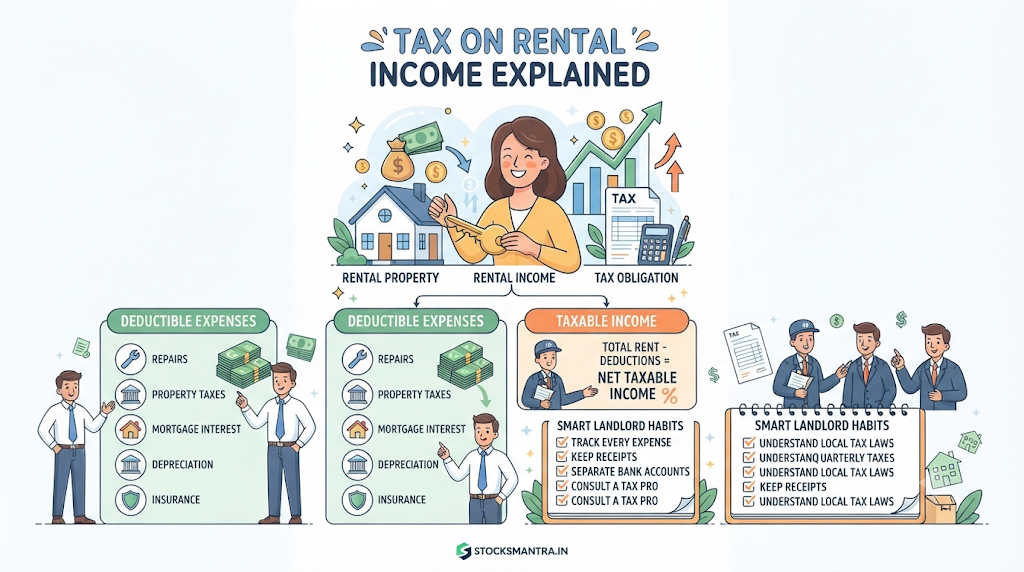
Net rental income is calculated using a simple formula:
Net Rental Income=Total Rent Collected−Allowed Deductions
This means the government lets you subtract the everyday costs of running and maintaining your rental property before calculating your final tax bill.
Why Rental Property Deductions Matter
Deductions are your best tool for lowering your tax burden as a landlord. Every dollar you spend on legitimate property expenses reduces the amount of income subject to tax.
Think of deductions as business costs. Just like a grocery store must pay for inventory and electricity before calculating profits, you must pay for upkeep and administrative costs to keep your rental business running.
Key Deductions Every Landlord Should Know
To reduce your tax liability legally, you need to track and claim the right expenses. Here are the most common deductions available to property owners:
1. Property Taxes
The local taxes you pay to your city, county, or local government for owning the real estate are fully deductible against your rental income.
2. Mortgage Interest
If you have a home loan on the rental property, the interest portion of your monthly mortgage payment can be deducted. (Note: The principal repayment—the part that pays down the actual loan balance—is generally not deductible).
3. Repairs and Maintenance
Keeping the property safe and habitable costs money. Fixing a leaky pipe, repairing a broken window, painting walls between tenants, or servicing the air conditioner are fully deductible in the year you pay for them.
4. Depreciation
Buildings wear down over time. Tax laws allow you to deduct a portion of the building’s cost each year to account for this physical wear and tear. This is called depreciation. It is a “paper deduction,” meaning you do not have to spend cash out of pocket each year to claim it, which makes it a powerful way to lower taxable income.
5. Insurance
The premiums you pay for landlord insurance, fire insurance, or liability coverage protect your investment and can be written off.
6. Professional Fees
If you hire a property manager to handle tenants, an accountant to file your taxes, or a lawyer to draft a lease agreement, those service fees are deductible.
Important Differences: Repairs vs. Improvements
One of the most common confusion points for landlords is knowing the difference between a repair and an improvement. Getting this wrong can lead to tax penalties.
- A Repair keeps your property in normal, good working condition. It fixes something that broke. Examples include fixing a running toilet or patching a hole in drywall. You can deduct the full cost of repairs in the single tax year you pay for them.
- An Improvement adds significant value to the property, prolongs its life, or adapts it to a new use. Examples include building a brand-new room, putting on a completely new roof, or installing a modern security system. You cannot deduct the full cost of an improvement all at once. Instead, you must depreciate its cost over several years.
Real-World Example: Calculating Rental Tax
Let us look at how this works for a practical scenario.
Imagine you own a small apartment that you rent out. Over the course of the year:
- You collect $12,000 in total rent.
- You pay $1,500 in local property taxes.
- You pay $3,000 in mortgage interest.
- You spend $1,000 on repairs (fixing a broken heater and painting).
- You claim $2,500 in depreciation for the building.
The Calculation:
- Total Rental Income: $12,000
- Total Deductions: $1,500 + $3,000 + $1,000 + $2,500 = $8,000
- Net Taxable Rental Income: $12,000 – $8,000 = $4,000
Instead of paying tax on the full $12,000 you collected, your tax is calculated only on the remaining $4,000 of net profit.
Common Mistakes Beginners Make
New landlords often make avoidable errors that cost them money or trigger problems with tax authorities. Watch out for these pitfalls:
- Mixing Personal and Business Funds: Depositing rent into your personal spending account and paying property bills from different personal cards makes tax filing messy. Always keep a separate bank account just for your rental property.
- Failing to Keep Receipts: If you claim $1,000 in repairs but throw away the receipts, an audit can result in the government disallowing those deductions and fining you. Keep digital or physical copies of every invoice and receipt.
- Confusing Capital Improvements with Repairs: Writing off a major roof replacement as a simple monthly repair instead of depreciating it over time is a red flag for tax auditors.
- Not Reporting Cash Rent: Some tenants pay cash. Failing to report cash payments is illegal tax evasion. Every single dollar collected must be accounted for in your financial records.
Risks and Limitations
Owning rental property carries inherent risks that affect your tax and financial standing:
- Vacancy Periods: If your tenant moves out and the property sits empty for three months, you collect zero rent while still paying mortgage interest, property taxes, and insurance.
- Tax Rule Changes: Local and national tax laws change. A deduction that is legal today might be restricted or eliminated tomorrow. Staying updated with current tax codes is essential.
Decision-Making Framework: Should You Manage or Outsource?
When managing a rental property, you face a choice: do it yourself or hire a professional? Use this framework to decide:
- Assess Your Time: Do you have free time to answer midnight emergency calls from tenants? If no, look into a property manager.
- Calculate the Cost: Property managers typically charge 8% to 12% of the monthly rent. Will the peace of mind and time saved outweigh this cost?
- Review Your Skills: Are you comfortable keeping detailed financial ledgers, tracking receipts, and understanding local landlord-tenant laws? If tax rules confuse you, hiring a certified accountant is a smart investment.
Checklist for Rental Property Tax Preparation
Use this checklist before filing your taxes each year:
- Gather all monthly rent payment records and bank deposits.
- Collect all receipts for repairs, maintenance, and supplies.
- Obtain your annual mortgage interest statement from your lender.
- Verify local property tax payment receipts.
- Organize records of any capital improvements made during the year.
- Check records of advertising costs if you paid to find a new tenant.
- Review professional service fees (accountant, legal, property manager).
Key Terms
- Gross Rental Income: The total amount of money collected from tenants before any expenses are subtracted.
- Net Rental Income: The profit left over after subtracting allowed business deductions from your gross rental income.
- Depreciation: An annual tax deduction that accounts for the physical wear and tear of a building over time.
- Capital Improvement: A major upgrade that adds long-term value or extends the useful life of a property.
- Audit: An official inspection of your financial records and tax return by tax authorities to verify accuracy.
FAQs
Is security deposit money considered taxable rental income when I receive it?
No. A security deposit belongs to the tenant while they live there, as you may have to return it when their lease ends. It only becomes taxable income if you keep part of it to cover unpaid rent or property damage.
Can I deduct my travel expenses when visiting my rental property?
Yes. If you travel to your rental property to perform repairs, collect rent, or show it to prospective tenants, the cost of travel (such as mileage or transit fares) can often be deducted as a business expense.
What happens if my rental property generates a net loss?
If your allowed deductions exceed the rent you collected for the year, you experience a rental loss. Depending on your total income level and tax laws, these losses can sometimes be used to offset other taxable income.
Do I need to report rental income if I only rent out a room in my house?
Yes. Renting out a spare room or a guest house generates rental income that must be reported. However, you can also deduct a proportional share of household expenses, such as utilities and maintenance, based on the size of the room rented.
Can I deduct the entire cost of new furniture I bought for a furnished rental?
No. Furniture is considered personal property and must be depreciated over several years rather than deducted all at once in a single year.
Conclusion
Managing tax on rental income does not have to be stressful. By treating your property like a small business, keeping accurate records of every dollar spent, and understanding the difference between simple repairs and major improvements, you can protect your profits and stay compliant. Keep your receipts organized throughout the year, leverage allowed deductions like depreciation and mortgage interest, and consult a qualified tax professional if your portfolio grows complex.