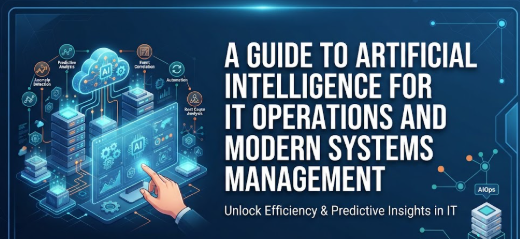
Modern digital systems generate massive streams of operational data every second. Applications run across cloud servers, microservices communicate constantly, and user traffic fluctuates dynamically. For system administrators and engineers, keeping track of this vast ecosystem using traditional dashboards can feel like finding a needle in a haystack.
When thousands of alerts fire at once, teams often struggle to find the root cause of an outage before users notice. This operational challenge is where Artificial Intelligence for IT Operations comes into play. Platforms like TheAIOps.com help organizations and technical professionals explore how automation, machine learning, and advanced analytics transform traditional IT management into proactive, intelligent operations.
What Is TheAIOps.com?
TheAIOps.com is a specialized knowledge, learning, and consulting hub focused entirely on modern IT operations driven by artificial intelligence. Rather than treating monitoring as a reactive chore, the platform explores how intelligent systems can collect, analyze, and act on operational data automatically.
The platform connects several key technical areas:
- Structured learning resources and study paths for professionals.
- Guidance on selecting and integrating modern operational tools.
- Strategic insights for organizations planning operational transformation.
- Deep dives into observability, event correlation, and automated remediation.
By bringing these disciplines together, TheAIOps.com serves as an educational bridge between traditional system administration and next-generation autonomous operations.
Understanding Artificial Intelligence for IT Operations
At its core, Artificial Intelligence for IT Operations combines big data with machine learning algorithms to automate and streamline IT management tasks.
Traditional monitoring relies on static thresholds. If CPU usage crosses 90 percent, an alert triggers. However, modern workloads fluctuate naturally, leading to false alarms or missed issues hidden deep within complex log files.
Intelligent IT operations platforms solve this by establishing baselines of normal behavior. Instead of waiting for a hard threshold break, the system learns what normal looks like across logs, metrics, and traces. When an unusual pattern appears, the platform flags it immediately, helping engineers catch performance dips before they cause downtime.
Exploring Structured Learning and Certification
As organizations adopt intelligent monitoring platforms, the demand for skilled professionals continues to grow. Structured educational pathways help engineers build competence step by step.
AIOps Training
Effective training programs move beyond basic theory to cover real-world operational scenarios. Learners explore core concepts such as intelligent monitoring, anomaly detection, event correlation, root-cause analysis, and automated remediation. The goal is to help technical staff understand how to interpret machine-driven insights rather than just staring at dashboards.
AIOps Certification
For professionals looking to validate their knowledge, certification programs offer a structured way to demonstrate competence in modern IT management. While hands-on practice remains essential, structured exams help organize complex topics into measurable milestones. Certification highlights a professional’s familiarity with modern operational tools, data pipelines, and automation frameworks.
AIOps Course Content
A comprehensive course typically follows a logical progression, starting with basic IT operations and moving toward advanced automation:
- Fundamentals of IT monitoring and log management.
- Basics of machine learning in operational data analysis.
- Techniques for detecting anomalies and reducing alert noise.
- Strategies for event correlation and root-cause discovery.
- Implementing automated incident response workflows.
Tools, Platforms, and Implementation Strategies
Adopting intelligent operations requires the right mix of technology and planning. Understanding the difference between individual utilities and a unified platform is essential for success.
AIOps Tools
Engineers use various tool categories to maintain visibility over infrastructure. Log management tools collect text logs, monitoring tools track resource metrics, and tracing tools follow requests across distributed microservices. Each tool serves a specific purpose, but managing them separately can create data silos.
AIOps Platform
An AIOps platform acts as a central nervous system for operational data. It ingests logs, metrics, and traces, processes the information through machine learning models, and correlates related events. By grouping hundreds of related alerts into a single incident ticket, the platform cuts through noise and points engineers directly toward the underlying problem.
AIOps Implementation
Implementing intelligent operations is an engineering journey rather than an overnight software installation. A successful rollout typically involves:
- Assessing the existing monitoring environment and data quality.
- Identifying high-impact use cases, such as reducing alert fatigue.
- Connecting relevant data sources and testing machine learning models.
- Setting up controlled automation with human approval steps.
- Measuring results and refining rules over time.
Consulting, Services, and Professional Skills
Many organizations partner with external experts to accelerate their adoption journey. Advisory services help bridge the gap between legacy infrastructure and modern automated workflows.
AIOps Consulting and Services
Consulting engagements typically focus on environment assessments, tool evaluations, and architecture planning. Services may include designing custom data pipelines, setting up observability dashboards, and creating reliable automation scripts. These services ensure that organizations invest in solutions that match their specific operational maturity.
The Role of an AIOps Engineer
An AIOps Engineer bridges the gap between software development, data science, and system administration. Essential skills include a strong foundation in Linux and cloud infrastructure, familiarity with observability tools, scripting capabilities in Python or Go, and a basic understanding of machine learning models. These professionals design the pipelines that turn raw operational data into actionable insights.
Core Technical Concepts in Modern Operations
To understand how intelligent systems operate under the hood, it helps to examine the underlying mechanics of data collection and analysis.
Monitoring vs. Observability
- Monitoring tells you whether a system is working or broken by checking predefined metrics.
- Observability allows you to understand why a system is behaving a certain way by examining its internal outputs, including logs, metrics, and traces.
Anomaly Detection and Event Correlation
Anomaly detection algorithms watch system behavior continuously. If a database latency metric deviates from its historical pattern on a Tuesday afternoon, the system flags it.
Event correlation takes this a step further. During a major outage, a single server failure can trigger thousands of downstream alerts. Event correlation engines group these symptoms together, identifying that a single network switch failure caused all subsequent warnings.
Predictive Analytics and Automated Remediation
Predictive models analyze historical capacity trends to forecast disk space exhaustion or memory leaks before they cause crashes. Once an issue is understood, automated remediation scripts can restart services, clear caches, or scale up cloud resources without requiring manual intervention.
Common Challenges and Mistakes
While intelligent operations offer powerful benefits, teams often encounter common pitfalls during adoption:
- Starting with tools instead of problems: Buying expensive software without defining clear operational goals.
- Ignoring data quality: Feeding incomplete or messy logs into machine learning models, leading to inaccurate insights.
- Over-automation: Automating responses before fully trusting the system, which can sometimes make outages worse.
- Neglecting human review: Removing human oversight entirely instead of maintaining a collaborative human-in-the-loop model.
Conclusion
The shift toward intelligent IT operations represents a natural evolution in how organizations manage complex digital infrastructure. By combining operational data, observability tools, and machine learning analytics, teams can move away from reactive firefighting. Platforms like TheAIOps.com provide the educational foundation and professional guidance needed to navigate this transition successfully, helping engineers build resilient, efficient, and modern IT environments.
Frequently Asked Questions
1. What is the primary purpose of TheAIOps.com?
TheAIOps.com serves as a specialized knowledge and learning platform dedicated to exploring how artificial intelligence, machine learning, and automation transform modern IT operations.
2. How does AIOps differ from traditional IT monitoring?
Traditional monitoring relies on static thresholds to trigger alerts, whereas AIOps uses machine learning to establish dynamic baselines, detect subtle anomalies, and correlate related events automatically.
3. What subjects are typically covered in AIOps training programs?
Training programs generally cover operational fundamentals, intelligent monitoring, log analysis, anomaly detection, event correlation, root-cause analysis, and automated remediation workflows.
4. Do I need a strong background in data science to learn AIOps?
No. While a basic understanding of machine learning concepts is helpful, AIOps primarily builds upon standard IT administration, cloud infrastructure, and systems engineering knowledge.
5. What role does an AIOps platform play in an enterprise?
An AIOps platform ingests operational data from multiple monitoring tools, reduces alert noise, correlates related events, and helps engineers pinpoint root causes quickly.
6. What is the difference between monitoring and observability?
Monitoring tells you when a system fails, while observability provides the detailed telemetry—logs, metrics, and traces—needed to understand the internal state and root cause of the failure.
7. Why is data quality important for intelligent IT operations?
Machine learning models rely on accurate historical data. Inconsistent, noisy, or missing log data can lead to false positives and unreliable anomaly detection.
8. What skills are most important for an AIOps Engineer?
Key skills include a solid grasp of cloud architecture, system troubleshooting, observability tools, scripting languages, and familiarity with data pipeline management.
9. What should organizations consider before implementing AIOps?
Organizations should assess their current monitoring maturity, define specific operational bottlenecks, clean up their data sources, and establish clear goals for automation.
10. Can automation completely replace human operators in IT management?
No. Automated remediation handles repetitive tasks and fast responses, but human oversight remains essential for complex troubleshooting, strategic planning, and approval workflows.
Leave a Reply