Introduction
In today’s fast-paced digital ecosystem, creators and professionals often watch their best ideas vanish down the endless scroll of social media algorithms or get bogged down by the frustrating technical hurdles of traditional website builders. BlogAion eliminates this friction by offering a clean, minimal publishing platform designed specifically for long-form writing, giving you a dedicated home to own your content, build long-term search visibility, and grow your personal brand without touching a single line of code.
Why Every Writer Needs a Dedicated Publishing Platform
To build a sustainable writing habit and a recognizable presence, relying solely on social feeds or third-party feeds isn’t enough. Having a dedicated publishing space offers distinct advantages that shape a writer’s trajectory over time.
1. True Content Ownership
When you publish on a dedicated platform, you retain ownership of your words and intellectual property. You aren’t subject to sudden policy updates, platform bans, or algorithmic suppression that can wipe out your archive overnight. Your archive remains intact, accessible, and under your control.
2. Long-Term Visibility and Search Impact
Social media posts have a lifespan measured in hours. A well-written, structured blog post, on the other hand, gains value over time. Search engines index long-form articles, allowing readers to discover your work months—or even years—after you hit publish. This creates a compounding effect where past work continues to attract new opportunities.
3. Personal Branding and Authority
A scattered collection of social posts doesn’t convey expertise as effectively as a structured publication. A personal publishing platform functions as a living portfolio. Whether you are a consultant seeking clients, a researcher documenting findings, or a creative writer showcasing stories, a central hub instantly establishes professional credibility.
4. Better Organization and Discovery
Short-form platforms force thoughts into fragmented threads. A dedicated blog allows you to group related ideas, create series, and present comprehensive arguments. Readers can explore your thought process logically rather than scrolling through a noisy, unrelated feed.
What is BlogAion?
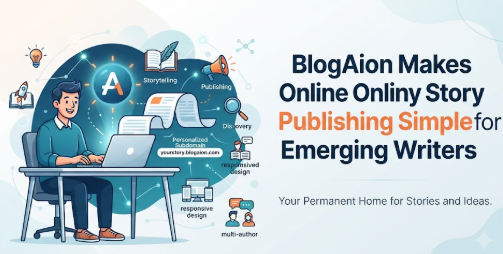
BlogAion is a modern publishing platform built for people who want to share meaningful ideas without getting bogged down by technology. It is designed for independent writers, educators, creative storytellers, and organizations who need a clean, distraction-free environment to write and publish long-form content.
Rather than trying to be an all-in-one site builder with hundreds of themes and overwhelming settings, BlogAion focuses entirely on the writing and reading experience. It addresses a fundamental problem in the publishing world: friction. By removing technical barriers, it allows creators to focus on what matters most—producing quality articles and reaching an audience.
What Makes BlogAion Different?
Understanding a platform’s value comes down to how its tools serve your daily workflow. Here is a look at what sets BlogAion apart and why these features matter in practice.
Distraction-Free, Minimalist Interface
- Why it matters: Busy dashboards, endless pop-ups, and complicated sidebars pull your attention away from writing.
- Practical benefit: BlogAion offers an uncluttered editor that puts typography and words first.
- Example: Instead of spending forty minutes tweaking font margins and widget colors, you open the editor and start writing immediately, staying in a state of creative flow.
Personal Subdomain Out of the Box
- Why it matters: Building a brand requires a distinct web address, but setting up custom domain DNS records can be confusing for non-technical users.
- Practical benefit: You get a personal, clean subdomain instantly upon setup, giving your publication an immediate home.
- Example: A freelance writer can instantly direct prospective clients to
yourname.blogaion.comas a clean, professional portfolio.
Fast, Responsive Design with Light & Dark Modes
- Why it matters: Readers view content on everything from high-end monitors to budget smartphones, day and night. Slow loading times drive readers away immediately.
- Practical benefit: Pages render quickly and scale across device screen sizes automatically, providing a comfortable reading experience in low-light conditions with dark mode support.
- Example: A reader opening your article on a train ride with a weak mobile connection can load and read your post smoothly without layout shifts.
Multi-Author Support
- Why it matters: Writing isn’t always a solo pursuit. Teams, small businesses, and publication groups often need to collaborate.
- Practical benefit: Multiple contributors can publish under a shared publication brand while preserving individual author profiles.
- Example: A boutique agency can run a company blog where three different team members draft and publish industry insights under their own names.
Built-In Community Discovery
- Why it matters: Launching a brand-new website often feels like shouting into an empty room.
- Practical benefit: Platform-wide discovery features help bring organic readers to your content, complementing your own promotional efforts.
- Example: An independent thinker publishing an essay on economics can gain initial readers from fellow platform users browsing built-in topic feeds.
Who Can Benefit from BlogAion?
Because of its adaptable and straightforward structure, BlogAion fits a broad variety of publishing needs:
- Bloggers and Essayists: Writers who need a reliable, clean home for long-form analysis, opinion pieces, and personal essays.
- Storytellers and Authors: Fiction and non-fiction writers sharing chapters, serialized prose, or commentary on their creative process.
- Students and Researchers: Academic minds who want to distill complex papers, publish study notes, or document research journeys for a broader audience.
- Educators and Teachers: Instructors sharing supplementary reading materials, study guides, or educational commentary with students and peers.
- Freelancers and Consultants: Professionals building thought leadership to attract prospective clients without maintaining an overly complex corporate site.
- Small Businesses and NGOs: Organizations needing an active blog to share updates, case studies, or mission-driven articles without hiring a web developer.
Real-Life Scenarios: How Writers Use the Platform
To see how this works in practice, let’s look at a few common real-world situations:
Scenario 1: The Freelance Copywriter
Problem: Sarah loses potential clients because her best work is buried across social media threads and old PDF attachments.
Solution: She sets up her personal subdomain, transfers her best case studies into well-formatted articles, and links the blog in her email signature.
Outcome: Prospective clients can quickly read her insights, review her portfolio, and contact her directly.
Scenario 2: The Independent Educator
Problem: Mark wants to share weekly historical analysis with his students and open-source history enthusiasts, but school platforms are closed to the public.
Solution: He publishes short weekly articles complete with structured headings, blockquotes, and images on a public feed.
Outcome: Students access resources easily, while public readers discover his educational work through search engines.
Scenario 3: The Startup Team
Problem: A three-person software team needs a product blog to publish release notes and engineering breakdowns, but they don’t want to dedicate developer hours to setting up a custom site.
Solution: They launch a collaborative publication using multi-author support.
Outcome: The team publishes weekly engineering updates within minutes of writing them, leaving their technical resources focused on their core software product.
Step-by-Step Guide: How to Start Publishing
Getting your publication online shouldn’t take days. Here is the straightforward process to go from an idea to a live article:
Step 1: Create Your Account
Sign up using your preferred credentials. The onboarding process is quick and avoids asking for unnecessary details up front.
Step 2: Claim Your Personal Subdomain
Select a clean, memorable web handle for your publication. Pick something that reflects your real name or publication title.
Step 3: Complete Your Author Profile
Add a short bio, headshot, and relevant external links. A complete author bio builds trust with new readers who land on your posts.
Step 4: Draft Your Article
Open the clean editor. Structure your piece using standard subheadings, paragraphs, and lists to make it readable.
Step 5: Format Your Content
Use visual breaks like blockquotes for important notes, bolding for key concepts, and formatted lists to keep your prose engaging and easy to skim.
Step 6: Review and Publish
Give your piece a final proofread, check your preview, and hit publish. Your post instantly goes live on your dedicated subdomain.
Step 7: Share Your Work
Distribute your new link to your existing networks, email lists, or social profiles to drive initial traffic.
Step 8: Maintain a Consistent Rhythm
Set a realistic posting schedule—whether that’s once a week or twice a month—to build long-term search visibility and reader loyalty.
How Long-Form Publishing Builds Real Growth
Writing online isn’t just about output; it’s about compounding value over time.
Regular Publishing ──> Search Indexing ──> Organic Discovery ──> Established Authority
When you consistently produce organized long-form content, several growth mechanisms kick in naturally:
- Building Topical Authority: Focusing on a few core topics signals to search engines and readers that you possess real depth of knowledge in your niche.
- Creating Digital Assets: Unlike a tweet that expires, a comprehensive article continues to answer questions for readers months after it is posted.
- Fostering High-Intent Connections: Readers who spend five to ten minutes reading a complete article form a much deeper connection with your brand than those who glance at a short social post.
Common Mistakes Writers Make And How to Avoid Them
Publishing successfully requires avoiding a few common traps that slow down progress.
Mistake 1: Relying Solely on Social Media Platforms
- The Problem: Platforms change algorithms, reduce reach, or shut down entirely.
- The Impact: You risk losing your entire audience and content archive overnight.
- The Solution: Use social media as a traffic engine, but host your permanent content on a platform you control.
Mistake 2: Choosing Overly Complex Publishing Tools
- The Problem: Writers spend hours tweaking plugins, themes, and code instead of writing.
- The Impact: Creative momentum drops, leading to inconsistent publishing habits.
- The Solution: Adopt a minimal, pre-configured publishing setup that keeps writing at the center.
Mistake 3: Poor Formatting and Unreadable Layouts
- The Problem: Publishing massive blocks of unbroken text without headings or visual breathing room.
- The Impact: Readers feel overwhelmed and click away within seconds.
- The Solution: Use clear subheadings, short paragraphs, bullet points, and visual callouts to maintain reader interest.
Mistake 4: Giving Up Too Early
- The Problem: Expecting thousands of readers on your first few posts.
- The Impact: Discouragement leads to abandoned publications.
- The Solution: Focus on building a body of ten to twenty quality articles first. Organic discovery takes time to build momentum.
Practical Tips to Get the Most Out of Your Publication
- Focus on Reader Intent: Write articles that answer specific questions, solve problems, or tell compelling stories.
- Keep Formatting Clean: Use subheadings (
##,###) to break down long arguments into digestible chunks. - Optimize Your Bio: Make it easy for readers to know who you are and where else to find your work.
- Link Internally: As your library grows, link newer posts back to your older foundational articles to keep readers exploring.
- Write First, Edit Second: Use the minimalist editor to complete drafts before tweaking style or layout settings.
Comparing Your Publishing Options
Traditional Social Feeds vs. Dedicated Blog Publishing
| Comparison Point | Social Media Platforms | Dedicated Publishing Platform |
| Content Ownership | Platform owns distribution rules | You own your content archive |
| Discoverability | Short-term algorithmic feed | Long-term search engine discovery |
| Content Lifespan | Hours to days | Months to years |
| Branding Control | Generic profile template | Dedicated subdomain and bio |
| Writing Format | Character limits, short threads | Long-form, structured essays |
| Reader Experience | Fragmented, high-distraction | Clean, focused, single-reader view |
Key Platform Features and Writer Benefits
| Feature Point | Why It Matters | Benefit for Writers |
| Minimalist Editor | Reduces cognitive overload while drafting | * Write faster without distraction * Focus purely on word quality |
| Personal Subdomain | Gives your blog a distinct identity | * Looks professional to clients * Easy to share on resumes and socials |
| Responsive Design | Adjusts automatically to any device | * Readers enjoy a great experience on mobile * No custom mobile layout setup needed |
| Multi-Author Hubs | Enables simple team publishing | * Manage guest writers seamlessly * Scale a publication with multiple voices |
Real Stories from the Field
Case Study 1: The Independent Strategy Writer
- The Challenge: Alex, a business strategist, had dozens of long-form articles saved in Google Docs, but felt intimidated by the complexity of building a full WordPress site.
- The Transition: He set up a publication on BlogAion in under ten minutes and uploaded his first three essays.
- The Result: Within two months, three of his posts started ranking for niche consulting terms, helping him secure two new enterprise strategy clients without running paid ads.
Case Study 2: The Academic Educator
- The Challenge: Maya needed a simple, clean way to post supplementary reading materials for her students without requiring them to register for complex school portals.
- The Transition: She began posting formatted lecture notes and reading guides on her clean subdomain weekly.
- The Result: Her students enjoyed the distraction-free reading layout, and educators from other institutions began referencing and sharing her public posts.
Why Writers Choose BlogAion
                       ┌──> Beginners: Zero setup friction or code
                       │
                       ├──> Professionals: Clean portfolio & subdomain
Writers Choose BlogAion ┼──> Storytellers: Distraction-free reader view
                       │
                       └──> Teams: Easy multi-author publishing
Frequently Asked Questions
Is BlogAion free to use?
Yes, you can create an account, claim your subdomain, and start publishing without initial upfront costs.
Do I need coding or web design skills to set up a blog?
No coding knowledge is required. The platform comes pre-configured with a clean layout, so you can focus entirely on writing.
What is a personal subdomain?
A personal subdomain gives your publication a unique web address (such as yourname.blogaion.com), making your work easy to find and share professionally.
Can I use the platform for creative storytelling or fiction?
Absolutely. The minimal visual design is well-suited for long-form creative writing, serialized stories, and personal essays.
Can multiple writers publish under a single publication?
Yes, multi-author support allows teams, literary groups, or organizations to collaborate on a single blog while maintaining distinct author bios.
How do readers discover my published articles?
Readers discover content through search engines, direct links you share, and built-in community feeds that feature published work across the platform.
Is it suitable for building a professional writing portfolio?
Yes. Having a clean, dedicated space with an author bio and structured articles serves as an effective, modern portfolio for freelancers and consultants.
Can teachers and students use it for educational publishing?
Yes. Educators can publish study materials, and students can host research notes or essays in a clean, accessible layout.
Conclusion
Building an online presence shouldn’t mean sacrificing ownership of your work or spending all your time acting as a web developer. The most impactful writers online are those who publish consistently, organize their ideas thoughtfully, and build a cumulative archive over time.
By choosing a publishing space designed to support clarity, speed, and simplicity, you give your ideas room to grow. Stop leaving your best writing at the mercy of shifting social algorithms—give your words a permanent home where readers can find, read, and return to them for years to come.